
The problem for mental solution, appropriate for today is
(normally the last day of the year)
For other great mathematicians or philosophers, he [Gauss] used the epithets magnus, or clarus, or clarissimus; for Newton alone he kept the prefix summus.
~W.W.R. Ball
(normally the last day of the year)
For other great mathematicians or philosophers, he [Gauss] used the epithets magnus, or clarus, or clarissimus; for Newton alone he kept the prefix summus.
~W.W.R. Ball
The 365th (and usually last) day of the year; 365 is a centered square number, and thus the sum of two consecutive squares (132 + 142 ) and also one more than four times a triangular number.
365 is the sum of two squares in two ways, 132 + 142 and 192 + 22 *Lord Karl Voldevive
There are 10 days during the year that are the sum of three consecutive squares. This is the last one (proof left to the reader ;-} .
365 = 10²+11²+12²; *jim wilder@wilderlab
365 is the smallest number that can be written as a sum of consecutive squares in more than one way (and all the numbers squared are consecutive.): 365 =102 + 112 + 122 =132 + 142 .
365 is a palindrome in base 2; 101101101
and base 8; 555
EVENTS
1719 When the first Astronomer Royal, John Flamsteed died on this day (see below) he was serving as Rector of Burstow (just east of Gatwick), and had been for thirty-five years. For some reason, no marker was placed on the grave, and 170 years later, it was not clear where the famous astronomer was buried. Finally, in 1888, another astronomer from Greenwich Observatory, Edwin Dunkin searched, and found, the burial site mentioned in his wife's will. Today there are several markers in the church at Barstow, including the one below indicating his resting place in the Chancel.
Several other images of the church, and markers for Flamsteed, are at the site from which I obtained this note. *Blogs Greenwich http://blogs.greenwich.co.uk/rob-powell/the-grave-of-john-flamsteed/

1831 Gauss writes to his close friend, Wilhelm Olbers regarding an essay published by Laplace, "The essay... is quite unworthy of this great geometer. I find two different, very gross blunders in it. I had always imagined that among geometers of the first rank the calculation was always only the dress in which they present that which they created not by calculation, but by mediation about the subject itself. ". *Carl Friedrich Gauss: Titan of Science by Guy Waldo Dunnington, Jeremy Gray, Fritz-Egbert Dohse
Wilhelm Olbers was German astronomer and physician who discovered the asteroids Pallas and Vesta, as well as five comets. Alexandre Zagoskin wrote to remind me that he formulated the Olbers paradox- an early and important argument against an infinite, eternal and static Universe.

*Wik
1915 The Mathematical Association of America was founded in Columbus, Ohio. Starting with 1045 charter members, the Association now has some 34,000 members who are interested in the improvement of mathematical instruction at the collegiate level. *VFR
1935, a patent was issued for the game of Monopoly assigned to Parker Brothers, Inc., by Charles Darrow of Pennsylvania (No. 2,026,082). The patent titled it a "Board Game Apparatus" and described it as "intended primarily to provide a game of barter, thus involving trading and bargaining" in which "much of the interest in the game lies in trading and in striking shrewd bargains." Illustrations included with the patent showed not only the playing board and pieces, cards, and the scrip money. He had invented the game on 7 Mar 1933, though it was preceded by other real-estate board games. *TISFirst page of Charles Darrow's patent submission for Monopoly, submitted and granted in 1935
*Wik
1956 The earliest mention in print of the term "Big Bang" appeared in the New York Times in describing the efforts of Fred Hoyle, who was working to disprove the idea. Hoyle had created the term on March 28, 1949 on a BBC radio show as a term of contempt for the theory which he opposed. From left: George Gamow in 1961 and Fred Hoyle in 1958. At midcentury, the two engaged in a spirited debate about the origins of the universe.Credit...Associated Press; Evening Standard/Getty Images *Wiik

*Wik
1961 This was the last day of the year 1961, a Stobogrammatic number. If you rotate the number by 180o it still looks the same. Then name seems to have been created for the Jan 1961 issue of The Mathematics Magazine by J. M. Howell of Los Angeles City College. The last day of the year is a significant date since it is the last time someone will be living in such a year for a very long time. *Mathematics Magazine
1987 The last minute (UT) of the last hour of the last day of the year 1987 carried an extra second, a leap second. This was to coordinate the slowdown in rotation of the Earth on its axis, or Solar Time, with the more precise atomic time. The one-second insertion was made at 6:59:59 P.M. at the Naval Observatory in Washington D.C. Just exactly when the proverbial man-in-the¬street choose to insert this second was his own business, but in New York’s Times Square it was done with much hoopla at midnight. *U.S. Naval Observatory's “Stargazing Notes for December 1987.” *VFR


The puzzles include a wordsearch concealing over 30 local placenames, a three way anamorphic illusion, a completely new idea based on the Tinner's Rabbits, an ancient maze from a French church, a modern Railway Maze (specially designed by Professor Sir Roger Penrose), a Word Anagram, a Letter misplacement puzzle, a traditional Word square puzzle, cryptarithms, hidden mice, and other curiosities and puzzles.
1999 Professor Andrew Wiles is knighted. The Princeton mathematician found fame in October 1994 when he succeeded in proving Fermat's Last Theorem. This was an amazing achievement that had eluded some of the greatest minds since Pierre Fermat conjured up his theory in the 1630s. His work has received every major honour and he had the pleasure in 1999 of seeing some of his former pupils crack another of mathematics' great puzzles: The Shimura-Taniyama-Weil conjecture. *BBC
1999 Alan Sugar, the man who founded Amstrad some 30 years ago and now runs Tottenham Hotspur football club,(Sugar sold his interest in the Spurs in 2007 according to a comment from Luke Robinson, below) has been knighted.
So too has Maurice Wilkes, who developed the world's first practical stored-program computer in 1949.
"I'm tickled pink by the news," said Mr Sugar, whose company launched the world's first mass-market word processor built with low-cost components from the Far East.
At the height of its success, Amstrad was worth £1.5bn on the FTSE-100 index. Mr Sugar eventually broke Amstrad up, spinning off Viglen Technology, its personal computer business, of which he is now chairman.
Maurice Wilkes led the Cambridge University team that developed the Edsac - Electronic Delay Storage Automatic Calculator. It was a huge contraption that could carry out just 650 instructions per second. Nevertheless, it went down in history as the first truly programmable computer. *BBCWilkes was a founder member of the British Computer Society (BCS) and its first president (1957–1960). He received the Turing Award in 1967 with the following citation: "Professor Wilkes is best known as the builder and designer of the EDSAC, the first computer with an internally stored program.

*wik
The last day of 2017, a prime year; to be followed by 2018, which is twice a prime (2 x 1009); and then 2019 which is three times a prime (3 x 673) ;
BIRTHS
1789 Benoît "Claudius" Crozet (December 31, 1789; Villefranche, France – January 29, 1864) was an educator and civil engineer.
After serving in the French military, in 1816, he immigrated to the United States. He taught at the U.S. Military Academy at West Point, New York, and helped found the Virginia Military Institute at Lexington, Virginia. He was Principal Engineer for the Virginia Board of Public Works and oversaw the planning and construction of canals, turnpikes, bridges and railroads in Virginia, including the area which is now West Virginia. He became widely known as the "Pathfinder of the Blue Ridge."
On June 7, 1816, in Paris, Crozet married Agathe Decamp.
Late in fall of 1816, Crozet and his bride headed for the United States. Almost immediately after arriving, Crozet began work as a professor of engineering at the U.S. Military Academy at West Point, New York.
While at West Point, Crozet is credited by some as being the first to use the chalkboard as an instructional tool. (Professor Ricky, a math historian at USMA has written, "old records show that it was introduced at West Point by Mr. George Baron, a civilian teacher, who in the autumn of 1801 gave to Cadet Swift 'a specimen of his mode of teaching at the blackboard' ").He also designed several of the buildings at West Point. Thomas Jefferson referred to Claudius Crozet as "by far the best mathematician in the United States." He also published A Treatise on Descriptive Geometry while at West Point, a copy of which was sent to Jefferson. Jefferson's response on Nov 23, 1821 began, "I thank you, Sir, for your kind attention in sending me a copy of your valuable treatise on Descriptive geometry." He continued the message with praise for the work, and the instructor both. The dining hall at the Virginia Military Institute is named in his honor. It has been affectionately nicknamed "Club Crozet" by the Cadets. * Wik & Natl. ArchivesIn my post on A Brief History of Blackboards and Slates I point to much earlier use in education"It appears that the blackboard first came into American education around 1800. The National Museum of American History website on colonial education says,:
"Mathematics teachers with ties to England and France introduced blackboards into the United States around 1800. By the 1840s, these erasable surfaces were used for teaching a wide range of subjects in elementary schools, colleges, and academies. The Massachusetts educator William A. Alcott visited over 20,000 schoolhouses. “A blackboard, in every school house," he wrote, "is as indispensably necessary as a stove or fireplace."

1864 Robert Grant Aitken (31 Dec 1864; 29 Oct 1951) American astronomer who specialized in the study of double stars, of which he discovered more than 3,000. He worked at the Lick Observatory from 1895 to 1935, becoming director from 1930. Aitken made systematic surveys of binary stars, measuring their positions visually. His massive New General Catalogue of Double Stars within 120 degrees of the North Pole allowed orbit determinations which increased astronomers' knowledge of stellar masses. He also measured positions of comets and planetary satellites and computed orbits. He wrote an important book on binary stars, and he lectured and wrote widely for the public.*TIS

1896 Carl Ludwig Siegel (December 31, 1896 – April 4, 1981) was a mathematician specializing in number theory and celestial mechanics. He was one of the most important mathematicians of the 20th century.
Among his teachers were Max Planck and Ferdinand Georg Frobenius, whose influence made the young Siegel abandon astronomy and turn towards number theory instead. His best student was Jürgen Moser, one of the founders of KAM theory (Kolmogorov-Arnold-Moser), which lies at the foundations of chaos theory.
Siegel's work on number theory, diophantine equations, and celestial mechanics in particular won him numerous honours. In 1978, he was awarded the Wolf Prize in Mathematics, one of the most prestigious in the field.
Siegel's work spans analytic number theory; and his theorem on the finiteness of the integer points of curves, for genus greater than 1, is historically important as a major general result on diophantine equations, when the field was essentially undeveloped. He worked on L-functions, discovering the (presumed illusory) Siegel zero phenomenon. His work derived from the Hardy-Littlewood circle method on quadratic forms proved very influential on the later, adele group theories encompassing the use of theta-functions. The Siegel modular forms are recognised as part of the moduli theory of abelian varieties. In all this work the structural implications of analytic methods show through.
André Weil, without hesitation, named Siegel as the greatest mathematician of the first half of the 20th century. In the early 1970s Weil gave a series of seminars on the history of number theory prior to the 20th century and he remarked that Siegel once told him that when the first person discovered the simplest case of Faulhaber's formula then, in Siegel's words, "Es gefiel dem lieben Gott." (It pleased the dear Lord.) Siegel was a profound student of the history of mathematics and put his studies to good use in such works as the Riemann-Siegel formula.*Wik

*Wik
1929 Jeremy Bernstein (31 Dec 1929, ) American physicist, educator, and writer widely known for the clarity of his writing for the lay reader on the major issues of modern physics. He was a staff writer for the New Yorker for over 30 years until 1993. He has held appointments at the Institute for Advanced Study, Brookhaven National Laboratory, CERN, Oxford, the University of Islamabad, and the Ecole Polytechnique. Berstein has written over 50 technical papers as well as his books popularizing science including Albert Einstein; Cranks, Quarks, and the Cosmos and A Theory for Everything. His passion for science was launched after he entered Harvard University, thereafter combining it with a talent as a writer. *TIS

*Wik
1930 Jaime Alfonso Escalante Gutierrez (December 31, 1930 — March 30, 2010) was a Bolivian educator well-known for teaching students calculus from 1974 to 1991 at Garfield High School, East Los Angeles, California. Escalante was the subject of the 1988 film Stand and Deliver, in which he is portrayed by Edward James Olmos.*Wik

1945 Leonard Max Adleman (December 31, 1945, ) is an American theoretical computer scientist and professor of computer science and molecular biology at the University of Southern California. He is known for being a co-inventor of the RSA (Rivest-Shamir-Adleman) cryptosystem in 1977, and of DNA computing. RSA is in widespread use in security applications. *Wik

1952 Vaughan Frederick Randal Jones (31 Dec 1952, ) is a New Zealand mathematician who was awarded the Fields Medal in 1990 for his study of functional analysis and knot theory. In 1984, Jones discovered a relationship between von Neumann algebras and geometric topology. As a result, he found a new polynomial invariant for knots and links in 3-space. It was a complete surprise because his invariant had been missed completely by topologists, in spite of intense activity in closely related areas during the preceding 60 years.*TIS

DEATHS
1610 Ludolph van Ceulen, a German mathematician who is famed for his calculation of π to 35 places. In Germany π used to be called the Ludolphine number. Because van Ceulen could not read Greek, Jan Cornets de Groot, the burgomaster of Delft and father of the jurist, scholar, statesman and diplomat, Hugo Grotius, translated Archimedes' approximation to π for Van Ceulen. This proved a significant point in Van Ceulen's life for he spent the rest of his life obtaining better approximations to π using Archimedes' method with regular polygons with many sides.*SAU
Van Ceulen found a way to increase the number of sides of the inscribed polygons from 128 to well into the millions, and he initially found a value of pi accurate to 20 decimal places. This number was engraved just below his portrait on the title page of his first book, Van den Circkel . In Archimedean style, the inscription says that pi must lie between 3.14....846 (at the top) and 3.14...847 (bottom). By the time of his death, van Ceulen had extended the value to 35 places, and he requested that the two limiting numbers be carved on his gravestone. The tombstone disappeared soon after his death in 1610, but it was "restored" (i.e., completely rebuilt from scratch) in 2000, and can be seen in St. Peter's Church in Leiden .
In the Netherlands, pi is often referred to as the “Ludolphine number", after van Ceulen. *Linda Hall Library

1679 Giovanni Alfonso Borelli (28 Jan 1608; 31 Dec 1679) Italian mathematician, physiologist and physicist sometimes called “father of biomechanics.” He was the first to apply the laws of mechanics to the muscular action of the human body. In De motu animalium (Concerning Animal Motion, 1680), he correctly described the skeleton and muscles as a system of levers, and explained the mechanism of bird flight. He calculated the forces required for equilibrium in various joints of the body well before the mechanics of Isaac Newton. In 1649, he published a work on malignant fevers. He repudiated astrological causes of diseases and believed in chemical cures. In 1658, he published Euclidus restitutus. He made anatomical dissections, drew a diver's rebreather, investigated volcanoes, was first to suggest a parabolic path for comets, and considered Jupiter had an attractive influence on its moons.*TIS
*Wik
1719 John Flamsteed (19 Aug 1646; 31 Dec 1719)English astronomer who established the Greenwich Observatory. Science Historian/blogger Thony Christie writes:
" Observational astronomy only produced three significant star catalogues in the two thousand years leading up to the 18th century. The first, the Greek catalogue from Hipparchus and Ptolemaeus published by Ptolemaeus in the 2nd century CE, which contained just over 1000 stars mapped with an accuracy that was astounding for the conditions under which it was produced. The second, containing somewhat more that 700 stars plus another 300 borrowed from the Ptolemaeus catalogue, was produced by the Danish astronomer Tycho Brahe in the last quarter of the 16th century, with an accuracy many factors better than his Greek predecessors. Both of these catalogues were produced with naked eye observations. The first catalogue to be produced using telescopic sights on the measuring instruments was that of John Flamsteed published posthumously in 1725, which contains more than 3000 stars measured to a much higher degree of accuracy than that of Tycho."
He then goes on to correct some misconceptions about Flamsteed's life that are commonly repeated, (he did NOT take part in talking Charles II into creating the observatory) and gives a nice description of a complex man. *Renaissance Mathematicus
RMAT
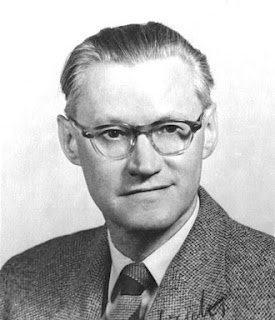
1984 Thomas Jan Stieltjes (29 December 1856 – 31 December 1894) did pioneering work on the integral. *VFR Thomas Stieltjes worked on almost all branches of analysis, continued fractions and number theory. *SAUHe was a pioneer in the field of moment problems and contributed to the study of continued fractions. The Thomas Stieltjes Institute for Mathematics at Leiden University, dissolved in 2011, was named after him, as is the Riemann–Stieltjes integral. Stieltjes worked on almost all branches of analysis, continued fractions and number theory. For his work, he is sometimes referred to as "the father of the analytic theory of continued fractions".*Wik

1913 Seth Carlo Chandler, Jr. (17 Sep 1846, 31 Dec 1913) was an American astronomer best known for his discovery (1884-85) of the Chandler Wobble, a complex movement in the Earth's axis of rotation (now referred to as polar motion) that causes latitude to vary with a period of 14 months. His interests were much wider than this single subject, however, and he made substantial contributions to such diverse areas of astronomy as cataloging and monitoring variable stars, the independent discovery of the nova T Coronae, improving the estimate of the constant of aberration, and computing the orbital parameters of minor planets and comets. His publications totaled more than 200. *TISChandler was awarded the Gold Medal of the Royal Astronomical Society in 1896 and the James Craig Watson Medal in 1894.

*Wik
1962 Charles G Darwin was the grandson of the famous biologist and graduated from Cambridge. He lectured on Physics at Manchester and after service in World War I and a period back at Cambridge he became Professor of Physics at Edinburgh. He left eventually to become head of a Cambridge college. He worked in Quantum Mechanics and had controversial views on Eugenics. *SAU

1982 Kurt Otto Friedrichs (September 28, 1901 – December 31, 1982) was a noted German American mathematician. He was the co-founder of the Courant Institute at New York University and recipient of the National Medal of Science. *Wik
<2017>
Credits :
*CHM=Computer History Museum
*FFF=Kane, Famous First Facts
*NSEC= NASA Solar Eclipse Calendar
*RMAT= The Renaissance Mathematicus, Thony Christie
*SAU=St Andrews Univ. Math History
*TIA = Today in Astronomy
*TIS= Today in Science History
*VFR = V Frederick Rickey, USMA
*Wik = Wikipedia
*WM = Women of Mathematics, Grinstein & Campbell
Several other images of the church, and markers for Flamsteed, are at the site from which I obtained this note. *Blogs Greenwich http://blogs.greenwich.co.uk/rob-powell/the-grave-of-john-flamsteed/
 |
1831 Gauss writes to his close friend, Wilhelm Olbers regarding an essay published by Laplace, "The essay... is quite unworthy of this great geometer. I find two different, very gross blunders in it. I had always imagined that among geometers of the first rank the calculation was always only the dress in which they present that which they created not by calculation, but by mediation about the subject itself. ". *Carl Friedrich Gauss: Titan of Science by Guy Waldo Dunnington, Jeremy Gray, Fritz-Egbert Dohse
 |
| *Wik |
1915 The Mathematical Association of America was founded in Columbus, Ohio. Starting with 1045 charter members, the Association now has some 34,000 members who are interested in the improvement of mathematical instruction at the collegiate level. *VFR
1935, a patent was issued for the game of Monopoly assigned to Parker Brothers, Inc., by Charles Darrow of Pennsylvania (No. 2,026,082). The patent titled it a "Board Game Apparatus" and described it as "intended primarily to provide a game of barter, thus involving trading and bargaining" in which "much of the interest in the game lies in trading and in striking shrewd bargains." Illustrations included with the patent showed not only the playing board and pieces, cards, and the scrip money. He had invented the game on 7 Mar 1933, though it was preceded by other real-estate board games. *TIS
 |
| *Wik |
1956 The earliest mention in print of the term "Big Bang" appeared in the New York Times in describing the efforts of Fred Hoyle, who was working to disprove the idea. Hoyle had created the term on March 28, 1949 on a BBC radio show as a term of contempt for the theory which he opposed.
 |
| *Wik |

1987 The last minute (UT) of the last hour of the last day of the year 1987 carried an extra second, a leap second. This was to coordinate the slowdown in rotation of the Earth on its axis, or Solar Time, with the more precise atomic time. The one-second insertion was made at 6:59:59 P.M. at the Naval Observatory in Washington D.C. Just exactly when the proverbial man-in-the¬street choose to insert this second was his own business, but in New York’s Times Square it was done with much hoopla at midnight. *U.S. Naval Observatory's “Stargazing Notes for December 1987.” *VFR


The puzzles include a wordsearch concealing over 30 local placenames, a three way anamorphic illusion, a completely new idea based on the Tinner's Rabbits, an ancient maze from a French church, a modern Railway Maze (specially designed by Professor Sir Roger Penrose), a Word Anagram, a Letter misplacement puzzle, a traditional Word square puzzle, cryptarithms, hidden mice, and other curiosities and puzzles.
1999 Professor Andrew Wiles is knighted. The Princeton mathematician found fame in October 1994 when he succeeded in proving Fermat's Last Theorem. This was an amazing achievement that had eluded some of the greatest minds since Pierre Fermat conjured up his theory in the 1630s. His work has received every major honour and he had the pleasure in 1999 of seeing some of his former pupils crack another of mathematics' great puzzles: The Shimura-Taniyama-Weil conjecture. *BBC

1999 Alan Sugar, the man who founded Amstrad some 30 years ago and now runs Tottenham Hotspur football club,(Sugar sold his interest in the Spurs in 2007 according to a comment from Luke Robinson, below) has been knighted.
So too has Maurice Wilkes, who developed the world's first practical stored-program computer in 1949.
"I'm tickled pink by the news," said Mr Sugar, whose company launched the world's first mass-market word processor built with low-cost components from the Far East.
At the height of its success, Amstrad was worth £1.5bn on the FTSE-100 index. Mr Sugar eventually broke Amstrad up, spinning off Viglen Technology, its personal computer business, of which he is now chairman.
Maurice Wilkes led the Cambridge University team that developed the Edsac - Electronic Delay Storage Automatic Calculator. It was a huge contraption that could carry out just 650 instructions per second. Nevertheless, it went down in history as the first truly programmable computer. *BBC
 |
| *wik |
The last day of 2017, a prime year; to be followed by 2018, which is twice a prime (2 x 1009); and then 2019 which is three times a prime (3 x 673) ;
BIRTHS
1789 Benoît "Claudius" Crozet (December 31, 1789; Villefranche, France – January 29, 1864) was an educator and civil engineer.After serving in the French military, in 1816, he immigrated to the United States. He taught at the U.S. Military Academy at West Point, New York, and helped found the Virginia Military Institute at Lexington, Virginia. He was Principal Engineer for the Virginia Board of Public Works and oversaw the planning and construction of canals, turnpikes, bridges and railroads in Virginia, including the area which is now West Virginia. He became widely known as the "Pathfinder of the Blue Ridge."
On June 7, 1816, in Paris, Crozet married Agathe Decamp.
Late in fall of 1816, Crozet and his bride headed for the United States. Almost immediately after arriving, Crozet began work as a professor of engineering at the U.S. Military Academy at West Point, New York.
While at West Point, Crozet is credited by some as being the first to use the chalkboard as an instructional tool. (Professor Ricky, a math historian at USMA has written, "old records show that it was introduced at West Point by Mr. George Baron, a civilian teacher, who in the autumn of 1801 gave to Cadet Swift 'a specimen of his mode of teaching at the blackboard' ").He also designed several of the buildings at West Point. Thomas Jefferson referred to Claudius Crozet as "by far the best mathematician in the United States." He also published A Treatise on Descriptive Geometry while at West Point, a copy of which was sent to Jefferson. Jefferson's response on Nov 23, 1821 began, "I thank you, Sir, for your kind attention in sending me a copy of your valuable treatise on Descriptive geometry." He continued the message with praise for the work, and the instructor both. The dining hall at the Virginia Military Institute is named in his honor. It has been affectionately nicknamed "Club Crozet" by the Cadets. * Wik & Natl. Archives
It appears that the blackboard first came into American education around 1800. The National Museum of American History website on colonial education says,:
"Mathematics teachers with ties to England and France introduced blackboards into the United States around 1800. By the 1840s, these erasable surfaces were used for teaching a wide range of subjects in elementary schools, colleges, and academies. The Massachusetts educator William A. Alcott visited over 20,000 schoolhouses. “A blackboard, in every school house," he wrote, "is as indispensably necessary as a stove or fireplace."

1864 Robert Grant Aitken (31 Dec 1864; 29 Oct 1951) American astronomer who specialized in the study of double stars, of which he discovered more than 3,000. He worked at the Lick Observatory from 1895 to 1935, becoming director from 1930. Aitken made systematic surveys of binary stars, measuring their positions visually. His massive New General Catalogue of Double Stars within 120 degrees of the North Pole allowed orbit determinations which increased astronomers' knowledge of stellar masses. He also measured positions of comets and planetary satellites and computed orbits. He wrote an important book on binary stars, and he lectured and wrote widely for the public.*TIS

1896 Carl Ludwig Siegel (December 31, 1896 – April 4, 1981) was a mathematician specializing in number theory and celestial mechanics. He was one of the most important mathematicians of the 20th century.
Among his teachers were Max Planck and Ferdinand Georg Frobenius, whose influence made the young Siegel abandon astronomy and turn towards number theory instead. His best student was Jürgen Moser, one of the founders of KAM theory (Kolmogorov-Arnold-Moser), which lies at the foundations of chaos theory.
Siegel's work on number theory, diophantine equations, and celestial mechanics in particular won him numerous honours. In 1978, he was awarded the Wolf Prize in Mathematics, one of the most prestigious in the field.
Siegel's work spans analytic number theory; and his theorem on the finiteness of the integer points of curves, for genus greater than 1, is historically important as a major general result on diophantine equations, when the field was essentially undeveloped. He worked on L-functions, discovering the (presumed illusory) Siegel zero phenomenon. His work derived from the Hardy-Littlewood circle method on quadratic forms proved very influential on the later, adele group theories encompassing the use of theta-functions. The Siegel modular forms are recognised as part of the moduli theory of abelian varieties. In all this work the structural implications of analytic methods show through.
André Weil, without hesitation, named Siegel as the greatest mathematician of the first half of the 20th century. In the early 1970s Weil gave a series of seminars on the history of number theory prior to the 20th century and he remarked that Siegel once told him that when the first person discovered the simplest case of Faulhaber's formula then, in Siegel's words, "Es gefiel dem lieben Gott." (It pleased the dear Lord.) Siegel was a profound student of the history of mathematics and put his studies to good use in such works as the Riemann-Siegel formula.*Wik
 |
| *Wik |
1929 Jeremy Bernstein (31 Dec 1929, ) American physicist, educator, and writer widely known for the clarity of his writing for the lay reader on the major issues of modern physics. He was a staff writer for the New Yorker for over 30 years until 1993. He has held appointments at the Institute for Advanced Study, Brookhaven National Laboratory, CERN, Oxford, the University of Islamabad, and the Ecole Polytechnique. Berstein has written over 50 technical papers as well as his books popularizing science including Albert Einstein; Cranks, Quarks, and the Cosmos and A Theory for Everything. His passion for science was launched after he entered Harvard University, thereafter combining it with a talent as a writer. *TIS
 |
| *Wik |
1930 Jaime Alfonso Escalante Gutierrez (December 31, 1930 — March 30, 2010) was a Bolivian educator well-known for teaching students calculus from 1974 to 1991 at Garfield High School, East Los Angeles, California. Escalante was the subject of the 1988 film Stand and Deliver, in which he is portrayed by Edward James Olmos.*Wik

1945 Leonard Max Adleman (December 31, 1945, ) is an American theoretical computer scientist and professor of computer science and molecular biology at the University of Southern California. He is known for being a co-inventor of the RSA (Rivest-Shamir-Adleman) cryptosystem in 1977, and of DNA computing. RSA is in widespread use in security applications. *Wik

1952 Vaughan Frederick Randal Jones (31 Dec 1952, ) is a New Zealand mathematician who was awarded the Fields Medal in 1990 for his study of functional analysis and knot theory. In 1984, Jones discovered a relationship between von Neumann algebras and geometric topology. As a result, he found a new polynomial invariant for knots and links in 3-space. It was a complete surprise because his invariant had been missed completely by topologists, in spite of intense activity in closely related areas during the preceding 60 years.*TIS

DEATHS
Van Ceulen found a way to increase the number of sides of the inscribed polygons from 128 to well into the millions, and he initially found a value of pi accurate to 20 decimal places. This number was engraved just below his portrait on the title page of his first book, Van den Circkel . In Archimedean style, the inscription says that pi must lie between 3.14....846 (at the top) and 3.14...847 (bottom).
By the time of his death, van Ceulen had extended the value to 35 places, and he requested that the two limiting numbers be carved on his gravestone. The tombstone disappeared soon after his death in 1610, but it was "restored" (i.e., completely rebuilt from scratch) in 2000, and can be seen in St. Peter's Church in Leiden .
In the Netherlands, pi is often referred to as the “Ludolphine number", after van Ceulen. *Linda Hall Library

1679 Giovanni Alfonso Borelli (28 Jan 1608; 31 Dec 1679) Italian mathematician, physiologist and physicist sometimes called “father of biomechanics.” He was the first to apply the laws of mechanics to the muscular action of the human body. In De motu animalium (Concerning Animal Motion, 1680), he correctly described the skeleton and muscles as a system of levers, and explained the mechanism of bird flight. He calculated the forces required for equilibrium in various joints of the body well before the mechanics of Isaac Newton. In 1649, he published a work on malignant fevers. He repudiated astrological causes of diseases and believed in chemical cures. In 1658, he published Euclidus restitutus. He made anatomical dissections, drew a diver's rebreather, investigated volcanoes, was first to suggest a parabolic path for comets, and considered Jupiter had an attractive influence on its moons.*TIS
 |
| *Wik |
1719 John Flamsteed (19 Aug 1646; 31 Dec 1719)English astronomer who established the Greenwich Observatory. Science Historian/blogger Thony Christie writes:
" Observational astronomy only produced three significant star catalogues in the two thousand years leading up to the 18th century. The first, the Greek catalogue from Hipparchus and Ptolemaeus published by Ptolemaeus in the 2nd century CE, which contained just over 1000 stars mapped with an accuracy that was astounding for the conditions under which it was produced. The second, containing somewhat more that 700 stars plus another 300 borrowed from the Ptolemaeus catalogue, was produced by the Danish astronomer Tycho Brahe in the last quarter of the 16th century, with an accuracy many factors better than his Greek predecessors. Both of these catalogues were produced with naked eye observations. The first catalogue to be produced using telescopic sights on the measuring instruments was that of John Flamsteed published posthumously in 1725, which contains more than 3000 stars measured to a much higher degree of accuracy than that of Tycho."
He then goes on to correct some misconceptions about Flamsteed's life that are commonly repeated, (he did NOT take part in talking Charles II into creating the observatory) and gives a nice description of a complex man. *Renaissance Mathematicus
 |
| RMAT |
1984 Thomas Jan Stieltjes (29 December 1856 – 31 December 1894) did pioneering work on the integral. *VFR Thomas Stieltjes worked on almost all branches of analysis, continued fractions and number theory. *SAU

 |
| *Wik |
1962 Charles G Darwin was the grandson of the famous biologist and graduated from Cambridge. He lectured on Physics at Manchester and after service in World War I and a period back at Cambridge he became Professor of Physics at Edinburgh. He left eventually to become head of a Cambridge college. He worked in Quantum Mechanics and had controversial views on Eugenics. *SAU

1982 Kurt Otto Friedrichs (September 28, 1901 – December 31, 1982) was a noted German American mathematician. He was the co-founder of the Courant Institute at New York University and recipient of the National Medal of Science. *Wik

<2017>
Credits :
*CHM=Computer History Museum
*FFF=Kane, Famous First Facts
*NSEC= NASA Solar Eclipse Calendar
*RMAT= The Renaissance Mathematicus, Thony Christie
*SAU=St Andrews Univ. Math History
*TIA = Today in Astronomy
*TIS= Today in Science History
*VFR = V Frederick Rickey, USMA
*Wik = Wikipedia
*WM = Women of Mathematics, Grinstein & Campbell


