
Mankind will not remain on the earth forever, but, in search of light and space, will at first timidly penetrate beyond the limits of the atmosphere and then finally conquer the spaces of the solar system.
— Konstantin Eduardovich Tsiolkovsky
tombstone inscription
(But first, can we learn to be indigenous to our own planet?) PB
The 262nd day of the year; 262 is the 5th meandric number. A meander is a self-avoiding closed curve which intersects a line a number of times. Intuitively, a meander can be viewed as a straight road crossing a river over a number of bridges.[ The term meander is drawn from the Greek name of an actual winding river, the Maiandros.]
262 is a palindrome, and twice a palindrome (2 x 131)
262 should be day of the year for 2022, 262 in base five is 2022.
262^5 begins with the digits 1234543.... novel
262 is the number of equilateral triangles formed out of matches in a hexagonal chunk with four matchsticks on a side..(Can you find the 38 equilaterals in the hexagon with two matchsticks on a side)
EVENTS
1648 The theory of atmospheric pressure and the existence of a vacuum were confirmed by experiments designed by Blaise Pascal.*VFR. Pascal had come down from Paris for the event but he did not make the trudge up the mountain with barometer in hand, but asked his brother -in-law, Florian Perier. Accompanied by "worthy gentleman" , to make the measure. It is clear from Torricelli's correspondence with Ricci that he knew the weight of air decreased with Altitude, but it was Pascal who first instructed the measure, and calculated the weight of all the air pressing on the Earth.
The weather was good on Saturday, Sep. 19, 1648, so Périer rose early, and he began by visiting the Minim convent in Clermont, where he set up two identical Torricellian tubes, and checked that they read the same. He left one of the tubes there in the monastery, instructing a monk to check the level regularly and see if it changed over the course of the day. Then, with an accompanying party, Périer headed with the other tube for the top of the Puy de Dôme, some 4806 feet above sea level and about 3000 higher than the Minim convent in Clermont. Sure enough, the mercury level at the summit dropped three inches, while the level in the stationary tube (Périer would later discover) did not change at all.
The Puy de Dôme experiment attracted some attention in subsequent decades, but it was not acclaimed at the time as a new kind of experiment. But over the centuries it has achieved canonical status from scientists and philosophers of science, and many historians. It appeals to writers on scientific method because it was designed to test a specific hypothesis – that the mercury in the tube is held up by atmospheric pressure – and to rule out competing hypotheses, such as that the mercury is held up by nature’s abhorrence of a vacuum. Even better, Périer used a control, a duplicate tube that was not subjected to the crucial variable, a change in altitude. And he brought along witnesses, and kept detailed notes. This was a perfect example of an experimentum crucis, a crucial experiment, years before Robert Hooke coined the term, and Isaac Newton demonstrated it with his prism experiments on light and color.
In 1923, there was a celebration of the tercentenary of Pascal’s birth. It was held at Clermont (now Clermont-Ferrand), and the banquet was at the summit of the Puy de Dôme, with the evening address delivered by the President of France, Alexandre Millerand. We like the art deco poster printed for the event, showing Clermont, the Puy de Dôme, and the statue of Pascal that was installed in a city park in 1880. *Linda Hall Org
1680 Francis and Mary Huntrodds die within five hours on their mutual birthday, and marriage anniversary. Statisticians sometimes hold "probability" parties in honor of Huntrodd's Day. *David Spiegelhalter, understandinguncertainty.org
Francis and Mary Huntrodd were both born on September 19, 1600, married on their mutual birthday (September 19th), and died on the same date 80 years later - September 19, 1680, with fewer than five hours separating their deaths. Their gravestone inscription at St. Mary's Church in Whitby, North Yorkshire tells their remarkable story.
The statistical improbability of their shared life events is what has made them famous among mathematicians and probability enthusiasts. They had 12 children during their 80-year marriage Francis Huntrodds (1600-1680) - Find a Grave Memorial, which was quite extraordinary for the time period, especially considering they both lived to age 80 in the 17th century when life expectancy was much lower.
What adds another layer of coincidence is the location of their burial: St. Mary's Church sits atop Whitby's famous 199 steps, and the date they shared throughout their lives was 19/9 (September 19th)
1783 The brothers Montgolfier repeated their experiment of 4 June 1783, in the presence of Louis XVI at Versailles. At one o’clock the crowd went wild as the balloon soared gracefully free carrying a rooster, a sheep, and a duck.*VFR
In 1783 Étienne carried out an initial tethered attempt, which was successful and which he repeated a second time seven days before the demonstration in front of the king at Versailles. Unfortunately, the balloon tore open and he had to stitch it back together quickly. The balloon was made of cotton canvas with paper glued onto both sides, measured 18.47m tall by 13.28m wide, and weighed 400 kg. It was named Le Réveillon after Étienne's friend Jean-Baptiste Réveillon, the Director of the Royal Manufacture of printed paper, who had designed a motif on a sky-blue background decorated with the king’s cypher – two interweaving L’s – linked with decorative elements all in gold. *chateauversailles.
Amidst stupefaction and applause, the balloon left the ground and soared 600 metres into the air. Damaged by a rip in the fabric, it descended slowly eight minutes later after travelling 3.5 km and came back to earth in the Wood of Vaucresson, at the Maréchal crossroads.
The first human would go aloft on 21 November of 1783.
In 1848, Hyperion, moon of Saturn, discovered by William Cranch Bond(US), George Phillips Bond(US) and William Lassell(UK)*TIS It was the first non-round moon to be discovered. Hyperion's discovery came shortly after John Herschel had suggested names for the seven previously-known satellites of Saturn in his 1847 publication Results of Astronomical Observations made at the Cape of Good Hope. Lassell, who saw Hyperion two days after William Bond, had already endorsed Herschel's naming scheme, (Saturn's moons should be named after the Titans and Titanesses—the brothers and sisters of the god Saturn (Cronus) in Greek mythology), and suggested the name Hyperion in accordance with it. He also beat Bond to publication. *Wik
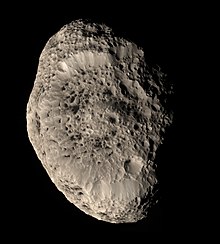 |
| *Wik |
1861 Russian chemist Alexander Butlerov first presented a definition for "chemical structure".
Chemical structure refers to the way atoms are arranged within molecules. Butlerov realized that chemical compounds are not a random cluster of atoms and functional groups, but structures with definite order. *.rsc.org
He was the first to incorporate double bonds into structural formulas, the discoverer of hexamine (1859), the discoverer of formaldehyde (1859) and the discoverer of the formose reaction (1861).
(The formose reaction (also called the Butlerov reaction) is a remarkable chemical reaction in which formaldehyde (HCHO) is converted into a complex mixture of sugars under basic conditions)He first proposed the idea of possible tetrahedral arrangement of valence bonds in carbon compounds in 1862. *Wik
 |
| *Wik |
1894 In a letter to Felix Klein (19 September 1894) Peano wrote: “The purpose of mathematical logic is to analyze the ideas and reasoning that especially figure in the mathematical sciences.” Peano was neither a logicist nor a formalist. He believed rather that mathematical ideas are ultimately derived from our experience of the material world. *Hubert Kennedy, "Eight Mathematical Biographies" Pg 27
 |
| Peano and wife Carola |
1994 Andrew Wiles has an "AHA" moment, Over the course of three lectures delivered at Isaac Newton Institute for Mathematical Sciences on June 21, 22, and 23 of 1993, Wiles had announced his proof of the Taniyama–Shimura conjecture, and hence of Fermat's Last Theorem. There was a relatively large amount of press coverage afterwards.
After announcing his results, (Nick) Katz was a referee on his manuscript and he asked Wiles a series of questions that led Wiles to recognize that the proof contained a gap. There was an error in a critical portion of the proof which gave a bound for the order of a particular group: the Euler system used to extend Flach's method was incomplete. Wiles and his former student Richard Taylor spent almost a year resolving it. Wiles indicates that on the morning of September 19, 1994 he realized that the specific reason why the Flach approach would not work directly suggested a new approach with the Iwasawa theory which resolved all of the previous issues with the latter and resulted in a CNF that was valid for all of the required cases. On 6 October Wiles sent the new proof to three colleagues including Faltings. The new proof was published and, despite its size, widely accepted as likely correct in its major components. *Wik

1995 Ahoy Matey, International "Talk Like a Pirate Day is born" is a parodic holiday created in 1995 by John Baur (Ol' Chumbucket) and Mark Summers (Cap'n Slappy), of Albany, Oregon, who proclaimed September 19th each year as the day when everyone in the world should talk like a pirate.For example, an observer of this holiday would greet friends not with "Hello," but with "Ahoy, matey!" The holiday, and its observance, springs from a romanticized view of the Golden Age of Piracy. *Wik
Its peak popularity was probably between 2002 and about 2012, when websites, forums, and even software projects would switch their interfaces into "Pirate" for the day. While it has become more of a niche tradition, it remains surprisingly resilient—many online calendars still list it, and communities continue to observe it annually.
One amusing historical footnote: the stereotypical pirate speech ("Arrr!", "Ahoy!", "Shiver me timbers!") isn't how eighteenth-century pirates actually talked. Most of it traces back to actor Robert Newton, whose West Country accent as Long John Silver in Disney's 1950 film of Treasure Island became the model for "pirate talk" in popular culture.
Wounded, but still walkin (perhaps with a peg leg) the "holiday continues today with:
libraries holding pirate-themed story hours,
pubs and restaurants running pirate promotions,
Renaissance fairs incorporating pirate weekends,
social media users posting in mock pirate dialect,
and plenty of "Arrr!" memes every September 19.
So strap on a bandana and an eye-patch and join in, what's the wordt that could happen??? Well, there is that plank!

2009 At the autumn meeting of the British Society for the History of Mathematics (BSHM), The Archimedes Codex by Reviel Netz and William Noel was awarded the Neumann Prize for the best book in the history of mathematics aimed a broad audience. Reviel Netz is Professor of Classics at Stanford University, California, and Dr William Noel is the curator of manuscripts and rare books at The Walters Art Museum in Baltimore, Maryland.
The prize was awarded for the first time this year and will henceforth be bestowed every two years. The prize is named after Dr Peter Neumann, Emeritus Fellow of The Queen’s College, Oxford, and a former president of the BSHM. He was awarded the OBE in 2008 for his services to education.
The Archimedes Codex is a biography of one of the ancient world’s greatest mathematicians Archimedes of Syracuse (c.287 BC – c.212 BC) and tells the story of the rediscovery of a 10th-century copy of some of his writings and drawings, which were found hidden beneath a 13th-century prayer book. *History Today, September 23, 2009
Winners to date (2023) are :
2021: Tony Royle. The Flying Mathematicians of World War I.
2019: Martin Beech. Going Underground
2017: Jimmy Soni & Rob Goodman. A Mind at Play
2015: Sydney Padua, The Thrilling Adventures of Lovelace and Babbage
2013: Jacqueline Stedall. The history of mathematics: A very short introduction
2011: Clifford A. Pickover, The Math Book
2009: Reviel Netz and William Noel, The Archimedes Codex
BIRTHS
1822 Jean Baptiste Joseph chevalier Delambre (19 September 1749, Amiens – 19 August 1822, Paris) was a French mathematician and astronomer. He was also director of the Paris Observatory, and author of well-known books on the history of astronomy from ancient times to the 18th century. Delambre was one of the first astronomers to derive astronomical equations from analytical formulas. His name is also one of the 72 names inscribed on the Eiffel tower. Delambre died in 1822 and was interred in the Père Lachaise Cemetery in Paris.
Jean-Baptiste Delambre had a fascinating connection to one of history's most ambitious scientific projects. In the 1790s, he was chosen to lead the northern portion of an extraordinary expedition to measure the meridian arc from Dunkirk to Barcelona - a project aimed at creating the universal standard that would become the meter.
While his colleague Pierre Méchain surveyed the southern section, Delambre spent years traveling through revolutionary France with his delicate surveying instruments, often facing suspicion from locals who couldn't understand why this mysterious figure was setting up strange equipment on church towers and hilltops. During the height of the Terror, he was even briefly arrested as a suspected spy because of his unusual activities.
The irony was that Delambre, this mild-mannered astronomer, was actually engaged in one of the most internationally significant scientific endeavors of the age - literally helping to reshape how humanity would measure the world. His meticulous work, combined with Méchain's, provided the foundation for the metric system that most of the world uses today. It took them nearly seven years to complete their measurements, and Delambre's dedication to precision helped ensure that the meter would be based on the most accurate possible measurement of the Earth itself.*PBnotes

1840 John Emory McClintock (19 Sept 1840 , 10 July 1916) for many years the leading actuary in America. He published 30 papers between 1868 and 1877 on actuarial questions. His publications were not confined to questions relating to life insurance policies however. He published about 22 papers on mathematical topics. One paper treats difference equations as differential equations of infinite order and others look at quintic equations which are soluble algebraically. He published A simplified solution of the cubic in 1900 in the Annals of Mathematics. Another work, On the nature and use of the functions employed in the recognition of quadratic residues (1902), published in the Transactions of the American Mathematical Society, is on quadratic residues.*SAU

1888 James Waddell Alexander (19 Sep 1888; 23 Sept 1971) American mathematician and a founder of the branch of mathematics originally known as analysis situs, now called topology. In 1912, he joined the faculty of the mathematics department at Princeton. Soon after, Alexander generalised the Jordan curve theorem and, in 1928, he discovered the Alexander polynomial which is much used in knot theory.*TIS

1908 Victor Frederick Weisskopf (September 19, 1908 – April 22, 2002) was an Austrian-born American theoretical physicist. He did postdoctoral work with Werner Heisenberg, Erwin Schrödinger, Wolfgang Pauli and Niels Bohr. During World War II he worked at Los Alamos on the Manhattan Project to develop the atomic bomb, and later campaigned against the proliferation of nuclear weapons.
His brilliance in physics led to work with the great physicists exploring the atom, especially Niels Bohr, who mentored Weisskopf at his institute in Copenhagen. By the late 1930s, he realized that, as a Jew, he needed to get out of Europe. Bohr helped him find a position in the U.S.
In the 1930s and 1940s, 'Viki', as everyone called him, made major contributions to the development of quantum theory, especially in the area of Quantum Electrodynamics. One of his few regrets was that his insecurity about his mathematical abilities may have cost him a Nobel prize when he did not publish results (which turned out to be correct) about what is now known as the Lamb shift. *Wik

1964 Simon Singh (19 September, 1964 - )In 1950 my parents emigrated to Taunton. A few years later they moved to Wellington, and that is where I was born. Somerset is a fertile ground for budding scientists. Just 5 miles from where I was born is the town of Milverton, the birthplace of Thomas Young, the polymath who made breakthroughs in a wide range of subjects. Most important of all, he advocated the wave theory of light. He studied at Emmanuel College Cambridge, and in due I course I attended the same college, but I failed to make any significant contributions to the foundations of physics.
Before starting my physics degree at Imperial College, London, I spent a year at GEC Hirst Research Centre, Wembley, working on gallium arsenide monolithic microwave integrated circuits. GEC were sponsoring me during my studies. It was an interesting year and I grew up a bit, but the main lesson I learned was that my future did not rest in industrial research and development.
My PhD in experimental particle physics was based at Cambridge University, but I spent most of my three years working at the European Centre for Particle Physics (CERN) in Geneva. I worked as part of the UA2 collaboration, which had previously won the Nobel Prize for discovering the W and Z bosons. It was a wonderful three years.
Particle physics was great fun. My three years at Cambridge and CERN were challenging and stimulating. However, I could see that there were people around me who were on a different planet when it came to understanding and researching physics, and it would be they who would go on to make their names as pioneers. As for me, it was time to change career. I had always enjoyed talking about and explaining science, so I took the decision to move towards a career in journalism and science communication. In particular, I have always loved television and felt that this was the most influential medium, so I started applying for a job at the BBC. *From his personal biography on his web page.
Simon Singh is the author of numerous popular science books, including the one below:

DEATHS
1710 Olaus Roemer, (25 Sep 1644 - 19 Sep 1710) Danish astronomer, He was the first to measure the speed of light. *VFR Astronomer who demonstrated conclusively that light travels at a finite speed. He measured the speed by precisely measuring the length of time between eclipses of Jupiter by one of its moons. This observation produces different results depending on the position of the earth in its orbit around the sun. He reasoned that meant light took longer to travel the greater distance when earth was traveling in its orbit away from Jupiter.*TIS

1761 Pieter van Musschenbroek (14 Mar 1692; 19 Sep 1761 at age 69) Dutch mathematician and physicist who invented the Leyden jar, the first effective device for storing static electricity. He grew up in a family that manufactured scientific instruments such as telescopes, microscopes and air pumps. Before Musschenbroek's invention, static electricity had been produced by Guericke using a sulphur ball, with minor effects. In Jan 1746, Musschenbroek placed water in a metal container suspended on silk cords, and led a brass wire through a cork into the water. He built up a charge in the water. When an unwary assistant touched the metal container and the brass wire, the discharge from this apparatus delivered a substantial shock of static electricity. The Leyden name is linked to the discovery having being made at the University of Leiden. *TIS

1843 Gaspard Gustave de Coriolis (21 May 1792, 19 Sept 1843) Coriolis is best remembered for the Coriolis force. He showed that the laws of motion could be used in a rotating frame of reference if an extra force called the Coriolis acceleration is added to the equations of motion. *SAU
In 1835, Coriolis first gave a mathematical description of the effect, giving his name to the Coriolis force. While air begins flowing from high to low pressure, the Earth rotates under it, thus making the wind appear to follow a curved path. In the Northern Hemisphere, the wind turns to the right of its direction of motion. In the Southern Hemisphere, it turns to the left. The Coriolis force is zero at the equator.
He was the first to apply the term travail (translated as "work") for the transfer of energy by a force acting through a distance.
Coriolis's name began to appear in the meteorological literature at the end of the 19th century, although the term "Coriolis force" was not used until the beginning of the 20th century.
The names of 72 scholars are inscribed in gold capital letters on the first floor's border, with 18 names on each side. The names are in a random order and can be read from the ground. Gustave Eiffel engraved the names to honor men of science and to commemorate the 100th anniversary of the French Revolution. Coriolis' name is in the space of the tiny yellow shading.
1859 John Pringle Nichol FRSE FRAS (13 January 1804 – 19 September 1859) was a Scottish educator, phrenologist, astronomer and economist who did much to popularise astronomy in a manner that appealed to nineteenth century tastes. [A phrenologist was someone who practices phrenology, a now-discredited pseudoscience that claimed to assess personality and mental traits by measuring the bumps and indentations on a person's skull. Phrenologists believed that the skull's surface reflected the size and development of underlying brain areas, which they associated with specific mental faculties or abilities. ]
Nichol held a number of posts in education and journalism and corresponded with many leading thinkers of the times, including John Stuart Mill. He clearly made some impression in economics as James Mill and Nassau Senior nominated him as Jean-Baptiste Say's successor as professor of political economy at the Collège de France though he was at the time too ill to take the post.
In 1836 and in competition with Thomas Carlyle, Nichol was appointed Regius Professor of Astronomy at the University of Glasgow. He became an enthusiastic and effective lecturer and made a profound impression on William Thomson, 1st Baron Kelvin with his introduction of the "Continental" approach to mathematical physics of Jean Baptiste Joseph Fourier. He lived at the Glasgow Observatory.
Nichol turned to popular lecturing and authored a number of popular and successful books about astronomy, especially championing the nebular hypothesis. In 1841 George Eliot wrote: "I have been revelling in Nichol's Architecture of the Heavens and Phenomena of the Solar System, and have been in imagination winging my flight from system to system, and from universe to universe ..."
William John Macquorn Rankine declared Nichol's Dictionary of the Physical Sciences to be: "... almost unparalleled for the extent and accuracy of the information that it contains in a small bulk."

1935 Konstantin Eduardovich Tsiolkovsky (17 Sep 1857, 19 Sep 1935) Russian pioneer space theorist who, while a provincial Russian schoolteacher, worked out many of the principles of space travel. In 1883, he noted that vehicle in space would travel in the opposite direction to gas that it emitted, and was the first to seriously propose this method propulsion in space travel. He wrote various papers, including the 1903 article "Exploration of Space with Reactive Devices." The engineering equations he derived included parameters such as specific impulse, thrust coefficient and area ratio. He established that the most efficient chemical combination would be that of liquid hydrogen and liquid oxygen. He was later recognized by the Soviet Union as the "father of cosmonautics." He also built the first wind tunnel.*TIS (He is buried at the Park of the Cosmonauts' Museum, Kaluga Province, Russian Federation)

1968 Chester Floyd Carlson (8 Feb 1906, 19 Sep 1968) American physicist who invented xerography (22 Oct 1938), an electrostatic dry-copying process that found applications ranging from office copying to reproducing out-of-print books. The process involved sensitizing a photoconductive surface to light by giving it an electrostatic charge Carlson developed it between 1934 and 1938, and initially described it as electrophotography It was immediately protected by Carlson with an impenetrable web of patents, though it was not until 1944 that he was able to obtain funding for further development. In 1947 he sold the commercial rights for his invention to the Haloid Company, a small manufacturer of photographic paper (which later became the Xerox Corporation).*TIS

2002 Etta Zuber Falconer (November 21, 1933 – September 19, 2002) was an American educator and mathematician the bulk of whose career was spent at Spelman College, where she eventually served as department head and associate provost. She was one of the earlier African-American women to receive a Ph.D. in mathematics.
Falconer began her teaching career in 1954 at Okolona College, where she met and married Dolan Falconer. She remained at Okolona until 1963, when she accepted a position at Howard High School in Chattanooga, Tennessee, where she taught the academic year 1963–64. When her husband was offered a coaching position at Morris Brown College in 1965, the family moved to Atlanta, also the site of Spelman College, an historically black women's college.
Falconer's mother had studied at Spelman, and Falconer approached the head of the mathematics department, telling him that she wanted to teach there She was appointed an instructor in 1965. In 1969 Falconer became the eleventh African American woman to receive a PhD in mathematics. She specialized in Abstract algebra. Falconer advanced to associate professor, leaving Spelman in 1971 to join the mathematics department at Norfolk State University, where she taught for the academic year 1971–1972. Falconer returned to Spelman as professor of mathematics and head of the mathematics department. She held those positions until 1985.
Falconer devoted 37 years of her life to teaching mathematics and improving science education at Spelman College. In 1995, she stated: "My entire career has been devoted to increasing the number of African American women in mathematics and mathematics-related careers." Along with her teaching career, Falconer strived to inspire more African American women to pursue careers in math or science by working with prominent organizations. This included the American Mathematical Society, the Mathematical Association of America, the Associate for Women in Mathematics, and the National Institute of Science.
Falconer was awarded the UNCF Distinguished Faculty Award (1986–1987), the Spelman Presidential Award for Excellence in Teaching (1988), the Spelman Presidential Faculty Award for Distinguished Service (1994).In 1995, Falconer was honored by the Association for Women in Mathematics, who awarded her the Louise Hay Award for outstanding achievements in mathematics education. QEM's Giants in Science Award (1995), and an honorary doctorate of science from the University of Wisconsin-Madison (1996). She was named a Fellow of the American Association for the Advancement of Science in 1999. In 2001, she received the American Association for the Advancement of Science Mentor Award for Lifetime Achievement.

2010 Joseph Bernard Kruskal, Jr. (January 29, 1928 – September 19, 2010) was an American mathematician, statistician, computer scientist and psychometrician. He was a student at the University of Chicago and at Princeton University, where he completed his Ph.D. in 1954, nominally under Albert W. Tucker and Roger Lyndon, but de facto under Paul Erdős with whom he had two very short conversations.Kruskal has worked on well-quasi-orderings and multidimensional scaling.
He was a Fellow of the American Statistical Association, former president of the Psychometric Society, and former president of the Classification Society of North America.
In statistics, Kruskal's most influential work is his seminal contribution to the formulation of multidimensional scaling. In computer science, his best known work is Kruskal's algorithm for computing the minimal spanning tree (MST) of a weighted graph. In combinatorics, he is known for Kruskal's tree theorem (1960), which is also interesting from a mathematical logic perspective since it can only be proved nonconstructively. Kruskal also applied his work in linguistics, in an experimental lexicostatistical study of Indo-European languages, together with the linguists Isidore Dyen and Paul Black.
Kruskal was born in New York City to a successful fur wholesaler, Joseph B. Kruskal, Sr. His mother, Lillian Rose Vorhaus Kruskal Oppenheimer, became a noted promoter of Origami during the early era of television. He died in Princeton. *Wik

Credits :
*CHM=Computer History Museum
*FFF=Kane, Famous First Facts
*NSEC= NASA Solar Eclipse Calendar
*RMAT= The Renaissance Mathematicus, Thony Christie
*SAU=St Andrews Univ. Math History
*TIA = Today in Astronomy
*TIS= Today in Science History
*VFR = V Frederick Rickey, USMA
*Wik = Wikipedia
*WM = Women of Mathematics, Grinstein & Campbell


.jpg)


.jpg)


