Saturday, 19 September 2026

"Done Right"


According to Hoyle, According to Cocker, nach Adam Riese.  There must be one in every language.  But who were they?  

In the US, and England, mostly it’s "according to Hoyle".   Some thought the Hoyle in question was Sir Fred Hoyle, who inadvertently coined the term “Big Bang” for the idea of the sudden expansion of a small point of matter/energy into a massive universe in less than a second.  Sir Fred didn’t buy it for a minute, and attacked the idea promoting his own “steady state universe” theory.  1949 The phrase "Big Bang" is created. Shortly after 6:30 am GMT on BBC's The Third Program, Fred Hoyle used the term in describing theories that contrasted with his own "continuous creation" model for the Universe. "...based on a theory that all the matter in the universe was created in one big bang ... ". *Mario Livio, Brilliant Blunders


Fred Hoyle held on to his belief until the discovery of background radiation.  He was a guy who held his ideas strong and hard, but he’s not the source of the expression, according to Hoyle.


That was another Englishmen, Edmond Hoyle.  Edmond Hoyle (1672 – 1769) was an English writer best known for his works on the rules and play of card games. The phrase "according to Hoyle" (meaning "strictly according to the rules") came into the language as a reflection of his generally perceived authority on the subject; since that time, use of the phrase has expanded into general use in situations in which a speaker wishes to indicate an appeal to a putative authority.


So what about this Cocker?   Here is what I found on a site called World Wide Words:

Something done according to Cocker was done properly, according to established rules or what was considered to be correct.

The etymological story starts in 1678, when John Hawkins published the manuscript of a book which Edward Cocker had left at his death two years earlier. Cocker had been the master of a grammar school in Southwark, across the Thames from the City of London, and Hawkins was his successor in the post.

 The book, after the fashion of the time, had an expansive title — Cocker’s Arithmetick: Being a Plain and familiar Method suitable to the meanest Capacity for the full understanding of that Incomparable Art, as it is now taught by the ablest School-masters in City and Country.


The Arithmetick (like musick and other words it has since lost its final letter) was an enormous success. It had reached its twentieth edition by 1700 and went through more than a hundred altogether. It was widely used to teach basic arithmetic in English schools for well over a century.“  

Benjamin Franklin' autobiography makes mention that he studied another common English translation, Cocker's Arithmetic, after he moved from his home to Pennsylvania, " And now it was that, being on some occasion made asham'd of my ignorance in figures, which I had twice failed in learning when at school, I took Cocker's book of Arithmetick, and went through the whole by myself with great ease.

According to Google N-gram viewer, between 1900 and 1990, the two expressions were about equally used, but seeming to switch in favor every ten years or so.  Then, around 1995, the Cocker phrase seemed to almost disappear, and the Hoyle quote dominated……. But..suddenly around 2016, it’s popularity roared back, and around 2019 they were nearly equal, with a slight edge to Cocker.  


And Nach Adam Riese, well he was a math man too, and even before Cocker.  He was born the year Columbus made his first voyage to what would come to be known as America.  He wrote a number of books in German for arithmetic and algebra, helping to spread the use of variable based mathematics.  His second book ran for 100 editions. And the expression, Das macht nach Adam Riese... (that gives according to Adam Riese) .  Unlike the other two, it is most often used in arithmetic.  A narrower field perhaps, but it has lasted about five hundred years. 


The Stamp shows an illustration of Riese's illustration of the "Rule of three" which students today would learn as cross products to solve proportions.


On This Day in Math - September 20


Here I am: My brain is open.

[As an itinerant scholar, this was greeting he often gave, ready to collaborate, upon arrival at the home of any mathematician colleague.]
~ Paul Erdös

The 263rd day of the year;

263 is an irregular prime. (a regular prime is an  odd prime which divides the numerator of a Bernoulli Number) They became of great interest after 1850 when Kummer proved that Fermat's Last Theorem was true for any exponent that was a regular prime.

\( 263^2 = 69169 \) A strobogrammatic number (appears the same rotated by 180o. *Prime Curos adds that it is the largest known number for which this is true.  (I'm not sure why 691169, or 619619, and 69869, etc would not be similarly strobogrammatic.)

Jim Wilder@wilderlab pointed out also that the length of 263!! (Hate that notation, it is the product of all the odds from 263 down to 1) is 263 digits. Once more pushing for a different and clearer notation. Even Prime Curios \(263!_2\) is better, but doesn't allow for partial descent, so \(n!_{a,b}\) with a as step size, and b as number of steps would allow \(43!_{5, 3} = 43 * 38 * 33 \) And if you changed the lowered text to upper, the 5 could mean count UP.

263 is the sum of five consecutive primes, 263 = 43 + 47 + 53 + 59 + 61 , and the average of the primes on each side of it, \( 263 = \frac{257 + 269}{2} \)

263 is the sum of three primes that are all palindromes, 151 + 101 + 11, ending in the sum of the digits of 263.

In 1919 Ramunjan wrote a new proof of Bertrand's Postulate, which he points out was first stated by Chebyshev, and I always give it in the poetic form I learned it first.

Chebyshev said it
So I'll say it again
There is always a Prime Between n and 2n

Of course Chebyshev actually said between n and 2n-2, but.....


Ramunjan created a sequence of integers that incremented no more than one as the primes grew. That sequence of Primes, 2, 11, 17, 29, 41.. are called Ramanujan primes, and 263 is one of them. It turns out that there are 24 primes between 263 and 263/2. 131 is the 32nd Prime, 263 is the 56th. Guess Ramanujan got that one right. the smallest number such that if x >= a(n), then pi(x) - pi(x/2) >= n,


EVENTS

1623 Schickard writes to Kepler about Schickard's new calculating machine:

What you have done by calculation I have just tried to do by way of mechanics. I have conceived a machine consisting of eleven complete and six incomplete sprocket wheels; it calculates instantaneously and automatically from given numbers, as it adds, subtracts, multiplies and divides. You would enjoy seeing how the machine accumulates and transports spontaneously a ten or a hundred to the left and, vice-versa, how it does the opposite if it is subtracting ..."

Long before Pascal and Leibniz, Schickard invented a calculating machine, the 'Rechenuhr', in 1623 *SAU

Life has been hard on the one (or two) original machines:

Schickard built at least one working Rechenuhr ("Calculating Clock") in 1623, and another was intended for his friend Johannes Kepler.

One machine was destroyed in a workshop fire while still under construction.

Any completed examples appear to have been lost during the Thirty Years' War.

Schickard never published a detailed account of the machine. Knowledge of it survived only because letters and sketches he sent to Kepler were rediscovered in the 20th century.

Several museums now display reconstructions.

Among the best places to see one are:


Heinz Nixdorf MuseumsForum — probably the finest public display, with a carefully made working reconstruction alongside a Pascaline.

Arithmeum — houses a replica built from Schickard's surviving sketches and explains how the reconstruction was achieved.

Computer Museum of the University of Stuttgart — exhibits a functioning reconstruction and provides demonstrations of its operation.

Deutsches Museum — also includes a reconstruction among its history-of-calculation exhibits.

Computer History Museum --- This is probably the best place in North America. The museum has a full-scale replica of Schickard's 1623 calculator in its permanent exhibition on the history of computing, displayed alongside a Pascaline and other early calculating devices. If you're interested in the evolution of calculating machines, it is arguably the best museum in the world.


.


 1717  Colin Maclaurin was appointed to the Mathematics Chair at Marischal College, Aberdeen at the age of 19. This is the youngest at which anyone has been appointed a full professor at a university.

 Maclaurin was a Scottish mathematician who published the first systematic exposition of Newton's methods, written as a reply to Berkeley's attack on the calculus for its lack of rigorous foundations.

Maclaurin used Taylor series to characterize maxima, minima, and points of inflection for infinitely differentiable functions in his Treatise of Fluxions. Maclaurin attributed the series to Brook Taylor, though the series was known before to Newton and Gregory, and in special cases to Madhava of Sangamagrama in fourteenth century India. Nevertheless, Maclaurin received credit for his use of the series, and the Taylor series expanded around 0 is sometimes known as the Maclaurin series. *Wik


1756 David Rittenhouse at age 24, wrote to Thomas Barton about his interest in optics during the French Indian War. “I have no health for a soldier,…I am so taken with optics that I do not know whether, if the enemy should invade this part of the country, as Archimedes was slain while making geometrical figures on the sand, so I should die making a telescope.” Barton was a minister and a graduate of Trinity College Dublin. They had met when Barton came to teach at Norriton, Pa. in 1751. They developed a friendship and Barton loaned Rittenhouse books with which he learned Latin and Greek. Later, Barton would marry Rittenhouse’s Sister, Esther. *Harpers Monthly Magazine, vol LXIV 1882,

A clockmaker by trade, Rittenhouse built mathematical instruments and, it is believed, the first telescope in the United States. He also introduced the use of natural spider webbing to form the reticle (system of cross hairs) in telescope transits and other position-measuring instruments.

In his book Notes on the State of Virginia, Thomas Jefferson listed Rittenhouse alongside Benjamin Franklin and George Washington as examples of New World genius when disputing French naturalist Georges-Louis Leclerc, Comte de Buffon's claim that the environment and climate of North America had stunted the intellect of peoples living there both native and European.

The magnificent Rittenhouse Orrery at the University of Pennsylvania. 


1786 Galvani made the crucial experiment on "animal electricity" when he proved that a dead and “prepared” frog jumped without an external electric source, just by touching muscles and nerves with a metallic arc. The frog functioned as a Leyden jar; it was an electric engine. Galvani made a breakthrough that was judged revolutionary by all the scientists of his time. *Walter Bernardi, The Controversy on Animal Electricity (paper on web)


1848 The American Association for the Advancement of Science met for the first time, in Philadelphia. *VFR It was a reformation of the Association of American Geologists and Naturalists. The society chose William Charles Redfield as their first president because he had proposed the most comprehensive plans for the organization.*Wik

The formation of AAAS in 1848 marked the emergence of a national scientific community in the United States. While science was part of the American scene from the nation's early days, its practitioners remained few in number and scattered geographically and among disciplines. AAAS was the first permanent organization formed to promote the development of science and engineering at the national level and to represent the interests of all its disciplines.

Participants in AAAS meetings, held in cities across the country, represented a who's who of science. The meetings were covered widely by newspapers, which sometimes reprinted their proceedings verbatim.

However, AAAS's permanence was not preordained and, despite the many contributions it made during its first 50 years, the Association came close to extinction more than once. Ultimately, an alliance with Science magazine, which had failed as a private venture, rejuvenated both the magazine and AAAS. *AAAS


1916 The National Research Council met for the first time, in New York. President Woodrow Wilson founded it for “encouraging the investigation of natural phenomena” for American business and national security. *VFR


1948 John von Neumann gave his first lecture on the theory of automata. In this lecture, which was later published, he drew attention to the fundamental importance of the Universal Turing Machine. *A. Hodges, Alan Turing. The Enigma, p. 388 


1954 Harlan Herrick of IBM runs the first successful FORTRAN program. *VFR (Anyone know what it did?) FORTRAN, which is an acronym for "FORmula TRANslator," was invented at IBM by a group led by John Backus. FORTRAN's purpose was to simplify the programming process by allowing the programmer ("coder") to use simple algebra-like expressions when writing software. It also took over the task of keeping track of where instructions were kept in memory--a very laborious and error-prone procedure when undertaken by humans. FORTRAN is still in use today in scientific and engineering applications, making it one of the oldest programming languages still in use (COBOL is another). *CHM
The image shows members of the original FORTRAN team at a reunion at the National Computer Conference in 1982 *IBM Icons of Progress


1973 Skylab III Crew Encounters Strange Object In Orbit.  On the 59th day of flight Skylab III, the three-man crew saw and photographed a strange red object (see photos). Not more than 30-50 nautical miles from them, Alan Bean, Owen Garriott and Jack Lousman reported the object was brighter than any of the planets. First UFO in space?


BIRTHS

1842 Sir James Dewar (20 Sep 1842; 27 Mar 1923) British chemist and physicist. Blurring the line between physics and chemistry, he advanced the research frontier in several fields at the turn of the century, and gave dazzling lectures. His study of low-temperature phenomena entailed making an insulating double-walled flask of his own design by creating a vacuum between the two silvered layers of steel or glass (1892). This Dewar flask that has been named for him led to the domestic Thermos bottle. In June 1897, The Scientific American reported that "Dewar has just succeeded in liquefying fluorine gas at a temperature of -185 degrees C." He obtained liquid hydrogen in 1898. Dewar also invented cordite, the first smokeless powder.*TIS  In his book, Napoleon's Hemorrhoids, Phil Mason points out that Dewar never patented his vacuum flask.  His student, Reinhold Burger saw the commercial potential and began making the devices in Germany in 1904 under the patented name, thermos, Greek for heat.  Dewar was knighted, and Reinhold made millions.

James Dewar lecturing at the Royal Institution, painting by Henry J. Brooks, 1904

*Linda Hall org


And James Dewar, clerihew, by E.C. Bentley and G.K. Chesterton, 1905 (University of Toronto Libraries on archive.org)*Linda Hall Library


1842 Alexander Wilhelm von Brill (20 Sept 1842, 8 June 1935) It is clear that Brill was much influenced by being a colleague of Klein's for five years and the influence would show up in many different ways throughout Brill's career. Brill taught a remarkably talented collection of students while at the Technische Hochschule in Munich including, for example Hurwitz, von Dyck, Rohn, Runge, Planck, Bianchi and Ricci-Curbastro. Although Klein left Munich in 1880, Brill was to remain there for a few more years, taking up the chair of mathematics in the University of Tübingen in 1884. Brill held this chair until he retired in 1918 at the age of 76, but continued to live and do mathematics in Tübingen after his retirement until his death at age 92.
He contributed to the study of algebraic geometry, trying to bring the rigour of algebra into the study of curves. In 1874 he published a joint work with Max Noether on properties of algebraic functions which are invariant under birational transformations. His work allowed the notion of genus of a curve, introduced by Clebsch, to be extended to singular and non-singular curves. In 1894 he wrote, again in collaboration with Max Noether, an extremely important survey of the development of the theory of algebraic functions.Brill also wrote on determinants, elliptic functions, special curves and surfaces. He wrote articles on the methodology of mathematics and on theoretical mechanics. At age 87 he wrote a book on Kepler's astronomy. *SAU


1926 Frank Nelson Cole (September 20, 1861 – May 26, 1926) At the time of his death he was a professor of mathematics at Columbia, but was living in a boarding house, under an assumed name, claiming to be a bookkeeper. The AMS Cole prize in algebra is named after him.*VFR 
His main research contributions are to number theory, in particular to prime numbers, and to group theory. In number theory he achieved the distinction of being the first to factor 267 - 1 and he did this using quadratic remainders. In fact
267 - 1 = 147573952589676412927 = 761838257287 × 193707721
which a computer will compute in a few seconds today. 
For the story of his dramatic presentation of this see Oct 31, 1903

 Édouard Lucas had demonstrated in 1876 that M67 must have factors (i.e., is not prime), but he was unable to determine what those factors were.
His contributions to factoring large numbers was published in 1903. His output of research papers was, however, fairly modest and he published only around 25 papers during his career. These publications include his doctoral dissertation in 1886 and a discussion of the icosahedron in 1887. He published The linear functions of a complex variable in the Annals of Mathematics in 1890 then, between the years 1891 to 1893, he found the complete list of simple groups with orders between 200 and 600. Another publication worth mentioning is The triad systems of thirteen letters which he published in the Transactions of the American Mathematical Society in 1913.*Wik According to a notice in the American Mathematical Monthly, which he had edited for twenty-five  years, he died of a heart attack brought on by an infected tooth.
Cole is described by D E Smith:-
As a man Cole was admired by all who penetrated a certain reserve that was natural to him, as an executive he was faithful to every duty, as a teacher he was lavish of the time that he would give to those who proved their worth, and as a friend he was loyal to the last. He loved to take long walks in the country studying trees and wild flowers.

The Number Theory prize for "Notable research work in number theory that has happened in the last six years" is named the Frank Nelson Coke Prize in Number Theory.


1887 Erich Hecke  (20 September 1887 – 13 February 1947) was a German mathematician. He obtained his doctorate in Göttingen under the supervision of David Hilbert. Kurt Reidemeister and Heinrich Behnke were among his students.
Hecke was born in Buk, Posen, Germany (now Poznań, Poland), and died in Copenhagen, Denmark. His early work included establishing the functional equation for the Dedekind zeta function, with a proof based on theta functions. The method extended to the L-functions associated to a class of characters now known as Hecke characters or idele class characters: such L-functions are now known as Hecke L-functions. He devoted most of his research to the theory of modular forms, creating the general theory of cusp forms (holomorphic, for GL(2)), as it is now understood in the classical setting.*Wik


1906  Vera Faddeeva 20 September 1906, 15 April 1983 (aged 76)) was a Soviet mathematician. Faddeeva published some of the earliest work in the field of numerical linear algebra. Her 1950 work, Computational methods of linear algebra was widely acclaimed and she won a USSR State Prize for it. Between 1962 and 1975, she wrote many research papers with her husband, Dmitry Konstantinovich Faddeev. She is remembered as an important Russian mathematician, specializing in linear algebra, who worked in the 20th century.


1915 Joseph Waksberg, (20 September 1915, 10 January 2006) born in Kielce, Poland, came to the United States with his family in 1921. He joined the Census Bureau in 1940, remaining there for 33 years. He then joined the stat-research firm Westat, becoming Chairman of the Board in 1990, taking over for Morris Hansen. Also, from 1967 to 1997, he served as a consultant to CBS and other TV networks for Election Night analysis.
Mr. Waksberg's 1978 paper in JASA, "Sampling Methods for Random Digit Dialing", resulted in the Mitofsky-Waksberg Method of RDD. [For a description of the Method, see the Sept 17th posting for Warren Mitofsky.] Generally, Warren Mitofsky developed the Method intuitively and Waksberg, on Mitofsky's request, developed it mathematically, resulting in his 1978 paper. *David Bee


1928 Donald G. Higman (September 20, 1928 in Vancouver – February 13, 2006) was an American mathematician known for his discovery, in collaboration with Charles C. Sims, of the Higman–Sims group.

Higman did his undergraduate studies at the University of British Columbia, and received his Ph.D. in 1952 from the University of Illinois Urbana-Champaign under Reinhold Baer. He served on the faculty of mathematics at the University of Michigan from 1956 to 1998.

His work on homological aspects of group representation theory established the concept of a relatively-projective module and explained its role in the theory of module decompositions. He developed a characterization of rank-2 permutation groups, and a theory of rank-3 permutation groups; several of the later-discovered sporadic simple groups were of this type, including the Higman–Sims group which he and Sims constructed in 1967. *Wik


DEATHS

1804 Pierre (-François-André) Méchain (16 Aug 1744, 20 Sep 1804) was a French astronomer and hydrographer at the naval map archives in Paris recruited by Jean Delambre. He was a mathematical prodigy. In 1790, they were chosen by the National Assembly to establish a decimal system of measurement based on the meter. Since this was defined to be one ten-millionth of the distance between the Earth's pole and the equator, Mechain led a survey of the meridian arc from Dunkirk, France, to Barcelona, Spain. Through his astronomical observations, Mechain discovered 11 comets and provided 26 additions to Messier's catalog. He calculated the orbits of the two comets he found in 1781. Mechain died of yellow fever while making further surveys for the meridian measurement. *TIS


1873 Giovanni Battista Donati (16 Dec 1826, 20 Sep 1873) Italian astronomer who, on 5 Aug 1864, was first to observe the spectrum of a comet (Tempel 1864 II), showing not merely reflected sunlight but also spectral lines from luminous gas forming the comet tail when near the Sun. Earlier, he discovered the comet known as Donati's Comet at Florence, on 2 Jun 1858. When the comet was nearest the earth, its triple tail had an apparent length of 50°, more than half the distance from the horizon to the zenith and corresponding to the enormous linear figure of more than 72 million km (about 45 million mi). With an orbital period estimated at more than 2000 years, it will not return until about the year 4000.*TIS This comet is often called the 2nd most brilliant of the 19th Century. 


1878 George Parker Bidder (13 June 1806 – 20 September 1878) was an English engineer and calculating prodigy. Born in the town of Moretonhampstead, Devon, England, he displayed a natural skill at calculation from an early age. In childhood, his father, William Bidder, a stonemason, exhibited him as a "calculating boy", first in local fairs up to the age of six, and later around the country. In this way his talent was turned to profitable account, but his general education was in danger of being completely neglected.
Still many of those who saw him developed an interest in his education, a notable example being Sir John Herschel. His interest led him to arrange it so George could be sent to school in Camberwell. There he did not remain long, being removed by his father, who wished to exhibit him again, but he was saved from this misfortune and enabled to attend classes at the University of Edinburgh, largely through the kindness of Sir Henry Jardine,
On leaving college in 1824 he received a post in the ordnance survey, but gradually drifted into engineering work.
Bidder died at Dartmouth, Devon and was buried at Stoke Fleming.
His son, George Parker Bidder, Jr. (1836–1896), who inherited much of his father's calculating power, was a successful parliamentary counsel and an authority on cryptography. His grandson, also named George Parker Bidder, became a marine biologist and president of the Marine Biological Association of the United Kingdom from 1939 to 1945. *Wik


1882 Charles Auguste Briot (19 July 1817,  20 Sept 1882) undertook research on analysis, heat, light and electricity. His first major work on analysis was Recherches sur la théorie des fonctions which he published in the Journal of the École Polytechnique in 1859, and he also published this work as a treatise in the same year. His researches on heat, light and electricity was all based on his theories of the aether. He was strongly influenced in developing these theories by Louis Pasteur, the famous chemist. Of course Pasteur was a great scientist, but Briot had an additional reason to hold him in high esteem for, like himself and his friend Bouquet, Pasteur was brought up in the Doubs region of France.
In 1859 Briot and Bouquet published their important two volume treatise on doubly periodic functions. They published another joint effort in 1875 when their treatise on elliptic functions appeared. In this same year they published a second edition to their two volume work of 1859. In 1879 Briot, this time in a single author work, produced his treatise on abelian functions. The physical motivation for the mathematical theories which gave rise to this work in analysis was published by Briot in 1864 when he published his work on light, Essai sur la théorie mathématique de la lumière and five years later when he published his work on heat, Théorie mécanique de la chaleur.
We noted above that Briot was a dedicated teacher and as such he wrote a great number of textbooks for his students. This was certainly a tradition in France at this time and it was natural for a teacher of Briot's quality to write up his courses as textbooks. He wrote textbooks which covered most of the topics from a mathematics course: arithmetic, algebra, calculus, geometry, analytic geometry, and mechanics. For his outstanding contributions to mathematics the Académie des Sciences in Paris awarded Briot their Poncelet Prize in 1882 shortly before he died. *SAU


1930 Moritz Pasch (8 Nov 1843, 20 Sept 1930) was a German mathematician who worked on the foundations of geometry. He found a number of assumptions in Euclid that nobody had noticed before. "Pasch's analysis relating to the order of points on a line and in the plane is both striking and pertinent to its understanding. Every student can draw diagrams and see that if a point B is between A and a point C, then C is not between A and B, or that every line divides a plane into two parts. But no one before Pasch had laid a basis for dealing logically with such observations. These matters may have been considered too obvious; but the result of such neglect is the need to refer constantly to intuition, so that the logical status of what is being done cannot become clear." *SAU


1939 Karl Hermann Brunn (August 1, 1862 – September 20, 1939) was a German mathematician, known for his work in convex geometry and in knot theory. He is recognized with the Brunn–Minkowski inequality and in Brunnian links in knot theory. A Brunnian link is a nontrivial link that becomes trivial if any component is removed. In other words, cutting any loop frees all the other loops (so that no two loops can be directly linked).
1982 Frederick Bath graduated from Bristol and Cambridge and held posts at King's College London, University College Dundee, St Andrews and Edinburgh. He worked in Geometry. He was president of the EMS in 1938 and 1939. *SAU


1996 Paul Erdös ( 26 Mar 1913, 20 Sep 1996) Hungarian mathematician, who was one of the century's top math experts and pioneered the fields of number theory and combinatorics. The type of mathematics he worked on were beautiful problems that were simple to understand, but notoriously difficult to solve. At age 20, he discovered a proof for a classic theorem of number theory that states that there is always at least one prime number between any positive integer and its double. In the 1930s, he studied in England and moved to the USA by the late 1930s when his Jewish origins made a return to Hungary impossible. Affected by McCarthyism in the 1950s, he spent much of the next ten years in Israel. Writing his many hundreds of papers made him one of history's most prolific mathematicians. *TIS I received a post from Raymond Johnson relating an interest in Erdos by the FBI, "I guess I shouldn't be surprised that our FBI kept files on Paul Erdős, given the communist paranoia in the United States of the 1950s and 1960s. My favorite line in his files has to be this: 'Subject visited and traveled in Netherlands for a period in 1951, and was described as lazy, preoccupied and seemingly scholarly." ( I learned of his death after some students in my Pre-calc class told me on the 21st. He was one of my favorites and I had been talking about him just days before. They had seen it on the morning news)

Erdos was known to just show up at the home of Ron Graham  and his wife, Fan Chung, both brilliant mathematicians, and just stay and "do math".  At times these visits to other mathematicians were unannounced.

Erdös took amphetamines later in life. His close friend Ronald Graham, once bet him $500 that he could not give up amphetamines for a month. Graham lost the bet. As Paul Hoffman tells the story, Erdös told him, "You've showed me that I'm not an addict. But I didn’t get any work done. I’d get up in the morning and stare at a blank piece of paper. I’d have no ideas, just like an ordinary person. You’ve set mathematics back a month" and he went back to his pills. *Fermat's Library


Credits :
*CHM=Computer History Museum
*FFF=Kane, Famous First Facts
*NSEC= NASA Solar Eclipse Calendar
*RMAT= The Renaissance Mathematicus, Thony Christie
*SAU=St Andrews Univ. Math History
*TIA = Today in Astronomy
*TIS= Today in Science History
*VFR = V Frederick Rickey, USMA
*Wik = Wikipedia
*WM = Women of Mathematics, Grinstein & Campbell M = Women of Mathematics, Grinstein & Campbell

Friday, 18 September 2026

A Brief History of the River Crossing Problem


Recently reading through some new math blogging educators on Sue Van Hattum's web page, Math Mama Writes, and one used variations of the "River Crossing" problem to link algebra to their middle school student's arithmetic learning and reminded me that I wanted to gather together my notes on the history of this great old problem.

For those who actually have not heard of the river crossing problem, a common version is something like this example from a rather nice Wikipedia posting:

The jealous husbands problem, in which three married couples must cross a river using a boat which can hold at most two people, subject to the constraint that no woman can be in the presence of another man unless her husband is also present.


David Singmaster, one of the foremost (if not THE foremost) historian on the history of recreational mathematics credits the 9th Century Alcuin of York, an English scholar, ecclesiastic, poet and teacher from York, Northumbria. He was born around 735 and became friend and adviser to Charlemagne and the leading teacher at his court.
His Propositiones ad Acuendos Juvenes (Problems to Sharpen the Young) contains the first written record of River Crossing Problems, apparently of three versions. Wikipedia lists the fox, goose and bag of beans puzzle and the Jealous Husbands problem above. (If you know the third version in his book, I would love to be informed).

The book also includes the first Explorer's Problem; first Division of Casks; first
Apple-sellers' Problem; first Collecting Stones; unusual solution of
Posthumous Twins Problem; first Three Odds Make an Even; and the first Strange
Families problem.

Professor Singmaster notes Pacioli's 1500 De Viribus has the next essential variation in the game, a river crossing that contains boats to hold more than two people. Then a few years later (1556), Tartaglia's General Trattato introduces the first River Crossing with four
couples. In his Science News blog, Ivars Petersen adds "With four or more couples, however, it's impossible to accomplish the crossings under the required conditions."
Several hundred years later, In volume 1 of Eduard Lucas' Recreations Mathematiques he gives De Fontenay's idea of couples crossing a river with an island. This would solve the four-couple Jealous Husbands problem. Lucas is also well remembered for his Towers of Hanoi Puzzle (briefly referenced in the picture at top with the tower of discs, and perhaps the turtle is a reference to Lo Shu and Magic Squares) and a Fibonacci like series that bears his name.

Today the forms of the puzzle have spread to reflect more modern additions to cultures. In the 19th Century Cannibals and Missionaries were a popular subject. A warfare version enters in this version from, I believe, a Russian version in the early 20th Century :

A detachment of soldiers must cross a river. The bridge is broken, and the river is deep. The officer in charge spots two boys playing in a rowboat by the shore. The boat is so tiny, however, that it can only hold two boys or one soldier. All the soldiers succeed in crossing the river in the boat. How?


And finally, this tongue-in-cheek quote from Ivars Petersen's Science News Article:

"One must be a little careful with some of these problems, as past cultures were often blatantly sexist or racist," Singmaster warns. "But such problems also show what the culture was like. . . . The river crossing problem of the jealous husbands is quite sexist and transforms into masters and servants, which is classist, then into missionaries and cannibals, which is racist. With such problems, you can offend everybody!"


Just to show a little of the popularity of these puzzles, I recently found a web page, Puzzle Museum, that had images of a Turnbridge Ware box of Puzzles sold by Rudolph Ackerman in the first quarter of the 19th Century. Inside one of the envelopes are cut-outs for the Wolf/goat/Seed and Jealous Husbands river crossing problems. Two other games were included, the Josephus (Turks and Christians count-out game) problem, and one of the dissected Cross.


Charles Dodgson (Lewis Carroll) often sent puzzles to his child-friends and included the river crossing problem with Fox, Goose, and Corn to young Jessie Sinclair. His interest in the problem seems to include the creation of an original variation on the problem, although there seems to be no direct evidence that he first created it.
His version is variously called "The Captive Queen", or just the tower problem. Here is one version:

A captive queen and her son and daughter were shut up in the top room of a very high tower. Outside their window was a pulley with a rope around it, and a basket fastened to each end of the rope of equal weight. They managed to escape with the help of this and a weight they found in the room, quite safely. It would have been dangerous for any of them to come down if they weighed over 15 lbs more than the content of the other basket, for they would do so too quick, and they also managed not to weigh less either.

The one basket coming down would naturally of course draw the other basket up.

The queen weighed 195 lbs, daughter 105, son 90, and the weight 75 lbs.

How did they all escape safely?


About three years after I wrote the above, Jim Wilder posted a version I had overlooked, involving a ball of twine.


This is from a wonderful collection of puzzles from a mathematician who has undoubtedly sold more mathematical puzzle books than anyone in the world. It is a Wonderful book to keep on the desk for a (sometimes) quick challenge.


River crossing problems seem to show across cultures. In Africa Counts: Number and Pattern in African Cultures, Claudia Zaslavsky mentions a version told by Kpelle children in Liberia in which a man must ferry a leopard, a goat, and a bunch of Cassava leaves. No period or origin of the puzzle is given, and the similarity to the fox, goat, and beans in Alcuin's problem makes one wonder if one influenced the other.

Islamic Mathematical Traditions
Medieval Islamic mathematicians and puzzle enthusiasts developed sophisticated versions of river crossing problems. The 9th-century scholar Al-Kindi and later mathematicians in the Islamic Golden Age created variants that often involved merchants, slaves, and masters, or different religious groups that needed to cross safely. These problems were part of a broader tradition of recreational mathematics that flourished in Baghdad and other centers of learning.
African Oral Traditions
Many African cultures have oral puzzle traditions that include river crossing scenarios, though these are often embedded in storytelling rather than presented as pure logic problems. West African folktales sometimes feature clever animals or people who must transport incompatible groups across rivers, teaching both logical thinking and cultural values.
Native American Traditions
Some Native American tribes have traditional puzzles involving water crossings, often as part of teaching stories. These frequently involve animals with different characteristics that create the classic constraint dynamics - predators and prey, or animals of different sizes that affect boat capacity.
Indian Mathematical Heritage
Ancient Indian mathematics, particularly in texts like those of Bhaskara II (12th century), included various transportation and allocation puzzles. While not always specifically river crossings, these shared the logical structure of moving entities under constraints. The tradition of mathematical recreations was strong in classical Indian scholarship.

What's particularly interesting is how different cultures adapted the basic logical structure to their own social contexts. European versions often featured farmers with livestock, while Asian versions might involve merchants and goods, African versions could feature tribal conflicts, and Middle Eastern versions sometimes incorporated religious or class-based restrictions.
The universality of this puzzle type suggests something fundamental about human problem-solving and the way we think about sequential decision-making under constraints. Each culture's version reflects its own social structures, concerns, and values while maintaining the core logical challenge.
The mathematical essence remains constant across cultures: you have a transportation constraint (boat capacity), incompatibility constraints (which entities can't be left together), and the goal of getting everyone across safely. This makes river crossing problems a beautiful example of how universal logical principles manifest through diverse cultural lenses.

Bengali--> Bagh-pan-chhagol (tiger, leaves, goat) version too. Punjabis had a lovers version-I've forgotten! 

Over the years I have come across several tongue-in-cheek solutions to river crossing type problems, so here are a couple of nice examples:
The first is from the wonderful XKCD site:


The Second is a business approach from Dilbert.Com:


If you  have other notes, information, or references to the history of these problems, I would love to hear from you. 

On This Day in Math - September 19


Mankind will not remain on the earth forever, but, in search of light and space, will at first timidly penetrate beyond the limits of the atmosphere and then finally conquer the spaces of the solar system.
— Konstantin Eduardovich Tsiolkovsky
tombstone inscription
(But first, can we learn to be indigenous to our own planet?) PB


The 262nd day of the year; 262 is the 5th meandric number. A meander is a self-avoiding closed curve which intersects a line a number of times. Intuitively, a meander can be viewed as a straight road crossing a river over a number of bridges.[ The term meander is drawn from the Greek name of an actual winding river, the Maiandros.]

262 is a palindrome, and twice a palindrome (2 x 131)

262 should be day of the year for 2022, 262 in  base five is 2022.

262^5 begins with the digits 1234543.... novel


262 is the number of equilateral triangles formed out of matches in a hexagonal chunk with four matchsticks on a side..(Can you find the 38 equilaterals in the hexagon with two matchsticks on a side)


EVENTS


1648 The theory of atmospheric pressure and the existence of a vacuum were confirmed by experiments designed by Blaise Pascal.*VFR.  Pascal had come down from Paris for the event but he did not make the trudge up the mountain with barometer in hand, but asked his brother -in-law, Florian Perier. Accompanied by "worthy gentleman" , to make the measure.  It is clear from Torricelli's correspondence with Ricci that he knew the weight of air decreased with Altitude, but it was Pascal who first instructed the measure, and calculated the weight of all the air pressing on the Earth.   

The weather was good on Saturday, Sep. 19, 1648, so Périer rose early, and he began by visiting the Minim convent in Clermont, where he set up two identical Torricellian tubes, and checked that they read the same.  He left one of the tubes there in the monastery, instructing a monk to check the level regularly and see if it changed over the course of the day.  Then, with an accompanying party, Périer headed with the other tube for the top of the Puy de Dôme, some 4806 feet above sea level and about 3000 higher than the Minim convent in Clermont.  Sure enough, the mercury level at the summit dropped three inches, while the level in the stationary tube (Périer would later discover) did not change at all.

The Puy de Dôme experiment attracted some attention in subsequent decades, but it was not acclaimed at the time as a new kind of experiment.  But over the centuries it has achieved canonical status from scientists and philosophers of science, and many historians.  It appeals to writers on scientific method because it was designed to test a specific hypothesis – that the mercury in the tube is held up by atmospheric pressure – and to rule out competing hypotheses, such as that the mercury is held up by nature’s abhorrence of a vacuum.  Even better, Périer used a control, a duplicate tube that was not subjected to the crucial variable, a change in altitude.  And he brought along witnesses, and kept detailed notes.  This was a perfect example of an experimentum crucis, a crucial experiment, years before Robert Hooke coined the term, and Isaac Newton demonstrated it with his prism experiments on light and color.

In 1923, there was a celebration of the tercentenary of Pascal’s birth.  It was held at Clermont (now Clermont-Ferrand), and the banquet was at the summit of the Puy de Dôme, with the evening address delivered by the President of France, Alexandre Millerand. We like the art deco poster printed for the event, showing Clermont, the Puy de Dôme, and the statue of Pascal that was installed in a city park in 1880. *Linda Hall Org


1680 Francis and Mary Huntrodds die within five hours on their mutual birthday, and marriage anniversary. Statisticians sometimes hold "probability" parties in honor of Huntrodd's Day. *David Spiegelhalter, understandinguncertainty.org

Francis and Mary Huntrodd were both born on September 19, 1600, married on their mutual birthday (September 19th), and died on the same date 80 years later - September 19, 1680, with fewer than five hours separating their deaths. Their gravestone inscription at St. Mary's Church in Whitby, North Yorkshire tells their remarkable story.

The statistical improbability of their shared life events is what has made them famous among mathematicians and probability enthusiasts. They had 12 children during their 80-year marriage Francis Huntrodds (1600-1680) - Find a Grave Memorial, which was quite extraordinary for the time period, especially considering they both lived to age 80 in the 17th century when life expectancy was much lower.

What adds another layer of coincidence is the location of their burial: St. Mary's Church sits atop Whitby's famous 199 steps, and the date they shared throughout their lives was 19/9 (September 19th) 


1783 The brothers Montgolfier repeated their experiment of 4 June 1783, in the presence of Louis XVI at Versailles. At one o’clock the crowd went wild as the balloon soared gracefully free carrying a rooster, a sheep, and a duck.*VFR

In 1783 Étienne carried out an initial tethered attempt, which was successful and which he repeated a second time seven days before the demonstration in front of the king at Versailles. Unfortunately, the balloon tore open and he had to stitch it back together quickly. The balloon was made of cotton canvas with paper glued onto both sides, measured 18.47m tall by 13.28m wide, and weighed 400 kg. It was named Le Réveillon after Étienne's friend Jean-Baptiste Réveillon, the Director of the Royal Manufacture of printed paper, who had designed a motif on a sky-blue background decorated with the king’s cypher – two interweaving L’s – linked with decorative elements all in gold. *chateauversailles.

Amidst stupefaction and applause, the balloon left the ground and soared 600 metres into the air. Damaged by a rip in the fabric, it descended slowly eight minutes later after travelling 3.5 km and came back to earth in the Wood of Vaucresson, at the Maréchal crossroads.

The first human would go aloft on 21 November of 1783.


In 1848, Hyperion, moon of Saturn, discovered by William Cranch Bond(US), George Phillips Bond(US) and William Lassell(UK)*TIS  It was the first non-round moon to be discovered. Hyperion's discovery came shortly after John Herschel had suggested names for the seven previously-known satellites of Saturn in his 1847 publication Results of Astronomical Observations made at the Cape of Good Hope. Lassell, who saw Hyperion two days after William Bond, had already endorsed Herschel's naming scheme, (Saturn's moons should be named after the Titans and Titanesses—the brothers and sisters of the god Saturn (Cronus) in Greek mythology), and suggested the name Hyperion in accordance with it. He also beat Bond to publication. *Wik
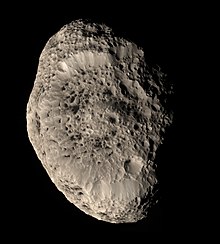
*Wik


1861 Russian chemist Alexander Butlerov first presented a definition for "chemical structure".
Chemical structure refers to the way atoms are arranged within molecules. Butlerov realized that chemical compounds are not a random cluster of atoms and functional groups, but structures with definite order. *.rsc.org  

 He was the first to incorporate double bonds into structural formulas, the discoverer of hexamine (1859), the discoverer of formaldehyde (1859) and the discoverer of the formose reaction (1861). 

(The formose reaction (also called the Butlerov reaction) is a remarkable chemical reaction in which formaldehyde (HCHO) is converted into a complex mixture of sugars under basic conditions)He first proposed the idea of possible tetrahedral arrangement of valence bonds in carbon compounds in 1862. *Wik

*Wik


1894 In a letter to Felix Klein (19 September 1894) Peano wrote: “The purpose of mathematical logic is to analyze the ideas and reasoning that especially figure in the mathematical sciences.” Peano was neither a logicist nor a formalist. He believed rather that mathematical ideas are ultimately derived from our experience of the material world. *Hubert Kennedy, "Eight Mathematical Biographies" Pg 27

Peano and wife Carola


1994   Andrew Wiles has an "AHA" moment,    Over the course of three lectures delivered at Isaac Newton Institute for Mathematical Sciences on June 21, 22, and 23 of 1993, Wiles had announced his proof of the Taniyama–Shimura conjecture, and hence of Fermat's Last Theorem. There was a relatively large amount of press coverage afterwards.
After announcing his results, (Nick) Katz was a referee on his manuscript and he asked Wiles a series of questions that led Wiles to recognize that the proof contained a gap. There was an error in a critical portion of the proof which gave a bound for the order of a particular group: the Euler system used to extend Flach's method was incomplete. Wiles and his former student Richard Taylor spent almost a year resolving it. Wiles indicates that on the morning of September 19, 1994 he realized that the specific reason why the Flach approach would not work directly suggested a new approach with the Iwasawa theory which resolved all of the previous issues with the latter and resulted in a CNF that was valid for all of the required cases. On 6 October Wiles sent the new proof to three colleagues including Faltings. The new proof was published and, despite its size, widely accepted as likely correct in its major components. *Wik


1995 Ahoy Matey,  International "Talk Like a Pirate Day is born"  is a parodic holiday created in 1995 by John Baur (Ol' Chumbucket) and Mark Summers (Cap'n Slappy), of Albany, Oregon, who proclaimed September 19th each year as the day when everyone in the world should talk like a pirate.For example, an observer of this holiday  would greet friends not with "Hello," but with "Ahoy, matey!" The  holiday, and its observance, springs from a romanticized view of the Golden Age of Piracy. *Wik 

Its peak popularity was probably between 2002 and about 2012, when websites, forums, and even software projects would switch their interfaces into "Pirate" for the day. While it has become more of a niche tradition, it remains surprisingly resilient—many online calendars still list it, and communities continue to observe it annually.

One amusing historical footnote: the stereotypical pirate speech ("Arrr!", "Ahoy!", "Shiver me timbers!") isn't how eighteenth-century pirates actually talked. Most of it traces back to actor Robert Newton, whose West Country accent as Long John Silver in Disney's 1950 film of Treasure Island became the model for "pirate talk" in popular culture.

Wounded, but still walkin (perhaps with a peg leg) the "holiday continues today with:

libraries holding pirate-themed story hours,

pubs and restaurants running pirate promotions,

Renaissance fairs incorporating pirate weekends,

social media users posting in mock pirate dialect,

and plenty of "Arrr!" memes every September 19.


So strap on a bandana and an eye-patch and join in, what's the wordt that could happen???  Well, there is that plank!


2009  At the autumn meeting of the British Society for the History of Mathematics (BSHM), The Archimedes Codex by Reviel Netz and William Noel was awarded the Neumann Prize for the best book in the history of mathematics aimed a broad audience. Reviel Netz is Professor of Classics at Stanford University, California, and Dr William Noel is the curator of manuscripts and rare books at The Walters Art Museum in Baltimore, Maryland.
The prize was awarded for the first time this year and will henceforth be bestowed every two years. The prize is named after Dr Peter Neumann, Emeritus Fellow of The Queen’s College, Oxford, and a former president of the BSHM. He was awarded the OBE in 2008 for his services to education.
The Archimedes Codex is a biography of one of the ancient world’s greatest mathematicians Archimedes of Syracuse (c.287 BC – c.212 BC) and tells the story of the rediscovery of a 10th-century copy of some of his writings and drawings, which were found hidden beneath a 13th-century prayer book. *History Today, September 23, 2009

Winners to date (2023) are :

2021: Tony Royle. The Flying Mathematicians of World War I. 

2019: Martin Beech. Going Underground

2017: Jimmy Soni & Rob Goodman.  A Mind at Play 

2015: Sydney Padua, The Thrilling Adventures of Lovelace and Babbage

2013:  Jacqueline Stedall. The history of mathematics: A very short introduction

2011: Clifford A. Pickover, The Math Book

2009: Reviel Netz and William Noel, The Archimedes Codex


BIRTHS


1822 Jean Baptiste Joseph chevalier Delambre (19 September 1749, Amiens – 19 August 1822, Paris) was a French mathematician and astronomer. He was also director of the Paris Observatory, and author of well-known books on the history of astronomy from ancient times to the 18th century. Delambre was one of the first astronomers to derive astronomical equations from analytical formulas. His name is also one of the 72 names inscribed on the Eiffel tower. Delambre died in 1822 and was interred in the Père Lachaise Cemetery in Paris.

Jean-Baptiste Delambre had a fascinating connection to one of history's most ambitious scientific projects. In the 1790s, he was chosen to lead the northern portion of an extraordinary expedition to measure the meridian arc from Dunkirk to Barcelona - a project aimed at creating the universal standard that would become the meter.
While his colleague Pierre Méchain surveyed the southern section, Delambre spent years traveling through revolutionary France with his delicate surveying instruments, often facing suspicion from locals who couldn't understand why this mysterious figure was setting up strange equipment on church towers and hilltops. During the height of the Terror, he was even briefly arrested as a suspected spy because of his unusual activities.
The irony was that Delambre, this mild-mannered astronomer, was actually engaged in one of the most internationally significant scientific endeavors of the age - literally helping to reshape how humanity would measure the world. His meticulous work, combined with Méchain's, provided the foundation for the metric system that most of the world uses today. It took them nearly seven years to complete their measurements, and Delambre's dedication to precision helped ensure that the meter would be based on the most accurate possible measurement of the Earth itself.*PBnotes


1840 John Emory McClintock (19 Sept 1840 , 10 July 1916) for many years the leading actuary in America. He published 30 papers between 1868 and 1877 on actuarial questions. His publications were not confined to questions relating to life insurance policies however. He published about 22 papers on mathematical topics. One paper treats difference equations as differential equations of infinite order and others look at quintic equations which are soluble algebraically. He published A simplified solution of the cubic in 1900 in the Annals of Mathematics. Another work, On the nature and use of the functions employed in the recognition of quadratic residues (1902), published in the Transactions of the American Mathematical Society, is on quadratic residues.*SAU


1888 James Waddell Alexander (19 Sep 1888; 23 Sept 1971) American mathematician and a founder of the branch of mathematics originally known as analysis situs, now called topology. In 1912, he joined the faculty of the mathematics department at Princeton. Soon after, Alexander generalised the Jordan curve theorem and, in 1928, he discovered the Alexander polynomial which is much used in knot theory.*TIS


1908 Victor Frederick Weisskopf (September 19, 1908 – April 22, 2002) was an Austrian-born American theoretical physicist. He did postdoctoral work with Werner Heisenberg, Erwin Schrödinger, Wolfgang Pauli and Niels Bohr. During World War II he worked at Los Alamos on the Manhattan Project to develop the atomic bomb, and later campaigned against the proliferation of nuclear weapons.
His brilliance in physics led to work with the great physicists exploring the atom, especially Niels Bohr, who mentored Weisskopf at his institute in Copenhagen. By the late 1930s, he realized that, as a Jew, he needed to get out of Europe. Bohr helped him find a position in the U.S.
In the 1930s and 1940s, 'Viki', as everyone called him, made major contributions to the development of quantum theory, especially in the area of Quantum Electrodynamics. One of his few regrets was that his insecurity about his mathematical abilities may have cost him a Nobel prize when he did not publish results (which turned out to be correct) about what is now known as the Lamb shift. *Wik


1964  Simon Singh (19 September, 1964 - )In 1950 my parents emigrated to Taunton. A few years later they moved to Wellington, and that is where I was born. Somerset is a fertile ground for budding scientists. Just 5 miles from where I was born is the town of Milverton, the birthplace of Thomas Young, the polymath who made breakthroughs in a wide range of subjects. Most important of all, he advocated the wave theory of light. He studied at Emmanuel College Cambridge, and in due I course I attended the same college, but I failed to make any significant contributions to the foundations of physics.
Before starting my physics degree at Imperial College, London, I spent a year at GEC Hirst Research Centre, Wembley, working on gallium arsenide monolithic microwave integrated circuits. GEC were sponsoring me during my studies. It was an interesting year and I grew up a bit, but the main lesson I learned was that my future did not rest in industrial research and development.
My PhD in experimental particle physics was based at Cambridge University, but I spent most of my three years working at the European Centre for Particle Physics (CERN) in Geneva. I worked as part of the UA2 collaboration, which had previously won the Nobel Prize for discovering the W and Z bosons. It was a wonderful three years.
Particle physics was great fun. My three years at Cambridge and CERN were challenging and stimulating. However, I could see that there were people around me who were on a different planet when it came to understanding and researching physics, and it would be they who would go on to make their names as pioneers. As for me, it was time to change career. I had always enjoyed talking about and explaining science, so I took the decision to move towards a career in journalism and science communication. In particular, I have always loved television and felt that this was the most influential medium, so I started applying for a job at the BBC.  *From his personal biography on his web page. 
Simon Singh is the author of numerous popular science books, including the one below:


DEATHS


1710 Olaus Roemer, (25 Sep 1644 - 19 Sep 1710) Danish astronomer,  He was the first to measure the speed of light. *VFR  Astronomer who demonstrated conclusively that light travels at a finite speed. He measured the speed by precisely measuring the length of time between eclipses of Jupiter by one of its moons. This observation produces different results depending on the position of the earth in its orbit around the sun. He reasoned that meant light took longer to travel the greater distance when earth was traveling in its orbit away from Jupiter.*TIS


1761 Pieter van Musschenbroek (14 Mar 1692; 19 Sep 1761 at age 69) Dutch mathematician and physicist who invented the Leyden jar, the first effective device for storing static electricity. He grew up in a family that manufactured scientific instruments such as telescopes, microscopes and air pumps. Before Musschenbroek's invention, static electricity had been produced by Guericke using a sulphur ball, with minor effects. In Jan 1746, Musschenbroek placed water in a metal container suspended on silk cords, and led a brass wire through a cork into the water. He built up a charge in the water. When an unwary assistant touched the metal container and the brass wire, the discharge from this apparatus delivered a substantial shock of static electricity. The Leyden name is linked to the discovery having being made at the University of Leiden. *TIS


1843 Gaspard Gustave de Coriolis (21 May 1792, 19 Sept 1843) Coriolis is best remembered for the Coriolis force. He showed that the laws of motion could be used in a rotating frame of reference if an extra force called the Coriolis acceleration is added to the equations of motion. *SAU  

In 1835, Coriolis first gave a mathematical description of the effect, giving his name to the Coriolis force. While air begins flowing from high to low pressure, the Earth rotates under it, thus making the wind appear to follow a curved path. In the Northern Hemisphere, the wind turns to the right of its direction of motion. In the Southern Hemisphere, it turns to the left. The Coriolis force is zero at the equator.

He was the first to apply the term travail (translated as "work") for the transfer of energy by a force acting through a distance.

Coriolis's name began to appear in the meteorological literature at the end of the 19th century, although the term "Coriolis force" was not used until the beginning of the 20th century. 

The names of 72 scholars are inscribed in gold capital letters on the first floor's border, with 18 names on each side. The names are in a random order and can be read from the ground. Gustave Eiffel engraved the names to honor men of science and to commemorate the 100th anniversary of the French Revolution. Coriolis' name is in the space of the tiny yellow shading.


1859  John Pringle Nichol FRSE FRAS (13 January 1804 – 19 September 1859) was a Scottish educator, phrenologist, astronomer and economist who did much to popularise astronomy in a manner that appealed to nineteenth century tastes.  [A phrenologist was someone who practices phrenology, a now-discredited pseudoscience that claimed to assess personality and mental traits by measuring the bumps and indentations on a person's skull. Phrenologists believed that the skull's surface reflected the size and development of underlying brain areas, which they associated with specific mental faculties or abilities. ]

Nichol held a number of posts in education and journalism and corresponded with many leading thinkers of the times, including John Stuart Mill. He clearly made some impression in economics as James Mill and Nassau Senior nominated him as Jean-Baptiste Say's successor as professor of political economy at the Collège de France though he was at the time too ill to take the post.

In 1836 and in competition with Thomas Carlyle, Nichol was appointed Regius Professor of Astronomy at the University of Glasgow. He became an enthusiastic and effective lecturer and made a profound impression on William Thomson, 1st Baron Kelvin with his introduction of the "Continental" approach to mathematical physics of Jean Baptiste Joseph Fourier. He lived at the Glasgow Observatory.

Nichol turned to popular lecturing and authored a number of popular and successful books about astronomy, especially championing the nebular hypothesis. In 1841 George Eliot wrote: "I have been revelling in Nichol's Architecture of the Heavens and Phenomena of the Solar System, and have been in imagination winging my flight from system to system, and from universe to universe ..."

William John Macquorn Rankine declared Nichol's Dictionary of the Physical Sciences to be: "... almost unparalleled for the extent and accuracy of the information that it contains in a small bulk."


1935 Konstantin Eduardovich Tsiolkovsky (17 Sep 1857, 19 Sep 1935) Russian pioneer space theorist who, while a provincial Russian schoolteacher, worked out many of the principles of space travel. In 1883, he noted that vehicle in space would travel in the opposite direction to gas that it emitted, and was the first to seriously propose this method propulsion in space travel. He wrote various papers, including the 1903 article "Exploration of Space with Reactive Devices."  The engineering equations he derived included parameters such as specific impulse, thrust coefficient and area ratio. He established that the most efficient chemical combination would be that of liquid hydrogen and liquid oxygen. He was later recognized by the Soviet Union as the "father of cosmonautics." He also built the first wind tunnel.*TIS  (He is buried at the Park of the Cosmonauts' Museum, Kaluga Province, Russian Federation)


1968 Chester Floyd Carlson (8 Feb 1906, 19 Sep 1968) American physicist who invented xerography (22 Oct 1938), an electrostatic dry-copying process that found applications ranging from office copying to reproducing out-of-print books. The process involved sensitizing a photoconductive surface to light by giving it an electrostatic charge Carlson developed it between 1934 and 1938, and initially described it as electrophotography It was immediately protected by Carlson with an impenetrable web of patents, though it was not until 1944 that he was able to obtain funding for further development. In 1947 he sold the commercial rights for his invention to the Haloid Company, a small manufacturer of photographic paper (which later became the Xerox Corporation).*TIS


2002 Etta Zuber Falconer (November 21, 1933 – September 19, 2002) was an American educator and mathematician the bulk of whose career was spent at Spelman College, where she eventually served as department head and associate provost. She was one of the earlier African-American women to receive a Ph.D. in mathematics.

Falconer began her teaching career in 1954 at Okolona College, where she met and married Dolan Falconer. She remained at Okolona until 1963, when she accepted a position at Howard High School in Chattanooga, Tennessee, where she taught the academic year 1963–64. When her husband was offered a coaching position at Morris Brown College in 1965, the family moved to Atlanta, also the site of Spelman College, an historically black women's college.

Falconer's mother had studied at Spelman, and Falconer approached the head of the mathematics department, telling him that she wanted to teach there She was appointed an instructor in 1965. In 1969 Falconer became the eleventh African American woman to receive a PhD in mathematics. She specialized in Abstract algebra. Falconer advanced to associate professor, leaving Spelman in 1971 to join the mathematics department at Norfolk State University, where she taught for the academic year 1971–1972. Falconer returned to Spelman as professor of mathematics and head of the mathematics department. She held those positions until 1985.

Falconer devoted 37 years of her life to teaching mathematics and improving science education at Spelman College. In 1995, she stated: "My entire career has been devoted to increasing the number of African American women in mathematics and mathematics-related careers." Along with her teaching career, Falconer strived to inspire more African American women to pursue careers in math or science by working with prominent organizations. This included the American Mathematical Society, the Mathematical Association of America, the Associate for Women in Mathematics, and the National Institute of Science.

Falconer was awarded the UNCF Distinguished Faculty Award (1986–1987), the Spelman Presidential Award for Excellence in Teaching (1988), the Spelman Presidential Faculty Award for Distinguished Service (1994).In 1995, Falconer was honored by the Association for Women in Mathematics, who awarded her the Louise Hay Award for outstanding achievements in mathematics education. QEM's Giants in Science Award (1995), and an honorary doctorate of science from the University of Wisconsin-Madison (1996). She was named a Fellow of the American Association for the Advancement of Science in 1999. In 2001, she received the American Association for the Advancement of Science Mentor Award for Lifetime Achievement.


2010 Joseph Bernard Kruskal, Jr. (January 29, 1928 – September 19, 2010) was an American mathematician, statistician, computer scientist and psychometrician. He was a student at the University of Chicago and at Princeton University, where he completed his Ph.D. in 1954, nominally under Albert W. Tucker and Roger Lyndon, but de facto under Paul Erdős with whom he had two very short conversations.Kruskal has worked on well-quasi-orderings and multidimensional scaling.
He was a Fellow of the American Statistical Association, former president of the Psychometric Society, and former president of the Classification Society of North America.
In statistics, Kruskal's most influential work is his seminal contribution to the formulation of multidimensional scaling. In computer science, his best known work is Kruskal's algorithm for computing the minimal spanning tree (MST) of a weighted graph. In combinatorics, he is known for Kruskal's tree theorem (1960), which is also interesting from a mathematical logic perspective since it can only be proved nonconstructively. Kruskal also applied his work in linguistics, in an experimental lexicostatistical study of Indo-European languages, together with the linguists Isidore Dyen and Paul Black.
Kruskal was born in New York City to a successful fur wholesaler, Joseph B. Kruskal, Sr. His mother, Lillian Rose Vorhaus Kruskal Oppenheimer, became a noted promoter of Origami during the early era of television.  He died in Princeton. *Wik


Credits :
*CHM=Computer History Museum
*FFF=Kane, Famous First Facts
*NSEC= NASA Solar Eclipse Calendar
*RMAT= The Renaissance Mathematicus, Thony Christie
*SAU=St Andrews Univ. Math History
*TIA = Today in Astronomy
*TIS= Today in Science History
*VFR = V Frederick Rickey, USMA
*Wik = Wikipedia
*WM = Women of Mathematics, Grinstein & Campbell