Sunday, 28 October 2012

On "Reducing" Fractions


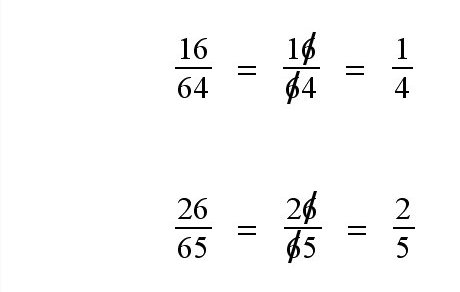
Just read a note from a young educator who was indignant that a visiting math teacher in her class had used the term "reduce fractions" in a dialog with her student. She wondered if she should "correct" this much senior teacher for her misuse of appropriate edu-speak.

I am no judge of classroom etiquette, but I have written about the history of the usage of the related terms,and thought it might be time to share with the many who may not be aware of the history of the mathematical language of fractional operations.
---------------------------------------------------------------------------------
Many modern elementary teachers get upset by the use of the term "reduce a fraction". I think this is mostly because they are not familiar with the origin of the term and only understand the word "reduce" to mean "make smaller", which is certainly one of the most common definitions of the word in modern dictionaries. I hope the the following will make them more understanding of those of us who are VERY old, and still remember when the term had a broader meaning.

According to the OED, the first use of the term in the sense of reducing a fraction was in 1579 in a book by Thomas Digges. Reduction is defined in the 1850 edition of Frederick Emerson's North American Arithmetic, Part Third, for Advanced Scholars as "the operation of changing any quantity from its number in one denomination to its number in another denomination."(pg 29, see image here) On the following page it asks the student to "reduce 7 bushels and 6 quarts to pints.". Later in the section on fractions it defines, "Reduction of fractions consists in changing them from one form to another, without altering their value." This broader language is preserved in most later texts for the next seventy or so years. It is defined in Milne's Progressive Arithmetic (1906, William J Milne) thusly, "The process of changing the form of any number without changing its value is called reduction." An almost identical definition appears in Davies and Peck's 1877 Complete Arithmetic, Theoretical and Practical(page 84, art. 66). All the books include reduction of fractions to higher terms as well as lower terms, and reduction of "decimals to common fractions".

In the Late 1930's and 40's arithmetic textbooks seemed to have totally omitted the broader definition, and treat reduce as a vade mecam for fractions in "lowest terms" or "simplest terms". In Learning Arithmetic (6) by Lennes, Rogers and Traver, (1942) the term reduction appears in the index only as a subheading under "fractions". The first occurance in the text, on page 36, without prior definition introduces students to a set of problems with the directions, "Reduce the fractions below to simplest forms". In Making Sure of Arithmetic by Silver Burdett (1955) the word "reduce" does not appear in the index at all, but on page 8 it contains, "When the two terms of a fraction are divided by the same number until there is no number by which both terms can be divided evenly, the fraction is reduced to lowest terms." [emphasis is from text]. By 1964, The Universal Encyclopedia of Mathematics by Simon and Schuster contains "A fraction is reduced, or cancelled, by dividing numerator and denominator by the same number." (pg 364) Later on the same page they note, "a fraction cannot be reduced if numerator and denominator are mutually prime" indicating that when they said "the same number" in the first statement, they meant a positive integer. This definition leads to "reduction" of fractions as making the numerator and denominator both smaller.

The roots of the word reduce are from the Latin re for back or again, and ducere which means "to lead". The latter root is also found in the word educare which is literally, to lead out, and is the source of our modern English word, educate.

On This Day in Math - October 28


"Big Fleas have little fleas upon their backs to bite 'em,

and little fleas have lesser fleas,

and so ad infinitum.
~Augustus De Morgan

The 302nd day of the year; There are 302 ways to play the first three moves in checkers.


EVENTS
1386 Opening of the University of Heidelberg. It is the oldest university in Germany and was the third university established in the Holy Roman Empire. *Wik

1462 Archbishop Adolph of Nassau captured the city of Maintz and allowed his soldiers to plunder the city. This forced Gutenberg and his printers to flee, but rather than nipping printing in the bud, it forced its spread to Strasburg, Cologne, Basel, Augsburg, Ulm, Nuremberg, Subiaco, and by 1470, Paris. [G. H. Putnam, Books and Their Makers During the Middle Ages (1896),
p. 372]. *VFR

1636 Harvard College founded. The only mathematical master’s thesis in the U.S. before 1700 was at Harvard. This was in 1693 when the candidate took the affirmative position on “Is the quadrature of a circle possible?”. *VFR

1886 The Statue of Liberty was dedicated on Bedloe’s Island in New York Harbor. The sculptur Bartholin was present. The statue had almost been moved to another city when there was not enough interest in New York to pay the cost of building the pedestal.  Joseph Pulitzer, publisher of the World, a New York newspaper, announced a drive to raise $100,000 (the equivalent of $2.3 million today). Pulitzer pledged to print the name of every contributor, no matter how small the amount given.The drive captured the imagination of New Yorkers, especially when Pulitzer began publishing the notes he received from contributors. "A young girl alone in the world" donated "60 cents, the result of self denial."  As the donations flooded in, the committee resumed work on the pedestal. After five months of daily calls to donate to the statue fund, on August 11, 1885, the World announced that $102,000 had been raised from 120,000 donors, and that 80 percent of the total had been received in sums of less than one dollar.  *Wik

1957 Only three weeks after Sputnik went into space, young Denis Cox in Victoria, Australia sent a design for a spaceship addressed, "TO A TOP SCIENTIST AT Woomera ROCKET RANGE South Australia."  His design included locations for Austalian Insignia, four Rolls Royce Engines, guided missiles, etc, but advised the scientists, "YOU PUT IN OTHER DETAILS".  The letter can be seen here at the Letters of Note web site Edited by Shaun Usher.
On September 24, 2009, an article on ABC Australia's web page indicated that "The Defence Science Technology Organisation is now finally organising a letter from rocket scientists in response to the letter."

In 1965, the Gateway Arch (630' (190m) high) was completed in St. Louis, Missouri. This graceful sweeping tapered curve of stainless steel is the tallest memorial in the U.S. The architect of the catenary curve arch was Eero Saarinen who won the design competition in 1947. It was constructed 1961-66 in the Jefferson National Expansion Memorial Park, established on the banks of the Mississippi River, on 21 Dec 1935, to commemorate the westward growth of the United States between 1803 and 1890. Cost for the $30 million national monument was shared by the federal government and the City of St. Louis. The memorial arch has an observation room at the top for visitors reached by trams running inside the legs of the arch.*TIS


BIRTHS
1703 Antoine Deparcieux (28 Oct 1703 in Clotet-de-Cessous, France - 2 Sept 1768 in Paris, France) was a French mathematician who is best known for an early work on annuities and mortality.*SAU

1804 Pierre François Verhulst (28 October 1804, Brussels, Belgium – 15 February 1849, Brussels, Belgium) was a mathematician and a doctor in number theory from the University of Ghent in 1825. Verhulst published in 1838 the equation:

dN/dt = r N (1-N/k)

when N(t) represents number of individuals at time t, r the intrinsic growth rate and k is the carrying capacity, or the maximum number of individuals that the environment can support. In a paper published in 1845 he called the solution to this the logistic function, and the equation is now called the logistic equation. This model was rediscovered in 1920 by Raymond Pearl and Lowell Reed, who promoted its wide and indiscriminate use.*Wik

1845 Ulisse Dini (14 Nov 1845 in Pisa, Italy - 28 Oct 1918 in Pisa, Italy) Dini looked at infinite series and generalised results such as a theorem of Kummer and one of Riemann, the ideas for which had first emerged in work of Dirichlet. He discovered a condition, now known as the Dini condition, ensuring the convergence of a Fourier series in terms of the convergence of a definite integral. As well as trigonometric series, Dini studied results on potential theory. *SAU

1880 Michele Cipolla (born 28 October 1880 in Palermo; died 7 September 1947 in Palermo) was an Italian mathematician, mainly specializing in number theory.
He was a professor of Algebraic Analysis at the University of Catania and, later, the University of Palermo. He developed (among other things) a theory for sequences of sets and Cipolla's algorithm for finding square roots modulo a prime number. He also solved the problem of binomial congruence.*Wik

1937 Dr. Marcian Edward (Ted) Hoff, Jr. was born October 28, 1937 at Rochester, New York. He received a BEE (1958) from Rensselear Polytechnic Institute in Troy, NY. During the summers away from college he worked for General Railway Signal Company in Rochester where he made developments that produced his first two patents. He attended Stanford as a National Science Foundation Fellow and received a MS (1959) and Ph.D. (1962) in electrical engineering. He joined Intel in 1962. In 1980, he was named the first Intel Fellow, the highest technical position in the company. He spent a brief time as VP for Technology with Atari in the early 1980s and is currently VP and Chief Technical Officer with Teklicon, Inc. Other honors include the Stuart Ballantine Medal from the Franklin Institute.*CHM

1955 Bill Gates, cofounder and CEO of Microsoft Corporation, was born. Gates developed a version of BASIC for the Altair 8800 while being a student at Harvard. With the success of BASIC, he and co-developer Paul Allen​ founded Microsoft, which delivered an operating system for the IBM PC​, the Microsoft Word​ word processing program, the Window system software, and other programs. *CHM


DEATHS
1703 John Wallis (23 Nov 1616, 28 Oct 1703) British mathematician who introduced the infinity math symbol. Wallis was skilled in cryptography and decoded Royalist messages for the Parliamentarians during the Civil War. Subsequently, he was appointed to the Savilian Chair of geometry at Oxford in 1649, a position he held until his death more than 50 years later. Wallis was part of a group interested in natural and experimental science which became the Royal Society, so Wallis is a founder member of the Royal Society and one of its first Fellows. Wallis contributed substantially to the origins of calculus and was the most influential English mathematician before Newton. *TIS

1916 Cleveland Abbe (3 Dec 1838, 28 Oct 1916) U.S. astronomer and first meteorologist, born in New York City, the "father of the U.S. Weather Bureau," which was later renamed the National Weather Service. Abbe inaugurated a private weather reporting and warning service at Cincinnati. His weather reports or bulletins began to be issued on Sept. 1, 1869. The Weather Service of the United States was authorized by Congress on 9 Feb 1870, and placed under the direction of the Signal Service. Abbe was the only person in the country who was already experienced in drawing weather maps from telegraphic reports and forecasting from them. Naturally, he was offered an important position in this new service which he accepted, beginning 3 Jan 1871, and was often the official forecaster of the weather.*TIS

1918 Edward Bouchet (15 Sept 1852, New Haven, Conn – 28 Oct 1918, New Haven, Conn) was the first African-American to earn a Ph.D. in Physics from an American university and the first African-American to graduate from Yale University in 1874. He completed his dissertation in Yale's Ph.D. program in 1876 becoming the first African-American to receive a Ph.D. (in any subject). His area of study was Physics. Bouchet was also the first African-American to be elected to Phi Beta Kappa.
Bouchet was also among 20 Americans (of any race) to receive a Ph.D. in physics and was the sixth to earn a Ph. D. in physics from Yale.
When Bouchet was born there were only three schools in New Haven open to black children. Bouchet was enrolled in the Artisan Street Colored School with only one teacher, who nurtured Bouchet's academic abilities. He attended the New Haven High School from 1866–1868 and then Hopkins School from 1868-1870 where he was named valedictorian (after graduating first in his class).
Bouchet was unable to find a university teaching position after college, most likely due racial discrimination. Bouchet moved to Philadelphia in 1876 and took a position at the Institute for Colored Youth (ICY). He taught physics and chemistry at the ICY for 26 years. The ICY was later renamed Cheyney University. He resigned in 1902 at the height of the W. E. B. Du Bois-Booker T. Washington controversy over the need for an industrial vs. collegiate education for blacks.
Bouchet spent the next 14 years holding a variety of jobs around the country. Between 1905 and 1908, Bouchet was director of academics at St. Paul's Normal and Industrial School in Lawrenceville, Virginia (presently, St. Paul's College). He was then principal and teacher at Lincoln High School in Gallipolis, Ohio from 1908 to 1913. He joined the faculty of Bishop College in Marshall, Texas in 1913. Illness finally forced him to retire in 1916 and he moved back to New Haven. He died there, in his childhood home, in 1918, at age of 66. He had never married and had no children.*Wik
1924 John Backus (3 Dec 1924, 28 Oct 1988) American computer scientist who invented the FORTRAN (FORmula TRANslation) programming language in the mid 1950s. He had previously developed an assembly language for IBM's 701 computer when he suggested the development of a compiler and higher level language for the IBM 704. As the first high-level computer programming language, FORTRAN was able to convert standard mathematical formulas and expressions into the binary code used by computers. Thus a non-specialist could write a program in familiar words and symbols, and different computers could use programs generated in the same language. This paved the way for other computer languages such as COBOL, ALGOL and BASIC. *TIS

1965 Luther Pfahler Eisenhart (13 January 1876 – 28 October 1965) was an American mathematician, best known today for his contributions to semi-Riemannian geometry.*Wik

1986 Irving Reiner was an American mathematician who (with Curtis) produced an important book on group representations.*SAU


Credits
*CHM=Computer History Museum
*FFF=Kane, Famous First Facts
*NSEC= NASA Solar Eclipse Calendar
*SAU=St Andrews Univ. Math History
*TIA= Today in Astronomy
*TIS= Today in Science History
*VFR = V Frederick Rickey, USMA
*Wik = Wikipedia
*WM = Women of Mathematics, Grinstein & Campbell
Saturday, 27 October 2012

On This Day in Math - October 27


It is the duty of every true Muslim, man and woman, to strive after knowledge.
Ulugh Beg [quoting the Hadith. Inscribed on his gate in Bukhara]

The 301st day of the year; 301 is the sum of three consecutive primes starting at 97

EVENTS

In 1780, the first U.S. astronomical expedition to record an eclipse of the sun observed the event which lasted from 11:11 am to 1:50 pm. The observers left about three weeks earlier, on 9 Oct from Harvard College, Cambridge, Mass., for Penobscot Bay, led by Samuel Williams. A boat was supplied by the Commonwealth of Massachusetts the four professors and six students. Although the U.S. was at war with Britain, the British officer in charge of Penobscot Bay permitted the expedition to land and set up equipment to observe the predicted total eclipse of the sun. The expedition was shocked to find itself outside the path of totality. They saw a thin arc of the sun instead of its complete obscuration by the moon. *TIS

1980 The first major network crash, the four-hour collapse of the ARPANET, occurred
The ARPANET, predecessor of the modern Internet, was set up by the Department of Defense Advanced Research Projects Agency (DARPA). Initially it had linked four sites in California and Utah, and later was expanded to cover research centers across the country.
The network failure resulted from a redundant single-error detecting code that was used for transmission but not storage, and a garbage-collection algorithm for removing old messages that was not resistant to the simultaneous existence of one message with several different time stamps. The combination of the events took the network down for four hours. *CHM 

2011 EPL (Europhysics Letters) went beyond Earthly limits by publishing its first ever paper submitted from space: a landmark for both European and physics-based research. Concerned with the properties of complex plasma in almost zero gravity conditions, the paper represents collaborative research of 29 individual missions performed over the last 10 years by German and Russian researchers aboard the International Space Station (ISS).
The experiments detailed in the paper were performed on the ISS in July 2010 by Alexander Alexandrovich Skvortsov and were submitted on 27 October 2011 by Skvortsov’s colleague, Sergey Alexandrovich Volkov, who remains on the ISS. IOP  Blog


BIRTHS

1678 Pierre Rémond de Montmort (27 Oct 1678 in Paris, France, 7 Oct 1719 in Paris, France) was a French mathematician who wrote an important work on probability. Montmort's reputation was made by his book on probability Essay d'analyse sur les jeux de hazard which appeared in 1708. The book, which is a collection of combinatorial problems, is a systematic study of games of chance and shows that there is important mathematics in this area.
Montmort collaborated with Nicolaus(I) Bernoulli and he was also a friend of Taylor. At a time of high feelings in the Newton-Leibniz controversy it says a lot for Montmort that he could be friends with followers of both camps.
In addition to those mentioned above, Montmort corresponded with Craig, Halley, Hermann and Poleni.
Montmort was elected to be a Fellow of the Royal Society in 1715, when he was on a trip to England. The following year he was elected to the Académie Royal des Sciences. *SAU

1798 Heinrich Ferdinand Scherk (27 Oct 1798 in Poznań, Poland - 4 Oct 1885 in Bremen, Germany) was a mathematician born in what is now Poland who discovered an important example of a minimal surface. Scherk discovered the third non-trivial examples of a minimal surface which appeared in his paper Bemerkungen über die kleinste Fläche innerhalb gegebener Grenzen published in Crelle's Journal. The first two examples, the catenoid and the helicoid (also called the screw surface), had been found by the Frenchman Jean Baptiste Marie Meusnier in 1776. The catenoid arises from rotating the catenary curve about a horizontal line. Scherk's result was certainly seen as a major breakthough and brought him considerable fame; two surfaces, Scherk's First Surface and Scherk's Second Surface, as they are named today, are studied in the paper. Scherk's doubly periodic surface is the first example of a complete, embedded, doubly periodic minimal surface. His minimal surfaces have recently been the basis of sculptures by the American artist Brent Collins who has based many of his works on Scherk's second minimal surface.
Another contribution by Scherk is still important today, namely his work on the distribution of the prime numbers. *SAU

1827 Pierre-Eugène-Marcellin Berthelot (27 Oct 1827, 18 Mar 1907 at age 79) was a French chemist and science historian and government official whose creative thought and work significantly influenced the development of chemistry in the late 19th century. He helped to found the study of thermochemistry, introduced a standard method for determining the latent heat of steam, measured hundreds of heats of reactions and coined the words exothermic and endothermic. Berthelot systematically synthesized organic compounds, including some not found in nature. His syntheses of many fundamental organic compounds helped to destroy the classical division between organic and inorganic compounds. *TIS
1890 Olive Clio Hazlett born (October 27, 1890 - March 8, 1974) was an American mathematician who spent most of her career working for the University of Illinois. She mainly researched algebra, and wrote seventeen research papers on subjects such as nilpotent algebras, division algebras, modular invariants, and the arithmetic of algebras. *Wik

1728 James Cook (27 Oct 1728; 14 Feb 1779) English seaman who was the first of the really scientific navigators. Captain Cook spent several years surveying the coasts of Labrador and Newfoundland. He observed a solar eclipse on 5 Aug 1766 near Cape Ray, Newfoundland. On the first of three expeditions into the Pacific (1768) he took Joseph Banks as the ship's botanist to study the flora and fauna discovered. (This practice of carrying a naturalist took place some 75 years before Charles Darwin's famous voyage.) Cook observed the transit of Venus on this voyage from the island of Tahiti on 3 Jun 1769. This would help scientists plot the distance between the sun to the earth. His geographical discoveries made him the most famous navigator since Magellan. He was killed by cannibal natives in Hawaii.*TIS

1856 Ernest William Hobson (27 Oct 1856 in Derby, England, 19 April 1933 in Cambridge, Cambridgeshire, England) wrote the first English book on the measure theory and integration of Baire, Borel and Lebesgue. *SAU

1890 Olive Clio Hazlett (October 27, 1890 - March 8, 1974) was an American mathematician who spent most of her career working for the University of Illinois. She mainly researched algebra, and wrote seventeen research papers on subjects such as nilpotent algebras, division algebras, modular invariants, and the arithmetic of algebras.*Wik
1915 Robert Alexander Rankin (27 Oct 1915 in Garlieston, Wigtownshire, Scotland, 27 Jan 2001 in Glasgow, Scotland) studied at Cambrige University. His fellowship there was interrupted by his wartime work on rockets. He became Professor of Mathematics at Birmingham before moving to the professorship at Glasgow, a post he held for 27 years. His most important work was on Number Theory. He became President of the EMS in 1957 and 1978 and an honorary member in 1990. *SAU

DEATHS

1449 Ulugh Beg (22 Mar 1394- 27 Oct 1449) The only important Mongol scientist, mathematician, and the greatest astronomer of his time. His greatest interest was astronomy, and he built an observatory (begun in 1428) at Samarkand. In his observations he discovered a number of errors in the computations of the 2nd-century Alexandrian astronomer Ptolemy, whose figures were still being used. His star map of 994 stars was the first new one since Hipparchus. After Ulugh Beg was assassinated by his son, the observatory fell to ruins by 1500, rediscovered only in 1908. Written in Arabic, his work went unread by the world's next generation of astronomers. When his tables were translated into Latin in 1665, telescopic observations had surpassed them. *TIS

1845 Jean-Charles-Athanase Peltier (22 Feb 1785, 27 Oct 1845) French physicist who discovered the Peltier effect (1834), that at the junction of two dissimilar metals an electric current will produce heat or cold, depending on the direction of current flow. In 1812, Peltier received an inheritance sufficient to retire from clockmaking and pursue a diverse interest in phrenology, anatomy, microscopy and meteorology. Peltier made a thermoelectric thermoscope to measure temperature distribution along a series of thermocouple circuits, from which he discovered the Peltier effect. Lenz succeeded in freezing water by this method. Its importance was not fully recognized until the later thermodynamic work of Kelvin. The effect is now used in devices for measuring temperature and non-compressor cooling units. *TIS

1675 Gilles Personne de Roberval (8 Aug 1602- 27 Oct 1675) French mathematician who developed powerful methods in the early study of integration, writing Traité des indivisibles. He computed the definite integral of sin x, worked on the cycloid and computed the arc length of a spiral. Roberval is important for his discoveries on plane curves and for his method for drawing the tangent to a curve, already suggested by Torricelli. This method of drawing tangents makes Roberval the founder of kinematic geometry. In 1669 he invented the Roberval balance with an articulated parallelogram is now almost universally used for weighing scales of the balance type. He studied the vacuum and designed apparatus which was used by Pascal in his experiments and also worked in cartography. *TIS

1968 Lise Meitner (7 Nov 1878, 27 Oct 1968)Austrian physicist who shared the Enrico Fermi Award (1966) with the chemists Otto Hahn and Fritz Strassmann for their joint research beginning in 1934 that led to the discovery of uranium fission. She refused to work on the atom bomb. In 1917, with Hahn, she had discovered the new radioactive element protactinium. She was the first to describe the emission of Auger electrons. In 1935, she found evidence of four other radioactive elements corresponding to atomic numbers 93-96. In 1938, she was forced to leave Nazi Germany, and went to a post in Sweden. Her other work in the field of nuclear physics includes study of beta rays, and study of the three main disintegration series. Later, she used the cyclotron as a tool. *TIS

1980 John Hasbrouck Van Vleck (13 Mar 1899, 27 Oct 1980) was an American physicist and mathematician who shared the Nobel Prize for Physics in 1977 with Philip W. Anderson and Sir Nevill F. Mott. The prize honoured Van Vleck's contributions to the understanding of the behaviour of electrons in magnetic, noncrystalline solid materials. *TIS

1999 Robert L. Mills (15 Apr 1927, 27 Oct 1999)American physicist who shared the 1980 Rumford Premium Prize with his colleague Chen Ning Yang for their "development of a generalized gauge invariant field theory" in 1954. They proposed a tensor equation for what are now called Yang-Mills fields. Their mathematical work was aimed at understanding the strong interaction holding together nucleons in atomic nuclei. They constructed a more generalized view of electromagnetism, thus Maxwell's Equations can be derived as a special case from their tensor equation. Quantum Yang-Mills theory is now the foundation of most of elementary particle theory, and its predictions have been tested at many experimental laboratories. *TIS


Credits
*CHM=Computer History Museum
*FFF=Kane, Famous First Facts
*NSEC= NASA Solar Eclipse Calendar
*SAU=St Andrews Univ. Math History
*TIA = Today in Astronomy
*TIS= Today in Science History
*VFR = V Frederick Rickey, USMA
*Wik = Wikipedia
*WM = Women of Mathematics, Grinstein & Campbell

Friday, 26 October 2012

On This Day in Math - October 26


There are no foolish questions and no man becomes a fool until he has stopped asking questions.
Charles P Steinmetz

The 300th day of the year; 300 is a triangular number, the sum of the integers from 1 to 24. 300 is also the sum of a pair of twin primes (149 + 151). It is also the sum of ten consecutive primes, 300 = 13 + 17 + 19 + 23 + 29 + 31 + 37 + 41 + 43 + 47.


EVENTS

1676 Newton, through the intermediary of Oldenburg, wrote Leibniz concerning his work on the calculus. An anagram contained the statement of the problem of integrating differential equations. *VFR

1843 John T Graves replies to Hamilton about the invention of Quaternions,
"There is something in the system which gravels me. I have not yet any clear views as to the extent to which we are at liberty arbitrarily to create imaginaries, and to endow them with supernatural properties."
"If with your alchemy you can create three pounds of gold, why should you stop there?
,
Graves is credited by Hamilton with being a critical inspiration in the Quaternions, and would quickly go on to create the "Octaves", an eight dimensional normed division algebra. Why should you stop there indeed? *Joan Baez Rankin Lecture of September 17, 2008 Glascow
1847 William Whewell wrote to Aubrey De Vere expressing dismay at the influence of Carlyle's pessimism among his friends and in society. *@GalileosBalls, Twitter
1896 Comptes Rendus publishes, "Extension of the Reimann-Roch Theorem to Algebraic Surfaces. A note by M. M. Noether, presented by M. Hermite *Mathematical Intellignecer vol 8 #4
1893 Karl Pearson’s first statistical publication. *VFR In Pearson' s first published statistical paper of 26 October 1893, he introduced the method of moments as a means of curve fitting asymmetrical distributions. One of his aims in developing the method of moments was to provide a general method for determining the values of the parameters of a frequency distribution. *StatProb web site

1960 Saga, a silent shoot-em-up Western playlet made on the TX-0 computer, was run on CBS' special for MIT's 100th anniversary. The TX-0 was the first general purpose transistorized computer. The program for Saga comprised 4,096 words of magnetic core storage. The 13,000 lines of code choreographed the movements of each object. A line of direction was written for each action, even if it went wrong. This led to the high point of the show where sheriff put his gun in the holster of the robber resulting in a never ending loop.
Doug Ross explained the rule-based diagram: If the robber drank from alcohol, his judgement would start to decline, but the program would remain logical.*CHM


BIRTHS

1846 Lewis Boss (26 Oct 1846; 12 Oct 1912) American astronomer best known for his compilation of two catalogues of stars (1910, 1937). In 1882 he led an expedition to Chile to observe a transit of Venus. About 1895 Boss began to plan a general catalog of stars, giving their positions and motions. After 1906, the project had support from the Carnegie Institution, Washington, D.C. With an enlarged staff he observed the northern stars from Albany and the southern stars from Argentina. With the new data, he corrected catalogs that had been compiled in the past, and in 1910 he published the Preliminary General Catalogue of 6,188 Stars for the Epoch 1900. The work unfinished upon his death was completed by his son Benjamin in 1937 (General Catalogue of 33,342 Stars for the Epoch 1950, 5 vol.)*TIS

1849 Georg Frobenius (26 Oct 1849; 3 Aug 1917) German mathematician who made major contributions to group theory, especially the concept of abstract groups (with Ludwig Stickleberger) and the theory of finite groups of linear substitutions (with Issai Schur), that later found important uses in the theory of finite groups as it applies to quantum mechanics. He also contributed to means of solving linear homogenous differential equations. The fact so many of Frobenius's papers read like present day text-books on the topics which he studied is a clear indication of the importance that his work, in many different areas, has had in shaping the mathematics which is studied today.*TIS

1877 Max Mason (26 Oct 1877; 23 Mar 1961) American mathematical physicist, educator, and science administrator. During World War I he invented several devices for submarine detection - several generations of the Navy's "M," or multiple-tube, passive submarine sensors. This apparatus focused sound to ascertain its source. To determine the direction from which the sound came, the operator needed only to seek the maximum output on his earphones by turning a dial. The final device had a range of 3 miles. Mason's special interest and contributions lay in mathematics (differential equations, calculus of variations), physics (electromagnetic theory), invention (acoustical compensators, submarine-detection devices), and the administration of universities and foundations. *TIS

1885 Niels Erik Norlund (26 Oct 1885 in Slagelse, near Soro, Sjaelland, Denmark - 4 July 1981 in Copenhagen, Denmark) In 1907 he was awarded a gold medal for an essay on continued fractions and his resulting two publications were in 1908: Sur les différences réciproques; and Sur la convergence des fractions continues both published in Comptes Rendus de l'Academie des Sciences. These publications in the most prestigious French journal earned Norlund an international reputation despite still being an undergraduate. In the summer of 1910 he earned a Master's degree in astronomy and in October of that year he successfully defended his doctoral thesis in mathematics Bidrag til de lineaere differentialligningers Theori. In the same year he published the 100-page paper Fractions continues et différences réciproques as well as Sur les fractions continues d'interpolation, a paper on Halley's comet, and an obituary of his teacher Thorvald Thiele. Norlund's sister Margrethe married Niels Bohr whose brother, Harald, was also an outstanding mathematician. In 1955 Norland reached retirement age. That mathematics was his first love now became clear, for once he gave up the responsibilities of the Geodesic Institute he returned to mathematics research. He published Hypergeometric functions in 1955 which was reviewed by Arthur Erdélyi, "This is one of those rare papers in which sound mathematics goes hand in hand with excellent exposition and style; and the reader is both instructed and delighted. It is likely to become the standard memoir on the generalized hypergeometric series ... " The paper Sur les fonctions hypergéométriques d'ordre supérieur (1956) gives a very full, rigorous and classical treatment of some integrals from generalized hypergeometric function theory.*SAU

1911 Shiing-shen Chern (26 Oct 1911; 3 Dec 2004) Chinese-American mathematician and educator whose researches in differential geometry include the development of the Chern characteristic classes in fibre spaces, which play a major role in mathematics and in mathematical physics. "When Chern was working on differential geometry in the 1940s, this area of mathematics was at a low point. Global differential geometry was only beginning, even Morse theory was understood and used by a very small number of people. Today, differential geometry is a major subject in mathematics and a large share of the credit for this transformation goes to Professor Chern." *TIS

1930 Walter Feit (26 Oct 1930 in Vienna, Austria - 29 July 2004 in Branford, Connecticut, USA) was an Austrian mathematician who (with John Thompson) proved one of the most important theorems about finite simple groups. In 1990 his 60th birthday was celebrated with an 'International Symposium on the Inverse Galois Problem' held in Oxford. His retirement from Yale in October 2003 was marked with the holding of a 'Conference on Groups, Representations and Galois Theory' in his honour. Feit died after a long illness at the Connecticut Hospice in Branford, Connecticut, USA. A memorial service was held on Sunday 10 October 2004 at the New Haven Lawn Club, New Haven, Connecticut. *SAU


DEATHS

1817 Aida Yasuaki was a Japanese mathematician who published about 2000 works. Aida compiled Sampo tensi shinan which appeared in 1788. It is a book of geometry problems, developing formulae for ellipses, spheres, circles etc. Aida explained the use of algebraic expressions and the construction of equations. He also worked on number theory and simplified continued fraction methods due to Seki. *SAU

1923 Charles Proteus Steinmetz (9 Apr 1865- 26 Oct 1923) German-born American inventor and electrical engineer whose theories and mathematical analysis of alternating current systems helped establish them as the preferred form of electrical energy in the United States, and throughout the world. In 1893, Steinmetz joined the newly organized General Electric Company where he was an engineer then consultant until his death. His early research on hysteresis (loss of power due to magnetic resistance) led him to study alternating current, which could eliminate hysteresis loss in motors. He did extensive new work on the theory of a.c. for electrical engineers to use. His last research was on lightning, and its threat to the new AC power lines. He was responsible for the expansion of the electric power industry in the U.S. *TIS

1968 Sergei Natanovich Bernstein (March 5, 1880 – October 26, 1968) was a Russian and Soviet mathematician. His doctoral dissertation, submitted in 1904 to the Sorbonne, solved Hilbert's nineteenth problem on the analytic solution of elliptic differential equations. Later, he published numerous works on Probability theory, Constructive function theory, and mathematical foundations of genetics. From 1906 until 1933, Bernstein was a member of the Kharkov Mathematical Society. *Wik

1970 Marcel Gilles Jozef Minnaert (12 Feb 1893; 26 Oct 1970 at age 77)
Flemish astronomer and solar physicist who was one of the pioneering solar researchers during the first half of the 20th century. Applying solar spectrophotometry, he was one of the first to make quantitative measurements of the intensity distribution inside Fraunhofer lines, and interpret from them information about the outer solar layers. His range of study also included comets, nebulae and lunar photometry. During the time he was director of the observatory at the University of Utrecht, (1937-1963) he created a modern astronomical institute to study solar and stellar spectra with resources including a solar telescope, spectrograph, photometer, and mechanical workshop. Minnaert also maintained a strong interest in the education of physics teachers, and as a univeristy professor gave clear, enthusiastic and well-prepared lectures. *TIS
1983 Alfred Tarski (14 Jan 1902, 26 Oct 1983) Polish-born American mathematician and logician who made important studies of general algebra, measure theory, mathematical logic, set theory, and metamathematics. Formal scientific languages can be subjected to more thorough study by the semantic method that he developed. He worked on model theory, mathematical decision problems and with universal algebra. He produced axioms for "logical consequence", worked on deductive systems, the algebra of logic and the theory of definability. Group theorists study 'Tarski monsters', infinite groups whose existence seems intuitively impossible. *TIS

1984 Mark Kac (3 Aug 1914 in Krzemieniec, Poland, Russian Empire - 26 Oct 1984 in California, USA) pioneered the modern development of mathematical probability, in particular its applications to statistical physics. The method of quantization now in use involves the Feynman-Kac path integral, named after Richard Feynman and Mark Kac. He published a classic text Statistical Independence in Probability, Analysis and Number Theory in 1959. To many Kac will be remembered best for a paper he wrote for the American Mathematical Monthly in 1966. This is the famous paper Can One Hear the Shape of a Drum? and Kac received the Chauvenet Prize from the Mathematical Association of America in 1968 for the, "most outstanding expository article on a mathematical topic by a member of the Association." *SAU

1998 Kenkichi Iwasawa (11 Sept 1917 in Shinshuku-mura (near Kiryu), Gumma Prefecture, Japan - 26 Oct 1998 in Tokyo, Japan ) In the late 1960s Iwasawa made a conjecture for algebraic number fields which, in some sense, was the analogue of the relationship which Weil had found between the zeta function and the divisor class group of an algebraic function field. This conjecture became known as "the main conjecture on cyclotomic fields" and it remained one of the most outstanding conjectures in algebraic number theory until it was solved by Mazur and Wiles in 1984 using modular curves. "it is no exaggeration to say that Iwasawa's ideas have played a pivotal role in many of the finest achievements of modern arithmetical algebraic geometry on such questions as the conjecture of B Birch and H Swinnerton-Dyer on elliptic curve; the conjecture of B Birch, J Tate, and S Lichtenbaum on the orders of the K-groups of the rings of integers of number fields; and the work of A Wiles on the modularity of elliptic curves and Fermat's Last Theorem." *SAU


Credits
*CHM=Computer History Museum
*FFF=Kane, Famous First Facts
*NSEC= NASA Solar Eclipse Calendar
*SAU=St Andrews Univ. Math History
*TIA = Today in Astronomy
*TIS= Today in Science History
*VFR = V Frederick Rickey, USMA
*Wik = Wikipedia
*WM = Women of Mathematics, Grinstein & Campbell