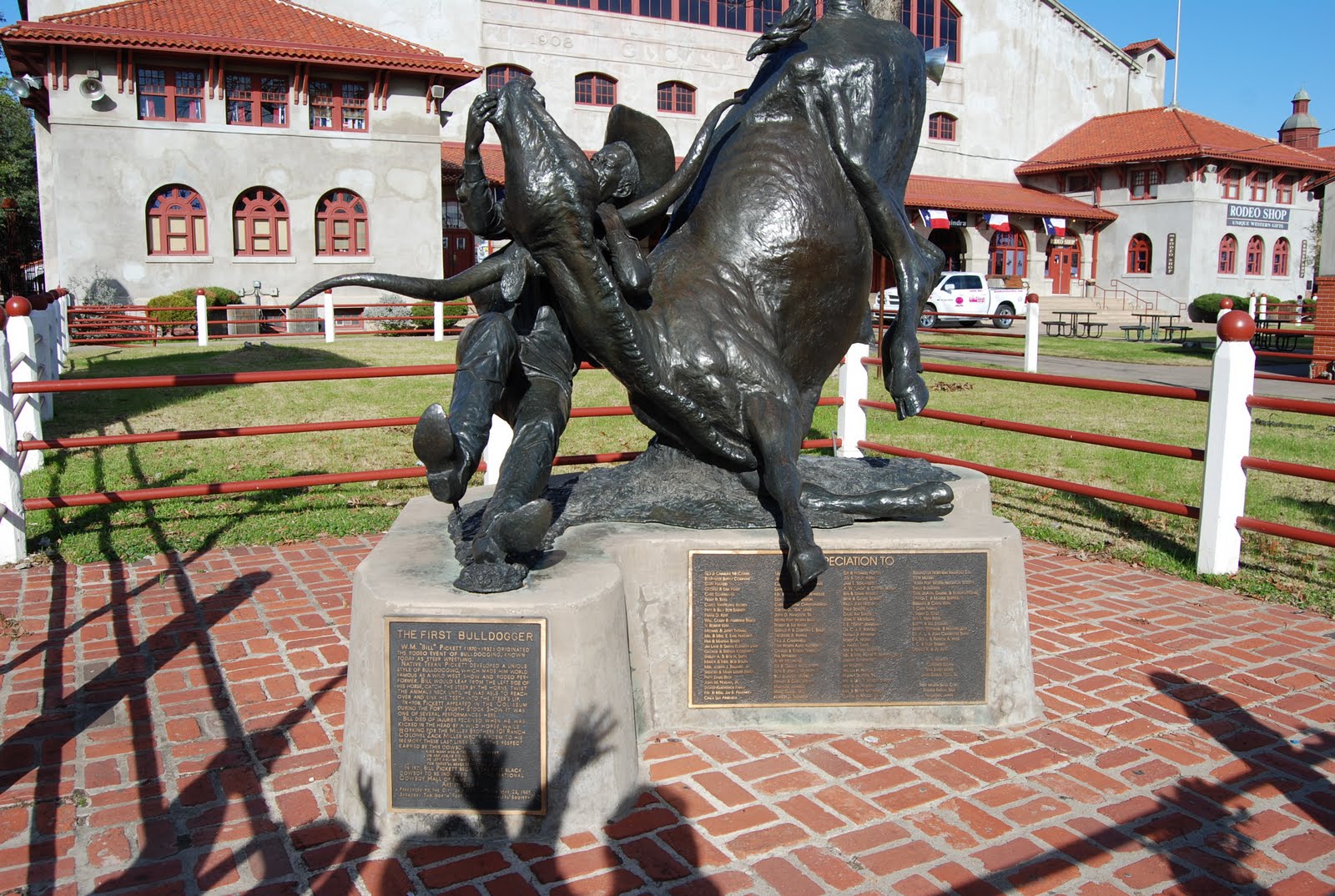
Shadow Family in Cowtown
Anyone who considers arithmetical methods of producing random digits is,
of course,
in the state of sin.
~John Von NeumannThe 362nd day of the year; 362 and its double and triple all use the same number of digits in Roman numerals.*What's Special About This Number.
3!+6!+2! - 1 =727 and 3!*6!*2! + 1=8641 are both prime *Prime Curios
362 is the sum of 3 nonzero squares in exactly 4 ways.(collect the whole set!)
1579: John Dee reveals alchemical secrets to Roger Cook, a fellow alchemist, they would fall out in 1581. Dee’s magic disc is below (Wellcome/BM)

1612 Galileo observed Neptune, but did not recognize it as a planet. Galileo's drawings show that he first observed Neptune on December 28, 1612, and again on January 27, 1613. On both occasions, Galileo mistook Neptune for a fixed star when it appeared very close—in conjunction—to Jupiter in the night sky; hence, he is not credited with Neptune's discovery. (The official discovery is usually cited as September 23, 1846, Neptune was discovered within 1° of where Le Verrier had predicted it to be.) During the period of his first observation in December 1612, Neptune was stationary in the sky because it had just turned retrograde that very day. This apparent backward motion is created when the orbit of the Earth takes it past an outer planet. Since Neptune was only beginning its yearly retrograde cycle, the motion of the planet was far too slight to be detected with Galileo's small telescope.*Wik
1828 Henry R. Rowlands becomes the first American to patent a device for walking on water. Since that time there have been at least one-hundred other patents approved in the US for similar devices. All seem to be inspired by the earliest known design (Jesus excepted) by Leonardo da Vinci in the late Fifteenth Century.


1893 Simon Newcomb gives a speech to the New York Mathematical Society with comments on the fourth dimension; "It is a perfectly legitimate exercise .... if we should not stop at three dimensions in geometry, but construct one for space having four... and there is room for an indefinite number of universes". He also called his speculations on the fourth dimension, "the fairlyland of geometry."
The speech appears a short time later on February 1, 1894 in Nature. His comments would also be commented on in H. G. Wells, Time Machine. "But some philosophical people have been asking ... - Why not another direction at right angles to the other three? ... Professor Simon Newcomb was expanding on this only a month or so ago." *Alfred M. Bork, The Fourth Dimension in Nineteenth-Century Physics, Isis, Sept 1964 pg 326-338
In 1893, Professor James Dewar gave six well-illustrated lectures on "Air gaseous and liquid," at the Royal Institution, London, 28 Dec 1893 - 9 Jan 1894. Some of the air in the room was liquefied in the presence of the audience and it remained so for some time, when enclosed in a vacuum jacket. Again, 1 Apr 1898.
My favorite stupid joke about Thermos Bottles: "You put hot stuff in a thermos, it stays hot. You put cold stuff in a thermos, it stays cold. BUT How does the Thermos know which is which?"
 1895 Wilhelm Conrad Rontgen announces that he has taken an x-ray of his wife’s hand in a paper, "Ein neue Art von Strahlen", to the Würzburg Physical-Medical-Society on 28 Dec and it appeared in their 1895 proceedings. By January he was famous. In the next year some 50 books and 1000 papers appeared on the subject! A journal devoted to the subject was founded in May 1896.
1895 The Lumières held their first public screening of projected motion pictures in 1895. The Lumière brothers, Auguste Marie Louis Nicolas [oɡyst maʁi lwi nikɔla] (19 October 1862, Besançon, France – 10 April 1954, Lyon) and Louis Jean (5 October 1864, Besançon, France – 6 June 1948, Bandol) were the earliest filmmakers in history. (Appropriately, "lumière" translates as "light" in English.)
Their first public screening of films at which admission was charged was held on December 28, 1895, at Salon Indien du Grand Café in Paris. This history-making presentation featured ten short films, including their first film, Sortie des Usines Lumière à Lyon (Workers Leaving the Lumière Factory). Each film is 17 meters long, which, when hand cranked through a projector, runs approximately 50 seconds. *Wik

1923 George David Birkhoff of Harvard received the first Bocher Memorial Prize for his paper “Dynamical systems with two degrees of freedom.” *VFR
1938 Kurt Godel lectures to the annual AMS meeting, Williamsburg, on the consistency of the axiom of choice and the generalized continuum hypothesis. Independence was proved in 1963 by Paul Cohen. *VFR
In 1931, Irene Joliot-Curie reported her study of the unusually penetrating radiation released when beryllium was bombarded by alpha particles seen by the German physicists, Walter Bothe and H. Becker in 1930. Joliot-Curie (daughter of Marie and Pierre Curie) agreed with them that the radiation was energetic gamma rays. She further discovered that if the emitted radiation passed through paraffin (or other hydrogen containing materials), large numbers of protons were released. Since this was, in fact, a previously unknown result for gamma rays, she lacked an explanation. It was to be the experiments of James Chadwick performed during 7-17 Feb that would discover the radiation was in fact new particles - neutrons.*TIS
1973 For a really big ellipse, consider the orbit of the comet Kahoutek, which reached perihelion on this date. The length of the major and minor axes are 3,600 and 44 Astronomical Units. The comet’s eccentricity is approximately 0.99993. *UMAP Journal, 4(1983), p. 164
Comet Kohoutek is a long-period comet; its previous apparition was about 150,000 years ago, and its next apparition will be in about 75,000 years. The comet was discovered on March 18th on photographic plates taken on March 7th and 9th by Czech astronomer Luboš Kohoutek, for whom the comet is named. *Wik
In 2005, the first in a network of satellites, named Galileo, was launched by a consortium of European governments and companies. By 2011, Galileo will consist of 30 satellites providing worldwide coverage as an alternative to the U.S. monopoly with its Global Positioning System (GPS). At a cost of $4 billion, it's Europe's biggest-ever space project, with one-third contributed by governments and the balance from eight companies. Since the American GPS is controlled by the military, the European satellite network is designed to ensure independance for civilian use, but also offer more precision for a paid service. Customers are expected to include service for small airports, transportation, and mobile phone manufacturers to build in navigation capabilities.*TIS
2009 Longest flight by a paper-only plane-Takuo Toda sets world record
TOKYO, Japan--Using a specially designed 10cm long paper plane, Japanese origami plane virtuoso Takuo Toda's origami flight in a Japan Airlines hangar near Tokyo's Haneda Airport lasted 26.1s - setting the world record for the Longest flight by a paper-only plane.
This one was made strictly in keeping with traditional rules of the ancient Japanese art; only one sheet of paper was folded by hand, with no scissors or glue. He had previously set a record for time aloft with a plane that included tape. *worldrecordsacademy.org
There is a video here.
2013 Voyager 1 is a 722-kilogram (1,590 lb) space probe launched by NASA on September 5, 1977 to study the outer Solar System. Operating for 36 years, 3 months, and 23 days as of 28 December 2013, the spacecraft communicates with the Deep Space Network to receive routine commands and return data. At a distance of about 127.21 AU (1.903×10¹⁰ km) from the Earth as of 28 December 2013, it is the farthest human made object from Earth. *Wik
BIRTHS
1798 Thomas Henderson (28 Dec 1798; 23 Nov 1844) Scottish astronomer, the first Scottish Astronomer Royal (1834), who was first to measure the parallax of a star (Alpha Centauri, observed at the Cape of Good Hope) in 1831-33, but delayed publication of his results until Jan 1839. By then, a few months earlier, both Friedrich Bessel and Friedrich Struve had been recognized as first for their measurements of stellar parallaxes. Alpha Centauri can be observed from the Cape, though not from Britain. It is now known to be the nearest star to the Sun, but is still so distant that its light takes 4.5 years to reach us. As Scottish Astronomer Royal in 1834, he worked diligently at the Edinburgh observatory for ten years, making over 60,000 observations of star positions before his death in 1844. *TIS
1808 Victoire Louis Athanase Dupré (December 28 1808 ; August 10 1869 ) was a French mathematician and physicist.
He worked on number theory and in the 1860s with thermodynamics and from him comes the textbook mécanique Théorie de la Chaleur (1869), which is essentially the distribution of this then-new field of knowledge in France contributed. Together with his son Paul Dupré experimental research, he examined the capillary and the surface tension of liquids. This work also led to a formulation of Young's equation which is known today as the Young-Dupré equation. *Wik
1873 William Draper Harkins (28 Dec 1873; 7 Mar 1951) American nuclear chemist who was one of the first to investigate the structure and fusion reactions of the nucleus. In 1920, Harkins predicted the existence of the neutron, subsequently discovered by Chadwick's experiment. He made pioneering studies of nuclear reactions with Wilson cloud chambers. In the early 1930's, (with M.D. Kamen) he built a cyclotron. Harkins demonstrated that in neutron bombardment reactions the first step in neutron capture is the formation of an "excited nucleus" of measurable lifetime, which subsequently splits into fragments. He also suggested that subatomic energy might provide enough energy to power the Sun over its lifetime.*TIS
1882 Sir Arthur Stanley Eddington (28 Dec 1882; 22 Nov 1944) English astrophysicist, and mathematician known for his work on the motion, distribution, evolution and structure of stars. He also interpreted Einstein's general theory of relativity. He was one of the first to suggest (1917) conversion of matter into radiation powered the stars. In 1919, he led a solar eclipse expedition which confirmed the predicted bending of starlight by gravity. He developed an equation for radiation pressure. In 1924, he derived an important mass-luminosity relation. He also studied pulsations in Cepheid variables, and the very high densities of white dwarfs. He sought fundamental relationships between the principle physical constants. Eddington wrote many books for the general reader, including Stars and Atoms. *TIS One of my favorite stories about Eddington is this one: Ludwick Silberstein approached Eddington and told him that people believed he was one of only three people in the world who understood general relativity, and that included Einstein. When Eddington didn't respond for a moment he prodded, come on, don't be modest, and Eddington replied, "Oh, no. It's not that. I was just trying to figure out who the third was?" *Mario Livio, Brilliant Blunders
1898 Carl-Gustaf Arvid Rossby (28 Dec 1898; 19 Aug 1957) Swedish-U.S. meteorologist who first explained the large-scale motions of the atmosphere in terms of fluid mechanics. His work contributed to developing meteorology as a science. Rossby first theorized about the existence of the jet stream in 1939, and that it governs the easterly movement of most weather. U.S. Army Air Corps pilots flying B-29 bombing missions across the Pacific Ocean during World War II proved the jet stream's existence. The pilots found that when they flew from east to west, they experienced slower arrival times and fuel shortage problems. When flying from west to east, however, they found the opposite to be true. Rossby created mathematical models (Rossby equations) for computerized weather prediction (1950). *TIS
1903 John von Neumann is born in Budapest, Hungary.(28 Dec 1903, 8 Feb 1957) His prodigious abilities were recognized in the early childhood. He obtained a degree in chemical engineering attending the University of Berlin (1921-1923) and the Technische Hochschule in Zurich (1923-1926). *CHM
He made important contributions in quantum physics, logic, meteorology, and computer science. He invented game theory, the branch of mathematics that analyses strategy and is now widely employed for military and economic purposes. During WW II, he studied the implosion method for bringing nuclear fuel to explosion and he participated in the development of the hydrogen bomb. He also set quantum theory upon a rigorous mathematical basis. In computer theory, von Neumann did much of the pioneering work in logical design, in the problem of obtaining reliable answers from a machine with unreliable components, the function of "memory," and machine imitation of "randomness." *TIS
1929 Maarten Schmidt (28 Dec 1929, ) Dutch-born American astronomer who in 1963 discovered quasars (quasi-stellar objects). The hydrogen spectrum of these starlike objects shows a huge redshift, which indicates they are more distant than normal stars, travelling away at greater speed, and are among the oldest objects observed. In turn, this indicates they existed only when the universe was very young, and provides evidence against the steady state theory of Fred Hoyle. Schmidt is currently seeking to find the redshift above which there are no quasars, and he also studies x-ray and gamma ray sources.*TIS
DEATHS
1663 Francesco Maria Grimaldi (2 Apr 1618, 28 Dec 1663) Italian mathematician and physicist who studied the diffraction of light. He observed the image on a screen in a darkened room of a tiny beam of sunlight after it passed pass through a fine screen (or a slit, edge of a screen, wire, hair, fabric or bird feather). The image had iridescent fringes, and deviated from a normal geometrical shadow. He coined the name diffraction for this change of trajectory of the light passing near opaque objects (though, more specifically, it may have been interferences with two close sources that he observed). This provided evidence for later physicists to support the wave theory of light. With Riccioli, he investigated the object in free fall (1640-50), and found that distance of fall was proportional to the square of the time taken.*TIS
1827 Robert Woodhouse (28 April 1773 – 23 December 1827) was an English mathematician. His earliest work, entitled the Principles of Analytical Calculation, was published at Cambridge in 1803. In this he explained the differential notation and strongly pressed the employment of it; but he severely criticized the methods used by continental writers, and their constant assumption of non-evident principles. This was followed in 1809 by a trigonometry (plane and spherical), and in 1810 by a historical treatise on the calculus of variations and isoperimetrical problems. He next produced an astronomy; of which the first book (usually bound in two volumes), on practical and descriptive astronomy, was issued in 1812, and the second book, containing an account of the treatment of physical astronomy by Pierre-Simon Laplace and other continental writers, was issued in 1818.
He became the Lucasian Professor of Mathematics in 1820, and subsequently the Plumian professor in the university. As Plumian Professor he was responsible for installing and adjusting the transit instruments and clocks at the Cambridge Observatory.[3] He held that position until his death in 1827. *Wik
1871 John Henry Pratt (4 June 1809 - 28 December 1871) was a British clergyman and mathematician who devised a theory of crustal balance which would become the basis for the isostasy principle. *Wik
1896 Horatio (Emmons) Hale (3 May 1817, 28 Dec 1896) was an American anthropologist whose contributions to the science of ethnology, included his theory of the origin of the diversities of human languages and dialectsa theory suggested by his study of child languages (the languages invented by little children). He emphasized the importance of languages as tests of mental capacity and as criteria for the classification of human groups. Hale was the first to discover that the Tutelos of Virginia belonged to the Siouan family, and to identify the Cherokee as a member of the Iroquoian family of speech. He sailed with the scientific corps of the Wilkes Exploring Expedition (1838-42) collecting linguistic materials. He used the drift of the Polynesian tongue as a clue to the migration of this race. *TIS
1919 Johannes Robert Rydberg, (‘Janne’ to his friends), (November 8, 1854 – December 28, 1919), was a Swedish physicist mainly known for devising the Rydberg formula, in 1888, which is used to predict the wavelengths of photons (of light and other electromagnetic radiation) emitted by changes in the energy level of an electron in a hydrogen atom.
The physical constant known as the Rydberg constant is named after him, as is the Rydberg unit. Excited atoms with very high values of the principal quantum number, represented by n in the Rydberg formula, are called Rydberg atoms. Rydberg's anticipation that spectral studies could assist in a theoretical understanding of the atom and its chemical properties was justified in 1913 by the work of Niels Bohr (see hydrogen spectrum). An important spectroscopic constant based on a hypothetical atom of infinite mass is called the Rydberg (R) in his honour. *Wik
1923 Gustave Eiffel (15 Dec 1832, 28 Dec 1923) French civil engineer who specialized in metal structures, known especially for the Eiffel Tower in Paris. He built his first of his iron bridges at Bordeaux (1858) and was among the first engineers to build bridge foundations using compressed-air caissons. His work includes designing the rotatable dome for Nice Observatory on the summit of Mont Gros (1886), and the framework for the Statue of Liberty now in New York Harbor. After building the Eiffel Tower (1887-9), which he used for scientific research on meteorology, aerodynamics and radio telegraphy, he also built the first aerodynamic laboratory at Auteuil, outside Paris, where he pursued his research work without interruption during WW I. *TIS
1964 Edwin Bidwell Wilson (25 April 1879 in Hartford, Connecticut, USA - 28 Dec 1964 in Brookline, Massachusetts, USA) Wilson graduated from Yale with a Ph.D. in 1901 and, in the same year, a textbook which he had written on vector analysis was published. Vector analysis (1901) was based on Gibbs' lectures and , "This beautiful work, published when Wilson was only twenty-two years old, had a profound and lasting influence on the notation for and the use of vector analysis." Wilson had been inspired by Gibbs to work on mathematical physics and he began to write papers on mechanics and the theory of relativity. In 1912 Wilson published the first American advanced calculus text. World War I had seen another move in Wilson's research interests for he had undertaken war work which involved aerodynamics and this led him to study the effects of gusts of wind on a plane. In 1920 he published his third major text Aeronautics and gathered round him a group of students working on this topic.
Wilson had already worked in a number of quite distinct areas and his work on aeronautics did not become the major topic for the rest of his career. Not long after the publication of his important text on Aeronautics his interests moved again, this time towards probability and statistics. He did not study statistics for its own, however, but he was interested in applying statistics both to astronomy and to biology. He was the first to study confidence intervals, later rediscovered by Neyman. In 1922 Wilson left the Massachusetts Institute of Technology to become Professor of Vital Statistics at the Harvard School of Public Health. He continued to hold this post until he retired in 1945, when he became professor emeritus. After he retired, Wilson spent a year in Glasgow, Scotland when he was Stevenson lecture on Citizenship. From 1948 he was a consultant to the Office of Naval Research in Boston. *SAU
Credits :
*CHM=Computer History Museum
*FFF=Kane, Famous First Facts
*NSEC= NASA Solar Eclipse Calendar
*RMAT= The Renaissance Mathematicus, Thony Christie
*SAU=St Andrews Univ. Math History
*TIA = Today in Astronomy
*TIS= Today in Science History
*VFR = V Frederick Rickey, USMA
*Wik = Wikipedia
*WM = Women of Mathematics, Grinstein & Campbell
The speech appears a short time later on February 1, 1894 in Nature. His comments would also be commented on in H. G. Wells, Time Machine. "But some philosophical people have been asking ... - Why not another direction at right angles to the other three? ... Professor Simon Newcomb was expanding on this only a month or so ago." *Alfred M. Bork, The Fourth Dimension in Nineteenth-Century Physics, Isis, Sept 1964 pg 326-338
In 1893, Professor James Dewar gave six well-illustrated lectures on "Air gaseous and liquid," at the Royal Institution, London, 28 Dec 1893 - 9 Jan 1894. Some of the air in the room was liquefied in the presence of the audience and it remained so for some time, when enclosed in a vacuum jacket. Again, 1 Apr 1898.
My favorite stupid joke about Thermos Bottles: "You put hot stuff in a thermos, it stays hot. You put cold stuff in a thermos, it stays cold. BUT How does the Thermos know which is which?"

1895 The Lumières held their first public screening of projected motion pictures in 1895. The Lumière brothers, Auguste Marie Louis Nicolas [oɡyst maʁi lwi nikɔla] (19 October 1862, Besançon, France – 10 April 1954, Lyon) and Louis Jean (5 October 1864, Besançon, France – 6 June 1948, Bandol) were the earliest filmmakers in history. (Appropriately, "lumière" translates as "light" in English.)
Their first public screening of films at which admission was charged was held on December 28, 1895, at Salon Indien du Grand Café in Paris. This history-making presentation featured ten short films, including their first film, Sortie des Usines Lumière à Lyon (Workers Leaving the Lumière Factory). Each film is 17 meters long, which, when hand cranked through a projector, runs approximately 50 seconds. *Wik

1923 George David Birkhoff of Harvard received the first Bocher Memorial Prize for his paper “Dynamical systems with two degrees of freedom.” *VFR
1938 Kurt Godel lectures to the annual AMS meeting, Williamsburg, on the consistency of the axiom of choice and the generalized continuum hypothesis. Independence was proved in 1963 by Paul Cohen. *VFR
In 1931, Irene Joliot-Curie reported her study of the unusually penetrating radiation released when beryllium was bombarded by alpha particles seen by the German physicists, Walter Bothe and H. Becker in 1930. Joliot-Curie (daughter of Marie and Pierre Curie) agreed with them that the radiation was energetic gamma rays. She further discovered that if the emitted radiation passed through paraffin (or other hydrogen containing materials), large numbers of protons were released. Since this was, in fact, a previously unknown result for gamma rays, she lacked an explanation. It was to be the experiments of James Chadwick performed during 7-17 Feb that would discover the radiation was in fact new particles - neutrons.*TIS
1973 For a really big ellipse, consider the orbit of the comet Kahoutek, which reached perihelion on this date. The length of the major and minor axes are 3,600 and 44 Astronomical Units. The comet’s eccentricity is approximately 0.99993. *UMAP Journal, 4(1983), p. 164
Comet Kohoutek is a long-period comet; its previous apparition was about 150,000 years ago, and its next apparition will be in about 75,000 years. The comet was discovered on March 18th on photographic plates taken on March 7th and 9th by Czech astronomer Luboš Kohoutek, for whom the comet is named. *Wik
In 2005, the first in a network of satellites, named Galileo, was launched by a consortium of European governments and companies. By 2011, Galileo will consist of 30 satellites providing worldwide coverage as an alternative to the U.S. monopoly with its Global Positioning System (GPS). At a cost of $4 billion, it's Europe's biggest-ever space project, with one-third contributed by governments and the balance from eight companies. Since the American GPS is controlled by the military, the European satellite network is designed to ensure independance for civilian use, but also offer more precision for a paid service. Customers are expected to include service for small airports, transportation, and mobile phone manufacturers to build in navigation capabilities.*TIS
2009 Longest flight by a paper-only plane-Takuo Toda sets world record
TOKYO, Japan--Using a specially designed 10cm long paper plane, Japanese origami plane virtuoso Takuo Toda's origami flight in a Japan Airlines hangar near Tokyo's Haneda Airport lasted 26.1s - setting the world record for the Longest flight by a paper-only plane.
This one was made strictly in keeping with traditional rules of the ancient Japanese art; only one sheet of paper was folded by hand, with no scissors or glue. He had previously set a record for time aloft with a plane that included tape. *worldrecordsacademy.org
There is a video here.
2013 Voyager 1 is a 722-kilogram (1,590 lb) space probe launched by NASA on September 5, 1977 to study the outer Solar System. Operating for 36 years, 3 months, and 23 days as of 28 December 2013, the spacecraft communicates with the Deep Space Network to receive routine commands and return data. At a distance of about 127.21 AU (1.903×10¹⁰ km) from the Earth as of 28 December 2013, it is the farthest human made object from Earth. *Wik
1798 Thomas Henderson (28 Dec 1798; 23 Nov 1844) Scottish astronomer, the first Scottish Astronomer Royal (1834), who was first to measure the parallax of a star (Alpha Centauri, observed at the Cape of Good Hope) in 1831-33, but delayed publication of his results until Jan 1839. By then, a few months earlier, both Friedrich Bessel and Friedrich Struve had been recognized as first for their measurements of stellar parallaxes. Alpha Centauri can be observed from the Cape, though not from Britain. It is now known to be the nearest star to the Sun, but is still so distant that its light takes 4.5 years to reach us. As Scottish Astronomer Royal in 1834, he worked diligently at the Edinburgh observatory for ten years, making over 60,000 observations of star positions before his death in 1844. *TIS
1808 Victoire Louis Athanase Dupré (December 28 1808 ; August 10 1869 ) was a French mathematician and physicist.
He worked on number theory and in the 1860s with thermodynamics and from him comes the textbook mécanique Théorie de la Chaleur (1869), which is essentially the distribution of this then-new field of knowledge in France contributed. Together with his son Paul Dupré experimental research, he examined the capillary and the surface tension of liquids. This work also led to a formulation of Young's equation which is known today as the Young-Dupré equation. *Wik
1873 William Draper Harkins (28 Dec 1873; 7 Mar 1951) American nuclear chemist who was one of the first to investigate the structure and fusion reactions of the nucleus. In 1920, Harkins predicted the existence of the neutron, subsequently discovered by Chadwick's experiment. He made pioneering studies of nuclear reactions with Wilson cloud chambers. In the early 1930's, (with M.D. Kamen) he built a cyclotron. Harkins demonstrated that in neutron bombardment reactions the first step in neutron capture is the formation of an "excited nucleus" of measurable lifetime, which subsequently splits into fragments. He also suggested that subatomic energy might provide enough energy to power the Sun over its lifetime.*TIS
1882 Sir Arthur Stanley Eddington (28 Dec 1882; 22 Nov 1944) English astrophysicist, and mathematician known for his work on the motion, distribution, evolution and structure of stars. He also interpreted Einstein's general theory of relativity. He was one of the first to suggest (1917) conversion of matter into radiation powered the stars. In 1919, he led a solar eclipse expedition which confirmed the predicted bending of starlight by gravity. He developed an equation for radiation pressure. In 1924, he derived an important mass-luminosity relation. He also studied pulsations in Cepheid variables, and the very high densities of white dwarfs. He sought fundamental relationships between the principle physical constants. Eddington wrote many books for the general reader, including Stars and Atoms. *TIS One of my favorite stories about Eddington is this one: Ludwick Silberstein approached Eddington and told him that people believed he was one of only three people in the world who understood general relativity, and that included Einstein. When Eddington didn't respond for a moment he prodded, come on, don't be modest, and Eddington replied, "Oh, no. It's not that. I was just trying to figure out who the third was?" *Mario Livio, Brilliant Blunders
1898 Carl-Gustaf Arvid Rossby (28 Dec 1898; 19 Aug 1957) Swedish-U.S. meteorologist who first explained the large-scale motions of the atmosphere in terms of fluid mechanics. His work contributed to developing meteorology as a science. Rossby first theorized about the existence of the jet stream in 1939, and that it governs the easterly movement of most weather. U.S. Army Air Corps pilots flying B-29 bombing missions across the Pacific Ocean during World War II proved the jet stream's existence. The pilots found that when they flew from east to west, they experienced slower arrival times and fuel shortage problems. When flying from west to east, however, they found the opposite to be true. Rossby created mathematical models (Rossby equations) for computerized weather prediction (1950). *TIS
1903 John von Neumann is born in Budapest, Hungary.(28 Dec 1903, 8 Feb 1957) His prodigious abilities were recognized in the early childhood. He obtained a degree in chemical engineering attending the University of Berlin (1921-1923) and the Technische Hochschule in Zurich (1923-1926). *CHM
He made important contributions in quantum physics, logic, meteorology, and computer science. He invented game theory, the branch of mathematics that analyses strategy and is now widely employed for military and economic purposes. During WW II, he studied the implosion method for bringing nuclear fuel to explosion and he participated in the development of the hydrogen bomb. He also set quantum theory upon a rigorous mathematical basis. In computer theory, von Neumann did much of the pioneering work in logical design, in the problem of obtaining reliable answers from a machine with unreliable components, the function of "memory," and machine imitation of "randomness." *TIS
1929 Maarten Schmidt (28 Dec 1929, ) Dutch-born American astronomer who in 1963 discovered quasars (quasi-stellar objects). The hydrogen spectrum of these starlike objects shows a huge redshift, which indicates they are more distant than normal stars, travelling away at greater speed, and are among the oldest objects observed. In turn, this indicates they existed only when the universe was very young, and provides evidence against the steady state theory of Fred Hoyle. Schmidt is currently seeking to find the redshift above which there are no quasars, and he also studies x-ray and gamma ray sources.*TIS
1663 Francesco Maria Grimaldi (2 Apr 1618, 28 Dec 1663) Italian mathematician and physicist who studied the diffraction of light. He observed the image on a screen in a darkened room of a tiny beam of sunlight after it passed pass through a fine screen (or a slit, edge of a screen, wire, hair, fabric or bird feather). The image had iridescent fringes, and deviated from a normal geometrical shadow. He coined the name diffraction for this change of trajectory of the light passing near opaque objects (though, more specifically, it may have been interferences with two close sources that he observed). This provided evidence for later physicists to support the wave theory of light. With Riccioli, he investigated the object in free fall (1640-50), and found that distance of fall was proportional to the square of the time taken.*TIS
1827 Robert Woodhouse (28 April 1773 – 23 December 1827) was an English mathematician. His earliest work, entitled the Principles of Analytical Calculation, was published at Cambridge in 1803. In this he explained the differential notation and strongly pressed the employment of it; but he severely criticized the methods used by continental writers, and their constant assumption of non-evident principles. This was followed in 1809 by a trigonometry (plane and spherical), and in 1810 by a historical treatise on the calculus of variations and isoperimetrical problems. He next produced an astronomy; of which the first book (usually bound in two volumes), on practical and descriptive astronomy, was issued in 1812, and the second book, containing an account of the treatment of physical astronomy by Pierre-Simon Laplace and other continental writers, was issued in 1818.
He became the Lucasian Professor of Mathematics in 1820, and subsequently the Plumian professor in the university. As Plumian Professor he was responsible for installing and adjusting the transit instruments and clocks at the Cambridge Observatory.[3] He held that position until his death in 1827. *Wik
1871 John Henry Pratt (4 June 1809 - 28 December 1871) was a British clergyman and mathematician who devised a theory of crustal balance which would become the basis for the isostasy principle. *Wik
1896 Horatio (Emmons) Hale (3 May 1817, 28 Dec 1896) was an American anthropologist whose contributions to the science of ethnology, included his theory of the origin of the diversities of human languages and dialectsa theory suggested by his study of child languages (the languages invented by little children). He emphasized the importance of languages as tests of mental capacity and as criteria for the classification of human groups. Hale was the first to discover that the Tutelos of Virginia belonged to the Siouan family, and to identify the Cherokee as a member of the Iroquoian family of speech. He sailed with the scientific corps of the Wilkes Exploring Expedition (1838-42) collecting linguistic materials. He used the drift of the Polynesian tongue as a clue to the migration of this race. *TIS
1919 Johannes Robert Rydberg, (‘Janne’ to his friends), (November 8, 1854 – December 28, 1919), was a Swedish physicist mainly known for devising the Rydberg formula, in 1888, which is used to predict the wavelengths of photons (of light and other electromagnetic radiation) emitted by changes in the energy level of an electron in a hydrogen atom.
The physical constant known as the Rydberg constant is named after him, as is the Rydberg unit. Excited atoms with very high values of the principal quantum number, represented by n in the Rydberg formula, are called Rydberg atoms. Rydberg's anticipation that spectral studies could assist in a theoretical understanding of the atom and its chemical properties was justified in 1913 by the work of Niels Bohr (see hydrogen spectrum). An important spectroscopic constant based on a hypothetical atom of infinite mass is called the Rydberg (R) in his honour. *Wik
1923 Gustave Eiffel (15 Dec 1832, 28 Dec 1923) French civil engineer who specialized in metal structures, known especially for the Eiffel Tower in Paris. He built his first of his iron bridges at Bordeaux (1858) and was among the first engineers to build bridge foundations using compressed-air caissons. His work includes designing the rotatable dome for Nice Observatory on the summit of Mont Gros (1886), and the framework for the Statue of Liberty now in New York Harbor. After building the Eiffel Tower (1887-9), which he used for scientific research on meteorology, aerodynamics and radio telegraphy, he also built the first aerodynamic laboratory at Auteuil, outside Paris, where he pursued his research work without interruption during WW I. *TIS
1964 Edwin Bidwell Wilson (25 April 1879 in Hartford, Connecticut, USA - 28 Dec 1964 in Brookline, Massachusetts, USA) Wilson graduated from Yale with a Ph.D. in 1901 and, in the same year, a textbook which he had written on vector analysis was published. Vector analysis (1901) was based on Gibbs' lectures and , "This beautiful work, published when Wilson was only twenty-two years old, had a profound and lasting influence on the notation for and the use of vector analysis." Wilson had been inspired by Gibbs to work on mathematical physics and he began to write papers on mechanics and the theory of relativity. In 1912 Wilson published the first American advanced calculus text. World War I had seen another move in Wilson's research interests for he had undertaken war work which involved aerodynamics and this led him to study the effects of gusts of wind on a plane. In 1920 he published his third major text Aeronautics and gathered round him a group of students working on this topic.
Wilson had already worked in a number of quite distinct areas and his work on aeronautics did not become the major topic for the rest of his career. Not long after the publication of his important text on Aeronautics his interests moved again, this time towards probability and statistics. He did not study statistics for its own, however, but he was interested in applying statistics both to astronomy and to biology. He was the first to study confidence intervals, later rediscovered by Neyman. In 1922 Wilson left the Massachusetts Institute of Technology to become Professor of Vital Statistics at the Harvard School of Public Health. He continued to hold this post until he retired in 1945, when he became professor emeritus. After he retired, Wilson spent a year in Glasgow, Scotland when he was Stevenson lecture on Citizenship. From 1948 he was a consultant to the Office of Naval Research in Boston. *SAU
Credits :
*CHM=Computer History Museum
*FFF=Kane, Famous First Facts
*NSEC= NASA Solar Eclipse Calendar
*RMAT= The Renaissance Mathematicus, Thony Christie
*SAU=St Andrews Univ. Math History
*TIA = Today in Astronomy
*TIS= Today in Science History
*VFR = V Frederick Rickey, USMA
*Wik = Wikipedia
*WM = Women of Mathematics, Grinstein & Campbell