
A set is a Many that allows itself to be thought of as a One.
~Georg Cantor The 63 day of the year; in Roman Numerals 63 is LXIII. If you represent each of these letters by its number in the English alphabet you get 12+24+9+9+9=63. (There is one more number that has this quality.)
At right, in honor of my many students from Misawa, Aomorishi, Japan, is Print 63 of Utagawa Hiroshige's 100 views of Edo (Koi No Bori)
\( \phi(63) = 36\) The number of positive integers which are less than 63 and relatively prime to it.
63 can be expressed as powers of its digits, \( 6^2 + 3^3 = 63\)
And more Math Facts For Day 63 at Number Facts for Every Year Day (61-90) from On This Day in Math
EVENTS
1616 The Thursday solemn session of the Holy Office coram Summo Pontifice, held on this day, saw the Papal approval of the censure of Copernicus's De Revolutionibus:
... the decree of the Congregation of the Index having been presented, prohibiting and suspending, respectively, the writings of Nicolaus Copernicus, of Diego de Zuñiga On Job, and of Paolo Antonio Foscarini, Carmelite Friar - His Holiness [Paul V] has ordered that this edict of prohibition and suspension, respectively, be published by the Master of the Palace. (Favaro, XIX, 278; trans. Finocchiaro, p. 148)*Vatican Observatory
1776 d'alelembert w rite s to Euler in Berlin, advising him not to give up his appointment there to return to Russia. Euler promptly ignored this advice, he had lived in Russia for fourteen years, and his advisor had not even visited, and the deal Euler got from thenew czarina made it one of the most lucrative positions in the world of mathematics.
In 1863, the National Academy of Sciences was chartered in the U.S. as President Abraham Lincoln approved the Act of Congress which established it (12 Stat. L. 806). The Act stipulated that the Academy would “whenever called upon by any department of the Government, investigate, examine, experiment or report upon any subject of science or art.” The Academy would receive no compensation, but the actual expenses incurred for the Government's requirements were to be paid from appropriations. In 1863, Alexander Dallas Bache became its first president, who served until 1867. Several scientific societies were formed in the U.S. before this date, the earliest being the Boston Philosophical Society founded in 1683.*TIS
In 1879, the office of director of the U.S. Geological Survey was authorized by Congress (20 Stat. L. 394), which made appropriations "for sundry civil expenses of the government." Clarence King, the first director, was nominated on 21 Mar 1879 and started work on 24 May 1879. The Survey was national in scope for the classification of public lands and their geological structure, mineral resources, and products. The first geological survey financed by Congress was authorized by act of Congress on 28 Jun 1834 (4 Stat. L. 394) which provided $5,000 for a survey made by George William Featherstonhaugh of the land between the Missouri and Red Rivers. The earliest survey at state expense was made in 1830-33 by Massachussetts.*TIS

*Jerry Slocum, Sam Loydʼs Most Successful Hoax
Slocum's book about the puzzle is excellent, and a link to one of his productions of the puzzle also
In 1901, the office of Standards, Weights and Measures was created by an act of Congress (31 Stat. L. 1449), establishing it as a separate bureau for the work previously conducted by the U.S. Coast and Geodetic Survey of the Treasury Department. Its first director was Samuel Wesley Stratton. On 1 Jul 1913, it became the National Bureau of Standards under the Department of Commerce.*TIS
1953 Nils Aall Barricelli begins his "artificial universe" on the computer used to make computations for the hydrogen bomb at Princeton's Institute for Advanced Study. *George Dyson, Ted Video

The last successful reception of telemetry was received from Pioneer 10 on April 27, 2002; subsequent signals were barely strong enough to detect, and provided no usable data. The final, very weak signal from Pioneer 10 was received on January 23, 2003 when it was 12 billion kilometers (80 AU) from Earth. *Wik and a HT to Hansruedi Widmer @HansruediWidmer
1975 Homebrew Computer Club Holds First Meeting:(see image at top of page)
The Homebrew Computer Club first met in a garage in Menlo Park, California. Founders Fred Moore and Gordon French hosted about 30 microcomputer hobbyists, who spent the first meeting discussing the Altair, a computer that could be built at home from a kit. The club and others like it led to a burgeoning popularity of the personal computer.*CHM
BIRTHS
1837 Aleksandr Nikolayevich Korkin (3 March [O.S. 19 February] 1837–September 1, 1908, all New Style) was a Russian mathematician. He made contribution to the development of partial differential equations. After Chebyshev, Korkin was the most important initiator of the formation of the Saint Petersburg Mathematical School*Wik 1838 George William Hill (3 Mar 1838; died 16 Apr 1914 at age 76) U.S. mathematical astronomer considered by many of his peers to be the greatest master of celestial mechanics of his time. Hill joined the Nautical Almanac Office in 1861. He computed the orbit of the moon while making original contributions to the three body problem. He introduced infinite determinants, a concept which later found application in many fields of mathematics and physics. When Simon Newcomb took over the Nautical Almanac in 1877 and began a complete recomputation of all solar system motions, Hill was assigned the difficult problem of the orbits of Jupiter and Saturn. After completing the enormous labor in ten years, he returned to his farm, where he continued his research in celestial mechanics. *TIS
In 1903 he was ranked second, after E. H. Moore, by the leading mathematicians in the U.S. in Catell’s American Men of Science. *VFR The Hill sphere, which approximates the gravitational sphere of influence of one astronomical body in the face of perturbations from another heavier body around which it orbits, was described by Hill. *Wik
1845 Georg (Ferdinand Ludwig Philipp) Cantor (3 Mar 1845, 6 Jan 1918) was a Russian-German mathematician who created modern set theory and extended it to give the concept of transfinite numbers,with cardinal and ordinal number classes. Although Cantor's earliest work was concerned with Fourier series, his reputation rests upon his contribution to transfinite set theory. He began with the definition of infinite sets proposed by Dedekind in 1872: a set is infinite when it is similar to a proper part of itself. Sets with this property, such as the set of natural numbers are said to be 'denumerable' or 'countable'. His career was repeatedly interrupted after 1884 by mental illness. He died of heart failure in 1918 in a mental institution. *TIS
His early research, dealing with the convergence of trigonometric series, led him to create a whole new field of mathematics. He called it Mengenlehre; we call it Set Theory. *VFR "The essence of mathematics lies precisely in its freedom."
1847 Alexander Graham Bell (3 Mar 1847; 2 Aug 1922 at age 75) Scottish-American inventor of the telephone. Bell's career was influenced by his grandfather (who published The Practical Elocutionist and Stammering and Other Impediments of Speech), his father (whose interest was the mechanics and methods of vocal communication) and his mother (who was deaf). As a teenager, Alexander was intrigued by the writings of German physicist Hermann Von Helmholtz, On The Sensations of Tone. At age 23 he moved to Canada. In 1871, Bell began giving instruction in Visible Speech at the Boston School for Deaf Mutes. This background set his course in developing the transmission of voice over wires. He cofounded Bell Telephone Co in 1877. With his father-in-law, he re-established the journal Science (1882).*TIS
1883 Sir Cyril Burt (3 Mar 1883, 10 Oct 1971) British psychologist who was a leader in developing methods of statistical data analysis, particularly factor analysis, in psychological testing. He investigated the role of heredity in intelligence with twin studies and the role of nurture in juvenile delinquency. In 1913, he was appointed the school psychologist for the schools administered by the London County Council (LCC) This was the first appointment of this kind in the U.K. In 1926, he proposed a national testing program of intelligence tests on children at about age 11. Subsequently, the national "Eleven-Plus" exam was used to identify whether children were high scorers suitable for education at a grammar schools, or not. After Burt's death his later work on twins was questioned as flawed or fraud.*TIS
1898 Emil Artin (3 Mar 1898; 20 Dec 1962 at age 64) Austro-German mathematician who worked in algebraic number theory, made a major contribution to field theory, and stated a law of reciprocity which included all previously known laws of reciprocity (1927). He also worked on the theory of braids (1925), and on rings with the minimum condition on right ideals, now called Artinian rings (1944). Artin has the distinction of solving (1927) one of the famous 23 problems previously posed by Hilbert in 1900. With his Jewish wife, he left Nazi Germany in 1937, and worked at universities in the U.S. until 1956, when he returned to his home country. *TIS He solved Hilbert’s seventeenth problem in 1927. *VFR (Can a multivariate polynomial that only has non-negative values over the reals be represented as a sum of squares of rational functions? Artin proved it could, An algorithm to do so was found by Charles Delzell.)
1901 Otto Schreier (3 March 1901 in Vienna, Austria - 2 June 1929 in Hamburg, Germany) He will be best remembered for his work on subgroups of free groups which he studied in his habilitation thesis. He published the results in 1927 in the paper Die Untergruppen der freien Gruppe which is described as "... one of the most important papers ever published on combinatorial group theory. It took a long time for all its aspects to become effective, and it contains much more than the title indicates. "
In January 1926 Schreier attended a lecture given by Reidemeister in Hamburg on finding presentations for normal subgroups of finitely presented groups. Reidemeister published his method later in 1926. Schreier, who took a more algebraic approach compared to Reidemeister's geometrical approach, was able to extend Reidemeister's method to arbitrary subgroups and, by cleverly choosing generators for the subgroup, was able to greatly simplify the presentation obtained. Schreier published his method in his 1927 paper Die Untergruppen der freien Gruppe.
Other work of Schreier is described as follows:
... Schreier made important contributions to other parts of group theory. The classical Lie groups ... can be considered as topological spaces. Schreier (1927) showed that the fundamental group of such a space is always abelian. Schreier (1928) found an important refinement of the fundamental Jordan-Hölder theorem, 39 years after the publication of Hölder's paper. It is rare that such a widely used and basic theorem can be deepened after such a long time. (In this case, something even more unusual happened. Zassenhaus (1934) discovered a second improvement of the theorem.)*SAU
1912 Andrew Paul Guinand (3 March 1912 in Renmark, South Australia, - 22 March 1987 in Peterborough, Ontario, Canada) Guinand worked on summation formulae and prime numbers, the Riemann zeta function, general Fourier type transformations, geometry and some papers on a variety of topics such as computing, air navigation, calculus of variations, the binomial theorem, determinants and special functions. In [1] W N Everitt writes,
As a student of Titchmarsh in Oxford in the years immediately before the second world war it was natural that Guinand's research interests should be directed into the field of Fourier analysis and the Riemann zeta function. ... [In an important paper in 1948] the main application of the general result yields a deep-seated connection between the distribution of the prime numbers and the location of the zeros of the Riemann zeta function on (or near to it if the Riemann hypothesis is false) the critical line in the complex plane... Guinand was convinced that these results could lead to more information about the Riemann zeta function, and he was disappointed that he was not able to advance further in this area and that others did not take up the possibility themselves.*SAU
1916 Paul Richard Halmos (March 3, 1916 – October 2, 2006) was a Hungarian-born American mathematician who made fundamental advances in the areas of probability theory, statistics, operator theory, ergodic theory, and functional analysis (in particular, Hilbert spaces). He was also recognized as a great mathematical expositor. In a series of papers reprinted in his 1962 Algebraic Logic, Halmos devised polyadic algebras, an algebraic version of first-order logic differing from the better known cylindric algebras of Alfred Tarski and his students. An elementary version of polyadic algebra is described in monadic Boolean algebra.
In addition to his original contributions to mathematics, Halmos was an unusually clear and engaging expositor of university mathematics. This was so even though Halmos arrived in the USA at 13 years of age and never lost his Hungarian accent. He chaired the American Mathematical Society committee that wrote the AMS style guide for academic mathematics, published in 1973. In 1983, he received the AMS's Steele Prize for exposition. Some of his classics were:
How to read mathematics
How to write mathematics
How to speak mathematics.
In the American Scientist 56(4): 375–389, Halmos argued that mathematics is a creative art, and that mathematicians should be seen as artists, not number crunchers. He discussed the division of the field into mathology and mathophysics, further arguing that mathematicians and painters think and work in related ways.
Halmos's 1985 "automathography" I Want to Be a Mathematician is an account of what it was like to be an academic mathematician in 20th century America. He called the book “automathography” rather than “autobiography”, because its focus is almost entirely on his life as a mathematician, not his personal life. The book contains the following quote on Halmos' view of what doing mathematics means:
“ "Don't just read it; fight it! Ask your own questions, look for your own examples, discover your own proofs. Is the hypothesis necessary? Is the converse true? What happens in the classical special case? What about the degenerate cases? Where does the proof use the hypothesis?”
In these memoirs, Halmos claims to have invented the "iff" notation for the words "if and only if" and to have been the first to use the “tombstone” notation to signify the end of a proof, and this is generally agreed to be the case. The tombstone symbol ∎ (Unicode U+220E) is sometimes called a halmos. *Wik
If you want to know more about this interesting individual and his mathematical career, read his book
I Want to Be a Mathematician: An Automathography in Three Parts (Maa Spectrum Series)

*VFR

1956 Daniel Chonghan Hong (3 Mar 1956; 2 Jul 2002 at age 46)
Korean theoretical physicist specializing in statistical physics and nonlinear dynamic physics, who with colleague Hugo Caram, originated the void diffusing-void model of granular flow, which is recognized as an effective theoretical treatment for a broad range of dynamical phenomena in granular media. In general, his work ranged from percolation network, viscous fingering, granular flows to traffic equations. He studied and taught in America from 1981, and wrote articles for popular magazines on various topics. He died at the young age of 46 of cardiac arrest. *TIS
DEATHS
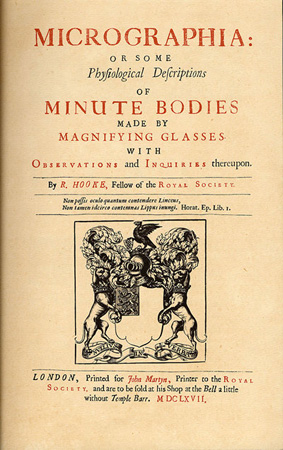
He was at one time simultaneously the curator of experiments of the Royal Society and a member of its council, Gresham Professor of Geometry and a Surveyor to the City of London after the Great Fire of London , in which capacity he appears to have performed more than half of all the surveys after the fire. He was also an important architect of his time, though few of his buildings now survive and some of those are generally mis-attributed, and was instrumental in devising a set of planning controls for London whose influence remains today. Allan Chapman has characterized him as "England's Leonardo" *wik
He was born in Freshwater, Isle of Wight, and discovered the law of elasticity, known as Hooke's law, and invented the balance spring for clocks. He was a virtuoso scientist whose scope of research ranged widely, including physics, astronomy, chemistry, biology, geology, architecture and naval technology. On 5 Nov 1662, Hooke was appointed the Curator of Experiments at the Royal Society, London. After the Great Fire of London (1666), he served as Chief Surveyor and helped rebuild the city. He also invented or improved meteorological instruments such as the barometer, anemometer, and hygrometer. Hooke authored the influential Micrographia (1665)*TIS
Lisa Jardine's book is an excellent biography of a complex and underrated man.
1765 William Stukeley FRS, FRCP, FSA (7 November 1687 – 3 March 1765) was an English antiquarian who pioneered the archaeological investigation of the prehistoric monuments of Stonehenge and Avebury, work for which he has been remembered as "probably... the most important of the early forerunners of the discipline of archaeology". Stukeley was also one of the first biographers of Isaac Newton. Stukeley was a friend of Isaac Newton and wrote a memoir of his life in 1752. This is one of the earliest sources for the story of the falling apple that inspired Newton's formulation of the theory of gravitation.
Becoming involved in the newly fashionable organization of Freemasonry, he also began to describe himself as a "druid", and incorrectly believed that the prehistoric megalithic monuments were a part of the druidic religion. However, despite this he has been noted as being a significant figure in the early development of the modern movement known as Neo-Druidry. *Wik
1879 William Kingdon Clifford (4 May 1845 – 3 March 1879 ) He played an important role in introducing the ideas of Riemann and other writers on non-Euclidean geometry to English mathematicians. “Clifford was a first-class gymnast, whose repertory apparently included hanging by his toes from the crossbar of a weather cock on a church tower, a feat befitting a High Churchman, as he then was.” *VFR
English mathematician and philosopher. Building on the work of Hermann Grassmann, he introduced what is now termed geometric algebra, a special case of the Clifford algebra named in his honour, with interesting applications in contemporary mathematical physics and geometry. He was the first to suggest that gravitation might be a manifestation of an underlying geometry. In his philosophical writings he coined the expression "mind-stuff". *Wikipedia {He enjoyed children and wrote children's stories including "The Little People."} "An atom must be at least as complex as a grand piano. "
1954 Hendrik De Vries (25 Aug 1867 in Amsterdam, The Netherlands - 3 March 1954 in Binyamina, Israel) "Paul Bockstable describes de Vries's contributions:
"Even greater emphasis was placed on the historical development of mathematical sciences in the historical writings of Hendrik de Vries (1867-1954), professor at the Municipal University of Amsterdam. His lectures took in algebra and analysis, but from 1921-22 onwards, he focussed increasingly on his preferred field, giving public lectures on the development of geometry. These culminated in a series of articles in the Nieuw Tijdschrift voor Wiskunde (New Journal of Mathematics), which were later collected, together with some other items, in a three volume publication entitled 'Historische Studien' (1926). De Vries wrote in the introduction that he wanted to focus attention on the historical development of very precisely defined topics, even specific problems or theorems. He pointed out the didactic benefits that the historical approach to mathematical problems could offer."
He continued to publish Historical studies, and as examples we give the title of a small number of these later articles: On the contact and intersection of circles and conic sections (1946), How analytic geometry became a science (1948), On the infinite and the imaginary, or "surrealism" in mathematics (1949), and On relations and transformations (1949).*SAU
1988 Sewall Green Wright (21 Dec 1889 in Melrose, Massachusetts, USA - 3 March 1988 in Madison, Wisconsin, USA) Wright is famed for his work on evolution, in particular in the use of statistical techniques in the subject. In 1942 he published the Gibbs lecture that he had delivered in the Bulletin of the American Mathematical Society. Opatowski writes in a review, "... a review of the prominent work done by the author in the last twelve years towards the establishment of a mathematical theory of evolution. "
Another paper by Wright which shows his mathematical approach to the subject is The differential equation of the distribution of gene frequencies which he published in 1945. He derives differential equations which are satisfied by the probability density function of the distribution of gene frequencies under certain conditions.
In 1950 Wright gave the Galton lecture at University College, London. In this lecture, which was later published as The genetical structure of populations, he systematically applied his method of path coefficients to problems of population structure in a variety of situations such as: random mating and inbreeding; statistical properties of populations; the inbreeding coefficient F; hierarchic structure; natural populations; the island model of structure; isolation by distance; population structure in evolution; ecologic opportunity; and evolution in general. He also presented a number of mathematical appendices in the paper: the method of path coefficients; general coefficients of inbreeding; properties of populations as related to F; the inbreeding coefficient of breeds; regular systems of mating; and isolation by distance.
Fisher and Wright had differing views on the mechanism and importance of natural selection. Their disagreement began in the late 1920s and became increasingly bitter leading to a split among evolutionists. *SAU
1990 Charlotte Moore Sitterly (24 Sep 1898; 3 Mar 1990) astrophysicist who organized, analyzed, and published definitive books on the solar spectrum and spectral line multiplets. From 1945 to age 90, she conducted this work at the U.S. National Bureau of Standards and the Naval Research Laboratory. She detected that technetium, an unstable element (previously known only as a result of laboratory experiments with nuclear reactions) exists in nature. She made major contributions to the compilation of tables for atomic-energy levels associated with optical spectra, which are now standard reference material. As instruments carried in space rockets provided new data in the ultraviolet, she extended these tables beyond the optical range. She was awarded the Bruce Medal in 1990.*TIS
1991 William Penney (24 Jun 1909, 3 Mar 1991 at age 81)(Baron Penney of East Hendred) British nuclear physicist who led Britain's development of the atomic bomb. Penney was to Britain as Robert Oppenheimer was to the U.S. He was a prominent part of the British Mission at Los Alamos during WW II, where his principal assignment was studying the damage effects from the blast wave of the atomic bomb, but he became involved in implosion studies as well. Penney's combination of expertise, analytical skill, effective communication, and the ability to translate them into practical application soon made him one of the five members of the Los Alamos “brain trust” that made key decisions. He was the only Briton to be part of the ten man Target Committee that drew up the list of targets for the atomic bombing of Japan. *TIS
Credits :
*CHM=Computer History Museum
*FFF=Kane, Famous First Facts
*NSEC= NASA Solar Eclipse Calendar
*RMAT= The Renaissance Mathematicus, Thony Christie
*SAU=St Andrews Univ. Math History
*TIA = Today in Astronomy
*TIS= Today in Science History
*VFR = V Frederick Rickey, USMA
*Wik = Wikipedia
*WM = Women of Mathematics, Grinstein & Campbell


