Friday, 25 July 2014

On This Day in Math - July 25


Teacher: How many times can you subtract 7 from 83, and what is left afterwards?
Student: You can subtract it as many times as you want, and it leaves 76 every time. ~Author Unknown

This is the 206th day of the year; It is the lowest positive integer (when written in English) to employ all of the vowels once only. (This seems to require the use "two hundred AND six" which I really dislike. What would be, or is there a, first without this "and"?) (Michael King ‏@processr suggested "5000 fIvE thOUsAnd".
There are 206 bones in the typical adult human body.


EVENTS

1741 Euler arrives in Berlin after a one month sea and land journey from St. Petersburg to become director of  Mathematics at Frederick the Great's newly formed Academy of Science. Having endured the political intrigue and brutal regime of Princess Anna, Euler had avoided the Politcal scene by immersing himself in work.  Frederick's mother, Sophia Dorothea, complained to Euler because he was so laconic.  Euler's reply was, "Madam, I have just come from a country where every person who spoke was hanged." *John Derbyshire, Prime Obsession, pg 59-60

 1783 Founding of the Royal Academy of Science in Turin.*VFR Lagrange helped found and was a major contributor to the scientific society of Turin, which would become the Royal Academy of Science of Turin. A main objective of this society was their journal, the Mélanges de Turin.

1807 Gauss named Professor of Astronomy and director of the new observatory in Gottingen. *VFR

In 1837, the five-needle telegraph was demonstrated by English inventors, Charles Wheatstone and William Fothergill Cooke. They ran a six-wire telegraph line 2.4-km from Euston to Camden Town along the Great Western Railway Company railway track. They successfully transmitted and received messages. Wheatstone provided the technological skill and is better remembered in the history of the telegraph while Cooke had the business acumen. This first patent (1837) was impractical because the code used simultaneous combinations of five keys, and so was rather cumbersome, limited to only twenty letters (J, C, Q, U, X and Z were omitted). By 1845, they patented the more important single-needle electric telegraph.*TIS

1925 The “Monkey Trial” of John T. Scopes began in Dayton, Tennessee. Clarence Darrow defended him. The prosecution, conducted by William Jennings Bryan, presented a strong case, and he was convicted of violating a state law prohibiting the teaching of evolution. Although the law was later overturned, this case provided a strong blow to science education. Scopes was not a biologist and never taught evolution. Rather he was a mathematics and physics teacher who volunteered to stand trial to furnish a test case.*VFR
The trial ran for 12 days. A local school teacher, John Scopes, was prosecuted under the state's Butler Act, but was supported by the American Civil Liberties Union. This law, passed a few months earlier (21 Mar 1925) prohibited the teaching of evolution in public schools. The trial was a platform to challenge the legality of the statute. Local town leaders,(wishing for the town to benefit from the publicity of the trial) had recruited Scope to stand trial. He was convicted (25 Jul) and fined $100. On appeal, the state supreme court upheld the constitutionality of the law but acquitted Scopes on the technicality that he had been fined excessively. The law was repealed on 17 May 1967. *TIS

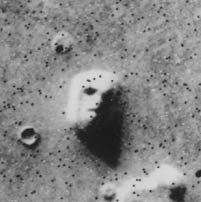
1976 Viking 1 orbiter took the infamous "Face on Mars" photo. "There is a hill on Mars that is roughly a kilometer across. It was first imaged by the Viking orbiter in the 1970s. It looks like a face. Richard Hoagland jumped on this, saying it didn't just look like a face, it was a face, carved by aliens for unknown reasons. He made this claim over and over, and then images taken later by probes with higher resolution cameras showed it didn't look much like a face at all. Hoagland then claimed that a) they botched the image, making it look less like a face, and b) he had predicted all along it wouldn't look like a face when better images were taken." *Phil Plait, Bad Astronomy


BIRTHS

1573 Christoph Scheiner SJ (25 July 1573 (or 1575) – 18 July 1650) was a Jesuit priest, physicist and astronomer in Ingolstadt. In 1603, Scheiner invented the pantograph, an instrument which could duplicate plans and drawings to an adjustable scale. Later in life he would invent a sunspot viewing appartus. In 1611, Scheiner observed sunspots; in 1612 he published the "Apelles letters" in Augsburg. Marcus Welser had the first three Apelles letters printed in Augsburg on January 5, 1612. They provided one of many reasons for the subsequent unpleasant argument between Scheiner and Galileo Galilei. *Wik Thus, in 1614, Galileo found himself in an unresoved dispute over priority with a mean and determined Jesuit. The fight was to grow meaner in subsequent years. It would play a major role in Galileo's Inquisitional trial eighteen years later. *James Reston, Jr., Galileo: A Life

1808 Johann Benedict Listing (25 July 1808 – 24 December 1882) wrote one of the earliest texts on Topology.  he studied the figure of the earth in minute detail; he made observations in meteorology, terrestrial magnetism, and spectroscopy; he wrote on the quantitative determination of sugar in the urine of diabetics; he promoted the nascent optical industry in Germany and better street lighting in Göttingen; he travelled to the world exhibitions in London 1851, Vienna 1873 and London 1876 as an observer for his government; he assisted in geodetic surveys; ... he invented a good many terms [other than topology], some of which have became current: "entropic phenomenona", "nodal points", "homocentric light", "telescopic system", " geoid" ...he coined "one micron" for the millionth of a metre ...*SAU

1825 Henry Wilbraham (July 25, 1825 – February 13, 1883) was an obscure English mathematician. His only noteworthy accomplishment was discovering and explaining the Gibbs phenomenon nearly fifty years before J. Willard Gibbs did. Gibbs and Maxime Bôcher, as well as nearly everyone else, were unaware of Wilbraham's work on the Gibbs phenomenon.*Wik

1857 Frank (Julian) Sprague (July 25, 1857 in Milford, Connecticut - October 25, 1934) was an engineer, inventor, and a pioneer in electric railway transportation. He started his career at sea in the U.S. Navy (1878). Later, he worked at the Brooklyn Navy Yard making plans for incadescent electric lamps on navy vessels, which led to joining Edison at Menlo Park (1883) He formed the Sprague Electric Railway and Motor Company in 1884, and became known as "the father of electric railway traction." when he installed the first U.S. electric trolley system (Richmond, Va., 1887). Edison took over this company in 1892. Sprague earned many patents, many for railway applications and diverse ideas such as electric toasters, electric signs, electric elevators and naval weaponry.*TIS

1901 Richard Gwilt was an actuary who worked for various Edinburgh insurance companies. He was a Fellow of the Faculty of Actuaries and of the Institute of Actuaries. *SAU

1915 Ivan Petrovich Egorov born the prominent Soviet geometer, *VFR It seems he died in 1990 but I can't find exact information.

1920 Rosalind Franklin (25 July 1920 – 16 April 1958) was an English scientist who contributed to the discovery of the molecular structure of deoxyribonucleic acid (DNA), a constituent of chromosomes that serves to encode genetic information. Beginning in 1951, she made careful X-ray diffraction photographs of DNA, leading her to suspect the helical form of the molecule, at least under the conditions she had used. When Watson saw her photographs, he had confirmation of the double-helix form that he and Crick then published. She never received the recognition she deserved for her independent work, but had died of cancer four years before the Nobel Prize was awarded to Crick and Watson.*TIS


DEATHS
1980 Euphemia Lofton Haynes (September 11, 1890 - July 25, 1980) After graduating from Washington D.C. Miner Normal School with distinction, she went on to earn an undergraduate mathematics major (and psychology minor) from Smith College in 1914. In 1917 she married Harold Appo Haynes.
Haynes pursued graduate studies in mathematics and education at the University of Chicago, earning a masters degree in education in 1930. She continued her graduate work in mathematics at the Catholic University of America where in 1943 she became the first African-American woman to earn a Ph.D. in mathematics. Her dissertation on "The Determination of Sets of Independent Conditions Characterizing Certain Special Cases of Symmetric Correspondences" was written under the supervision of Professor Aubrey Landrey.
Euphemia Haynes devoted her life to education in the Washington, D.C. area for forty-seven years, including teaching mathematics at Armstrong High School and Dunbar High School. She became a professor of mathematics at Miner Teachers College in 1930 where she established the mathematics department and served as chair of the Division of Mathematics and Business Education (in 1955 Minor Teachers College and Wilson Teachers College united to form the District of Columbia Teachers College.) From July 1966 to July 1967, Haynes served as the first woman to chair the District of Columbia School Board. She played a central role in the integration of the DC public schools. Upon her death, she left $700,000 to the Catholic University of America which was used to establish the Euphemia Lofton Haynes Chair in the Department of Education and to support a student loan fund in the School of Education. *ASC

1987 Charles Stark Draper (October 2, 1901 – July 25, 1987) American aeronautical engineer, educator, and science administrator who earned degrees from Stanford, Harvard, and MIT then, in 1939, became head of MIT's Instrumentation Laboratory, which was a centre for the design of navigational and guidance systems for ships, airplanes, and missiles from World War II through the Cold War. He developed gyroscope systems that stabilized and balanced gunsights and bombsights and which were later expanded to an inertial guidance system for launching long-range missiles at supersonic jet targets. He was "the father of inertial navigation." The Project Apollo contract for guiding man and spacecraft to the moon was also placed with the Instrumentation Lab.*TIS

1993 Vincent Joseph Schaefer (July 4, 1906 – July 25, 1993) U.S. chemist whose research in meteorology and weather control introduced cloud seeding. He worked on the physics of precipitation at the General Electric (GE) Research Laboratory in Schenectady, New York. Having discovered a method of producing a snowstorm under laboratory conditions, he proved the same was possible outdoors. On 13 Nov 1946, he flew over Mount Greylock in Massachusetts, successfully seeding clouds with pellets of dry ice (solid carbon dioxide) to produce the first snowstorm initiated by man. Later, he became founder and director of Atmospheric Sciences Research Center at State University of New York in Albany. *TIS


Credits :
*CHM=Computer History Museum
*FFF=Kane, Famous First Facts
*NSEC= NASA Solar Eclipse Calendar
*RMAT= The Renaissance Mathematicus, Thony Christie
*SAU=St Andrews Univ. Math History
*TIA = Today in Astronomy
*TIS= Today in Science History
*VFR = V Frederick Rickey, USMA
*Wik = Wikipedia
*WM = Women of Mathematics, Grinstein & Campbell

Thursday, 24 July 2014

On This Day in Math - July 24


In mathematics the art of proposing a question 
must be held of higher value than solving it.
~Goerg Cantor

Today is the 205th day of the year; there are 205 pairs of twin primes less than ten thousand. *Number Gossip


EVENTS
In 1673, Edmund Halley entered Queen's College, Oxford, as an undergraduate. Halley had attended the prestigious St. Paul's school, where in 1671, he was appointed captain, a position resembling today's student body president. He was an excellent student, and by the time he entered Queen's College, Oxford. At this young age, Halley already possessed, "... the basic facts and computations not only of navigation but also those which the practical astronomer is concerned when he sets about the delicate task of measuring the positions of celestial bodies in the sky," according to Colin Ronan in his book Edmond Halley: genius in eclipse *TIS

1860 Yale University authorized the granting of Doctor of Philosophy degrees. The first such degrees in the U.S. were awarded in 1861 by Yale to Eugene Schuyler, James Morris Whiton, and Arthur Williams Wright. [Kane, p. 215] *VFR

1911, American Hiram Bingham discovered the Lost City of the Incas, Vilcapampa (now called Machu Picchu), where the last Incan Emperors found refuge from the conquistadors.*TIS

1950, the first successful rocket launch from Cape Canaveral took place. "Bumper" No. 8 was a captured German V-2 rocket with the payload replaced by another rocket 700-pound Army-JPL Wac Corporal rocket on top. It was fired from Long-Range Proving Ground at Cape Canaveral. The first-stage V-2 climbed 10 miles, separated from the second-stage Corporal which traveled 15 more miles. (V-2 exploded). A previous attempt on 19 July 1950 of a similar launch was aborted on the pad. Image: A V2 just after launch (White Sands Missle Range, NM)*TIS

1991, a University of Manchester scientist announced the finding a planet outside of solar system. Andrew G. Lyne of the University of Manchester subsequently retracted his claim for a planet around pulsar PSR 1829-10 at the Jan 1992 meeting of the American Astronomical Society in Atlanta. He said that the modulation of radio waves coming from the pulsar was caused not by the presence of a planet but was in fact an artifact of the Earth's motion around the Sun. That possibility that had been considered but then discounted in earlier studies of the data.*TIS


BIRTHS

1827 Edward Olney (ALL-nee*) (July 24, 1827 - January 16, 1887) was born in Moreau, Saratoga County, New York. His ancestry can be traced back to Thomas Olney who accompanied Roger Williams in founding the city of Providence and colony of Rhode Island. Benjamin Olney's family moved to Oakland County, Michigan, in 1833 and, a few months later, settled on a farm in Weston, Wood County, Ohio.
Opportunities for formal education on the frontier were sparse, and Olney was largely self-taught. Calloway tells about Edward hiring a neighbor boy to drive the team of oxen on the Olney farm so that he could attend school for six weeks in order to master Day's Algebra. During this time he also ran an arithmetic school at home in the evenings in order to earn the money to pay for his substitute driver.
At age 19, Olney began his career as a teacher in the local elementary schools, while studying mathematics, natural science, and languages on his own. Cajori reports that "though he had never studied Latin, he began teaching it and kept ahead of the class because he 'had more application'." In 1848 Olney was hired as a teacher in the district school at Perrysburg, Ohio. The following year he was named principal of the grammar department in the new Union School. Over the next five years he would become the school's superintendent, marry Miss Sarah Huntington (a teacher at the school), and receive an honorary A. M. degree from Madison University (now Colgate University) in Hamilton, New York. Today there is an Olney School in Lake Township, Wood County, named after him.
In 1853 Olney was appointed Professor of Mathematics at Kalamazoo College, Michigan, where he remained for ten years and established the first mathematics curriculum at that institution. He inspired his colleagues and students alike with "his high Christian aims; his generous, self-sacrificing spirit; his thoroughness in government and discipline; and the inspiration which attended him." Although he insisted that his students recite using exact and correct language, he always tried to simplify the explanations of concepts and processes and make them more understandable. Kalamazoo college later conferred the honorary degree, LL. D. upon him.
In 1863 Olney was named Professor of Mathematics at the University of Michigan, succeeding George P. Williams, whose title was then changed to Professor of Physics. In those days the freshmen at Michigan were taught by inexperienced instructors, but once a week they had to recite for Professor Olney. His reputation for being a stern disciplinarian and a stickler for correct details earned him the nickname "Old Toughy." Nevertheless, he took great pains to see that the poorer students obtained help in making up their deficiencies. According to a former student, G. C. Comstock, "He was not a harsh man, and although the students stood in awe of him, I think that he was generally liked by them."
While he was at Michigan, Professor Olney began writing a series of successful mathematics textbooks for use in both grammar schools and colleges. In many places these displaced the works of such highly regarded authors as Charles Davies and Elias Loomis. Among the titles are: Elements of Arithmetic for Intermediate, Grammar, and Common Schools (1877), A University Algebra (1873), Elementary Geometry (1883), Elements of Trigonometry (1870), and A General Geometry and Calculus (1871) (online). Olney's treatment of calculus was criticized for using infinitesimal methods, but praised for giving "the elegant method, discovered by Prof. James C. Watson [Professor of Astronomy at Michigan], of demonstrating the rule for differentiating a logarithm without the use of series." It is said that Olney preferred geometry to analysis, and when teaching calculus, he would attempt to translate analytical expressions into their geometrical equivalents. This, along with his own struggles in self-education, contributed to his great success as a teacher and textbook author. Edward Olney died on January 16, 1887, after suffering for three years from the effects of a stroke. *David E. Kullman

1851 Friedrich Hermann Schottky. (24 July 1851 – 12 August 1935) was a German mathematician who worked on elliptic, abelian, and theta functions and invented Schottky groups. He was born in Breslau, Germany (now Wrocław, Poland) and died in Berlin.
He is also the father of Walter H. Schottky, the German physicist and inventor of a variety of semiconductor concepts.*Wik

1853 Henri-Alexandre Deslandres (July 24, 1853 – January 15, 1948) French astrophysicist who invented a spectroheliograph (1894) to photograph the Sun in monochromatic light (about a year after George E. Hale in the U.S.) and made extensive studies of the solar chromosphere and solar activity. He worked at the Paris and Meudon Observatories. His investigation of molecular spectra produced empirical laws presaging those of quantum mechanics. He observed spectra of planets and stars and measured their radial velocities of, and he determined the rotation rates of Uranus, Jupiter and Saturn (shortly after James E. Keeler).*TIS

1856 Emile Picard (24 July 1856 – 11 December 1941) born. Picard's mathematical papers, textbooks, and many popular writings exhibit an extraordinary range of interests, as well as an impressive mastery of the mathematics of his time. Modern students of complex variables are probably familiar with two of his named theorems. His lesser theorem states that every nonconstant entire function takes every value in the complex plane, with perhaps one exception. His greater theorem states that an analytic function with an essential singularity takes every value infinitely often, with perhaps one exception, in any neighborhood of the singularity. He also made important contributions in the theory of differential equations, including work on Picard–Vessiot theory, Painlevé transcendents and his introduction of a kind of symmetry group for a linear differential equation, the Picard group. In connection with his work on function theory, he was one of the first mathematicians to use the emerging ideas of algebraic topology. In addition to his path-breaking theoretical work, Picard also made important contributions to applied mathematics, including the theories of telegraphy and elasticity. His collected papers run to four volumes.
Like his contemporary, Henri Poincaré, Picard was much concerned with the training of mathematics, physics, and engineering students. He wrote a classic textbook on analysis and one of the first textbooks on the theory of relativity. Picard's popular writings include biographies of many leading French mathematicians, including his father in law, Charles Hermite.*Wik

1871 Paul Epstein (July 24, 1871 – August 11, 1939) was a German mathematician. He is known for his contributions to number theory, in particular the Epstein zeta function.
Epstein was raised in Frankfurt where his father was a professor. He received his PhD in 1895 from the University of Strasbourg. From 1895 to 1918 he was a Privatdozent at the University in Strasbourg, which at that time was part of the German Empire. At the end of World War I the city of Strasbourg reverted to France, and Epstein, being German, had to return to Frankfurt.
Epstein was appointed to a non-tenured post at the university and he lectured in Frankfurt from 1919. Later he was appointed professor at Frankfurt. However, after the Nazis came to power in Germany he lost his university position. Because of his age he was unable to find a new position abroad, and finally committed suicide by abusing barbital, fearing Gestapo torture. *Wik

1888 Dunham Jackson (July 24, 1888, Bridgewater, Massachusetts – November 6, 1946) was a mathematician who worked within approximation theory, notably with trigonometrical and orthogonal polynomials. He is known for Jackson's inequality. He was awarded the Chauvenet Prize in 1935. His book Fourier Series and Orthogonal Polynomials (dated 1941) was reprinted in 2004.
Harold Bacon recalls that Jackson was an inspired writer of limericks. When Bacon purchased Jackson's "The Theory of Approximations" he took it to Jackson's office and requested he sign it, suggesting a limerick. Without any visible prethought Jackson wrote on the flyleaf:
There was a young fellow named Bacon
Whose judgement of books was mistaken
In a moment too rash
He relinquished some cash
And his faith in the Author was shaken
*Steven Krantz, Mathematical Apocrypha Redux

1923 Christine Mary Hamill (July 24, 1923 – March 24, 1956) was an English mathematician who specialized in group theory and finite geometry. After receiving her Ph.D. at the University of Cambridge in 1951, she was appointed to a lectureship in the University of Sheffield and later was appointed lecturer in the University College, Ibadan, Nigeria.*Wik


DEATHS

1934 Hans Hahn (September 27, 1879 – July 24, 1934) was an Austrian mathematician who is best remembered for the Hahn-Banach theorem. He also made important contributions to the calculus of variations, developing ideas of Weierstrass. *SAU

1964 Finlay Freundlich (May 29, 1885 – July 24, 1964) was a distinguished German astronomer who worked with Einstein on measurements of the orbit of Mercury to confirm the general theory of relativity. He left Germany to avoid Nazi rule and became the Napier Professor of Astronomy at St Andrews. *SAU

1974 Sir James Chadwick (20 October 1891 – 24 July 1974) English physicist who received the Nobel Prize for Physics (1935) for his discovery of the neutron. He studied at Cambridge, and in Berlin under Geiger, then worked at the Cavendish Laboratory with Rutherford, where he investigated the structure of the atom. He worked on the scattering of alpha particles and on nuclear disintegration. By bombarding beryllium with alpha particles, Chadwick discovered the neutron - a neutral particle in the atom's nucleus - for which he received the Nobel Prize for Physics in 1935. In 1932, Chadwick coined the name "neutron," which he described in an article in the journal Nature. He led the UK's work on the atomic bomb in WW II, and was knighted in 1945*TIS

1983 Eberhard Frederich Ferdinand Hopf (April 4, 1902, Salzburg, Austria-Hungary – July 24, 1983, Bloomington, Indiana) was a mathematician and astronomer, one of the founding fathers of ergodic theory and a pioneer of bifurcation theory who also made significant contributions to the subjects of partial differential equations and integral equations, fluid dynamics, and differential geometry. The Hopf maximum principle is an early result of his (1927) which is one of the most important techniques in the theory of elliptic partial differential equations.*Wik

1992 Lillian Rose Vorhaus Kruskal Oppenheimer (October 24, 1898 in New York City – July 24, 1992) was an American origami pioneer. She popularized origami in the West starting in the 1950s, and is credited with popularizing the Japanese term origami in English-speaking circles, which gradually supplanted the literal translation paper folding that had been used earlier. In the 1960s she co-wrote several popular books on origami with Shari Lewis.
She was the mother of three sons William Kruskal(developed the Kruskal-Wallis one-way analysis of variance), Martin David Kruskal(co-inventor of solitons and of surreal numbers), and Joseph Kruskal ( Kruskal's algorithm for computing the minimal spanning tree (MST) of a weighted graph) who all went on to be prominent mathematicians. Her grandson Clyde P. Kruskal (son of Martin) is an American computer scientist,working on parallel computing architectures, models, and algorithms. *Wik

2005 Sir Richard Doll (28 October 1912 – 24 July 2005) British epidemiologist who was one of the first two researchers to link cigarette smoking to lung cancer, as published in the British Medical Journal in 1950. In the same journal, fifty years later, Doll published (22 Jun 2004) the first research that quantified the damage over the lifetime of a generation, based on a 50-year study of a group of almost 35,000 British doctors who smoked. The study found that almost half of persistent cigarette smokers were killed by their habit, and a quarter died before age 70. Persons who quit by age 30 had normal life expectancy. Even quitting at age 50 saved six more years of life over those who continued smoking. He studied other health effects, such as those caused by asbestos and electricmagnetic fields.*TIS


Credits :
*CHM=Computer History Museum
*FFF=Kane, Famous First Facts
*NSEC= NASA Solar Eclipse Calendar
*RMAT= The Renaissance Mathematicus, Thony Christie
*SAU=St Andrews Univ. Math History
*TIA = Today in Astronomy
*TIS= Today in Science History
*VFR = V Frederick Rickey, USMA
*Wik = Wikipedia
*WM = Women of Mathematics, Grinstein & Campbell

Wednesday, 23 July 2014

On This Day in Math - July 23


Men love to wonder, and that is the seed of science.

-Ralph Waldo Emerson

The 204th day of the year; 204 is the sum of consecutive primes in two different ways: as the sum of a twin prime (101 + 103) and as the sum of six consecutive primes (23 + 29 + 31 + 37 + 41 + 43). (one might wonder what is the smallest number that is the sum of consecutive primes in more than one way... And what is the smallest prime number that is expressible as the sum of consecutive Primes in more than one way?)
(spoiler)

And a trio from *Derek Orr @MathYearRound :
204 = 1²+2²+3²+4²+5²+6²+7²+8².
Sum of first 204 primes is prime.
100...00099...999 (204 0's and 204 9's) is prime.


EVENTS

594 The Sun was well up (17°) at 6:11 am when totality occurred. On a warm summer's morning it must have got surprisingly cold as totality approached, giving a clue that something unusual was about to happen. At 258 km wide this was an Eclipse with a very wide track and a good duration of over 3 minutes. The Eclipse track traveled into Denmark, Norway, Sweden, Finland, Estonia and Russia. *NSEC

1754 Joseph Louis Lagrange, 18, published his first work in the form of a letter in Italian (He was Italian born. Only his great-great-grandfather Lagrange was French, all other ancestors were Italian). A month later he realized that he had rediscovered Leibniz’s formula for the n-th derivative of a product. *VFR

1788 Jefferson's interest in surveying, and measurement in general led him to inquire of Benjamin Vaughan, then of England, about a British odometer, "I have heard that they make in London an Odometer, which may be made fast between two spokes of any wheel, and will indicate the revolutions of the wheel by means of a pendulum which always keeps it’s vertical position while the wheel is turning round and round. Thus [see Fig. 1.] I will thank you to inform me whether it’s indications can be depended on, and how much the instrument costs. " *Jefferson Letters

1829, William Austin Burt, a surveyor, of Mount Vernon, Michigan, received a patent for his typographer, a forerunner of the typewriter (U.S. No. 5581X). The Patent Office fire of 1836 destroyed the original patent model. Burt's typographer was a heavy, box-like contraption, made almost entirely of wood. Like today's familiar toy typewriter, the typographer had type mounted on a metal wheel, with a rotating, semicircular frame. By turning a crank, Burt was able to move the wheel until it came to the letter he wanted. Then he would pull a lever, driving the type against the paper and making an inked impression. *TIS

1904 The ice cream cone was introduced at the St. Louis world’s fair.*VFR by some accounts, the ice cream cone was invented by Charles E. Menches during the Louisiana Purchase Exposition in St. Louis. *TIS

1962 Tens of millions of people watched a historic broadcast as Telstar beamed live transatlantic video into viewers’ living rooms for the first time. The age of satellite television had dawned.
In homes across Rome, people barely touched their dinners. London’s pubs were packed, but bartenders served nary a drink. Throughout Europe, more than 100 million people huddled around television sets on the evening of July 23, 1962, to tune in to history. With Europeans watching eagerly, a black-and-white image of the Statue of Liberty flickered onto their screens. The picture itself was not particularly noteworthy except for one thing: it was live, via satellite. *History.Com
The first broadcast was to have been remarks by President John F. Kennedy, but the signal was acquired before the president was ready, so the lead-in time was filled with a short segment of a televised game between the Philadelphia Phillies and the Chicago Cubs at Wrigley Field before the President's address.

1995 The comet Hale–Bopp was discovered on July 23, 1995, independently by two observers, Alan Hale and Thomas Bopp, both in the United States. Hale–Bopp's orbital position was calculated as 7.2 astronomical units (AU) from the Sun, placing it between Jupiter and Saturn and by far the greatest distance from Earth at which a comet had been discovered by amateurs. It was discovered at such a great distance from the Sun that it raised expectations that the comet would brighten considerably by the time it passed close to Earth. Although predicting the brightness of comets with any degree of accuracy is very difficult, Hale–Bopp met or exceeded most predictions when it passed perihelion on April 1, 1997. The comet was dubbed the Great Comet of 1997.


BIRTHS

1773 Sir Thomas Makdougall Brisbane, (23 July 1773 – 27 January 1860) Baronet British soldier and astronomical observer for whom the city of Brisbane, Australia, is named. He was Governor of NSW (1821-25). Mainly remembered as a patron of science, he built an astronomical observatory at Parramatta, Australia, made the first extensive observations of the southern stars since Lacaille in (1751-52) and built a combined observatory and magnetic station at Makerstoun, Roxburghshire, Scotland. He also conducted (largely unsuccessful) experiments in growing Virginian tobacco, Georgian cotton, Brazilian coffee and New Zealand flax.*TIS

1775 Etienne Louis Malus (23 July 1775 – 24 February 1812) born in Paris. He was the son on the Treasurer of France. His primary interest was mathematical optics. [Ivor Grattan-Guiness, Convolutions in French Mathematics, 1800–1840, p. 473] *VFR He studied geometric systems called ray systems, closely connected to Julius Plücker's line geometry. He conducted experiments to verify Christiaan Huygens' theories of light and rewrote the theory in analytical form. His discovery of the polarization of light by reflection was published in 1809 and his theory of double refraction of light in crystals, in 1810.
Malus attempted to identify the relationship between the polarising angle of reflection that he had discovered, and the refractive index of the reflecting material. While he deduced the correct relation for water, he was unable to do so for glasses due to the low quality of materials available to him (most glasses at that time showing a variation in refractive index between the surface and the interior of the glass). It was not until 1815 that Sir David Brewster was able to experiment with higher quality glasses and correctly formulate what is known as Brewster's law.
Malus is probably best remembered for Malus' law, giving the resultant intensity, when a polariser is placed in the path of an incident beam. His name is one of the 72 names inscribed on the Eiffel tower.*Wik

1854 Ivan Vladislavovich Sleszynski (23 July 1854 in Lysianka, Cherkasy, Kiev gubernia, Ukraine - 9 March 1931 in Kraków, Poland)Sleszynski's main work was on continued fractions, least squares and axiomatic proof theory based on mathematical logic. In a paper of 1892, based on his doctoral dissertation, he examined Cauchy's version of the Central Limit Theorem using characteristic function methods, and made several significant improvements and corrections. Because of the work, he is recognised as giving the first rigorous proof of a restricted form of the Central Limit Theorem. *SAU

1856 Bal Gangadhar Tila (23 July 1856 – 1 August 1920, age 64) Scholar, mathematician, philosopher, and militant nationalist who helped lay the foundation for India's independence. Tilak was a great Sanskrit scholar and astronomer. He fixed the origin and date of Rigvedic Aryans, which was highly acclaimed and universally accepted by orientalists of his time. He founded (1914) and served as president of the Indian Home Rule League and, in 1916, concluded the Lucknow Pact with Mohammed Ali Jinnah, which provided for Hindu-Muslim unity in the struggle for independence.*TIS

1886 Walter Schottky (23 July 1886, Zürich, Switzerland – 4 March 1976, Pretzfeld, West Germany) Swiss-born German physicist whose research in solid-state physics led to development of a number of electronic devices. He discovered the Schottky effect, an irregularity in the emission of thermions in a vacuum tube and invented the screen-grid tetrode tube (1915). The Schottky diode is a high speed diode with very little junction capacitance (also known as a "hot-carrier diode" or a "surface-barrier diode.") It uses a metal-semiconductor junction as a Schottky barrier, rather than the semiconductor-semiconductor junction of a conventional diode. *TIS

1906 Vladimir Prelog (23 July 1906 – 7 January 1998) Yugoslavian-born Swiss chemist who shared the 1975 Nobel Prize for Chemistry with John W. Cornforth for his work on the stereochemistry of organic molecules and reactions. Stereochemistry is the study of the three-dimensional arrangements of atoms within molecules. He authored systematic naming rules for molecules and their mirror-image version, that is, which configuration will be referred to as "dextra" and which will be the "levo" (right or left). Also, by X-ray diffraction, he elucidated the structure of several antibiotics.*TIS

1920 Chushiro Hayashi (July 23, 1920 – February 28, 2010) Japanese astrophysicist who with his coworkers created evolutionary models for stars of mass between 0.01 to 100 times that of the Sun. In 1950, he contributed to the abg (Alpher, Bethe, Gamow) (also see April 1, Events) model of nucleosynthesis in the hot big bang. Hayashi pioneered in modeling stellar formation and pre-main sequence evolution along “Hayashi tracks” (1961) downward on the Hertzprung-Russell diagram until stars reach the main sequence. He and Takenori Nakano studied the formation of low-mass, brown dwarf stars. Hayashi also investigated the formation of the solar system and of the earth and its atmosphere. He retired in 1984. He was presented the Bruce Medal in 2004 for lifetime contributions to astronomy.*TIS

1928 Vera Rubin (July 23, 1928 - ) is an American astronomer who pioneered work on galaxy rotation rates. Her opus magnus was the uncovering of the discrepancy between the predicted angular motion of galaxies and the observed motion, by studying galactic rotation curves. This phenomena became known as the galaxy rotation problem. Currently, the theory of dark matter is the most popular candidate for explaining this. The alternative theory of MOND (Modified Newtonian Dynamics) has little support in the community.
Rubin received the Gold Medal of the Royal Astronomical Society in 1996. She was only the second female recipient of this medal, the first being Caroline Herschel in 1828. The asteroid 5726 Rubin is named in her honor. *TIA

1930 Daniel McCracken, (July 23, 1930 – July 30, 2011) who wrote the first textbook on FORTRAN, was born. A student of mathematics and chemistry, McCracken started working in computers at General Electric in 1951, training workers in using the new technology. Based on this teaching experience, McCracken wrote several important computer programming textbooks, most notably ""A Guide to FORTRAN Programming"" in 1961.*CHM

1932 Derek Thomas "Tom" Whiteside FBA (July 23, 1932–April 22, 2008[4]) was a British historian of mathematics. He was the foremost authority on the work of Isaac Newton and editor of The Mathematical Papers of Isaac Newton. From 1987 to his retirement in 1999, he was the Professor of the History of Mathematics and Exact Sciences at Cambridge University. *Wik

1952 Mark David Weiser (July 23, 1952 – April 27, 1999) American computer scientist and visionary who developed the pioneering idea for what he referred to as "ubiquitous computing," He coined that term in 1988 to describe a future in which PC's will be replaced with tiny computers embedded in everyday "smart" devices (everyday items such as coffeepots and copy machines) and their connection via a network. He said, "First were mainframes, each shared by lots of people. Now we are in the personal computing era, person and machine staring uneasily at each other across the desktop. Next comes ubiquitous computing, or the age of calm technology, when technology recedes into the background of our lives." *TIS


DEATHS

1903 Eduard Weyr (22 June 1852 Praha – 23 July 1903 Záboří) wrote geometrical papers and books mainly in projective geometry and differential geometry. He also worked on algebra, in particular studying linear algebra, matrices and hypercomplex systems.
Weyr published Differential calculus in 1902. This led to controversy with a young mathematician J V Pexider who sharply criticised Weyr's textbook. Jindrich Beèváo and Ludek Zajièek give an interesting account of this episode in a paper in the book .*Math.info website

1916 William Ramsay (2 October 1852, Glasgow, Scotland - 23 July 1916 (aged 63)
High Wycombe, Bucks., England) died. Ramsay was a British chemist who discovered the four gases neon, argon, krypton and xenon. He also determined they belonged with helium and radon to form a family of gases called the noble gases. This discovery would earn him the 1904 Nobel Prize in Chemistry.*Science History

1932 Alberto Santos-Dumont (July 20, 1873 – July 23, 1932) was a Brazilian aviation pioneer, deemed the Father of Aviation by his countrymen. At the age of 18, Santos-Dumont was sent by his father to Paris where he devoted his time to the study of chemistry, physics, astronomy and mechanics. His first spherical balloon made its first ascension in Paris on 4 July 1898. He developed steering capabilities, and in his sixth dirigible on 19 Oct 1901 won the "Deutsch Prize," awarded to the balloonist who circumnavigated the Eiffel Tower. He turned to heavier-than-air flight, and on 12 Nov 1906 his 14-BIS airplane flew a distance of 220 meters, height of 6 m. and speed of 37 km/h. to win the "Archdecon Prize." In 1909, he produced his famous "Demoiselle" or "Grasshopper" monoplanes, the forerunners of the modern light plane. *TIS

1964 Samarendra Nath Roy or S. N. Roy (11 December 1906 – 23 July 1964). He was well known for his pioneering contribution to multivariate statistical analysis, mainly that of the Jacobians of complicated transformations for various exact distributions, rectangular coordinates and the Bartlett decomposition. His dissertation included the Post master's work at the Indian Statistical Institute where he worked under Mahalanobis. To commemorate his Birth Centenary an International Conference on "Multivariate Statistical Methods in the 21st Century: The Legacy of Prof. S.N. Roy" was held at Kolkata, India during December 28–29, 2006. The Journal of Statistical Planning and Inference published a special Issue for celebrating of the Centennial of Birth of S. N. Roy*Wik

1964 W. W. Rogosinski died. *VFR He wrote on Fourier Series with G.H. Hardy

1993 Florence Nightingale David, (August 23, 1909 – July 23, 1993) also known as F. N. David was an English statistician, born in Ivington, Herefordshire, England. She was named after Florence Nightingale, who was a friend of her parents.
David read mathematics at Bedford College for Women in London. After graduation, she worked for the eminent statistician Karl Pearson at University College, London as his research student. She calculated the distribution of correlation coefficients, producing in 1938 her first book, Tables of the correlation coefficient.
After Karl Pearson died in 1934, she returned to the Biometrics laboratory to work with Jerzy Neyman where she submitted her last four published papers as her PhD thesis. During World War II, David worked for the Ministry of Home Security. In late 1939 when war had started but England had not yet been attacked, she created statistical models to predict the possible consequences of bombs exploding in high density populations such as the big cities of England and especially London. From these models, she determined estimates of harm to humans and damage to non-humans This included the possible numbers living and dead, the reactions to fires and damaged buildings as well as damages to communications,utilities such as phones, water, gas, electricity and sewers. As a result when the Germans bombed London in 1940 and 1941, vital services were kept going and her models were updated and modified with the evidence from the real harms and real damage.
David became head of the Statistics Department at the University of California at Riverside in 1970.*Wik

2012  Sally Kristen Ride (May 26, 1951 – July 23, 2012) was an American physicist and a former NASA astronaut. Ride joined NASA in 1978, and in 1983 became the first American woman—and then-youngest American, at 32—to enter space. In addition to being interested in science, she was a nationally ranked tennis player. Ride attended Swarthmore College and then transferred to Stanford University, graduating with a bachelor's degree in English and physics. Also at Stanford, she earned a master's degree and a Ph.D. in physics, while doing research in astrophysics and free electron laser physics.In 1987 she left NASA to work at Stanford University's Center for International Security and Arms Control.
Sally Ride died on July 23, 2012 after a 17-month battle with pancreatic cancer.   US President Barack Obama called her a "national hero and a powerful role model" who "inspired generations of young girls to reach for the stars."*Wik


Credits :
*CHM=Computer History Museum
*FFF=Kane, Famous First Facts
*NSEC= NASA Solar Eclipse Calendar
*RMAT= The Renaissance Mathematicus, Thony Christie
*SAU=St Andrews Univ. Math History
*TIA = Today in Astronomy
*TIS= Today in Science History
*VFR = V Frederick Rickey, USMA
*Wik = Wikipedia
*WM = Women of Mathematics, Grinstein & Campbell

Tuesday, 22 July 2014

On This Day in Math - July 22


The mathematician may be compared to a designer of garments, who is utterly oblivious of the creatures whom his garments may fit. To be sure, his art originated in the necessity for clothing such creatures, but this was long ago; to this day a shape will occasionally appear which will fit into the garment as if the garment had been made for it. Then there is no end of surprise and delight.

~David van Dantzig


This is the 203rd  day of the year; 203 is the 6th Bell number, i.e. it is the number of partitions of a set of size 6.

EVENTS

1694 Johann Bernoulli sent “L’Hospital’s rule” to L’Hospital under the terms of their agreement of 17 March 1694. *VFR The agreement between them led to the first real calculus text in 1696.

1925 After Norbert Wiener suggested to his friend Phillip Franklin in a letter that they hang a sign outside their office at MIT reading “Wiener and Franklin. Wholesale and Retail Mathematicians and Exporters,” he wrote: “As to the state of the market: differential geometry seems rather quiet, and some of the principal operators have deserted it for other securities. Real and complex variables continue firm, without much change. Analysis situs has a bull market. Bull operators have been very active in differential equations, also. Quantum theory continues speculative, with chances of a very sharp rise, but the market contains a lot of wildcat stock. Hilbert, Brouwer, and Co. are doing well with mathematical logic.” From Science in America, ed. Nathan Reingold, p. 384.*VFR

1933 Wiley Post startled the world by completing the first solo airplane flight around the world. The 15,400 mile flight lasted seven days, 18 hours, 49 and 1/2 minutes. Two years later he was killed in an airplane crash with humorist, Will Rogers. [Scientific American, November 1933]*VFR   He had made an accompanied flight around the world in 1931. Born 22 Nov 1898, Wiley Post made his first solo flight in 1926, the year he got his flying license, signed by Orville Wright, despite wearing a patch over his left eye, lost in an oilfield accident. Post invented the first pressurized suit to wear when he flew around the world. Another credit was his research into the jet streams. He died with his passenger, humorist Will Rogers, 15 Aug 1935 in a plane crash in Alaska.*TIS


1976 “researchers from Univ of Illinois announced they had found an unavoidable set containing 1936 reducible configurations effectively proving the four color theorem.*VFR

1978 Roger Apéry gave a talk entitled "Sur l'irrationalité de ζ(3)." to outline proofs that ζ(3) and ζ(2) were irrational. Alfred J. Van der Poorten's reprint of the talk describes the less than hopeful anticipation of the audience.,
"The board of programme changes informed us that R. Apery (Caen) would speak Thursday, 14:00 ‘Sur l’irrationalit'e de ζ(3)’. Though there had been earlier rumours of his claiming a proof, scepticism was general. The lecture tended to strengthen
this view to rank disbelief. Those who listened casually, or who were afflicted with being non-Francophone, appeared to hear only a sequence of unlikely assertions"
"I heard with some incredulity that, for one, Henri Cohen (then Bordeaux, now Grenoble) believed that these claims might well be valid. Very much intrigued, I joined Hendrik Lenstra (Amsterdam) and Cohen in an evening’s discussion in which Cohen explained and demonstrated most of the details of the proof. We came away convinced that Professeur Apery had indeed found a quite miraculous and magnificent demonstration of the irrationality of ζ(3)." *, Poorten, A PROOF THAT EULER MISSED , with special thanks to Tim Pentilla who helped me establisth the date of the original address.

1983 Science reported that Gerd Faltings of Wuppertal University in Germany proved the sixty-year­old Mordell conjecture: most equations of degree higher than three have only a finite number of rational solutions. In particular, this applies to Fermat’s Last Theorem. [Mathematics Magazine 57 (1984), p. 52].*VFR  In number theory, the Mordell conjecture is the conjecture made by Mordell (1922) that a curve of genus greater than 1 over the field Q of rational numbers has only finitely many rational points. The conjecture was later generalized by replacing Q by a finite extension. It was proved by Gerd Faltings (1983), and is now known as Faltings' theorem.

1997Apple Announces OS 8-Apple Computer Inc. announces a new operating system for its Macintosh computers, OS 8. An important move at a time when Apple's upper-level management and profits were experiencing significant problems, the new operating system offered new features such as easier integration of the Internet and a three-dimensional look. Immediately after the announcement, the software earned positive reviews from users, although it was not expected to end Apple's financial troubles as it faced growing competition from improvements in the Microsoft Windows operating system used on IBM-compatible PCs. *CHM

2009 A total solar eclipse the longest-lasting total eclipse of the 21st century – takes place. It lasted a maximum of 6 minutes and 39 seconds off the coast of Southeast Asia, causing tourist interest in eastern China, Japan, India, Nepal and Bangladesh. It will not be surpassed until 13 June 2132. *Wik

2381 The maximum theoretical length for a British total eclipse is 5.5 minutes. The eclipse of June 16, 885 lasted for almost 5 minutes and the same will be true for the Scottish total eclipse of 22 Jul, 2381. This TSE will be the first total solar eclipse
in Amsterdam since 17 June 1433. *NSEC


BIRTHS
1784 Friedrich Wilhelm Bessel born (22 July 1784 – 17 March 1846). He is noted for the special class of functions that have become an indispensable tool in applied mathematics. This, like all of his mathematical work, was motivated by his work in astronomy. *VFR    In 1809, at the age of 26, Bessel was appointed director of Frederick William III of Prussia's new Königsberg Observatory and professor of astronomy, where he spent the rest of his career. His monumental task was determining the positions and proper motions for about 50,000 stars, which allowed the first accurate determination of interstellar distances. Bessel's work in determining the constants of precession, nutation and aberration won him further honors. Other than the sun, he was the first to measure the distance of a star, by parallax, of 61 Cygni (1838). In mathematical analysis, he is known for his Bessel function. *TIS

1795 Gabriel Lam´e (22 July 1795 – 1 May 1870) born in Tours, in today's département of Indre-et-Loire.
He became well known for his general theory of curvilinear coordinates and his notation and study of classes of ellipse-like curves, now known as Lamé curves, and defined by the equation:
 \left|\,{x\over a}\,\right|^n + \left|\,{y\over b}\,\right|^n =1
where n is any positive real number.
He is also known for his running time analysis of the Euclidean algorithm. Using Fibonacci numbers, he proved that when finding the greatest common divisor of integers a and b, the algorithm runs in no more than 5k steps, where k is the number of (decimal) digits of b. He also proved a special case of Fermat's last theorem. He actually thought that he found a complete proof for the theorem, but his proof was flawed. The Lamé functions are part of the theory of ellipsoidal harmonics. *Wik
Piet Hein's Super Ellipse is a Lame Curve

1822 Gregor Mendel (July 20, 1822 – January 6, 1884) (Original name (until 1843) Johann Mendel). Austrian pioneer in the study of heredity. He spent his adult life with the Augustinian monastery in Brunn, where as a geneticist, botanist and plant experimenter, he was the first to lay the mathematical foundation of the science of genetics, in what came to be called Mendelism. Over the period 1856-63, Mendel grew and analyzed over 28,000 pea plants. He carefully studied for each their plant height, pod shape, pod color, flower position, seed color, seed shape and flower color. He made two very important generalizations from his pea experiments, known today as the Laws of Heredity. Mendel coined the present day terms in genetics: recessiveness and dominance.

1882 Konrad Knopp (22 July 1882 – 20 April 1957) born. He is best known for comprehensive book on infinite series.*VFR

1887 - Gustav Hertz born (22 July 1887 – 30 October 1975) .Hertz was a German physicist who shares the 1925 Nobel Prize in Physics with James Franck for their Frank-Hertz experiment. The Frank-Hertz experiment shows that an atom absorbs energy in discrete amounts, confirming the quantum theory of atoms. This experiment was an important step confirming the Bohr model of the atom. *TIS

1902 Reinhold Baer (July 22, 1902 – October 22, 1979) Baer's mathematical work was wide ranging; topology, abelian groups and geometry. His most important work, however, was in group theory, on the extension problem for groups, finiteness conditions, soluble and nilpotent groups.*SAU

1914 Edward (Rolke) Farber was an American who invented a portable, battery-operated stroboscopic flash unit for still cameras (1937) that effectively "stopped action." He began his career as a photojournalist on the staff of the Milwaukee Journal. After studying electrical engineering at Northwestern University, Farber went on to design flash equipment for the U.S. Army during World War II, and then established his own electronic-flash manufacturing firm. He was a good friend and collaborator of Harold Edgerton and developed the first practical portable strobe flash for news photographers. In 1942, the Milwaukee Journal became the first newspaper to furnish all of its photographers with the portable flash. Weighing only 13.5 pounds, it was a considerable improvement over the 90-pound units photographers used prior to Farber's invention. He sold his Strobe Research firm in 1954. He was a photographic adviser to the U.S. Government during its intercontinental ballistic missile testing program in the late 1950's.*TIS

1935 John Robert Stallings (July 22, 1935 – November 24, 2008) In 1968 Stallings published his most famous paper On torsion-free groups with infinitely many ends in the Annals of Mathematics. L Neuwirth explains what is contained in the paper:-
In this remarkable paper, the author, using very little besides his bare hands, proves the following theorem:
Theorem
1. If G is a torsion-free, finitely presented group, with infinitely many ends, then G is a non-trivial free product.
This simple sounding theorem proves to be very powerful, implying
(with a little work) the following two theorems:
Theorem
2. A torsion-free, finitely generated group, containing a free subgroup of finite index, is itself free.
Theorem
3. A finitely generated group of cohomological dimension 1 is free.
This last theorem answers a question which had been unanswered for over ten years and which had received considerable attention over that period of time. Theorem
2 answers a question of J-P Serre, who proved an analogue of Theorem 2 for pro-p groups. The proof of Theorem 1 is both combinatorial and geometric in nature and, as suggested, is self-contained.
For this truly outstanding paper the American Mathematical Society awarded Stallings their Frank Nelson Cole Prize in Algebra in 1970. Also in 1970 he was invited to address the International Congress of Mathematicians in Nice, France. He gave a talk on Group theory and 3-manifolds. He had been honoured in the previous year when invited to give the James K Whittemore Lecture in Mathematics at Yale University in 1969. His topic was Group theory and three-dimensional manifolds. This lecture and his Nice address were both published in 1971.
Among the 50 or so papers Stalling published, we should highlight another two which have proved particularly important: Topology on finite graphs (1983) and Non-positively curved triangles of groups (1991). The first of these introduced the 'Stallings subgroup graph' as a method to describe subgroups of free groups. It also introduced a foldings technique now known as 'Stallings' foldings method' which has been the basis for much later work. The second of these two papers introduced the notion of a triangle of groups which became the basis for later work on the theory of complexes of groups.*SAU


DEATHS

1575  Francisco Maurolico (Messina, Sicily, 16 Sept 1494 - near Messina, Sicily, 21/22 July 1575) was an Italian Benedictine who wrote important books on Greek mathematics. He also worked on geometry, the theory of numbers, optics, conics and mechanics.*SAU

1826 Giuseppe Piazzi (July 16, 1746 – July 22, 1826) Italian astronomer and author, born in Valtellina, discovered the first asteroid - Ceres. He established an observatory at Palermo and mapped the positions of 7,646 stars. He also discovered that the star 61 Cygni had a large Proper Motion , which led Bessel to chose it as the object of his parallax studies. He discovered Ceres in 1801, but was able to make only three observations. Fortuitously, Gauss had recently developed mathematical techniques that allowed the orbit to be calculated. This was the first asteroid discovered. The thousandth Asteroid discovered was named Piazzia in his honor.*TIS  (His dates of birth and death are six days apart)

1869 John A. Roebling (June 12, 1806 – July 22, 1869) German-American engineer who pioneered the design and construction of suspension bridges. In 1831 he immigrated to Saxonburg, near Pittsburgh, Pa., and shortly thereafter was employed by the Pennsylvania Railroad Corp. to survey its route across the Allegheny Mountains. He then demonstrated the practicability of steel cables in bridge construction and in 1841 established at Saxonburg the first U.S. factory to manufacture steel-wire rope. Roebling utilized steel cables in the construction of numerous suspension bridges including a railroad suspension bridge over the Niagara River at Niagara Falls (1851-55). He designed the Brooklyn Bridge. He died from injuries while supervising preliminary construction operations.*TIS

1915 Sir Sandford Fleming (January 7, 1827 – July 22, 1915) Scottish surveyor and leading railway engineer who divided world into time zones. He emigrated at age 17 years to Quebec, Canada, on April 24, 1845, as a surveyor. Later became one of the foremost railway engineers of his time. While in charge of the initial survey for the Canadian Pacific Railway, the first Canadian railway to span the continent, he realized the problems of coordinating such a long railway. This lead him to the idea of time zones, which contribution to the adoption of the present system of time zones earned him the title of "Father of Standard Time." Fleming also designed the first Canadian postage stamp. Issued in 1851, it cost three pennies and depicted the beaver, now the national animal of Canada.*TIS

1932 Reginald Aubrey Fessenden (October 6, 1866 – July 22, 1932), was a Canadian inventor and engineer with 300 patents. He broadcast the first program of voice and music. In 1893, Fessenden moved to Pittsburgh as the head of electrical engineering at the university, Fessenden read of Marconi's work and began experimenting himself. Marconi could only transmit Morse code. But Fessenden's goal was to transmit the human voice and music. He invented the "continuous wave": sound superimposed onto a radio wave for transmission. A radio receiver extracts the signal so the listener with the original sound. Fessenden made the first long-range transmissions of voice on Christmas Eve 1906 from a station at Brant Rock, Massachusetts, heard hundreds of miles out in the Atlantic.*TIS

1938 Ernest (William) Brown (29 November 1866 – 22 July 1938) was a British astronomer who devoted his career to the theory of the Moon's motion and constructing accurate lunar tables. His theory took account of "the gravitational action of every particle of matter which can have a sensible effect on the Moon's motion," some 1500 terms. He then determined the numerical values of the constants by analyzing 150 years of Greenwich observations, and computed tables accurate to 0.01 arcsec. After 30 years of work, Brown published his lunar tables Tables of the Motion of the Moon in 1919. In 1926 Brown published a paper in which he ascribed fluctuations in the Moon's motion to irregular changes in the Earth's period of rotation, which has subsequently proved correct. *TIS

1943 William Fogg Osgood died (March 10, 1864, Boston - July 22, 1943, Belmont, Massachusetts). Although his nickname was “Foggy,” this was not an apt description of him as a teacher. He instilled the habit of careful thought in Harvard students for 43 years. His A First Course in Differential and Integral Calculus (1907) was revised once and reprinted 17 times.*VFR From 1899 to 1902, he served as editor of the Annals of Mathematics and in 1904–1905 was president of the American Mathematical Society, whose Transactions he edited in 1909–1910. In 1904, he was elected to the National Academy of Sciences.
The works of Osgood dealt with complex analysis, in particular conformal mapping and uniformization of analytic functions, and calculus of variations. He was invited by Felix Klein to write an article on complex analysis in the Enzyklopädie der mathematischen Wissenschaften which was later expanded in the book Lehrbuch der Funktionentheorie. Besides his research on analysis, Osgood was also interested in mathematical physics and wrote on the theory of the gyroscope. *Wik

1959 David van Dantzig (September 23, 1900, Amsterdam – July 22, 1959) was at secondary school when he wrote his first mathematics paper. He was only thirteen years old at the time. However, his main interest in secondary school was not mathematics, rather it was chemistry. After leaving school he continued with his studies of chemistry, but this he did not enjoy and when he was forced to give up his academic studies to help support his family van Dantzig took on a number of jobs purely to make money.
By now van Dantzig knew that mathematics was the subject which he really wanted to study but he was not in a position to do so, both because he had to earn money and also because he did not have the necessary school qualifications. He put in hours of work on mathematics in the evenings after finishing his money earning tasks for the day. He took the state mathematics examinations in 1921, at a higher level the following year and again in 1923 he passed at a higher level still. Entering the University of Amsterdam to study mathematics he soon passed examinations which took him essentially to Master's Degree level.
Van Dantzig became an assistant to Schouten in 1927 at Delft Technical University. Then, for a short time, he taught at a teacher training institution, but he returned to Delft as a lecturer in 1932. This was the year in which he received his doctorate from Gröningen for a thesis which he submitted in 1931 Studiën over topologische Algebra. In this work he coined the now familiar term topological algebra but the thesis is memorable in other ways too. It -
... is a fine example of mathematical style: it consists of a concise string of definitions and theorems organised in such a way that in this context each theorem is obvious and none needs a proof.
He was promoted to extraordinary professor at Delft in 1938 and then an ordinary professor in 1940. The Dutch had tried to remain neutral when World War II broke out in 1939 but in the spring of 1940 German troops, in a strategic move on their way to attack France, entered Holland and the Dutch were defeated in a week. Van Dantzig was dismissed from his chair when the Germans occupied Holland and he was forced to move with his family from the Hague to Amsterdam.
After the war ended, he was appointed professor at the University of Amsterdam in 1946. In Amsterdam he was the cofounder of the research and service institution, the Mathematisch Centrum. He played a major role in both this Centre and in the University of Amsterdam where he continued to hold his chair until his death.
Van Dantzig studied differential geometry, electromagnetism and thermodynamics. His most important work was in topological algebra and in addition to his doctoral thesis which we mentioned above, he wrote a whole series of papers on topological algebra. He studied metrisation of groups rings and fields. One paper classified fields with a locally compact topology.*SAU


1966 Philipp Frank (20 Mar 1884; 22 Jul 1966 at age 82) Austrian-American physicist and mathematician whose theoretical work covered a broad range of mathematics, including variational calculus, Hamiltonian geometrical optics, Schrödinger wave mechanics, and relativity. Frank had a deep and lasting interest in the philosophy of science. In a number of writings, he strove to reconcile science and philosophy and “bring about the closest rapprochement between” them. The 1907 paper he wrote analyzing the law of causality caught Einstein's attention, who in 1912 recommended Frank as his successor as professor of theoretical physics at the German University of Prague. He held that position until 1938, when he moved to Harvard University in the U.S., first as visiting lecturer, but remaining there until retirement in 1954. He wrote on misinterpretations of the Theory of Relativity.*TIS

1995  Otakar Boruvka (10 May 1899 in Uherský Ostroh – 22 July 1995 in Brno)   To many people Boruvka is best known for his solution of the Minimal Spanning Tree problem which he published in 1926 in two papers On a certain minimal problem (Czech) and Contribution to the solution of a problem of economical construction of electrical networks (Czech). Let us quote the problem as it appears in the second of these 1926 papers:-
There are n points in the plane whose mutual distances are different. The problem is to join them with a net in such a way that:
1. any two points are joined to each other either directly or by means of some other points;
2. the total length of the net will be minimal.
In modern graph theoretical terms this can be stated as: Given an undirected graph with weights assigned to its edges, find a spanning tree of minimal weight.
In fact the problem had been suggested to Boruvka before he became a university student. He had a friend, Jindrich Saxel, who worked for the firm West-Moravian Powerplants and he suggested the problem which he stated in terms of cities and the distances between them. At the time that Saxel suggested the problem to Boruvka, World War I was still happening and Czech universities were closed. Boruvka was offered a job with West-Moravian Powerplants at this time but declined. The authors write:-
The Minimal Spanning Tree problem is a cornerstone of Combinatorial Optimisation and in a sense its cradle. The problem is important both in its practical and theoretical applications. Moreover, recent development places Boruvka's pioneering work in a new and very contemporary context. One can even say that out of many available Minimal Spanning Tree algorithms, Boruvka's algorithm is presently the basis of the fastest known algorithms.  *SAU


Credits :
*CHM=Computer History Museum
*FFF=Kane, Famous First Facts
*NSEC= NASA Solar Eclipse Calendar
*RMAT= The Renaissance Mathematicus, Thony Christie
*SAU=St Andrews Univ. Math History
*TIA = Today in Astronomy
*TIS= Today in Science History
*VFR = V Frederick Rickey, USMA
*Wik = Wikipedia
*WM = Women of Mathematics, Grinstein & Campbell