Monday, 4 March 2013

On This Day in Math - March 4


Willet Memorial in Petts Wood *Diamond Geezer Blog
there is no philosophy which is not founded upon knowledge of the phenomena, but to get any profit from this knowledge it is absolutely necessary to be a mathematician.
~Daniel Bernoulli


The 63 day of the year; in Roman Numerals 63 is LXIII. If you represent each of these letters by its number in the English alphabet you get 12+24+9+9+9=63. (There is one more number that has this quality.)

EVENTS
1675 date of Charles II’s Royal Warrant that ordered the Board of Ordnance to pay for “the support and Maintenance” of John Flamsteed, appointed “our astronomical observator” and charged:
“to apply himself with the most exact care and diligence to the rectifying the tables of the motions of the heavens, and the places of the fixed stars, so as to find our the so much-desired longitude of places for the perfecting the art of navigation.”
*Rebekah Higgitt, Teleskopos (although Ms. Higgitt is not fond of historical anniversaries)

1801 Thomas Jefferson became the third president of the United States. During his two terms in office he repeatedly sponsored bills providing governmental support of science for the common good. *VFR

1837 Adolphe Quetelet Predicts a meteor shower for the night of August 10th. First published prediction that Persid meteors were annual event.
The 1833 Leonid storm had galvanized interest in meteors, and the time was ripe. Adolphe Quetelet, a Belgian statistician and founder and director of the Brussels Observatory, had mentioned mid-August meteors very tentatively six months earlier. His attention had been called to meteors by François Arago of France, who dominated European science at the time with his skill in discerning important scientific problems and suggesting experiments to solve them. What, asked Arago in the wake of the 1833 display, constituted a shower of meteors, and what was the rate of the ordinary, everynight drizzle?
The problem was ideal for Quetelet, whose passion was statistics. In a speech to the Royal Academy of Sciences and Arts of Brussels on December 3, 1836, Quetelet gave his answer: averaged over the night and year, a single observer should expect to see eight sporadic (nonshower) meteors per hour. That figure is still good today. After his speech Quetelet made a brief mention of unusual August meteors, and in his 1836 annual report of the Brussels Observatory he presented the idea timidly and almost in passing: "I thought I also noticed a greater frequency of these meteors in the month of August (from the 8th to the 15th)."
By the following year, Quetelet had accidentally found records in his observatory of exceptional meteor displays on August 10th of 1834 and 1835 to accompany the increase he had seen in 1836. He called for scientists at the March 4, 1837, session of the Royal Academy of Brussel to watch the sky on August 10, 1837. *Sky and Telescope

1891 David Hilbert submits article on his space filling curve, Über die stetige Abbildung einer Linie auf ein Flächenstück to the journal Mathematische Annalen. *Wik

1929 When Herbert Hoover was sworn in as President of the United States, his wife, Lou Henry Hoover, became the first “First Lady” with a degree in a scientific field. Like her husband, she had graduated from Stanford with a degree in geology. *FFF pg 313

1949 The first time the carbon-14 radioactive dating technique was used. To test the theory the method was used to determine the age of Egyptian artifacts where their age was already known. Willard Frank Libby dated a piece of wood from the Third Dynasty Pharaoh Djoser's tomb that was about 4,700 years old. This age was nearly the same as the half-life of carbon-14, they expected the concentration of carbon-14 would be half that found today. This test was successful. *about.com

1956 An Wang Sells Core Memory Patent to IBM:
An Wang sells his patent for ferrite core memory to IBM for $500,000. One of the most important inventions in computer history, ferrite core memory was widely used in digital computers from the mid-1950s until the mid-1970s. The U.S. Patent Office awarded Wang the patent for what he called a pulse transfer controlling device in 1949. Jay Forrester at MIT is considered the inventor of core memory. *CHM

In 1977, the first Freon-cooled Cray-1 supercomputer, costing $19,000,000, was shipped to Los Alamos Laboratories, NM, and was used to help the defense industry create sophisticated weapons systems. This system had a peak performance of 133 megaflops and used the newest technology, integrated circuits and vector register technology. The Cray-1 looked like no other computer before or since. It was a cylindrical machine 7 feet tall and 9 feet in diameter, weighed 30 tons and required its own electrical substation to provide it with power (an electric bill around $35,000/month). The inventor, Seymour Cray, died 5 Oct 1996 in an auto accident. His innovations included vector register technology, cooling technologies, and magnetic amplifiers. *TIS

1979 Voyager I photo reveals rings of Jupiter. *VFR
*NASA


2012 Today's date can be written (yr/mo/day) as 12/3/4 (I missed this until it was pointed out to me by Don McDonald)

BIRTHS
1822 Jules Antoine Lissajous (4 March 1822 in Versailles, France - 24 June 1880 in Plombières, France) was a French mathematician best known for the Lissajous figures produced from a pair of sine waves. *SAU The curves are also called Bowditch curves for the early American mathematician, Nathanial Bowditch,  who worked with them earlier. In general, a parametric curve with equations x= A sin(k t ); y= B sin(m t), the curves can describe things as simple as a circle or ellipse to more complex open and closed curves. If the ratio of k/m is rational, the curve will eventually close.(EEB)
Lissajous was interested in waves and developed an optical method for studying vibrations. He wanted to be able to see the waves that were created by vibrations, usually expressed in the form of sound. At first he studied waves produced by a tuning fork in contact with water, studying the ripples that were caused. Working on these ideas, he published Sur la position des noeuds dans les lames qui vibrent transversalement (1850). In 1855 he described a way of studying acoustic vibrations by reflecting a light beam from a mirror attached to a vibrating object onto a screen. *SAU

1854 Sir (William) Napier Shaw (4 Mar 1854; 23 Mar 1945 at age 90) was an English meteorologist who applied his training in mathematics. He studied the upper atmosphere, using instruments carried by kites and high-altitude balloons. He measured (1906) the movement of air in two anti-cyclones, finding descent rates of 350 and 450 metres per day. He calculated the reduction in pressure due to a certain depression to correspond to the removal of two million million tons of air. He introduced the millibar unit for measurement of air pressure (1000 millibar = 1 bar = 1 standard atmosphere) and the tephigram to illustrate the temperature of a vertical profile of the atmosphere. He also co-authored an early work on atmospheric polluiton, The Smoke Problem of Great Cities (1925).*TIS

1862 Robert Emden (4 Mar 1862, 8 Oct 1940) Swiss astrophysicist and mathematician who wrote Gaskugeln (Gas Spheres, 1907), giving a mathematical model of stellar structure as the expansion and compression of gas spheres, wherein the forces of gravity and gas pressure are in equilibrium. He expanded on earlier work by J. H. Lane (1869) and A. Ritter (1878-83) who first derived equations describing stars as gaseous chemical, spherical bodies held together by their own gravity and obeying the known gas laws of thermodynamics. For four decades, the Lane-Emden equation was the foundation of theoretical work on the structure of stars: their central temperatures and pressures, masses, and equilibria. Emden also devised a hypothesis, no longer taken seriously, to explain sunspots. *TIS

1866 Eugène Maurice Pierre Cosserat (4 March 1866 in Amiens, France - 31 May 1931 in Toulouse, France) Cosserat studied the deformation of surfaces which led him to a theory of elasticity. *SAU

1881 Richard C(hace) Tolman (4 Mar 1881, 5 Sep 1948) was an American physicist and chemist who demonstrated that electrons are the charge-carrying entities in the flow of electricity, and also made a measurement of its mass. During the Manhattan Project of WW II, he was the chief scientific adviser to Brig. General Leslie Groves, the head of military affairs overseeing the development of the atomic bomb. After the war he was adviser to the U.S. representative to the United Nations Atomic Energy Commission. *TIS

1904 George Gamow (4 Mar 1904,19 Aug 1968) Russian-born American nuclear physicist, cosmologist and writer who was one of the foremost advocates of the big-bang theory, which desribes the origin of the universe as a colossal explosion that took place billions of years ago. In 1954, he expanded his interests into biochemistry and his work on deoxyribonucleic acid (DNA) made a basic contribution to modern genetic theory. *TIS

1914 Robert Rathbun Wilson (4 Mar 1914, 16 Jan 2000) was an American physicist who was the first director of Fermilab. From 1967, he led the design and construction of Fermilab (the Fermi National Accelerator Laboratory) near Chicago, Illinois. He also improved the environment by restoring prairie at the site. It began operating in 1972 with the world's most powerful particle accelerator. With later improvements, it retained that status for well over three decades until it was superceded by the LHC (Large Hadron Collider) at the CERN laboratory in Geneva, Switzerland. Wilson is remembered for his justification of the needed financing at a Senate hearing in 1969, where he said “It has nothing to do with defending our country, except to make it worth defending.” He resigned in 1978 because he did not believe the government was giving it sufficient funding for its research mission.*TIS The stately 16-story Robert Rathbun Wilson Hall rises above the surrounding Illinois countryside. Inspired by a Gothic cathedral in Beauvais, France, its twin towers are joined by crossovers beginning at the seventh floor.

1923 Patrick (Alfred Caldwell) Moore, (4 Mar 1923, )English amateur astronomer, writer and broadcaster. He was educated at home due to childhood illness, from which time he acquired his interest in observational astronomy. Moore is best known as the enthusiastic and knowledgeable presenter of the BBC TV program The Sky at Night, which he began in 1957. With a half-century of broadcasts, this is the world's longest-running television series, and it remains so with the original presenter. Moore has written over 60 books, including The Amateur Astronomer (1970), The A-Z of Astronomy (1986), and Mission to the Planets (1990). As an accomplished xylophone player, his interest in astronomy also shows in the title of one of his musical compositions: Perseus and Andromeda (1975)*TIS


DEATHS
1910 Knut Johan Angstrom (12 Jan 1857; 4 Mar 1910) Swedish physicist, son of Anders Angstrom, who invented an electric compensation pyrheliometer and other devices for infra-red photography. With these, he studied the sun's heat radiation*TIS

1915 William Willett (10 Aug 1856, 4 Mar 1915 at age 58)English builder who invented Daylight Saving Time. He claimed he had the idea while taking an early summer morning ride in Petts Wood near to his home in Chislehurst, London. He observed that many blinds were still down, although there was already good daylight, yet many made no use of it. He used his wealth as a prominent home builder to campaign for a scheme of adjusting clocks with the season and published a pamphlet in 1907. His original idea was to make four weekly changes of 20-mins each, for a total of 80-mins. The first Daylight Saving Bill, proposing a single one hour at the change of season failed in 1908. After his death, the idea was adopted during WW I for wartime fuel savings. A memorial was erected in Petts Wood.*TIS A sun dial Memorial was erected in the Petts Wood in his honor.*TIS

1976 Walter Schottky (23 Jul 1886, 4 Mar 1976 at age 89)Swiss-born German physicist whose research in solid-state physics led to development of a number of electronic devices. He discovered the Schottky effect, an irregularity in the emission of thermions in a vacuum tube and invented the screen-grid tetrode tube (1915). The Schottky diode is a high speed diode with very little junction capacitance (also known as a "hot-carrier diode" or a "surface-barrier diode.") It uses a metal-semiconductor junction as a Schottky barrier, rather than the semiconductor-semiconductor junction of a conventional diode. *TIS

1997 Robert Henry Dicke (6 May 1916 St. Louis, Missouri, USA - 4 Mar 1997 at age 80) American physicist who worked in such wide-ranging fields as microwave physics, cosmology, and relativity. As an inspired theorist and a successful experimentalist, his unifying theme was the application of powerful and scrupulously controlled experimental methods to issues that really matter. He also made a number of significant contributions to radar technology and to the field of atomic physics. His visualization of an oscillating universe stimulated the discovery of the cosmic microwave background, the most direct evidence that our universe really did expand from a dense state. A key instrument in measurements of this fossil of the Big Bang is the microwave radiometer he invented. His patents ranged from clothes dryers to lasers. *TIS

2000 Hermann Alexander Brück (15 August 1905 in Berlin, Germany – 4 March 2000 in Edinburgh, Scotland) was a German-born astronomer who spent the great portion of his career in the United Kingdom.
Upon graduation from Munich, Brück followed his friend Albrecht Unsöld to the Potsdam Astrophysical Observatory; Unsöld had earned his doctorate the year before, also under Sommerfeld. While there, he participated in the physics colloquium at the Humboldt University of Berlin with the physicists Max von Laue and Albert Einstein and the astronomer Walter Grotrian. With growing difficulties under National Socialism, Brück left Germany in 1936 to take a temporary research assistantship at the Vatican Observatory. In 1937 he moved to the University of Cambridge to join the circle of the modern astrophysicists around Arthur Eddington. In time, Brück became Assistant Director of the Observatories and John Couch Adams, specializing in solar spectroscopy. He taught a course in classical astronomy and started the student astronomical society, which fostered the careers of many astronomers.
In 1947, at the invitation of Éamon de Valera, Brück moved to Dublin to direct the Dunsink Observatory, which was part of the Dublin Institute for Advanced Studies, where he associated with Erwin Schrödinger. In 1950, the Observatory, along with the Royal Irish Academy, hosted the first meeting of the Royal Astronomical Society. In 1955, the International Astronomical Union held their triennial Assembly in Dublin. At this gathering, the Observatory demonstrated photoelectric equipment for photometry, which had been developed by M. J. Smyth, who had been Brück’s student in Cambridge. Also displayed was the UV solar spectroscopy which extended the Utrecht Atlas and formed part of the revised Rowland tables of the Solar spectrum; Brück’s wife, Dr. Mary Brück (née Conway), was a leading figure in this work.
In 1957, Brück moved to the University of Edinburgh. With his vision and drive, he transformed the Royal Observatory into an internationally-ranked center of research. He put together a team of astronomers and engineers headed initially by P. B. Fellgett and later by V. C. Reddish *Wik

2011 Simon van der Meer (24 Nov 1925, )Dutch engineer and physicist who along with Italian physicist Carlo Rubbia, discovered the W particle and the Z particle by colliding protons and antiprotons, for which both men shared the Nobel Prize for Physics. These subatomic particles (units of matter smaller than an atom) transmit the weak nuclear force, one of four fundamental forces in nature. The discovery supported the unified electroweak theory put forward in the 1970's. Working at CERN in Switzerland, Van der Meer improved the design of particle accelerators used produce collisions between beams of subatomic particles. He invented a device that would monitor and adjust the particle beam with correcting magnetic fields by a system of 'kickers' placed around the accelerator ring.*TIS


Credits :
*CHM=Computer History Museum
*FFF=Kane, Famous First Facts
*NSEC= NASA Solar Eclipse Calendar
*RMAT= The Renaissance Mathematicus, Thony Christie
*SAU=St Andrews Univ. Math History
*TIA = Today in Astronomy
*TIS= Today in Science History
*VFR = V Frederick Rickey, USMA
*Wik = Wikipedia
*WM = Women of Mathematics, Grinstein & Campbell

Sunday, 3 March 2013

On This Day in Math - March 3

*CHM

A set is a Many that allows itself to be thought of as a One.
~Georg Cantor

The 62 day of the year; 62 is the smallest number that can be written as the sum of 3 distinct squares in 2 ways. (Students might try to find the smallest number that can be written as the sum of 2 distinct squares in 2 ways)

EVENTS
In 1863, the National Academy of Sciences was chartered in the U.S. as President Abraham Lincoln approved the Act of Congress which established it (12 Stat. L. 806). The Act stipulated that the Academy would “whenever called upon by any department of the Government, investigate, examine, experiment or report upon any subject of science or art.” The Academy would receive no compensation, but the actual expenses incurred for the Government's requirements were to be paid from appropriations. In 1863, Alexander Dallas Bache became its first president, who served until 1867. Several scientific societies were formed in the U.S. before this date, the earliest being the Boston Philosophical Society founded in 1683.*TIS

In 1879, the office of director of the U.S. Geological Survey was authorized by Congress (20 Stat. L. 394), which made appropriations "for sundry civil expenses of the government." Clarence King, the first director, was nominated on 21 Mar 1879 and started work on 24 May 1879. The Survey was national in scope for the classification of public lands and their geological structure, mineral resources, and products. The first geological survey financed by Congress was authorized by act of Congress on 28 Jun 1834 (4 Stat. L. 394) which provided $5,000 for a survey made by George William Featherstonhaugh of the land between the Missouri and Red Rivers. The earliest survey at state expense was made in 1830-33 by Massachussetts.*TIS

In 1901, the office of Standards, Weights and Measures was created by an act of Congress (31 Stat. L. 1449), establishing it as a separate bureau for the work previously conducted by the U.S. Coast and Geodetic Survey of the Treasury Department. Its first director was Samuel Wesley Stratton. On 1 Jul 1913, it became the National Bureau of Standards under the Department of Commerce.*TIS

1975 Homebrew Computer Club Holds First Meeting:
The Homebrew Computer Club first met in a garage in Menlo Park, California. Founders Fred Moore and Gordon French hosted about 30 microcomputer hobbyists, who spent the first meeting discussing the Altair, a computer that could be built at home from a kit. The club and others like it led to a burgeoning popularity of the personal computer.*CHM


BIRTHS
1837 Aleksandr Nikolayevich Korkin (3 March [O.S. 19 February] 1837–September 1, 1908, all New Style) was a Russian mathematician. He made contribution to the development of partial differential equations. After Chebyshev, Korkin was the most important initiator of the formation of the Saint Petersburg Mathematical School*Wik

1838 George William Hill (3 Mar 1838; died 16 Apr 1914 at age 76) U.S. mathematical astronomer considered by many of his peers to be the greatest master of celestial mechanics of his time. Hill joined the Nautical Almanac Office in 1861. He computed the orbit of the moon while making original contributions to the three body problem. He introduced infinite determinants, a concept which later found application in many fields of mathematics and physics. When Simon Newcomb took over the Nautical Almanac in 1877 and began a complete recomputation of all solar system motions, Hill was assigned the difficult problem of the orbits of Jupiter and Saturn. After completing the enormous labor in ten years, he returned to his farm, where he continued his research in celestial mechanics. *TIS
In 1903 he was ranked second, after E. H. Moore, by the leading mathematicians in the U.S. in Catell’s American Men of Science. *VFR The Hill sphere, which approximates the gravitational sphere of influence of one astronomical body in the face of perturbations from another heavier body around which it orbits, was described by Hill. *Wik

1845 Georg (Ferdinand Ludwig Philipp) Cantor (3 Mar 1845, 6 Jan 1918) was a Russian-German mathematician who created modern set theory and extended it to give the concept of transfinite numbers,with cardinal and ordinal number classes. Although Cantor's earliest work was concerned with Fourier series, his reputation rests upon his contribution to transfinite set theory. He began with the definition of infinite sets proposed by Dedekind in 1872: a set is infinite when it is similar to a proper part of itself. Sets with this property, such as the set of natural numbers are said to be 'denumerable' or 'countable'. His career was repeatedly interrupted after 1884 by mental illness. He died of heart failure in 1918 in a mental institution. *TIS
His early research, dealing with the convergence of trigonometric series, led him to create a whole new field of mathematics. He called it Mengenlehre; we call it Set Therory. *VFR "The essence of mathematics lies precisely in its freedom."

1847 Alexander Graham Bell (3 Mar 1847; 2 Aug 1922 at age 75) Scottish-American inventor of the telephone. Bell's career was influenced by his grandfather (who published The Practical Elocutionist and Stammering and Other Impediments of Speech), his father (whose interest was the mechanics and methods of vocal communication) and his mother (who was deaf). As a teenager, Alexander was intrigued by the writings of German physicist Hermann Von Helmholtz, On The Sensations of Tone. At age 23 he moved to Canada. In 1871, Bell began giving instruction in Visible Speech at the Boston School for Deaf Mutes. This background set his course in developing the transmission of voice over wires. He cofounded Bell Telephone Co in 1877. With his father-in-law, he re-established the journal Science (1882).*TIS

1883 Sir Cyril Burt (3 Mar 1883, 10 Oct 1971) British psychologist who was a leader in developing methods of statistical data analysis, particularly factor analysis, in psychological testing. He investigated the role of heredity in intelligence with twin studies and the role of nuture in juvenile deliquency. In 1913, he was appointed thea school psychologist for the schools administered by the London County Council (LCC) This was the first appointment of this kind in the U.K. In 1926, he proposed a national testing program of intelligence tests on children at about age 11. Subsequently, the national "Eleven-Plus" exam was used to identify whether children were high scorers suitable for education at a grammar schools, or not. After Burt's death his later work on twins was questioned as flawed or fraud.*TIS

1898 Emil Artin (3 Mar 1898; 20 Dec 1962 at age 64) Austro-German mathematician who worked in algebraic number theory, made a major contribution to field theory, and stated a law of reciprocity which included all previously known laws of reciprocity (1927). He also worked on the theory of braids (1925), and on rings with the minimum condition on right ideals, now called Artinian rings (1944). Artin has the distinction of solving (1927) one of the famous 23 problems previously posed by Hilbert in 1900. With his Jewish wife, he left Nazi Germany in 1937, and worked at universities in the U.S. until 1956, when he returned to his home country. *TIS He solved Hilbert’s seventeenth problem in 1927. *VFR (Can a multivariate polynomial that only has non-negative values over the reals be represented as a sum of squares of rational functions? Artin proved it could, An algorithm to do so was found by Charles Delzell.)

1901 Otto Schreier (3 March 1901 in Vienna, Austria - 2 June 1929 in Hamburg, Germany) He will be best remembered for his work on subgroups of free groups which he studied in his habilitation thesis. He published the results in 1927 in the paper Die Untergruppen der freien Gruppe which is described as "... one of the most important papers ever published on combinatorial group theory. It took a long time for all its aspects to become effective, and it contains much more than the title indicates. "
In January 1926 Schreier attended a lecture given by Reidemeister in Hamburg on finding presentations for normal subgroups of finitely presented groups. Reidemeister published his method later in 1926. Schreier, who took a more algebraic approach compared to Reidemeister's geometrical approach, was able to extend Reidemeister's method to arbitrary subgroups and, by cleverly choosing generators for the subgroup, was able to greatly simplify the presentation obtained. Schreier published his method in his 1927 paper Die Untergruppen der freien Gruppe.
Other work of Schreier is described as follows:
... Schreier made important contributions to other parts of group theory. The classical Lie groups ... can be considered as topological spaces. Schreier (1927) showed that the fundamental group of such a space is always abelian. Schreier (1928) found an important refinement of the fundamental Jordan-Hölder theorem, 39 years after the publication of Hölder's paper. It is rare that such a widely used and basic theorem can be deepened after such a long time. (In this case, something even more unusual happened. Zassenhaus (1934) discovered a second improvement of the theorem.)
*SAU

1912 Andrew Paul Guinand (3 March 1912 in Renmark, South Australia, - 22 March 1987 in Peterborough, Ontario, Canada) Guinand worked on summation formulae and prime numbers, the Riemann zeta function, general Fourier type transformations, geometry and some papers on a variety of topics such as computing, air navigation, calculus of variations, the binomial theorem, determinants and special functions. In [1] W N Everitt writes,
As a student of Titchmarsh in Oxford in the years immediately before the second world war it was natural that Guinand's research interests should be directed into the field of Fourier analysis and the Riemann zeta function. ... [In an important paper in 1948] the main application of the general result yields a deep-seated connection between the distribution of the prime numbers and the location of the zeros of the Riemann zeta function on (or near to it if the Riemann hypothesis is false) the critical line in the complex plane... Guinand was convinced that these results could lead to more information about the Riemann zeta function, and he was disappointed that he was not able to advance further in this area and that others did not take up the possibility themselves.
*SAU

1916 Paul Richard Halmos​ (March 3, 1916 – October 2, 2006) was a Hungarian-born American mathematician who made fundamental advances in the areas of probability theory, statistics, operator theory, ergodic theory, and functional analysis (in particular, Hilbert spaces). He was also recognized as a great mathematical expositor. In a series of papers reprinted in his 1962 Algebraic Logic, Halmos devised polyadic algebras, an algebraic version of first-order logic differing from the better known cylindric algebras of Alfred Tarski and his students. An elementary version of polyadic algebra is described in monadic Boolean algebra.
In addition to his original contributions to mathematics, Halmos was an unusually clear and engaging expositor of university mathematics. This was so even though Halmos arrived in the USA at 13 years of age and never lost his Hungarian accent. He chaired the American Mathematical Society committee that wrote the AMS style guide for academic mathematics, published in 1973. In 1983, he received the AMS's Steele Prize for exposition. Some of his classics were:
How to read mathematics
How to write mathematics
How to speak mathematics.
In the American Scientist 56(4): 375–389, Halmos argued that mathematics is a creative art, and that mathematicians should be seen as artists, not number crunchers. He discussed the division of the field into mathology and mathophysics, further arguing that mathematicians and painters think and work in related ways.
Halmos's 1985 "automathography" I Want to Be a Mathematician is an account of what it was like to be an academic mathematician in 20th century America. He called the book “automathography” rather than “autobiography”, because its focus is almost entirely on his life as a mathematician, not his personal life. The book contains the following quote on Halmos' view of what doing mathematics means:
“ "Don't just read it; fight it! Ask your own questions, look for your own examples, discover your own proofs. Is the hypothesis necessary? Is the converse true? What happens in the classical special case? What about the degenerate cases? Where does the proof use the hypothesis?”
In these memoirs, Halmos claims to have invented the "iff" notation for the words "if and only if" and to have been the first to use the “tombstone” notation to signify the end of a proof, and this is generally agreed to be the case. The tombstone symbol ∎ (Unicode U+220E) is sometimes called a halmos. *Wik
If you want to know more about this interesting individual and his mathematical career, read his book
 I Want to Be a Mathematician: An Automathography in Three Parts (Maa Spectrum Series)
*VFR

1956 Daniel Chonghan Hong (3 Mar 1956; 2 Jul 2002 at age 46)
Korean theoretical physicist specializing in statistical physics and nonlinear dynamic physics, who with colleague Hugo Caram, originated the void diffusing-void model of granular flow, which is recognized as an effective theoretical treatment for a broad range of dynamical phenomena in granular media. In general, his work ranged from percolation network, viscous fingering, granular flows to traffic equations. He studied and taught in America from 1981, and wrote articles for popular magazines on various topics. He died at the young age of 46 of cardiac arrest. *TIS


DEATHS
1703 Robert Hooke (18 Jul 1635, 3 Mar 1703 at age 67) English natural philosopher, architect and polymath. His adult life comprised three distinct periods: as a scientific inquirer lacking money; achieving great wealth and standing through his reputation for hard work and scrupulous honesty following the great fire of 1666, but eventually becoming ill and party to jealous intellectual disputes. These issues may have contributed to his relative historical obscurity.
He was at one time simultaneously the curator of experiments of the Royal Society and a member of its council, Gresham Professor of Geometry and a Surveyor to the City of London after the Great Fire of London , in which capacity he appears to have performed more than half of all the surveys after the fire. He was also an important architect of his time, though few of his buildings now survive and some of those are generally mis-attributed, and was instrumental in devising a set of planning controls for London whose influence remains today. Allan Chapman has characterized him as "England's Leonardo" *wik
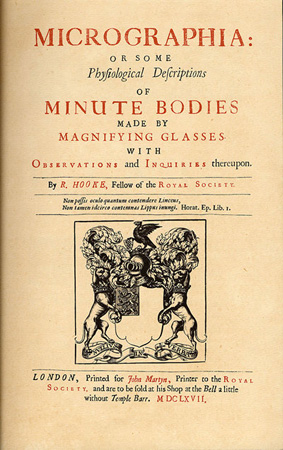
He was born in Freshwater, Isle of Wight, and discovered the law of elasticity, known as Hooke's law, and invented the balance spring for clocks. He was a virtuoso scientist whose scope of research ranged widely, including physics, astronomy, chemistry, biology, geology, architecture and naval technology. On 5 Nov 1662, Hooke was appointed the Curator of Experiments at the Royal Society, London. After the Great Fire of London (1666), he served as Chief Surveyor and helped rebuild the city. He also invented or improved meteorological instruments such as the barometer, anemometer, and hygrometer. Hooke authored the influential Micrographia (1665)*TIS
Lisa Jardine's book is an excellent biography of a complex and underrated man.


1879 William Kingdon Clifford (4 May 1845 – 3 March 1879 ) He played an important role in introducing the ideas of Riemann and other writers on non-Euclidean geometry to English mathematicians. “Clifford was a first-class gymnast, whose repertory apparently included hanging by his toes from the crossbar of a weather cock on a church tower, a feat befitting a High Churchman, as he then was.” *VFR
English mathematician and philosopher. Building on the work of Hermann Grassmann, he introduced what is now termed geometric algebra, a special case of the Clifford algebra named in his honour, with interesting applications in contemporary mathematical physics and geometry. He was the first to suggest that gravitation might be a manifestation of an underlying geometry. In his philosophical writings he coined the expression "mind-stuff". *Wikipedia {He enjoyed children and wrote children's stories including "The Little People."} "An atom must be at least as complex as a grand piano. "

1954 Hendrik De Vries (25 Aug 1867 in Amsterdam, The Netherlands - 3 March 1954 in Binyamina, Israel) "Paul Bockstable describes de Vries's contributions:
"Even greater emphasis was placed on the historical development of mathematical sciences in the historical writings of Hendrik de Vries (1867-1954), professor at the Municipal University of Amsterdam. His lectures took in algebra and analysis, but from 1921-22 onwards, he focussed increasingly on his preferred field, giving public lectures on the development of geometry. These culminated in a series of articles in the Nieuw Tijdschrift voor Wiskunde (New Journal of Mathematics), which were later collected, together with some other items, in a three volume publication entitled 'Historische Studien' (1926). De Vries wrote in the introduction that he wanted to focus attention on the historical development of very precisely defined topics, even specific problems or theorems. He pointed out the didactic benefits that the historical approach to mathematical problems could offer."
He continued to publish Historical studies, and as examples we give the title of a small number of these later articles: On the contact and intersection of circles and conic sections (1946), How analytic geometry became a science (1948), On the infinite and the imaginary, or "surrealism" in mathematics (1949), and On relations and transformations (1949).*SAU

1988 Sewall Green Wright (21 Dec 1889 in Melrose, Massachusetts, USA - 3 March 1988 in Madison, Wisconsin, USA) Wright is famed for his work on evolution, in particular in the use of statistical techniques in the subject. In 1942 he published the Gibbs lecture that he had delivered in the Bulletin of the American Mathematical Society. Opatowski writes in a review, "... a review of the prominent work done by the author in the last twelve years towards the establishment of a mathematical theory of evolution. "
Another paper by Wright which shows his mathematical approach to the subject is The differential equation of the distribution of gene frequencies which he published in 1945. He derives differential equations which are satisfied by the probability density function of the distribution of gene frequencies under certain conditions.
In 1950 Wright gave the Galton lecture at University College, London. In this lecture, which was later published as The genetical structure of populations, he systematically applied his method of path coefficients to problems of population structure in a variety of situations such as: random mating and inbreeding; statistical properties of populations; the inbreeding coefficient F; hierarchic structure; natural populations; the island model of structure; isolation by distance; population structure in evolution; ecologic opportunity; and evolution in general. He also presented a number of mathematical appendices in the paper: the method of path coefficients; general coefficients of inbreeding; properties of populations as related to F; the inbreeding coefficient of breeds; regular systems of mating; and isolation by distance.
Fisher and Wright had differing views on the mechanism and importance of natural selection. Their disagreement began in the late 1920s and became increasingly bitter leading to a split among evolutionists. *SAU

1990 Charlotte Moore Sitterly (24 Sep 1898; 3 Mar 1990) astrophysicist who organized, analyzed, and published definitive books on the solar spectrum and spectral line multiplets. From 1945 to age 90, she conducted this work at the U.S. National Bureau of Standards and the Naval Research Laboratory. She detected that technetium, an unstable element (previously known only as a result of laboratory experiments with nuclear reactions) exists in nature. She made major contributions to the compilation of tables for atomic-energy levels associated with optical spectra, which are now standard reference material. As instruments carried in space rockets provided new data in the ultraviolet, she extended these tables beyond the optical range. She was awarded the Bruce Medal in 1990.*TIS

1991 William Penney (24 Jun 1909, 3 Mar 1991 at age 81)(Baron Penney of East Hendred) British nuclear physicist who led Britain's development of the atomic bomb. Penney was to Britain as Robert Oppenheimer was to the U.S. He was a prominent part of the British Mission at Los Alamos during WW II, where his principal assignment was studying the damage effects from the blast wave of the atomic bomb, but he became involved in implosion studies as well. Penney's combination of expertise, analytical skill, effective communication, and the ability to translate them into practical application soon made him one of the five members of the Los Alamos “brain trust” that made key decisions. He was the only Briton to be part of the ten man Target Committee that drew up the list of targets for the atomic bombing of Japan. *TIS


Credits :
*CHM=Computer History Museum
*FFF=Kane, Famous First Facts
*NSEC= NASA Solar Eclipse Calendar
*RMAT= The Renaissance Mathematicus, Thony Christie
*SAU=St Andrews Univ. Math History
*TIA = Today in Astronomy
*TIS= Today in Science History
*VFR = V Frederick Rickey, USMA
*Wik = Wikipedia
*WM = Women of Mathematics, Grinstein & Campbell

Saturday, 2 March 2013

On This Day in Math - March 2


Conway gate at CMS, Cambridge UK


Mathematics education is much more complicated than you expected, even though you expected it to be more complicated than you expected.
~Edward Griffith Begle

The 61st day of the year; The 61st Fibonacci number (2,504,730,781,961) is the smallest Fibonacci number which contains all the digits from 0 to 9 *Tanya Khovanova, Number Gossip (are there others that contain only the first 2, 3 .. 9 digits? ie 21 has 1,2 but 121393 has 1,2,3 but also a 9. Is there any that contain ONLY 1,2,3 or 1,2,3,4 etc)

EVENTS
In 1896, Henri Becquerel reported his discovery of the penetrating rays of a uranium compound to the French Academy of Sciences. The photographic plate, fogged by these rays, showing the outline of a metal cross lying between the compound and the plate, is the first recognition of the effects later known as radioactivity. *TIS


In 1972, U.S. spacecraft Pioneer 10 was launched. It passed close by Jupiter and Neptune before leaving the solar system. It is now more than six billion miles from Earth. *TIS


BIRTHS
1836 Julius Weingarten (2 March 1836 in Berlin – 16 June 1910 in Freiburg im Breisgau) was a German mathematician. He made some important contributions to the differential geometry of surfaces, such as the Weingarten equations.*Wik

1862 Robert Alladice studied at Edinburgh University and was then appointed assistant to Professor Chrystal there. He was a founder member of the EMS and became President in 1890. He left Edinburgh to become Professor at Stanford University in California. He worked in Geometry. *SAU

1862 Boris Borisovich Golitsyn (2 Mar 1862; 17 May 1916 at age 54) (Prince) Russian physicist known for his work on methods of earthquake observations and on the construction of seismographs. He invented the first effective electromagnetic seismograph in 1906. A seismometer of this type picks up earthquake waves with a pendulum that supports a coil of insulated wire between the poles of a magnet rigidly linked to the earth. The relative motion between the magnet and the coil caused by tremors in the earth generates corresponding electric currents in the coil. The currents can be amplified to operate a pen recorder. *TIS

1912 Clifford Hugh Dowker (2 March 1912 in Parkhill, Western Ontario, Canada- 14 Oct 1982 in London, England) was a topologist known for his work in point-set topology and also for his contributions in category theory, sheaf theory and knot theory. *SAU


DEATHS
1840 (Heinrich) Wilhelm (Matthäus) Olbers(11 Oct 1758; 2 Mar 1840) was a German astronomer and physician, born in Arbergen, Germany. While practising medicine at Bremen, he calculated the orbit of the comet of 1779, discovered the minor planets (asteroids) Pallas (1802) and Vesta (1807), and discovered five comets (all but one already observed at Paris). He also invented a method for calculating the velocity of falling stars. He is also known for Olber's paradox which asks "why is the night sky dark if there are so many bright stars all around to light it?" *TIS


1885 Joseph Alfred Serret (30 Aug 1819 in Paris, France - 2 March 1885 in Versailles, France) He was a French mathematician best remembered for the Serret-Frenet formulas for a space-curve. In 1860 Serret succeeded Poinsot in the Académie des Sciences. In 1871 he retired to Versailles as his health began to deteriorate.
Serret also worked in number theory, calculus and mechanics. He edited the works of Lagrange which were published in 14 volumes between 1867 and 1892. He also edited the 5th edition of Monge in 1850.*SAU

1962 Charles-Jean Étienne Gustave Nicolas de la Vallée Poussin (14 August 1866 - 2 March 1962) was a Belgian mathematician. He is most well known for proving the Prime number theorem. This states that π(x), the number of primes ≤ x, tends to x/Lnx as x tends to infinity. (actually by this time the method of attack involved the use of Li(n), the logarithmic integral as described by Gauss).
The prime number theorem had been conjectured in the 18th century, but in 1896 two mathematicians independently proved the result, namely Hadamard (whose proof was much simpler) and Vallée Poussin. The first major contribution to proving the result was made by Chebyshev in 1848, then the proof was outlined by Riemann in 1851. The clue to two independent proofs being produced at the same time is that the necessary tools in complex analysis had not been developed until that time. In fact the solution of this major open problem was one of the major motivations for the development of complex analysis during the period from 1851 to 1896.
The king of Belgium ennobled him with the title of baron. *SAU

1978 Edward Griffith Begle (27 Nov 1914, 2 Mar 1978 at age 63) American mathematician, a topologist, who led development of "new math." When the Soviet Union launched the Sputnik satellite (1957), beating the U.S. into space, the effectiveness of science and mathematics education in American schools came under scrutiny. Begle's idea was to replace the traditional focus on mathematics as memorization and algorithmic computation. Instead, he designed a program to emphasise the fundamental importance of understanding the principles of mathematics. He directed (1958-72) the School Mathematics Study Group, funded by the National Science Foundation. SMSG produced teaching materials for all grade levels with this approach. Ultimately, initiating lasting reform through teachers was unsuccessful. *TIS

2008 Frederick Seitz (4 Jul 1911, 2 Mar 2008 at age 96) American physicist who made fundamental contributions to the theory of solids, nuclear physics, fluorescence, and crystals. As Eugene Wigner's first doctoral student, late in 1932, Seitz developed the cellular method of deriving solid-state wave functions. The widespread application of this Wigner-Seitz method to the understanding of metals is regarded as the catalyst for the formation of the field of solid-state physics in the U.S. His subsequent research focused on the theory and properties of crystals. He studied dislocations and imperfections in crystal structures, the effect of irradiation on crystals, and the process of diffusion (the movement of atoms or particles caused by random collision) in crystalline materials. *TIS

2009 Jacob Theodore "Jack" Schwartz (January 9, 1930 – March 2, 2009) was an American mathematician, computer scientist, and professor of computer science at the New York University Courant Institute of Mathematical Sciences. He was the designer of the SETL programming language and the NYU Ultracomputer. He founded the New York University Department of Computer Science, chairing it from 1964 to 1980.
His research interests included: the theory of linear operators, von Neumann algebras, quantum field theory, time-sharing, parallel computing, programming language design and implementation, robotics, set-theoretic approaches in computational logic, proof and program verification systems; multimedia authoring tools; experimental studies of visual perception; multimedia and other high-level software techniques for analysis and visualization of bioinformatic data.
He authored 18 books and more than 100 papers and technical reports.*Wik


Credits :
*CHM=Computer History Museum
*FFF=Kane, Famous First Facts
*NSEC= NASA Solar Eclipse Calendar
*RMAT= The Renaissance Mathematicus, Thony Christie
*SAU=St Andrews Univ. Math History
*TIA = Today in Astronomy
*TIS= Today in Science History
*VFR = V Frederick Rickey, USMA
*Wik = Wikipedia
*WM = Women of Mathematics, Grinstein & Campbell

Friday, 1 March 2013

On This Day in Math - March 1

section of Van Dyke's portrait of della Faille showing mathematical tools *Wik


The role of the teacher is to create the conditions for invention rather than provide ready-made knowledge.
~Seymour Papert

The 60th day of the year; 60 is the smallest composite number which is the order of a simple group.

EVENTS
1774 William Herschel begins to keep an astronomical journal, and records observations of Saturn's rings. Herschel's music led him to an interest in mathematics and lenses. His interest in astronomy grew stronger after he made the acquaintance of the English Astronomer Royal Nevil Maskelyne. He started building his own reflecting telescopes and would spend up to 16 hours a day grinding and polishing the speculum metal primary mirrors. He "began to look at the planets and the stars" in May, 1773 and on 1 March 1774 began an astronomical journal by noting his observations of Saturn's rings and the Great Orion Nebula(M4).*Wik

In 1813, Michael Faraday was appointed at the Royal Institution as Chemical Assistant to Humphry Davy, whom he succeeded as Professor of Chemistry in 1820. Since age 14, in 1805, while an apprentice bookbinder, Faraday had educated himself about science. In 1810, he joined the City Philosophical Society to attend lectures and discuss scientific matters. A turning point in his life happened in 1812. A client of the bookbindery gave him four tickets to hear Humphry Davy lecturing at the Royal Institution. Fascinated by the scientific topics, He took notes, which he took with him later to show Davy when he later asked for a position. Davy interviewed him, but there was no opening at the time. When a vacancy occurred in 1813, Davy recalled him and Faraday was hired.*TIS His The Chemical History of a Candle is free from Amazon on Kindle (and quite inexpensive on paper)

1847 On March 1, 1847, Gabriel Lamé announced that he believed that he had found a full proof for Fermat's Last Theorem. He presented to the Paris Academy the outline of what he believed was a complete proof. Earlier he had succeeded in the first proof for x7 + y7 = z7.. The error was later pointed out by Liouville and by Kummer. The error hinged on the assumption of the unique factorization of the roots of unity. Kummer's work on this assumption led to his discovery that unique factorization could be "saved" by using "ideal complex numbers." Kummer's ideal complex numbers would turn out to be a major breakthrough in the generalization of Fermat's Last Theorem. It would also turn out to be the foundation for what is today known as algebraic number theory. *Larry Freeman web page on FLT

1896 Henri Becquerel re-discovers radioactivity. In 1903, together with the Curies, he received the Nobel Prize in Physics for this work. Becquerel thought that phosphorescent materials, such as some uranium salts, might emit penetrating x-ray-like radiation when illuminated by bright sunlight. His first experiments appeared to show this. He presented a paper describing them to the French Academy of Sciences on 24 February 1896
. Then he began to doubt his theory. "I kept the apparatuses prepared and returned the cases to the darkness of a bureau drawer, leaving in place the crusts of the uranium salt. Since the sun did not come out in the following days, I developed the photographic plates on the 1st of March, expecting to find the images very weak. Instead the silhouettes appeared with great intensity.." *Wik


1953 On this date in 1953, Watson and Crick solved the structure of DNA. What better day to lay to rest a few myths about it? *genotopoia Seuagenerian-double-helix

1960 John McCarthy's LISP Programmer's Manual Released :
The first LISP Programmer's Manual is released. Considered the mother tongue of Artificial Intelligence (AI), LISP is older than most other high-level languages still in use today. Its inventor, John McCarthy, created the recursive and symbolic language. *CHM

In 1966, the mission of the Soviet Union's unmanned spacecraft Venera 3 (Venus 3) was a partial success when it reached Venus and automatically released a small landing capsule intended to explore the planet's atmosphere during a parachute descent. However, contact had been lost since 16 Feb 1966. Although no data was returned before the capsule impacted, it became the first man-made object to touch the surface of another planet. The Soviet Union issued a commemorative stamp to mark the achievement. Venera 3 was launched on 16 Nov 1965. The landing capsule (0.9-m diam., about 300-kg) had been designed to collect data on pressure, temperature, and composition of the Venusian atmosphere. Failure is believed due to overheating of internal components and the solar panels.*TIS

1984 The Vatican newspaper, L’Observatore Romano, stated, “The so-called heresy of Galileo does not seem to have any foundation, neither theologically nor under canon law.” In 1822 the church lifted the ban on the works of Galileo and by 1979 Pope John Paul II selected a commission to investigate. On March 1, 1984, the result appeared in the Vatican Newspaper. But it still took until Oct 31, 1992, before Pope John Paul II declared that the church may have been mistaken in condemning Galileo. *Wik

BIRTHS
1597 Jan-Karel della Faille or Jean Charles de La Faille (1 March 1597 in Antwerp, Belgium - 4 Nov 1652 in Barcelona, Spain) was a Flemish Jesuit who was the first to determine the center of gravity of the sector of a circle. He proved that the centers of gravity of a sector of a circle, of a regular figure inscribed in it, of a segment of a circle, or of an ellipse lie on the diameter of the figure. These theorems are founded on a postulate from Luca Valerio's De centro gravitatis solidorum (1604). ... La Faille ended his work with four corollaries which revealed his ultimate goal: an examination of the quadrature of the circle. *SAU

1611 John Pell (1 March 1611 in Southwick, Sussex, England - 12 Dec 1685 in Westminster, London, England) Malcolm wrote, "The mathematician John Pell is a significant figure in the intellectual history of 17th century England - significant, however, more because of his activities, contacts and correspondence than because of his published work. His few publications are, nevertheless, valuable sources of information about his intellectual biography.
Pell worked on algebra and number theory. He gave a table of factors of all integers up to 100000 in 1668. Pell's equation y2 = ax2 + 1, where a is a non-square integer, was first studied by Brahmagupta and Bhaskara II. Its complete theory was worked out by Lagrange, not Pell. It is often said that Euler mistakenly attributed Brouncker's work on this equation to Pell. However the equation appears in a book by Rahn which was certainly written with Pell's help: some say entirely written by Pell. Perhaps Euler knew what he was doing in naming the equation. *SAU He introduced the division sign (obelus, ÷) into England. The obelus was first used by Johann Rahn (1622-1676) in 1659 in Teutsche Algebra. Rahn's book was interpreted into English and published, with additions made by John Pell. According to some sources, John Pell was a key influence on Rahn and he may be responsible for the development of the symbol. The word obelus comes from a Greek word meaning a "roasting spit." The symbol wasn't new. It had been used to mark passages in writings that were considered dubious, corrupt or spurious.*TIS

1879 Robert Daniel Carmichael (1 March 1879 in Goodwater, Coosa County, Alabama, USA - 2 May 1967 in Merriam, Northeast Johnson County, Kansas, USA) Carmichael is known for his mathematical research in what are now called the Carmichael numbers (numbers satisfying properties of primes described by Fermat's Little Theorem although they are not primes- see below), Carmichael's theorem, and the Carmichael function, all significant in number theory and in the study of the prime numbers. Carmichael might have been the first to describe the Steiner system S(5,8,24), a structure often attributed to Ernst Witt. While at Indiana University Carmichael was involved with special theory of relativity. *Wik Fermat had proved that if n is prime then xn-1 = 1 mod n for every x coprime to n. A 'Carmichael number' is a non-prime n satisfying this condition for any x coprime to n. It was given this name since Carmichael discovered the first such number, 561, in 1910 (there are several base ten Carmichael numbers below 561 for the interested student to search for). For many years it was an open problem as to whether there were infinitely many Carmichael numbers, but this was settled in 1994 by W R Alford, A Granville, and C Pomerance in their paper There are infinitely many Carmichael numbers. *SAU

1914 I. Bernard Cohen (1 March 1914 – 20 June 2003) was the Victor S. Thomas Professor of the history of science at Harvard University and the author of many books on the history of science and, in particular, Isaac Newton.
Cohen was the first American to receive a Ph.D. in history of science, was a Harvard undergraduate ('37) and then a Ph.D. student and protégé of George Sarton who was the founder of Isis and the History of Science Society. Cohen taught at Harvard from 1942 until his death, and his tenure was marked by the development of Harvard's program in the history of science. *Wik

1928 Seymour Papert (1 Mar 1928, )American computer scientist who invented the Logo computer programming language, an educational computer programming language for children. He studied under Piaget, absorbing his educational theories. He has studied ways to use mathematics to understand better how children learn and think, and about the ways in which computers can aid in a child's learning. With Marvin Minsky, he co-founded the Artificial Intelligence Lab at MIT. In the mid-80's he worked in Costa Rica to develop a nationwide program of intensive computer use throughout the public education system. Costa Rica, which now has the highest literacy rate in the Americas, continues to serve as a model for large-scale deployment of computer technology in education.*TIS

DEATHS
1862 Peter Barlow (13 Oct 1776 Norwich, UK; 1 Mar 1862) English mathematician and engineer who invented two varieties of achromatic (non-colour-distorting) telescope lenses. In 1819, Barlow began work on the problem of deviation in ship compasses caused by the presence of iron in the hull. For his method of correcting the deviation by juxtaposing the compass with a suitably shaped piece of iron, he was awarded the Copley Medal. In 1822, he built a device which is to be considered one of the first models of an electric motor supplied by continuous current. He also worked on the design of bridges, in particular working (1819-26) with Thomas Telford on the design of the bridge over the Menai Strait, the first major modern suspension bridge. Barlow was active during the period of railway building in Britain.*TIS His New Mathematical Tables (1814) later known as Barlow’s Tables, gave the factors, squares, cubes, square roots, reciprocals, and natural logarithms of all numbers from 1 to 10,000. It was so accurate that it was reprinted numerous times, the last being 1947. *VFR

1884 Isaac Todhunter (23 Nov 1820 in Rye, Sussex, England - 1 March 1884 in Cambridge, England) Todhunter is best known for his textbooks and his writing on the history of mathematics. Among his textbooks are Analytic Statics (1853), Plane Coordinate Geometry (1855), Examples of Analytic geometry in Three Dimensions (1858). He also wrote some more elementary texts, for example Algebra (1858), Trigonometry (1859), Theory of Equations (1861), Euclid (1862), Mechanics (1867) and Mensuration (1869).
Among his books on the history of mathematics are A History of the Mathematical Theory of Probability from the Time of Pascal to that of Laplace (1865, reprinted 1965) and History of the Mathematical Theories of Attraction (1873). No mathematical treatises on elementary subjects probably ever attained so wide a circulation; and, being adopted by the Indian government, they were translated into Urdu and other Oriental languages.
Todhunter received many awards for his contributions to mathematics. In addition to the fellowship of the Royal Society he served on its Council in 1874, the same year in which he was awarded the Adams Prize for his work Researches on the calculus of variations.*SAU

1908 Heinrich Maschke (24 October 1853 in Breslau, Germany (now Wrocław, Poland) – 1 March 1908 Chicago, Illinois, USA) was a German mathematician who proved Maschke's theorem, a theorem in group representation theory that concerns the decomposition of representations of a finite group into irreducible pieces.*Wik
1913 Mario Pieri (22 June 1860 in Lucca, Italy - 1 March 1913 in S Andrea di Compito (near Lucca), Italy) Pieri's main area was projective geometry and he is an important member of the Italian School of Geometers. However, after he moved to Turin, Pieri became influenced by Peano at the University and Burali-Forti who was a colleague at the Military Academy. This influence led Pieri to study the foundations of geometry.
In 1895 he set up an axiomatic system for projective geometry with three undefined terms, namely points, lines and segments. He improved on results of Pasch and Peano and then, in 1905, Pieri gave the first axiomatic definition of complex projective geometry which does not build on real projective geometry.
In 1898 Pieri published the memoir The principles of the geometry of position through the Academy of Sciences of Turin. Russell was impressed by this memoir and wrote, in his Principia, "This is, in my opinion, the best work on the present subject." *SAU

1978 Kiyoshi Oka (April 19, 1901 – March 1, 1978) was a Japanese mathematician who did fundamental work in the theory of several complex variables. He was born in Osaka. He went to Kyoto Imperial University in 1919, turning to mathematics in 1923 and graduating in 1924.
He was in Paris for three years from 1929, returning to Hiroshima University. He published solutions to the first and second Cousin problems, and work on domains of holomorphy, in the period 1936–1940. These were later taken up by Henri Cartan and his school, playing a basic role in the development of sheaf theory. Oka continued to work in the field, and proved Oka's coherence theorem in 1950.
He was professor at Nara Women's University from 1949 to retirement at 1964. He received many honours in Japan.*Wik


Credits
*CHM=Computer History Museum
*FFF=Kane, Famous First Facts
*NSEC= NASA Solar Eclipse Calendar
*SAU=St Andrews Univ. Math History
*TIA = Today in Astronomy
*TIS= Today in Science History
*VFR = V Frederick Rickey, USMA
*Wik = Wikipedia
*WM = Women of Mathematics, Grinstein & Campbell