Friday, 25 September 2026

# 7 Absolute value/difference,… from old math term history notes

    Absolute Value The word absolute is from a variant of absolve and has a meaning related to free from restriction or condition. The first use of "absolute value" in English seems to have been to apply to real values. Jeff Miller's website on the Earliest Known Uses of Some of the Words of Mathematics says," Absolute value is found in English in 1850 in The elements of analytical geometry; comprehending the doctrine of the conic sections, and the general theory of curves and surfaces of the second order by John Radford Young (1799-1885): "we have AF the positive value of x equal to BA - BF, and for the negative value, BF must exceed BA, that is, F must be on the other side of A, as at F', hence making AF' equal to the absolute value of the negative root of the equation" [University of Michigan Digital Library]." [See the page here] In 1876 Karl Weierstrass applied the term to magnitude of complex numbers. From Miller's site again we find "Absolute value was coined in German as absoluten Betrag by Karl Weierstrass (1815-1897), who wrote:

Ich bezeichne den absoluten Betrag einer complex Groesse x mit |x|. [I denote the absolute value of complex number x by |x|.]"

In "The Words of Mathematics", Steven Schwartzman suggests that the use of the word for real values only became common in the middle of the 20th century. This may be true, but the use for signed numbers also appears in 1889 by Wentworth according to Miller; "In 1889, Elements of Algebra by G. A. Wentworth has: 'Every algebraic number, as +4 or -4, consists of a sign + or - and the absolute value of the number; in this case 4.' " (above). In the 1893 edition of the same book he uses the term again, as shown below, without any symbol.

The revision of Hall and Knight's Algebra, for Colleges and Schools {"Revised and Enlarged for the use of American Schools"} by F. L. Sevenoak in 1905 also uses the term without a sign. By 1934, the word is still used without symbol in Walter W. Hart's Progressive First Algebra,(pg 78), but in the 1939 edition of College Algebra by Rosenbach and Whitman, the symbol is used as shown below

The symbol for absolute value is usually a pair of vertical lines containing the number, as created by Weierstrass in 1876 (see above). |3| is read as "The absolute value of three". The absolute value of a real number is its distance from zero, so |3| = |-3| = 3. In words that says that the absolute value of three is equal to the absolute value of -3 , and that both have a value of three.

For complex numbers the absolute value is also called magnitude or length of the complex number. Complex numbers are sometimes drawn as a vector using an Argand Diagram, and the length of the vector Z=a+bi is |a+bi|. Stated another way, the value of |a+bi|= 

A symbol for the Absolute Difference of two numbers, or the absolute value of the difference was created by Oughtred around 1630. Miller writes, "The tilde was introduced for this purpose by William Oughtred (1574-1660) in the Clavis Mathematicae (Key to Mathematics), composed about 1628 and published in London in 1631, according to Smith, who shows a reversed tilde (Smith 1958, page 394)." This seems no longer to be common in basic maths classes in England today (current coments anyone?). After posting a request for information to the Historia Matematica discussion group about the use of the tilde to indicate absolute difference in England I received the following update from Herbert Prinz:

"In modern English texts on navigation, nautical astronomy or its history, the tilde,~, is frequently used to express the function | a - b |, where |x| stands for absolute value. E. g. Cotter, The Complete Nautical Astronomer, 1969. I am not sure when this practice started. In older texts on the same subject, say, Moore, The Practical Navigator, 1800, one does not find the tilde used in this way. For one, because instructions were given mostly verbally without the use of any symbols at all. And second, the distinction from '-' was unnecessary, as it was always understood, if not explicitly stated, that one must subtract the smaller.  While talking about symbols, I should add that shortly after Robert Recorde began using the equal sign, =, now common, Viete used the same symbol for the absolute difference between two numbers.   


In England the absolute value is often referred to as the modulus function, and the two bars that make up the symbol are sometimes called "modulus signs" according to a note posted by Vicky Neale on the Ask NRich math site. The term modulus is used both in America and England to represent the magnitude or length of a complex number. The term is also used in a number of other specialty ways in mathematics, the best known being the "congruence modulus". The modulus of a congruence, often shortened to "mod" is the base value with which the congruence is computed. We say A is Congruent to B modulus C, if A divided by C and B divided by C have the same remainder. C is called the modulus of congruence. It would be written A≡B [mod C]

Modulus comes almost unchanged from the Latin from the diminutive of modus (measure or amount), modulus for a small measure. Vicky also pointed out that at one time the term was used for, "A unit of payment used at Trinity College.... Fellows received some number of moduli". Ms Neale also said she was unfamiliar with the use of the ~ for absolute difference.

It was Gauss, Disquisitiones arithmeticae in 1801, who introduced the term modulus of congruence, and the abreviation, "mod". Cajori credits Jean Argand for the first use of modulus for the length of a vector in 1814. I am not sure when the British public schools started to use the term for the absolute value of a number, and would love to know if someone has old books with these terms (or others for the same idea).

Thursday, 24 September 2026

On This Day in Math - September 25


"


I am undecided whether or not the Milky Way​ is but one of countless others all of which form an entire system. Perhaps the light from these infinitely distant galaxies is so faint that we cannot see them.

~ Johann H Lambert

This is the 268th day of the year, 268 is the smallest number whose product of digits is 6 times the sum of its digits. (A good classroom exploration might be to find numbers in which the product of the digits is n x the sum of the digits for various values of n.. more generally, for what percentage of numbers is the sum a factor of the product at all?)

The two odd numbers adjacent to 6*268 form a pair of twin primes, and the next two odd numbers after 268 are a pair of twin primes. And the 268th prime, is the smaller of a pair of twin primes.

268 is the sum of two consecutive primes, 268 = 131 + 137

Prime Curios offers this little mental conversion, 268 inches of 1/8 inch copper wire weighs 1 pound. There is no AWG standard gauge wire that is 1/8 of an inch diameter, but AWG 8 is really close. For students, what would a similar length of 1/4 inch diameter copper wire weigh?

Many people know that N! has N digits for N= 22, 23, and 24.  Surprisingly, to me, there are also three consecutive numbers for which N! has 2N digits, 266, 267, and 268.  For N! has 3N digits, only two consecutive numbers, 2712 and 2713.For N! having 4N digits, there are again two consecutive  occurrences,  27175 and 27176. For 5N we go back to three consecutive digits,  271819, 271820, 271821  Note the increase by a power of ten as a limit, and the higher you go, the closer they approach  e * 10^n. It has been conjectured that there are always at two or three consecutive numbers for every digit, but never more. The first 100 such numbers are found at A058814 - OEIS Thanks to Derek Orr and Frank Kampas for some help and direction on this. 


EVENTS


1493 Columbus set sail on his second voyage to America.


303  On Sept. 25, 303 C.E. bishop-martyr St. Fermin (b. 272) is beheaded in Amiens, France; starting in in 1591 the San Fermin Festival in Pamplona, Spain is founded, featuring eight 3/4-ton bulls chasing drunken revelers down a 900-yard cobblestone street corridor; originally held on Sept. 25, it begins running from noon on July 6 to midnight on July 14 starting in 1592; by the 20th cent. there are eight bull runs during the 9-day festival, one each morning at 8 a.m. - advice: stay in front? *HistoryScoper


1513 On September 25th, 1513, Vasco Nunez de Balboa crossed the Isthmus of Panama and first sighted the Pacific Ocean (it would take four days for his group to work their way down the mountain to the ocean.. Balboa was accompanied by 190 Spaniards and several hundred slaves. His "discovery" spurred those looking for a passage to the Pacific. Balboa spent a number of months exploring the West Coast of Central America. Within six years he would be found guilty of treason and beheaded by rivals for his supposed "river of gold".


1608 The oldest written mention of the telescope: In a letter of introduction from the Council of Zeeland to Zeeland’s Delegates to the States General (the Netherlands parliament) in Den Haag asking them to organise an audience with Prince Maurice of Nassau for a spectacle maker from Middelburg who had invented a “…certain device by means of which all things at a very great distance can be seen as if they were nearby, by looking through glasses…”; the oldest written mention of the telescope. On an unknown day between 25th and 29th September: Hans Lipperhey (1570 – 1619) the spectacle maker from Middelburg (who was actually a German from Wesel) demonstrates his new invention at the court of Prince Maurice, where a peace conference in the Dutch-Spanish War is taking place along with the first visit to Europe of the Ambassador of Siam. Lipperhey’s demonstration is described in detail in a French flyer describing the Ambassadors visit and the news of the new invention is thus spread rapidly throughout Europe.

26th July 1609 Julian calendar (5th August 1609 Gregorian calendar): Thomas Harriot (1560 – 1621) makes a sketch of the moon using a telescope.

21st August 1609: Galileo demonstrates his telescope to the aristocrats of Venice.

24th August 1609: Galileo presents his telescope to the Doge and Senate of Venice.

25th August 1609: Galileo is granted a lifetime contract as professor for mathematics at the University of Padua with a salary of 1000 Florins but with the subsidiary clause that he would never receive a raise in salary.

When Galileo first used a telescope as an astronomical instrument is not known but it was at least a couple of months later.

It is highly probable that Simon Marius (1573 – 1624) court astronomer in Ansbach Franconia used a telescope as an astronomical instrument before Galileo but it is not possible to determine when.

7th January 1610: Galileo discovers the first three moons of Jupiter.

8th January 1610: Marius discovers the first three moons of Jupiter independently of Galileo. *Renaissance Mathematicus,


Lipperhey’s Patent Application


1654 Fermat writes to Pascal defending his combinatorial method that Pascal had previously regarded as incorrect.*VFR In the same letter he announced the following two results for odd primes expanding his sums of two primes Christmas letter to Fr Mersenne from 14 years earlier:

p = X2 + 2y2 Iff p is equivalent to 1 or 3 mod 8,  {3, 11, 17, 43,...}

p = X2 + 3y2 Iff p is equivalent to 1 mod 3 {4, 7, 13, 19, ...}  


His statue is in the town named for him, Descartes.  It is located 48 mikes away and is on  the same Creuse River my part time French home in Argenton-sur-creuse overlooks.  Originally called Le Haye, the name was changed to Le Haye-Descartes (1802), then later to Descartes (1967).  It is also the birthplace of Pierre Ballue (a common spelling of my last name).  

His family home was nearby in Chatellerault, and he left La Haye in 1606 (about age ten) to attend the college of Henry IV at La Fleche.  Then in about 1615-16 he attended the University of Poitiers ro become a lawyer as his father's wishes.  From there to Paris,  And soon he departed France and spent almost all of the rest of his life in the Dutch Republic, and then in Sweden where he died.


Beautiful Argenton on the Creuse, phot from my study,


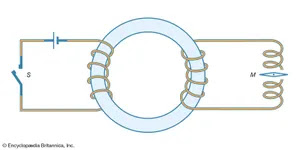
1820 Arago announces electromagnetism ... Francois Arago announced that a copper wire between the poles of a voltaic cell, could laterally attract iron filings to itself (Ann. de Chim. et de Physique., xv. p.93). His discovery came in the same year that Oersted discovered that an electric current flowing in a wire would deflect a neighboring compass needle. Arago in the same publication described how he had successfully succeeded in causing permanent magnetism in steel needles laid at right angles to the copper wire. Arago and André-Marie Ampère, discussed and experimented with forming the copper wire into a helix to intensify the magnetizing action. However, it was not until 1825 that the electromagnet in its familiar form was invented by William Sturgeon. *TIS


1938  A brief story in The Oregonian of Portland, Oregon:  "Charles Keville walked into the temporary morgue and looked at a body that had been identified as his."
" 'Nope,' he said,  'That ain't me', and walked out again."  *
Dudes Posting Their W’s

1944 Denmark issued a stamp commemorating the 300th anniversary of the birth of Ole Roemer,*VFR
Danish astronomer who, in 1676, first demonstrated that light travels at a finite speed. Rømer also invented the modern thermometer showing the temperature between two fixed points, namely the points at which water respectively boils and freezes.

Rømer made his discovery regarding the speed of light while working at the Royal Observatory in Paris and studying Jupiter's moon Io. He estimated that light takes about 11 minutes to travel from the Sun to Earth. Using today's knowledge of the Sun-Earth distance, this would amount to a speed of light of approximately 220,000 kilometers per second, compared to today's accepted value of just under 300,000 kilometers per second.

In scientific literature, alternative spellings such as "Roemer", "Römer", or "Romer" are common.


1960 NEW MATH. New mathematics is found in Time magazine of Feb. 3, 1958, in the heading, "The new mathematics" [OED].
New math is found again in an article which appeared in numerous newspapers on Sept. 25, 1960: “But the ‘new math’ is being promoted energetically by such influential bodies as the U. S. Office of Education, the National Science Foundation, the National Education Association, the Mathematical Association of America, the College Entrance Examination Board and the Carnegie Corporation.”
* Jeff Niller
cartoon about parental confusion during "New Math" introduction.  "In the words of the great Tom Leher, "Math so easy that only a child could do it."


On this day in 1988, Faà di Bruno was beatified by Pope John Paul II in St Peter's Square in Rome.   is best known for his formula for the nth derivative of a composition of functions. Faà di Bruno's formula is an identity in mathematics generalizing the chain rule to higher derivatives. It is named after Francesco Faà di Bruno (1855, 1857), although he was not the first to state or prove the formula.  In 1800, more than 50 years before Faà di Bruno, the French mathematician Louis François Antoine Arbogast had stated the formula in a calculus textbook, which is considered to be the first published reference on the subject.  
#SAU 


1989 IBM announces plans to develop a new design for transmitting information within a computer, called Micro Channel Architecture, which it said could transfer data at 160 million bytes per second or eight times faster than the fastest speed at the time. Although IBM was hoping to make its system the industry standard, manufacturers of IBM-compatible computers largely chose other methods. *CHM

*CHM


BIRTHS

1644 Olaus Roemer, Danish astronomer, born. He was the first to measure the speed of light. *VFR (25 Sep 1644;23 Sep 1710) Astronomer who demonstrated conclusively that light travels at a finite speed. He measured the speed by precisely measuring the length of time between eclipses of Jupiter by one of its moons. This observation produces different results depending on the position of the earth in its orbit around the sun. He reasoned that meant light took longer to travel the greater distance when earth was traveling in its orbit away from Jupiter.*TIS "Ole Rømer took part in several other achievements considering measurement. He developed a temperature scale that is now famous as the Fahrenheit scale. Fahrenheit improved and distributed his ideas after visiting Rømer. In his last years, he was even given the position as second Chief of the Copenhagen Police and invented the first street oil lamps in the city of Copenhagen.
Further achievements and inventions may be added to Rømer's biography, like his innovative water supply system and his urban planning concept. " *Yovista.blogspot


1819 George Salmon (25 September 1819 – 22 January 1904) made many discoveries about ruled surfaces and other surfaces. *SAU His publications in algebraic geometry were widely read in the second half of the 19th century. A Treatise on Conic Sections remained in print for over fifty years, going though five updated editions in English, and was translated into German, French and Italian. *Wik
Salmon statue at Trinity College, Dublin
*MacTutor, SAU


1825 Carl Harald Cramer,(25 September 1893 ,5 October 1985) was a Swedish mathematical statisticians and is one of the prominent figures in the statistical theory. He was once described by John Kingman as "one of the giants of statistical theory". 
In number theory, Cramér's conjecture,in 1936 states that
p_{n+1}-p_n=O((\log p_n)^2),\
where pn denotes the nth prime number, O is big O notation, and "log" is the natural logarithm. Intuitively, this means the gaps between consecutive primes are always small, and it quantifies asymptotically just how small they can be. This conjecture has not been proven or disproven.
*Wik
Big O notation is a mathematical notation that describes the limiting behavior of a function when the argument tends towards a particular value or infinity.


1846 Wladimir (Peter) Köppen (25 Sep 1846; 22 Jun 1940) German meteorologist and climatologist best known for his delineation and mapping of the climatic regions of the world. He played a major role in the advancement of climatology and meteorology for more than 70 years. The climate classification system he developed remains popular because it uses easily obtained data (monthly mean temperatures and precipitation) and straightforward, objective criteria. He recognized five principal climate groups: (A) Humid tropical -winterless climates; (B) Dry - evaporation constantly exceed precipitation; (C) humid mid-latitude, mild winters; (D) humid mid-latitude, severe winters; and (E) Polar - summerless climates. *TIS


1857 Sergey Petrovich Degayev (also spelled Degaev; Russian: Серге́й Петрович Дегаев; 1857 in Moscow – 1921 in Bryn Mawr, Pennsylvania) was a Russian revolutionary terrorist, Okhrana agent, and the murderer of inspector of secret police Georgy Sudeykin. After emigrating to the United States, Degayev took the name Alexander Pell and became a prominent American mathematician, the founder of school of Engineering at the University of South Dakota. The Dr. Alexander Pell scholarship is named in his honor.

After December 1883, all the posts in the Empire were plastered with posters showing Degayev's photographs and announcing 5000 roubles for information as to his whereabouts and 10,000 roubles for help in catching him. Still the conspirators had a good lead on their hunters and successfully arrived in Paris. At a winter 1884 meeting, Narodnaya Volya, led by V. A. Karaulov, Lev Tikhomirov and German Lopatin, fulfilled its end of the bargain and granted Degayev his life on the condition that he never again appear in the Russian Empire. Lev Tikhomirov personally verified that he boarded a steamship bound for South America.
From South America Degayev moved to the United States; there he joined his wife, Lyubov Degayeva. His brother, Vladimir Degayev, who worked at the time in a Russian consulate in the United States and moonlighted as a foreign correspondent for a few Russian publications printed an article claiming that Sergey Degayev was killed in New Zealand, discouraging searches for him by both Russian police and Russian revolutionaries.

Both Vladimir and Sergey Degayevs were registered in the USA under the name Polevoi after their maternal grandfather Nikolai Polevoy. After his naturalization Alexander (Sergey) took the name Alexander Pell and his wife took the name Emma Pell. At first they were poor; Sergey worked as a stevedore and as an unskilled labourer while his wife worked as a cook and a laundress. In 1895 Alexander was enrolled into a PhD program in Johns Hopkins University with majors in mathematics and astronomy and a minor in English. During his study he was financially supported by his wife who continued to work as a cook. He received his doctorate in 1897 for the dissertation On the Focal surfaces of the Congruences of Tangents to a Given Surface.

The University of South Dakota was established in the frontier town of Vermillion and started its classes in 1882. In 1897 they decided that they needed a professor of mathematics. They asked Professor L. S. Hulburt from Johns Hopkins if he could suggest a suitable candidate. He replied that he "could suggest a first class mathematician who had the disadvantage of having a strong Russian brogue". The reply from South Dakota was "Send your Russian mathematician along, brogue and all".


Alexander Pell (Sergey Degayev) and Emma Pell (Lyubov Degayeva), South Dakota
Alexander Pell was immensely popular among his students who referred to him as the "class father" and "Jolly Little Pell" (who could "crack jokes faster than the freshmen could crack nuts"). He was a good researcher, a member of the American Mathematical Society and the author of many journal publications. He was also an accomplished administrator who organized the School of Engineering of the University of South Dakota and became its first Dean (1905).

Alexander Pell had a habit of providing financial support from his own resources, and providing accommodation in his house to a few of his students. One such student was Anna Johnson, the future accomplished mathematician Anna Johnson Pell Wheeler. Anna Johnson received her A.B. degree under Pell's supervision in 1903 and continued her study at the University of Iowa and then at the University of Göttingen. In 1904 Emma Pell died. 
Three years later Alexander Pell went to Göttingen and married Anna in July 1907. They both returned to Vermillion where Anna taught classes in the theory of functions and differential equations and Alexander was the Dean of Engineering. In 1908 Pell resigned from the University of South Dakota and went with Anna to Chicago. There Anna completed her doctorate under E. H. Moore, while Pell took a position at the Armour Institute of Engineering (currently Illinois Institute of Technology). In 1911 Pell suffered a stroke and was unable to work thereafter. The same year the Pells moved to South Hadley, Massachusetts where Anna taught at Mount Holyoke College. In 1918 they moved again to Bryn Mawr, Pennsylvania where Anna taught at Bryn Mawr College. Alexander Pell died in Bryn Mawr in 1921.

Alexander Pell (Sergey Degayev) and Emma Pell (Lyubov Degayeva), South Dakota


1888 Stefan Mazurkiewicz (25 Sept 1888 , 19 June 1945) His main work was in topology and the theory of probability. His notion of dimension of a compact set preceded that of Menger and Urysohn by seven years. Mazurkiewicz applied topological methods to the theory of functions, obtaining powerful results. His theory gave particularly strong results when applied to the Euclidean plane, giving deep knowledge of its topological structure. *SAU


1992 Lisa Sauermann (born 25 September 1992) is a German mathematician known for her performance in the International Mathematical Olympiad, where in 2011 she had the single highest (and perfect) score. She won four gold medals (2008–2011) and one silver medal (2007) at the olympiad, representing Germany.

Sauermann attended Martin-Andersen-Nexö-Gymnasium Dresden when she was in 12th grade. She won the Franz Ludwig Gehe Prize in 2011 and the gold medal in the age group III, the 11th–12th grade competition. As a result, she won a trip to the Royal Academy of Sciences in Stockholm. To achieve this, she presented a new mathematical theorem with a proof in a work entitled "Forests with Hypergraphs".

In 2011 she began studying mathematics at the University of Bonn. In 2014, she completed her bachelor thesis on algebraic geometry under Michael Rapoport. She became a graduate student studying with Jacob Fox at Stanford University where she obtained her PhD in 2019, receiving two prizes for her dissertation titled "Modern Methods in Extremal Combinatorics". After her graduation she worked as an assistant professor at Stanford before spending a year at the Institute for Advanced Study in Princeton. In 2021 became an assistant professor at MIT and received the European Prize in Combinatorics at Eurocomb for her work in combinatorics. In 2023 she accepted a tenured professorship at University of Bonn, where she currently works,  her main field of work as of 2023 being probabilistic combinatorics. In 2022, she was awarded a Sloan fellowship, and in 2023, she received the von Kaven Award.

Her sister, Anne, two years her junior, was a successful participant in math and science Olympiads at the national level. *Wik


DEATHS

1777 Johann Heinrich Lambert (26 Aug 1728, 25 Sep 1777) Swiss-German mathematician, astronomer, physicist, and philosopher who provided the first rigorous proof that pi ( the ratio of a circle's circumference to its diameter) is irrational, meaning it cannot be expressed as the quotient of two integers. He also devised a method of measuring light intensity. *TIS In 1766 Lambert wrote Theorie der Parallellinien which was a study of the parallel postulate. By assuming that the parallel postulate was false, he managed to deduce a large number of non-euclidean results. He noticed that in this new geometry the sum of the angles of a triangle increases as its area decreases. *SAU
Lambert devised a formula for the relationship between the angles and the area of hyperbolic triangles. These are triangles drawn on a concave surface, as on a saddle, instead of the usual flat Euclidean surface. Lambert showed that the angles added up to less than π (radians), or 180°. The amount of shortfall, called the defect, increases with the area. The larger the triangle's area, the smaller the sum of the angles and hence the larger the defect C△ = π — (α + β + γ). 
Lambert solves a geometrical problem, viz. to reconstruct the course of a ship at sea on the basis of observations with a plane table on the shore. The problem is originally in Marinoni's De Re Ichnographica (1751), which Lambert read early on (1752). Lambert here reduces this problem (the most complicated one in Marinoni) using algebraic methods. Since many observations have to be reduced to solve the problem, these studies constitute one of the starting points for Lambert's work on the theory of errors.

Lambert is a curious historical figure; extremely accomplished, a worthy member of a select company that includes Leonard Euler and Immanuel Kant, except that hardly anyone has ever heard of Lambert, save the optician who measures the luminance of a light source in lamberts, or the cartographer who produces an aviation map using the Lambert conical projection, or the astrophysicist who measures the albedo of a moon of Saturn, using a term for reflectivity that was coined by Lambert. Lambert spent the last 13 years of his working life in Berlin, where he was appointed a member of the Academy of Sciences there. He wrote original works on pyrometry (the measure of heat), photometry (the measure of luminance), hygrometry (measurement of humidity), cartographic projections (he invented 7 new projections, several still in common use), even treatises on non-Euclidean geometry and irrational numbers. *Linda Hall Org


*Wik


1852 Christoph Gudermann (March 25, 1798, September 25, 1852) was born in Vienenburg. He was the son of a school teacher and became a teacher himself after studying at the University of Göttingen, where his advisor was Karl Friedrich Gauss. He began his teaching career in Kleve and then transferred to a school in Münster.
He is most known today for being the teacher of Karl Weierstrass, who took Gudermann's course in elliptic functions, 1839–1840, the first to be taught in any institute. Weierstrass was greatly influenced by this course, which marked the direction of his own research.
Gudermann originated the concept of uniform convergence, in an 1838 paper on elliptic functions, but only observed it informally, neither formalizing it nor using it in his proofs. Instead, Weierstrass elaborated and applied uniform convergence.
His researches into spherical geometry and special functions focused on particular cases, so that he did not receive the credit given to those who published more general works. The Gudermannian function, or hyperbolic amplitude, is named after him.Gudermann died in Münster. *Wik


1877 Urbain-Jean-Joseph Le Verrier (11 May 1811, 25 Sep 1877) French astronomer who predicted the position of a previously unknown planet, Neptune, by the disturbance it caused in the orbit of Uranus. In 1856, the German astronomer Johan G. Galle discovered Neptune after only an hour of searching, within one degree of the position that had been computed by Le Verrier, who had asked him to look for it there. In this way Le Verrier gave the most striking confirmation of the theory of gravitation propounded by Newton. Le Verrier also initiated the meteorological service for France, especially the weather warnings for seaports. *TIS (He died the day after the anniversary of the sighting of his most famous prediction. Between that moment of fame in 1846 and his death, he mistakenly attributed the variability of Mercury's orbit to another small planet he named "Vulcan". It took the theory of General Relativity to explain the variations. He was buried in Montparnasse cemetery in Paris. A large globe sits atop grave. Arago described him as, "the man who discovered a planet with the point of his pen."

1933 Paul Ehrenfest (January 18, 1880, September 25, 1933) was an Austrian and Dutch physicist and mathematician, who made major contributions to the field of statistical mechanics and its relations with quantum mechanics, including the theory of phase transition and the Ehrenfest theorem.
He befriended Albert Einstein on a visit to Prague in 1912 and became a professor in Leiden, where he frequently hosted Einstein. Suffering from depression, in 1933 Ehrenfest killed his disabled son, Wassik, and then himself. 
On 21 December 1904, he married Tatyana Afanasyeva, who collaborated with him in his work. They had two daughters and two sons: Tatyana ('Tanja') (1905–1984) also became a mathematician; Galinka ('Galja') (1910–1979) became an author and illustrator of children's books; Paul, Jr. ('Pavlik') (1915–1939) became a physicist; and Vassily ('Wassik') (1918–1933).
*Wik

Paul, and his wife Tatyana, a Russian-Dutch mathematician and physicist who made contributions to the fields of statistical mechanics and statistical thermodynamics with her husband Paul Ehrenfest.


1955  Franz Rellich (September 14, 1906 – September 25, 1955) was an Austrian-German mathematician. He made important contributions in mathematical physics, in particular for the foundations of quantum mechanics and for the theory of partial differential equations. The Rellich–Kondrachov theorem is named after him.
Among Rellich's most important mathematical contributions are his work in the perturbation theory of linear operators on Hilbert spaces: he studied the dependence of the spectral family 
Although the origins and applications of the problem are in quantum mechanics, Rellich's approach was completely abstract.

Rellich successfully worked on many partial differential equations with degeneracies. For instance, he showed that in the elliptic case, the Monge-Ampère differential equation, while not necessarily uniquely soluble, can have at most two solutions.

Particularly relevant to physics was Rellich's mathematical clarification of the outgoing Sommerfeld conditions.

When in 1933 the great mathematical-physical tradition in Göttingen terminated with the Machtergreifung of the Nazis, Rellich, having taken an active position against Nazism, was among those forced to leave. In 1934 he became Privatdozent in Marburg, in 1942 professor in Dresden, and in 1946 director of the Mathematical Institute in Göttingen, being instrumental in its reconstruction. Heinz Otto Cordes, Erhard Heinz, Konrad Jörgens, and Jürgen Moser were among of his doctoral students. His sister Camilla Juliana Anna was the wife of mathematician Bartel Leendert van der Waerden. Rellich died in Göttingen. *Wik


2021 Joachim Neubüser ( June 18 , 1932 in Belgard , Pomerania ; September 25 , 2021 in Aachen ) was a German mathematician who was primarily concerned with group theory and was a professor at RWTH Aachen .

Neubüser studied at the University of Kiel from 1951 , passing his state examination in 1957 and receiving his doctorate under Wolfgang Gaschütz in 1957 (On homogeneous groups). As a postdoctoral researcher, he was at the University of Manchester in 1957/58 and from 1958 an assistant in Kiel. After receiving his habilitation in 1967 (The subgroup associations of groups of order ≤ 100 with the exception of orders 64 and 96), he was a senior lecturer in Kiel and from 1969 a full professor at RWTH Aachen University (Chair D). He retired in 1997.

He worked primarily in the field of algorithmic group theory and developed programs for this area from the 1960s onwards. In 1986, he initiated the computer algebra system GAP  with algorithms for group theory, and previously, in 1981, the CAS system (Character Algorithm System) for calculations involving group characters. He also dealt with space groups . With Hans Zassenhaus and others, he classified crystallographic groups in four dimensions.

His doctoral students included Wilhelm Plesken , Rolf Bülow and Volkmar Felsch. *Wik


Credits :
*CHM=Computer History Museum
*FFF=Kane, Famous First Facts
*NSEC= NASA Solar Eclipse Calendar
*RMAT= The Renaissance Mathematicus, Thony Christie
*SAU=St Andrews Univ. Math History
*TIA = Today in Astronomy
*TIS= Today in Science History
*VFR = V Frederick Rickey, USMA
*Wik = Wikipedia
*WM = Women of Mathematics, Grinstein & Campbell

# 6 Fibonacci sequence, & some history,.,… from old math term notes

    Fibonacci's Sequence This sequence is named for Leonardo of Pisa (1175-about 1250). Now he is also called Leonardo Fibonacci, which seems to have been a contraction of Filius Bonacci, son of Bonacci, although the name was never applied during his lifetime. He was one of the three men who are most responsible for introducing the Arabic numerals and methods of algebra to the Western World. In his classic book Liber abaci he poses, and solves the famous rabbit problem which produces the now famous sequence, {0, 1, 1, 2, 3, 5, 8, 13, 21...} in which each value is the sum of the two previous values.

Although it is almost certain that he knew, Fibonacci never wrote that each term was found by adding the two previous terms. The first record of such a statement occurred almost 400 years after Fibonacci by Kepler. Almost another hundred years would pass before R. Simson, for whom the Simson line is mis-named, recognized that each term was the convergent of the continued fraction


. Since all the partial quotients are one, this is the simplest, and therefore slowest to converge, of all the infinite continued fractions. Yet another 150 years would pass before the explicit formula for fn would be found by J. Binet. Letting the golden ratio be represented by  he was able to express the Nth term of the series as . 

It is not clear when we began to call it the Fibonacci sequence. As late as the mid-1800's French Mathematician Gabrielle Lame' proved that the number of n-digit Fibonacci numbers is at least 4 and at most 5; but Lame' did not use the name "Fibonacci numbers". In fact, they were often called Lame's numbers because of his proof. Lame also contributed to the story of Fermat's Last Theorem in 1839 when he confirmed that there could be no integer values for which x7 + y7 = z7

According to Paul J. Nahin, author of AN IMAGINARY TALE, the name Fibonacci was not common until centuries after Leonardo's death, and during his lifetime he was called Bigollo, a slang term for a loafer drawn from the word bighellone. Julio Gonzalez Cabillon has written, "The name 'Fibonacci' most probably originated with the historian of mathematics Guillaume Libri (1803-1869)."

In September of 2001, Heinz Lueneburg posted a note that seemed to suggest that there may have been earlier uses than Julio suggested. He writes (with some editing by me):

I was in Rome and checked the Boncompagni paper
I quoted in my posting of August 28. The paper starts with the diskussion of what is known of persons of the Bonacci family other than Leonardo: One Matteo Bonacci is known because he is mentioned as a witness of the treaty Pisa and Genova signed on February 13, 1188.
Then he lists the names of authors who use the name "Leonardo Pisano".
Then he lists the names of authors who use the name "Fibonacci".
John Leslie 1820
Cossali 1797-99
Giovanni Gabriello Grimaldi 1790-1792
Libri 1838-1841
Chasles 1837
Nicollet 1811-1818
S. Ersch & I. G. Gruber 1818 and subsequent years
August de Morgan 1847. He also uses Bonacci.

Then he lists the names of authors who explain "Fibonacci = filio Bonacci"
Flaminio dal Borgo 1765
Tiraboschi 1822-1828
Ranieri Tempesti 1787
Giovanni Andres 1808-1817
Grimaldi 1790-1792
Libri 1838-1841

Then his arguments for Fibonacci = de filiis Bonacci follow.
Then he discusses the sobriquet Bigollone, Bigollo, Bigoloso.
Finally, in the major part of the paper, he discusses the various manuscripts of the various works of Fibonacci still in existence.
The question "who gets the credit?" is still open.
Regards, Heinz Lueneburg 

Those interested in learning more about the sequence may find a good reference at the Dr. Math Faq page. And there is a large body of information related to the Fibonacci sequence and the Golden Ratio at this page from England. The page is also the source of the photo at right of the statue to Fibonacci in the cemetary at the Duomo (Cathedral) in Pisa. 

A nice biorgraphy of Leonardo of Pisa can be found at a page by Clark Kimberling. The page shows an earlier picture of the same statue prior to its restoration when it stood on the street named for Fibonacci. My thanks to Gian Marco Rinaldi who corrected a previous mistake about the statue. He also introduced me to a web page where Alberto Rodríguez Santos maintains a site which has a history of the many moves of the statue around the city over the years. On my last day of my first visit to Pisa I missed a turn and came upon the Via Fibonacci quite by accident.

Wednesday, 23 September 2026

On This Day in Math - September 24


Scipio Ferro of Bologna well-nigh thirty years ago discovered this rule and handed it on to Antonio Maria Fior of Venice, whose contest with Niccolo Tartaglia of Brescia gave Niccolo occasion to discover it. He [Tartaglia] gave it to me in response to my entreaties, though withholding the demonstration. Armed with this assistance, I sought out its demonstration in [various] forms. This was very difficult.
~Girolamo Cardano


This is the 267th Day of the Year
267 = 46^2 - 43^2, and also 134^2 - 133^2

267 is the smallest number n such that n+ a googol is prime. (anyone want to find the next one? A quick mental problem for students, How do you know that 269+Googol will not be prime?))

267 can be written as the sum of five cubes in two ways, \( 267 = 1^3 + 2^3 + 2^3 + 5^3 + 5^3 = 2^3 + 2^3 + 2^3 + 3^3 + 6^3 \) 

Gauss proved that all numbers are the sum of, at most, three triangular numbers. (see July 10, events 1796) Can you find three triangular numbers that sum to 267?, can you find a sum with two? How many can you find in two or less?

Many people know that N! has N digits for N= 22, 23, and 24.  Surprisingly, to me, there are also three consecutive numbers for which N! has 2N digits, 266, 267, and 268. (this means 266! has 2*266 or 532 digits)  
 For N! has 3N digits, only two consecutive numbers, 2712 and 2713.For N! having 4N digits, there are again two consecutive  occurrences,  27175 and 27176. For 5N we go back to three consecutive digits,  271819, 271820, 271821  Note the increase by a power of ten as a limit, and the higher you go, the closer they approach  e * 10^n. It has been conjectured that there are always at two or three consecutive numbers for every digit, but never more. The first 100 such numbers are found at A058814 - OEIS Thanks to Derek Orr and Frank Kampas for some help and direction on this.  


EVENTS


1846 Neptune First observed… “It was on that date, back in 1846, that German Astronomer Johann Galle, assisted by graduate student Heinrich Louis d’Arrest, trained the 24 centimeter (9 inch) Fraunhofer Refractor of the Berlin Observatory on a patch of sky near the Aquarius-Capricorn border (see illustration below) and observed the small, blue disk of Neptune. On July 12th, 2011 Neptune completed exactly one orbit since its discovery. One hundred and sixty five years ago a series of events played out in France, England and Germany that would culminate in a watershed moment in the history science and astronomy, a discovery that would prove to be unique and unrepeatable. These events were rife with centuries-old rivalries, political conspiracy and intrigue, all mixed together with good mathematics, some good science, some bad science, some luck and much mayhem.” 


1852 The steam powered airship was made by Baptiste Jules Henri Jacques Giffard His airship, powered with a steam engine, and weighing over 180 kg (400 lb), it was the world's first passenger-carrying airship (then known as a dirigible, which was French ). Both practical and steerable, the hydrogen-filled airship was equipped with a 3 hp steam engine that drove a propeller. The engine was fitted with a downward-pointing funnel. The exhaust steam was mixed in with the combustion gases and it was hoped by these means to stop sparks rising up to the gas bag; he also installed a vertical rudder.
On 24 September 1852 Giffard made the first powered and controlled flight traveling 27 km from Paris to Élancourt. The wind was too strong to allow him to make way against it, so he was unable to return to the start. However, he was able to make turns and circles,[citation needed] proving that a powered airship could be steered and controlled. *Wik


1940 Westinghouse patent application for the Nimatron, a machine to play the game of Nim, is approved. Created by Eduard Condon, Edgewood Tawney, Gerald Tawney, and Willard Dorr, the machine would be featured in the Westinghouse exhibit at the 1940 World's Fair. The machine played 100,000 games at the fair, winning about 90,000. Most of its defeats were apparently administered by attendants to demonstrate that possibility. When the machine did lose it would "present its opponent with a token coin stamped with the words 'Nim Champ'" *historyofinformation.com


Do kids in math classrooms still learn and play Nim today?  someone in the classroom from grade 7-12 who would survey a class and tell me if any recognize the name or the game.


On this day in 2017, Maryna Viazovska was given a Clay Research Award in recognition of her groundbreaking work on sphere-packing problems in eight and twenty-four dimensions. In particular, she proved that the \(E_8\) lattice is an optimal solution in eight dimensions.

Maryna Sergiivna Viazovska is a Ukrainian mathematician known for her work in sphere packing. She is full professor and Chair of Number Theory at the Institute of Mathematics of the École Polytechnique Fédérale de Lausanne in Switzerland. She was awarded the Fields Medal in 2022

*Wik


BIRTHS


1501 Girolamo Cardano (24 Sep 1501; 21 Sep 1576) Famous for his Ars magna of 1545, which contained detailed and systematics algebraic solutions to cubic and quartic equations. He was one of the most colorful figures in the whole history of mathematics, as is well illustrated in his autobiography, The Book of My Life. *VFR
Italian physician, mathematician, and astrologer who was the first to give a clinical description of typhus fever. His book, Ars magna ("Great Art," 1545) was one of the great achievements in the history of algebra, in which he published the solutions to the cubic and quartic equations. His mechanical inventions included the combination lock, the compass gimbal consisting of three concentric rings, and the universal joint to transmit rotary motion at various angles (as used in present-day vehicles). He contributed to hydrodynamics and held that perpetual motion is impossible, except in celestial bodies. He published two encyclopedias of natural science and introduced the Cardan grille, a cryptographic tool (1550). *TIS
His gambling led him to formulate elementary rules in probability, making him one of the founders of the field.
One story says that it was by his own hand so as to fulfill his earlier astrological prediction of of his death on this date. *H. Eves, Introduction to the History of Mathematics, Pg 221...


1625 Jan de Witt (September 24, 1625, Dordrecht - August 20, 1672) murdered by a mob from the (William of) Orange faction. For the previous twenty years he served as grand pensionary in Holland, essentially the prime minister of the Netherlands. Consequently this talented mathematician had little time to devote to mathematics. He wrote the first systematic account of the analytic geometry of the straight line and conics. It was published in Van Schooten’s second Latin edition of Descartes’ Geometrie *VFR de Witt and his brother were both killed by a mob which was probably supported by William III of Orange. At the very least, as the Wikipedia articles states, "he protected and rewarded the killers." After a previous attempt on his life, he was lured by a forged letter to the cell where his brother was held, and both were hanged and then their bodies were mutilated. The story of their deaths are a critical element in the plot of Alexander Dumas' "The Black Tulip". *Wik


1766 John Farey, Sr. (1766 – January 6, 1826) was an English geologist and writer. However, he is better known for a mathematical construct, the Farey sequence named after him.
Farey's most famous work is General View of the Agriculture and Minerals of Derbyshire (3 volumes 1811-17) for the Board of Agriculture. In the first of these volumes (1811) he gave an able account of the upper part of the British series of strata, and a masterly exposition of the Carboniferous and other strata of Derbyshire. In this classic work, and in a paper published in the Philosophical Magazine, vol. 51, 1818, p. 173, on 'Mr Smith's Geological Claims stated', he zealously called attention to the importance of the discoveries of William Smith.
As well as being remembered by historians of geology, his name is more widely known by the Farey sequence which he noted as a result of his interest in the mathematics of sound (Philosophical Magazine, vol. 47, 1816, pp 385-6).
Farey died in London. Subsequently his widow offered his geological collection to the British Museum, which rejected it, and it was dispersed.*Wik
Farey diagram to F9 represented with circular arcs. In the SVG image, hover over a curve to highlight it and its terms.*Wik


1844 Max Noether born (24 September 1844 – 13 December 1921) . One of the leaders of nineteenth century algebraic geometry. Although himself a very distinguished mathematician  (He has been called "one of the finest mathematicians of the nineteenth century").  his daughter Emmy Noether was to bring greater innovation to mathematics than did her father. *SAU

Brill and Max Noether developed alternative proofs using algebraic methods for much of Riemann's work on Riemann surfaces. Brill–Noether theory went further by estimating the dimension of the space of maps of given degree d from an algebraic curve to projective space Pn. In birational geometry, Noether introduced the fundamental technique of blowing up in order to prove resolution of singularities for plane curves.

Noether made major contributions to the theory of algebraic surfaces. Noether's formula is the first case of the Riemann-Roch theorem for surfaces. The Noether inequality is one of the main restrictions on the possible discrete invariants of a surface. *Wik


1862 Winifred Edgerton Merrill​  (September 24, 1862 – September 6, 1951) made a vast impact on the male orientated world of mathematics. She left behind the Victorian ideal that a wellborn woman should stay at home, and went about continuing her education in mathematics to Ph.D. level. This was a fantastic achievement and Merrill became the first American woman to obtain a Ph.D. in mathematics. *SAU

She earned her B.A. degree from Wellesley College in 1883, and taught for a time at Sylvanus Reed's School. She continued her interest in astronomy by independently using data from the Harvard observatory to calculate the orbit of the Pons-Brooks comet of 1883. She then appealed to Columbia University for permission to use their telescope. On February 4, 1884 the members of the board of trustees agreed, considering her an "exceptional case" and cautioning her "not to disturb the male students." She was required to work as a laboratory assistant to the director of the observatory.

She studied math and astronomy at Columbia which at the time was an all-male institution. Her teachers included Professor John Krom Rees, Professor J. Howard Van Amringe and Professor William Guy Peck. After her first appeal to receive a degree was rejected by the trustees, she was advised by President Frederick A. P. Barnard to speak to each of the trustees individually. At the next meeting, she was awarded the PhD with high honors from Columbia University in 1886, by a unanimous vote.


1870 Georges Claude (24 Sep 1870; 23 May 1960) The French engineer, chemist, and inventor of the neon light, Georges Claude, was born in Paris. He invented the neon light, which was the forerunner of the fluorescent light. Claude was the first to apply an electrical discharge to a sealed tube of neon gas, around 1902 and make a neon lamp ("Neon" from Greek "neos," meaning "new gas.") He first publicly displayed the neon lamp on 11 Dec 1910 in Paris. His French company Claude Neon, introduced neon signs to the U.S. with two "Packard" signs for a Packard car dealership in Los Angeles, purchased by Earle C. Anthony for $24,000. *TIS


1891 William F. Friedman (24 Sep 1891; 12 Nov 1969) one of the world's greatest cryptologists, who helped decipher enemy codes from World War I to World War II. He was born as Wolfe Friedman.in Kishinev, Russia. He emigrated to the U.S. in 1893. Originally trained as an agricultural geneticist, he had become interested in cryptology. During World War I, with his wife Elizebeth, he set up a cryptology school for military personnel, which led to appointment by the U.S. as head of the Signal Intelligence Service (1930). He broke the Japanese "Purple" code (1937-40), thus allowing Americans to read much of Japan's secret messages during World War II. *TIS There is a bust of him at the National Cryptologic Museum in Fort Meade Maryland on which he is identified as the "Dean of American Cryptology". 


William and Elizabeth around 1917


1896 Tadeusz Ważewski (24 September 1896 – 5 September 1972) was a Polish mathematician.
Ważewski made important contributions to the theory of ordinary differential equations, partial differential equations, control theory and the theory of analytic spaces. He is most famous for applying the topological concept of retract, introduced by Karol Borsuk to the study of the solutions of differential equations. *Wik
Ważewski studied at the Jagiellonian University in 1914–1920. He started from physics but very quickly turned to mathematics. Ważewski was a pupil of Zaremba.
He spent three years in Paris and got a doctoral diploma from Sorbona.
Ważewski’s research started from topology. In his doctoral dissertation he obtained interesting results on dendrites (locally connected continua not containing simple closed curves). *Ciesielski & Pogoda, EMS Newsletter December 2012


1898 Charlotte Moore Sitterly (24 Sep 1898; 3 Mar 1990) astrophysicist who organized, analyzed, and published definitive books on the solar spectrum and spectral line multiplets. From 1945 to age 90, she conducted this work at the U.S. National Bureau of Standards and the Naval Research Laboratory. She detected that technetium, an unstable element (previously known only as a result of laboratory experiments with nuclear reactions) exists in nature. She made major contributions to the compilation of tables for atomic-energy levels associated with optical spectra, which are now standard reference material. As instruments carried in space rockets provided new data in the ultraviolet, she extended these tables beyond the optical range. She was awarded the Bruce Medal in 1990.*TIS

Inscription.   Prominent authority on astronomy and author of more than one hundred books and articles. Sitterly was a career physicist with the Bureau of Standards, U.S. Department of Commerce. She received the American Astronomical Society award in 1937 and was the first woman elected to the Royal Astronomical Society of Great Britain, 1949. Born here in Ercildoun, Dr. Sitterly was a lifelong Quaker and attended Fallowfield Friends Meeting nearby. Erected 2005 by Pennsylvania Historical and Museum Commission.


1904 Evan T Davies graduated from the University of Wales at Aberystwyth and then studied in Rome and Paris. After lecturing at King's College London he was appointed to a professorship in Southampton. He worked in Differential Geometry and the Calculus of Variations.*SAU


1906 Pol(idore) Swings, (24 Sep 1906; 28 Oct, 1983) Belgian astrophysicist, made spectroscopic studies to identify elements and structure of stars and comets. He discovered the first interstellar molecule, the CH radical (1937). In comet atmospheres he studied the "Swings bands" - certain carbon emission lines. In 1941, with a slit spectrograph he identified a "Swings effect" in the violet CN bands (3875 A) - a fluorescence partly due to solar radiation that shows emmission line excitation differences dependant on the Doppler shift caused by a comet's motion relative to the Sun. He co-authored an Atlas of Cometary Spectra with Leo Haser in 1956. *TIS


1923 Raoul Bott,(September 24, 1923 – December 20, 2005) was a Hungarian mathematician known for numerous basic contributions to geometry in its broad sense. He is best known for his Bott periodicity theorem, the Morse–Bott functions which he used in this context, and the Borel–Bott–Weil theorem. *Wik

In mathematics, the Bott periodicity theorem describes a periodicity in the homotopy groups of classical groups, discovered by Raoul Bott (1957, 1959), which proved to be of foundational significance for much further research, in particular in K-theory of stable complex vector bundles, as well as the stable homotopy groups of spheres. Bott periodicity can be formulated in numerous ways, with the periodicity in question always appearing as a period-2 phenomenon, with respect to dimension, for the theory associated to the unitary group. 


1925  Geoffrey Ronald Burbidge  (24 September 1925 – 26 January 2010), an English/American astronomer and astrophysicist, was born in Chipping Norton, Oxfordshire . Burbidge earned his PhD from University College London. He met there Margaret Burbidge, an observational astronomer, and they were married. Eventually both moved to the United States and taught and worked at Mount Wilson Observatories and Caltech, before they both accepted permanent positions at the University of California, San Diego, where Geoffrey taught from 1962 until his retirement. He was director of Kitt Peak Observatory in Arizona from 1978 to 1984.

Before they moved to the United States, Geoffrey and Margaret worked at Cambridge University with Fred Hoyle and an American physicist, Willy Fowler. This was not long after the cosmogonical wars had begun, with George Gamow championing the Big Bang hypothesis, while Hoyle was in favor of a steady-state theory, which did not require a Big Bang to explain the expansion of the universe. Gamow’s Big Bang proposal also sought to explain the origin of the elements as byproducts of the Big Bang, so that heavier elements were cooked up in rapid succession by the addition of protons and neutrons in a process now known as nucleosynthesis. Since steady-state advocates had no Big Bang to serve as a cosmic cooker, they needed to explain nucleosynthesis some other way.


The two Burbidges, Fowler, and Hoyle worked on the problem in Cambridge in 1954-55, and published a now-famous paper in 1957 which put forward the idea of stellar nucleosynthesis. Elements, they argued, are slowly built up by fusion in the cores of stars, so that hydrogen fuses to helium, then to carbon, oxygen, silicon, all of the elements up to iron. The remaining elements are byproducts of the energy released in supernova explosions, which not only produce the rest of the elements up to uranium, but explode them out into the interstellar medium, where they become the building blocks for future stars.


The paper was written at Caltech in 1956, primarily by the Burbidges and Fowler, and published in Reviews of Modern Physics in 1957. It was over 100 pages long, with lots of supporting data to show that chemical abundances in the universe have changed over time (which should not happen according to Gamow). The paper was called “Synthesis of the elements in stars,” and the authors were listed, in order, as E. Margaret Burbidge, G. R. Burbidge, William A. Fowler, and F. Hoyle (second image). This was almost immediately abbreviated to B2FH by readers (pronounced B-squared-F-H), and the paper is usually referred to as the B2FH paper. I don’t know if Geoffrey ever did so, but if asked which author he was, he could have responded: “I was the square” (or, less dramatically, “I was the 2”).


The authors of B2FH, left to right: Margaret Burbidge, Geoffrey Burbidge, Willy Fowler, and Fred Hoyle, photograph, 1971, exhibition at St. John’s College, Cambridge, 1971, photo by Don Clayton (joh.cam.ac.uk)


The paper has become a milestone paper because B2FH were right – only hydrogen and helium were byproducts of the Big Bang; all of the 90 other elements were made in stars – normal stars, red giants, white dwarfs, and supernovas. Nearly all nucleosynthesis in the cosmos is stellar nucleosynthesis. Gamow turned out to be right about the Big Bang, but not about the origin of the elements. Credit for that goes to the Burbidges, Hoyle, and Fowler. We include a group photo of the four, 14 years after B2FH, on the occasion of Fowler’s birthday.  *William B. Ashworth, Jr., Consultant for the History of Science, Linda Hall Library and Associate Professor emeritus, Department of History, University of Missouri-Kansas City. 


1930 John Watts Young (September 24, 1930 – January 5, 2018) astronaut who was the commander of the first ever Space Shuttle mission (STS-1, 12 Apr 1981), walked on the Moon during the Apollo 16 mission (21 Apr 1972), made the first manned flight of the Gemini spacecraft with Virgil Grissom. *TIS

 He is the only astronaut to fly on four different classes of spacecraft: Gemini, the Apollo command and service module, the Apollo Lunar Module and the Space Shuttle.


1945 Ian Nicholas Stewart FRS (24 September, 1945 - ) is an Emeritus Professor   Mathematics at the University of Warwick, England, and a widely known popular-science and science-fiction writer.
While in the sixth form at school, Stewart came to the attention of the mathematics teacher. The teacher had Stewart sit mock A-level examinations without any preparation along with the upper-sixth students; Stewart placed first in the examination. This teacher arranged for Stewart to be admitted to Cambridge on a scholarship to Churchill College, where he obtained a BA in mathematics. Stewart then went to the University of Warwick for his doctorate, on completion of which in 1969 he was offered an academic position at Warwick, where he presently professes mathematics. He is well known for his popular expositions of mathematics and his contributions to catastrophe theory.
While at Warwick he edited the mathematical magazine Manifold. He also wrote a column called "Mathematical Recreations" for Scientific American magazine for several years.
Stewart has held visiting academic positions in Germany (1974), New Zealand (1976), and the U.S. (University of Connecticut 1977–78, University of Houston 1983–84). *Wik


DEATHS


1054 Hermann of Reichenau (1013 July 18 – 1054 September 24), was a German mathematician who important for the transmission of Arabic mathematics, astronomy and scientific instruments into central Europe. Hermann introduced three important instruments into central Europe, knowledge of which came from Arabic Spain. He introduced the astrolabe, a portable sundial and a quadrant with a cursor.
His works include De Mensura Astrolabii and De Utilitatibus Astrolabii (some parts of these works may not have been written by Hermann).
Hermann's contributions to mathematics include a treatise dealing with multiplication and division, although this book is written entirely with Roman numerals. He also wrote on a complicated game based on Pythagorean number theory which was derived from Boethius. 

The game was played with counters on a board; capture of the opponent's pieces was dependent on the determination of arithmetical ratios and arithmetic, geometrical, and harmonic progressions. This game, which enjoyed a considerable vogue during the Middle Ages, has been attributed to Pythagoras, Boethius, and Gerbert.*SAU


1651 Etienne Pascal died (Clermont, May 2, 1588 - Paris, September 24, 1651). The Pascal limacon is named after him, and not after his famous son who later came blazing on the scene. *VFR Étienne is famed as the discoverer of the curve the Limaçon of Pascal. The curve, so named by Roberval, can be used to trisect an angle. He discovered the curve in around 1637. (Limacon is from the Latin word for a snail the curve is a roulette formed when a circle rolls around the outside of another circle.) In a letter (see Lettre d'Étienne Pascal et Roberval à Fermat, samedi 16 août 1636) he actively argued in favour of Fermat's De maximis et minimis in opposition to Descartes who viewed the work in a very negative light. *SAU


1938 Lev Genrikhovich Schnirelman ( 2 ​​January 1905 in Gomel ; 24 September 1938 in Moscow )  He was a Belarussian mathematician who made important contributions to the Goldbach conjecture. Using these ideas of compactness of a sequence of natural numbers he was able to prove a weak form of the Goldbach conjecture showing that every number is the sum of ≤ 20 primes.*SAU

On 7 June 1742, the Prussian mathematician Christian Goldbach wrote a letter to Leonhard Euler (letter XLIII), in which he proposed the following conjecture: Every integer that can be written as the sum of two primes can also be written as the sum of as many primes as one wishes, until all terms are units.

Goldbach was following the now-abandoned (mostly) convention of considering 1 to be a prime number, so that a sum of units would be a sum of primes. He then proposed a second conjecture in the margin of his letter, which implies the first: Every integer greater than 2 can be written as the sum of three primes.


1945 Hans (Wilhelm) Geiger (30 Sep 1882, 24 Sep  1945) was a German physicist who introduced the Geiger counter, the first successful detector of individual alpha particles and other ionizing radiations. After earning his Ph.D. at the University of Erlangen in 1906, he collaborated at the University of Manchester with Ernest Rutherford. He used the first version of his particle counter, and other detectors, in experiments that led to the identification of the alpha particle as the nucleus of the helium atom and to Rutherford's statement (1912) that the nucleus occupies a very small volume in the atom. Geiger returned to Germany in 1912 and continued to investigate cosmic rays, artificial radioactivity, and nuclear fission. *TIS


1885 Pauline Sperry (March 5, 1885 – September 24, 1967)  born in Peabody, Massachusetts. After graduating Phi Beta Kappa from Smith College in 1906 she taught several years before doing graduate work at the University of Chicago under the projective differential geometer Ernest Julius Wilczynski (1876–1932). Her doctoral thesis, "Properties of a certain projectively defined two-parameter family of curves on a general surface", drew on his work as the founder of the American school of projective differential geometry. After receiving her Ph.D. in 1916 she taught at the University of California at Berkeley, becoming the first woman to be promoted to assistant professor in mathematics (in 1923). In 1950 she was fired for refusing to sign a loyalty oath.  

At the height of McCarthyism, the Board of Regents required university employees to sign a loyalty oath. Sperry, Hans Lewy, and others who refused were barred from teaching without pay in 1950. In the case Tolman v. Underhill, the California Supreme Court ruled in 1952 the loyalty oath unconstitutional and reinstated those who refused to sign. Sperry was reinstated with the title emeritus associate professor and later awarded back pay. *Wik


1999 Anneli Cahn Lax (23 Feb 1922 in Katowice, Poland - 24 Sept 1999 in New York City, New York, USA) Anneli Cahn was born in Katowice, then a German city, but now part of Poland, on February 23, 1922. Her family fled Hitler’s regime in 1935 and settled in New York. She married Peter Lax, a fellow mathematician, in 1948. Their lives together included a shared love for mathematics. Perhaps her most important contribution to mathematics was as editor of the New Mathematics Library. The launch of the Soviet satellite Sputnik in 1957 was a shock to the American scientific community, a shock felt on every level. Much thought was devoted to the education of a new generation who would accelerate the pace of American scientific productivity. Out of this endeavor grew the New Mathematical Library. The notion was to make accessible to interested high school students, and to a more general public, deep results in mathematics described by research mathematicians. (This sort of work had long been going on in Eastern Europe.) Lax was asked to take over as general editor for this series, and under her guidance it grew to be the foremost mathematical expository series in the language. Upon her death it was renamed in her honor. *Mark Saul, Obituary for the AMS VOl 47,#7


Credits :
*CHM=Computer History Museum
*FFF=Kane, Famous First Facts
*NSEC= NASA Solar Eclipse Calendar
*RMAT= The Renaissance Mathematicus, Thony Christie
*SAU=St Andrews Univ. Math History
*TIA = Today in Astronomy
*TIS= Today in Science History
*VFR = V Frederick Rickey, USMA
*Wik = Wikipedia
*WM = Women of Mathematics, Grinstein & Campbell