
But in the present century, thanks in good part to the influence of Hilbert, we have come to see that the unproved postulates with which we start are purely arbitrary. They must be consistent, they had better lead to something interesting.
~ Julian Lowell Coolidge
The 271st day of the year; 271 is a prime number and is the sum of eleven consecutive primes (7 + 11 + 13 + 17 + 19 + 23 + 29 + 31 + 37 + 41 + 43).
271 is also the difference of two consecutive cubes, 103 - 93. Such prime numbers are called Cuban Primes, and were named by the British mathematician Allan Joseph Champneys Cunningham in 1923.
Using the English alphabet code, a = 1, b = 2, etc, there are exactly 271 positive numbers that give larger numbers when you write out their English names and add the letters *primecurios
490 B.C. In one of history’s great battles, the Greeks defeated the Persians at Marathon. A Greek soldier was dispatched to notify Athens of the victory, running the entire distance and providing the name and model for the modern “marathon” race. *VFR
1695 After fitting several comets data using Newton's proposal that they followed parabolic paths, Edmund Halley was "inspired" to test his own measurements of the 1682 comet against an elliptical orbit. He writes to Newton, "I am more and more confirmed that we have seen that Comet now three times since Ye Year 1531." *David A Grier, When Computer's Were Human

1791 Captain George Vancouver observed this Wednesday morning a partial solar eclipse. He went on the name the barren rocky cluster of isles, by the name of Eclipse Islands. *NSEC
1858, Donati's comet (discovered by Giovanni Donati, 1826-1873) became the first to be photographed. It was a bright comet that developed a spectacular curved dust tail with two thin gas tails, captured by an English commercial photographer, William Usherwood, using a portrait camera at a low focal ratio. At Harvard, W.C. Bond, attempted an image on a collodion plate the following night, but the comet shows only faintly and no tail can be seen. Bond was subsequently able to evaluate the image on Usherwood's plate. The earliest celestial daguerreotypes were made in 1850-51, though after the Donati comet, no further comet photography took place until 1881, when P.J.C. Janssen and J.W. Draper took the first generally recognized photographs of a comet*TIS “William Usherwood, a commercial photographer from Dorking, Surrey took the first ever photograph of a comet when he photographed Donati’s comet from Walton Common on the 27th September 1858, beating George Bond from Harvard Observatory by a night! Unfortunately, the picture taken by Usherwood has been lost.” *Exposure web site
G.P. Bond also successfully photographed the comet on September 28 at Harvard College Observatory, the first comet photograph through a telescope. He made several attempts with increasing exposure times, finally achieving a discernible image. He later wrote, "only the nucleus and a little nebulosity 15" in diameter acted on the plate in an exposure of six minutes"

G P Bond's wet glass photo is at the Harvard Observatory

1889 The first General Conference on Weights and Measures (CGPM) defined the length of a metre. One metre was defined as the distance between two lines on a standard bar of an alloy of platinum (Pt) with 10% iridium (Ir), measured at the melting point of ice. The original international prototype of the metre is still kept at the BIPM, Bureau International des Poids et Mesures, in Sèvres, France. *rsc,org
Original standard meter bars (mètres étalons) and public display markers from the French Revolution can still be seen in Paris at two main public outdoor locations, as well as in select museums.


1917 Richard Courant wrote to Nina Runge, his future wife, that he finally got the opportunity to talk to Ferdinand Springer about “a publishing project” and that things looked promising. This meeting led to a contract and a series of books now called the "Yellow Series". *VFR


1907 When Lise Meitner entered Freidrich-Wilhelm University to study, she had to ask permission of Max Planck to attend his lectures. Planck had said that "If a woman possessed a special gift for the tasks of theoretical physics, and also the drive to develop her talent, which does not happen often,...; if it is at all compatible with the university order I shall readily admit her, on a trial basis,,, ", Apparently the stars aligned and he allowed her into his lectures. needing to find a place to do some experimental work. Fortunately, Professor Rubens in the experimental physics institute had a young man named Otto Hahn who would collaborate with her. As there so often is, a problem arose. Hahn did work at times in the chemistry lab of Professor Emil Fischer which was completely off limits to women as he feared their hair would catch fire and consume the whole laboratory. It seems a young former student had had an "exotic" hairstyle. Meitner could work in a converted wood shop in the basement with an outside entrance.
A year later when the Prussian Government began admitting women to universities, he removed the restrictions on her, apparently she was no longer a fire risk, and had a ladies bathroom installed. In spite of these "relaxed rules" Hahn would later state that , "Despite many years of successful work, in the chemical lab she was, so to speak, nonexistent. * Lise Meitner, Ruth Lewin Sime The general consensus is that he didn't want to share credit for the Nobel Prize work they both participated in.


1969 Murchison meteorite , a meteorite fell over Murchison, Australia. Only 100-kg of this meteorite have been found. Classified as a carbonaceous chondrite, type II (CM2), this meteorite is suspected to be of cometary origin due to its high water content (12%). An abundance of amino acids found within this meteorite has led to intense study by researchers as to its origins. More than 92 different amino acids have been identified within the Murchison meteorite to date. Nineteen of these are found on Earth. The remaining amino acids have no apparent terrestrial source. *TIS

1980 "We are Star-Stuff." On this day in 1980 the program Cosmos: A Personal Voyage with Carl Sagan premiered. The series was first broadcast by the Public Broadcasting Service in 1980, and was the most widely watched series in the history of American public television for a decade. As of 2009, it was still the most widely watched PBS series in the world. The series is notable for its groundbreaking use of special effects, which allow Sagan to seemingly walk through environments that are actually models rather than full-sized sets. *WIK
2009: mathoverflow.net goes online. *Peter Krautzberger,
2011 President Barack Obama announced that Richard Alfred Tapia was among twelve scientists to be awarded the National Medal of Science, the top award the United States offers its researchers. Tapia is currently the Maxfield and Oshman Professor of Engineering; Associate Director of Graduate Studies, Office of Research and Graduate Studies; and Director of the Center for Excellence and Equity in Education at Rice University. He is a renowned American mathematician and champion of under-represented minorities in the sciences. *Wik

551 B.C. Birthdate of the Chinese philosopher and educator Confucius. His birthday is observed as “Teacher’s Day” in memory of his great contribution to the Chinese Nation. His most famous aphorism is: “With education there is no distinction between classes or races of men.” *VFR
Statue of Confucious in Uraguay, (Didn't know he traveled that much. )
One of my favorite trivia factoids, Confucius, Buddha, and Pythagoras all lived in the same century

1605 Ismael Boulliau (28 Sept 1605 , 25 Nov 1694) was a French clergyman and amateur mathematician who proposed an inverse square law for gravitation before Newton. Boulliau was a friend of Pascal, Mersenne and Gassendi and supported Galileo and Copernicus. He claimed that if a planetary moving force existed then it should vary inversely as the square of the distance (Kepler had claimed the first power), "As for the power by which the Sun seizes or holds the planets, and which, being corporeal, functions in the manner of hands, it is emitted in straight lines throughout the whole extent of the world, and like the species of the Sun, it turns with the body of the Sun; now, seeing that it is corporeal, it becomes weaker and attenuated at a greater distance or interval, and the ratio of its decrease in strength is the same as in the case of light, namely, the duplicate proportion, but inversely, of the distances that is, 1/d2. *SAU

1651 Johann Philipp von Wurzelbau (28 September 1651 in Nürnberg; 21 July 1725 Nürnberg )was a German astronomer.
A native of Nuremberg, Wurzelbauer was a merchant who became an astronomer. As a youth, he was keenly interested in mathematics and astronomy but had been forced to earn his living as a merchant. He married twice: his first marriage was to Maria Magdalena Petz (1656–1713), his second to Sabina Dorothea Kress (1658–1733). Petz bore him six children.
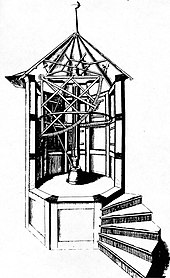
He first published a work concerning his observations on the great comet of 1680, and initially began his work at a private castle-observatory on Spitzenberg 4 owned by Georg Christoph Eimmart (completely destroyed during World War II), the director of Nuremberg's painters' academy. Wurzelbauer was 64 when he began this second career, but proved himself to be an able assistant to Eimmart. A large quadrant from his days at Eimmart's observatory still survives.
After 1682, Wurzelbauer owned his own astronomical observatory and instruments, and observed the transit of Mercury, solar eclipses, and worked out the geographical latitude of his native city. After 1683, he had withdrawn himself completely from business life to dedicate himself to astronomy.
By 1700, Wurzelbauer had become the most well-known astronomer in Nuremberg. For his services to the field of astronomy, he was ennobled in 1692 by Leopold I, Holy Roman Emperor and added the von to his name. He was a member of the French and the Prussian academies of the sciences.
The crater Wurzelbauer on the Moon is named after him. *Wik
The allegory of astronomy hovers above the roof of Wurzelbau's observatory (title engraving of the Uranies Noricae basis astronomico-geographica from 1697)

1698 Pierre-Louis Moreau de Maupertuis (28 Sep 1698; 27 Jul 1759)French mathematician, biologist, and astronomer. In 1732 he introduced Newton's theory of gravitation to France. He was a member of an expedition to Lapland in 1736 which set out to measure the length of a degree along the meridian. Maupertuis' measurements both verified Newton's predictions that the Earth would be an oblate speroid, and they corrected earlier results of Cassini. Maupertuis published on many topics including mathematics, geography, astronomy and cosmology. In 1744 he first enunciated the Principle of Least Action and he published it in Essai de cosmologie in 1850. Maupertuis hoped that the principle might unify the laws of the universe and combined it with an attempted proof of the existence of God.*TIS

1761 François Budan de Boislaurent (28 Sept 1761, 6 Oct 1840) was a Haitian born amateur mathematician best remembered for his discovery of a rule which gives necessary conditions for a polynomial equation to have n real roots between two given numbers. Budan is considered an amateur mathematician and he is best remembered for his discovery of a rule which gives necessary conditions for a polynomial equation to have n real roots between two given numbers. Budan's rule was in a memoir sent to the Institute in 1803 but it was not made public until 1807 in Nouvelle méthode pour la résolution des équations numerique d'un degré quelconque. In it Budan wrote, "If an equation in x has n roots between zero and some positive number p, the transformed equation in (x - p) must have at least n fewer variations in sign than the original." *SAU (Sounds like a nice followup extension to Descartes Rule of signs in Pre-calculus classes. Mention the history, how many times do your students hear about a Haitian mathematician?)

1824 George Johnston Allman (28 September 1824 – 8 May 1904) was an Irish professor, mathematician, classical scholar, and historian of ancient Greek mathematics. His fame rests mainly upon his authorship of Greek Geometry from Thales to Euclid, first published in Dublin in 1889 and republished several times subsequently.
He was born in Dublin the son of William Allman MD, also a botanist.
He held the position of Professor of Mathematics at Queen's University of Ireland for forty years, from 1853 until reaching retirement age in 1893.
He died at Finglass, Dublin on 8 May 1904. He had married in 1853 Louisa, the daughter of John Smith Taylor of Dublin..*Wik

1873 Julian Lowell Coolidge. (28 Sep 1873; 5 Mar 1954) After an education at Harvard (B.A. 1895), Oxford (B.Sc. 1897), Turin (with Corrado Serge) and Bonn (with Eouard Study, Ph.D. 1904), he came back to Harvard to teach until he retired in 1940. He was an enthusiastic teacher with a flair for witty remarks. [DSB 3, 399] *VFR
He published numerous works on theoretical mathematics along the lines of the Study-Segre school. He taught at Groton School, Conn. (1897-9) where one of his pupils was Franklin D Roosevelt, the future U.S. president. From 1899 he taught at Harvard University. Between 1902 and 1904, he went to Turin to study under Corrado Segre and then to Bonn where he studied under Eduard Study. His Mathematics of the Great Amateurs is perhaps his best-known work. *TIS
He is noted for when discussing the need for rigor in definitions, he quipped: “A definition is like a tight collar — uncomfortable perhaps, but it keeps the subject from running away.”

.tif.jpg)
1881 Edward Burns Ross FRSE (28 September 1881 – 11 January 1947) was a 20th-century Scottish mathematician who served as a professor of mathematics at the Madras Christian College.
Ross was born in Maud, Aberdeenshire the son of Ann and William Ross, an Inland Revenue supervisor. Following his father's death in 1887, his school teacher mother moved the family to Edinburgh in 1888. He was then educated at George Watson's School and was school dux in 1898. He studied mathematics and physics at the University of Edinburgh graduating with an MA in 1902. He then continued with postgraduate studies, using a Ferguson Scholarship, in Mathematical Tripos (seventh wrangler, 1904) at the University of Cambridge, gaining a further MA in 1906.
In 1906, he became assistant to Karl Pearson at University College, London staying for one academic year, and in 1907 obtained a post at Madras Christian College in India. His pupils included S. R. Ranganathan who later dedicated a book to him. Ross was a friend of G.H. Hardy and took an interest in the work of Srinivasa Ramanujam.
In 1921 he was elected a Fellow of the Royal Society of Edinburgh. His proposers were Sir Edmund Taylor Whittaker, Ellice Horsburgh, Cargill Gilston Knott and David Gibb.
He retired due to ill-health in 1932 and went to live with his sisters at 41 Liberton Brae in south Edinburgh.He died on 11 January 1947. *Wik
1893 Hilda Geiringer (28 September 1893 – 22 March 1973), also known as Hilda von Mises and Hilda Pollaczek-Geiringer, was an Austrian mathematician.
While still in high school, Geiringer showed great mathematical ability. Her parents supported her financially so that she could study mathematics at the University of Vienna. After receiving her first degree, Geiringer continued her study of mathematics in Vienna. She received her Ph.D. from the University of Vienna in 1917 under the guidance of Wilhelm Wirtinger with a thesis entitled "Trigonometrische Doppelreihen" about Fourier series in two variables. She spent the following two years as Leon Lichtenstein's assistant editing the Jahrbuch über die Fortschritte der Mathematik, a mathematics review journal.
In 1921, Geiringer moved to Berlin where she was employed as an assistant to Richard Edler von Mises at the Institute of Applied Mathematics. In this same year, she married Felix Pollaczek who, like Geiringer, was born in Vienna into a Jewish family and had studied in Berlin. Pollaczek obtained his doctorate in 1922 and went on to work for the Reichspost (Postal service) in Berlin, applying mathematical methods to telephone connections. Hilda and Felix had a child, Magda, in 1922, but their marriage broke up. After the divorce, Geiringer continued working for von Mises and at the same time raised her child.
Although trained as a pure mathematician, Geiringer moved towards applied mathematics to fit in with the work being undertaken at the Institute of Applied Mathematics. Her work at this time was on statistics, probability theory, and also on the mathematical theory of plasticity. She submitted a thesis for her Habilitation to qualify as an instructor at the University of Berlin, but it was not immediately accepted. Geiringer lost the right to teach at the university in December 1933. In fact, she had been proposed for appointment to the position of extraordinary professor in 1933 but the proposal had been ”put on hold” once the Civil Service Law came into effect two months after Adolf Hitler attained power. This law disqualified Jews from serving as teachers, professors, judges, or in other government positions. Geiringer left Germany after she was dismissed from the University of Berlin, and, with Magda, she went to Brussels. There she was appointed to the Institute of Mechanics and began to apply mathematics to the theory of vibrations.

1901 Kurt Otto Friedrichs (September 28, 1901 – December 31, 1982) was a noted German American mathematician. He was the co-founder of the Courant Institute at New York University and recipient of the National Medal of Science.
Friedrichs' greatest contribution to applied mathematics was his work on partial differential equations . He also did major research and wrote many books and papers on existence theory, numerical methods , differential operators in Hilbert space , non-linear buckling of plates, flows past wings, solitary waves, shock waves, combustion, magneto-fluid dynamical shock waves, relativistic flows, quantum field theory , perturbation of the continuous spectrum, scattering theory, and symmetric hyperbolic equations. With Cartan , Friedrichs gave a “geometrized” formulation of Newtonian gravitation theory—also known as “ Newton–Cartan theory ”—and later developed by Dautcourt, Dixon, Dombrowski and Horneffer, Ehlers , Havas, Künzle, Lottermoser, Trautman , and others.
A member of the National Academy of Sciences since 1959, Friedrichs received many honorary degrees and awards for his work. There is a student prize named after Friedrichs at NYU . The American Mathematical Society selected him as the Josiah Willards Gibbs lecturer for 1954. In November 1977, Friedrichs received the National Medal of Science from President Jimmy Carter "for bringing the powers of modern mathematics to bear on problems in physics , fluid dynamics, and elasticity."*Wik

1925 Martin David Kruskal (September 28, 1925 – December 26, 2006) was an American mathematician and physicist. He made fundamental contributions in many areas of mathematics and science, ranging from plasma physics to general relativity and from nonlinear analysis to asymptotic analysis. His single most celebrated contribution was the discovery and theory of solitons. His Ph.D. dissertation, written under the direction of Richard Courant and Bernard Friedman at New York University, was on the topic "The Bridge Theorem For Minimal Surfaces." He received his Ph.D. in 1952.
In the 1950s and early 1960s, he worked largely on plasma physics, developing many ideas that are now fundamental in the field. His theory of adiabatic invariants was important in fusion research. Important concepts of plasma physics that bear his name include the Kruskal–Shafranov instability and the Bernstein–Greene–Kruskal (BGK) modes. With I. B. Bernstein, E. A. Frieman, and R. M. Kulsrud, he developed the MHD (or magnetohydrodynamic) Energy Principle. His interests extended to plasma astrophysics as well as laboratory plasmas. Martin Kruskal's work in plasma physics is considered by some to be his most outstanding.
In 1960, Kruskal discovered the full classical spacetime structure of the simplest type of black hole in General Relativity. A spherically symmetric black hole can be described by the Schwarzschild solution, which was discovered in the early days of General Relativity. However, in its original form, this solution only describes the region exterior to the horizon of the black hole. Kruskal (in parallel with George Szekeres) discovered the maximal analytic continuation of the Schwarzschild solution, which he exhibited elegantly using what are now called Kruskal–Szekeres coordinates.
This led Kruskal to the astonishing discovery that the interior of the black hole looks like a "wormhole" connecting two identical, asymptotically flat universes. This was the first real example of a wormhole solution in General Relativity. The wormhole collapses to a singularity before any observer or signal can travel from one universe to the other. This is now believed to be the general fate of wormholes in General Relativity.
Martin Kruskal was married to Laura Kruskal, his wife of 56 years died on 6 Feb 2019. Laura is well known as a lecturer and writer about origami and originator of many new models. Martin, who had a great love of games, puzzles, and word play of all kinds, also invented several quite unusual origami models including an envelope for sending secret messages (anyone who unfolded the envelope to read the message would have great difficulty refolding it to conceal the deed).
His Mother, Lillian Rose Vorhaus Kruskal Oppenheimer was an American origami pioneer. She popularized origami in the West starting in the 1950s, and is credited with popularizing the Japanese term origami in English-speaking circles, which gradually supplanted the literal translation paper folding that had been used earlier. In the 1960s she co-wrote several popular books on origami with Shari Lewis.*wik


1925 Seymour R. Cray (28 Sep 1925; 5 Oct 1996) American electronics engineer who pioneered the use of transistors in computers and later developed massive supercomputers to run business and government information networks. He was the preeminent designer of the large, high-speed computers known as supercomputers. *TIS Cray began his engineering career building cryptographic machinery for the U.S. government and went on to co-found Control Data Corporation (CDC) in the late 1950s. For over three decades, first with CDC then with his own companies, Cray consistently built the fastest computers in the world, leading the industry with innovative architectures and packaging and allowing the solution of hundreds of difficult scientific, engineering, and military problems. Many of Cray's supercomputers are on exhibit at The Computer Museum History Center. Cray died in an automobile accident in 1996.*CHM


1961 Enrique Zuazua Iriondo (September 28, 1961 'Eibar, Gipuzkoa, Basque Country, Spain - ) is a Research Professor at Ikerbasque, the Basque Foundation for Science in BCAM - Basque Center for Applied Mathematics that he founded in 2008 as Scientific Director. He is also the Director of the BCAM Chair in Partial Differential Equations, Control and Numerics and Professor in leave of Applied Mathematics at the Universidad Autónoma de Madrid (UAM).
His domains of expertise in Applied Mathematics include Partial Differential Equations, Control Theory and Numerical Analysis. These subjects interrelate and their final aim is to model, analyse, computer simulate, and finally contribute to the control and design of the most diverse natural phenomena and all fields of R + D + i.
Twenty PhD students got the degree under his advice and they now occupy positions in centres throughout the world: Brazil, Chile, China, Mexico, Romania, Spain, etc. He has developed intensive international work having led co-operation programmes with various Latin American countries, as well as with Portugal, the Maghreb, China and Iran, amongst others. *Wik

Gabriel Mouton (Aug 29,1618, September 28, 1694) was a French mathematician and precursor of the metric system .
Towards1644 He obtained his doctorate in theology . He was appointed vicar at the church of Saint-Paul in Lyon where he resided . He spent his free time studying mathematics and astrology .
Mouton was a pioneer in the search for a practical natural unit of measurement. His calculations of the apparent diameters of the moon and the sun around 1670 were the result of his astronomical observations and certain calculation procedures that he developed.
This religious man, a protégé of Camille de Neufville de Villeroy (archbishop and governor of Lyon after having been a parish priest of Ainay at the age of five...), was first a vicar, then a perpetual and prebendary of the church of Saint-Paul in Lyon .
Mouton also calculated tables of logarithms of sines and cosines. He is said to have created an astronomical pendulum of remarkable precision.
It is considered by many French, American, German, and English physicists as one of the precursors of the metric system .
Around 1670, Gabriel Mouton showed how difficult it is to maintain an invariable length for measurements. He proposed a set of linear measurements, which he called geometric, which he subjected to decimal division .
He proposed using base 10, whereas at the time, units were converted to their multiple or submultiple by multiplying or dividing most often by 6 or 12 ( base 6 , base 12 ). He named them milliare , centuria , decuria , virga , virgula decima , virgula centesima , and virgula millesima . The term virga could derive from verge , meaning balance rod, as Mouton believed this length could be found at every point on the globe with a pendulum swinging at the same rate . The milliare, or mile, would be the length of the arc of 1 minute of the Earth's great circle ( meridian ), so that the virga and the virgula (1/1,000 or 1/10,000 of a geometric mile) would have corresponded to the fathom and the foot.
Gabriel Mouton was the first physicist to propose the definition of a universal standard of length based on the dimensions of the Earth : the virgula geometrica , defined as one six hundred thousandth of a degree of a meridian arc . Using current data, the virgula = 111.111 km / 600,000 = 0.18 m. The virga = 1.80 m is not far from the fathom.
We can see that Mouton's project corresponds, in principle, to the one that was carried out, more than 120 years later, by our metric system .
In1670 In Lyon, he published his conclusions in the work Observationes diametrorum solis et lunae apparentium .
In 1847, the city of Lyon named a port and a bridge over the Saône : the Mouton bridge. This would later be replaced by the Clémenceau bridge .*Wik

Count Guglielmo Libri Carucci dalla Sommaja (1 Jan 1803, 28 Sept 1869) Libri's early work was on mathematical physics, particularly the theory of heat. However he made many contributions to number theory and to the theory of equations. His best work during the 1830s and 1840s was undoubtedly his work on the history of mathematics. From 1838 to 1841 he published four volumes of Histoire des sciences mathématiques en Italie, depuis la rénaissanace des lettres jusqu'à la fin du dix-septième siècle. He intended to write a further two volumes, but never finished the task. It is an important work but suffers from over-praise of Italians at the expense of others. *SAU

1953 Edwin Powell Hubble (20 Nov 1889, 28 Sep 1953)American astronomer, born in Marshfield, Mo., who is considered the founder of extragalactic astronomy and who provided the first evidence of the expansion of the universe. In 1923-5 he identified Cepheid variables in "spiral nebulae" M31 and M33 and proved conclusively that they are outside the Galaxy. His investigation of these objects, which he called extragalactic nebulae and which astronomers today call galaxies, led to his now-standard classification system of elliptical, spiral, and irregular galaxies, and to proof that they are distributed uniformly out to great distances. Hubble measured distances to galaxies and their redshifts, and in 1929 he published the velocity-distance relation which is the basis of modern cosmology.*TIS

1992 John Leech (21 July, 1926 – Sep 28,1992) was a British mathematician best known for discovering the Leech lattice, a rare 24-dimensional geometric structure used in sphere packing and coding theory.
In mathematics, the Leech lattice is an even unimodular lattice Λ24 in 24-dimensional Euclidean space, E24. It is one of the best models for the kissing number problem. It was discovered by John Leech (1967). It may also have been discovered (but not published) by Ernst Witt in 1940. *SAU/Wik
He also discovered the third taxicab number. A Taxicab number is a number that can be written as the sum of two cubes in more than one way. It is named for an event that occurred when Hardy went to visit Ramanujan in the hospital. Hardy says the following about the visit:
I remember once going to see him when he was lying ill at Putney. I had ridden in taxi cab number 1729 and remarked that the number seemed to me rather a dull one, and that I hoped it was not an unfavorable omen. "No," he replied, "it is a very interesting number; it is the smallest number expressible as the sum of two cubes in two different ways."


For the curious, Fourth Taxicab Number (\(Ta(4) = 6,963,472,309,248\))
Discoverers: E. Rosenstiel, J. A. Dardis, and C. R. Rosenstiel.
Year: 1989
Significance: It is the smallest positive integer that can be expressed as the sum of two positive cubes in four different ways.
Fifth Taxicab Number (\(Ta(5) = 48,988,659,276,962,496\))
Discoverer: David W. Wilson.
Year: 1997
Significance: It is the smallest positive integer that can be expressed as the sum of two positive cubes in five different ways. *Reddit
2004 Jacobus Hendricus ("Jack") van Lint (1 September 1932, 28 September 2004) was a Dutch mathematician, professor at the Eindhoven University of Technology, of which he was rector magnificus from 1991 till 1996. His field of research was initially number theory, but he worked mainly in combinatorics and coding theory. Van Lint was honored with a great number of awards. He became a member of Royal Netherlands Academy of Arts and Sciences in 1972, received four honorary doctorates, was an honorary member of the Royal Netherlands Mathematics Society (Koninklijk Wiskundig Genootschap), and received a Knighthood.*Wik

Credits :
*CHM=Computer History Museum
*FFF=Kane, Famous First Facts
*NSEC= NASA Solar Eclipse Calendar
*RMAT= The Renaissance Mathematicus, Thony Christie
*SAU=St Andrews Univ. Math History
*TIA = Today in Astronomy
*TIS= Today in Science History
*VFR = V Frederick Rickey, USMA
*Wik = Wikipedia
*WM = Women of Mathematics, Grinstein & Campbell


No comments:
Post a Comment