Saturday, 8 March 2014

On This Day in Math - March 8

sheet from Kepler's Harmonices Mundi

The teaching of Algebra in the early stages ought to consist of a gradual generalisation of Arithmetic; in other words, Algebra ought, in the first instance to be taught as Arithmetica Universalis in the strictest sense.
~George Chrystal


The 67th day of the year; 67 is the largest prime which is not the sum of distinct squares.

EVENTS
1618 Kepler, On how he discovered his Third law:
...and if you want the exact moment in time, it was conceived mentally on 8th March in this year one thousand six hundred an eighteen, but submitted to calculation in an unlucky way, and therefore rejected as false, and finally returning on the 15th of May and adopting a new line of attack, stormed the darkness of my mind. So strong was the support from the combination of my labor of seventeen years on the observations of Brahe and the present study, which conspired together, that at first I believed I was dreaming, and assuming my conclusion among my basic premises. But it is absolutely certain and exact that the proportion between the periodic times of any two planets is precisely the sesquialterate proportion of their mean distances ...
* Harmonice mundi (Linz, 1619) Book 5, Chapter 3, trans. Aiton, Duncan and Field, p. 411.

1758 Euler's paper on the game of Rencontre,(A type of solitare card game) published in 1753, is E201, "Calcul de la probabilité dans le jeu de rencontre," Mémoires de l'académie de Berlin (1751), 1753, p. 255-270. Regarding this work, the editor says that a memoir entitled "Calcul des probabilités dans les jeux de hasard" was presented to the Academy of Berlin 8 March 1758. He asserts that it is probably memoir 201: "Calcul de la probabilité dans le jeu de rencontre." An analysis of it appeared in the Nova Acta eruditorum, Leipzig 1754, p, 179. Euler's paper can be found here

In 1775, Joseph Priestley, having discovered oxygen on 1 Aug 1774, experimented with mice in his home laboratory on whether it is necessary to support life. *TIS

1896 James Dewar responds in answer to questions about his cryogenic experiments and safety precautions from Heike Kamerlingh Onnes, the Dutch Physicist whose laboratory had been shut down in Leiden for being to dangerous. "I may say that I have made all my experiments with high pressure apparatus before the Prince of Wales and the Sister of your Queen Dowager the Duchess of Albany without the slightest hesitation and no suggestions of danger were even suggested." *archive of the Kamerlingh Onnes Laboratory
1945 A Patent is Filed for the Harvard Mark I: C.D Lake, H.H. Aiken, F.E. Hamilton, and B.M. Durfee file a calculator patent for the Automatic Sequence Control Calculator, commonly known as the Harvard Mark I. The Mark I was a large automatic digital computer that could perform the four basic arithmetic functions and handle 23 decimal places. A multiplication took about five seconds. *CHM

In 1976, the largest recovered single stony meteorite (1,774 kg) fell in Jilin, China, during a meteor shower that dropped more than 4,000 kg of extra-terrestrial rock. *TIS

BIRTHS
1804 Alvan Clark (8 Mar 1804, 19 Aug 1887) American astronomer whose family became the first significant manufacturers of astronomical instruments in the U.S. His company manufactured apparatus for most American observatories of the era, including Lick and Pulkovo, and others in Europe. In 1862, while testing a telescope, Clark discovered the companion star to Sirius, which had previously been predicted but until then never sighted. The 18½-in objective telescope he used was subsequently delivered to the Dearborn Observatory, Chicago. His sons, Alvan Graham Clark and George Bassett Clark, continued the business. The unexcelled 40-in refractor telescopes for the 40-in Yerkes observatory was made by Alvan Graham Clark*TIS

1851 George Chrystal (8 March 1851 in Old Meldrum (near Aberdeen), Scotland
- 3 Nov 1911 in Edinburgh, Scotland)is best remembered today for Algebra: a two volume work which was completed by 1889. He was also involved in educational reform throughout his career and was a major figure in setting up an educational system in Scotland. He became one of the first honorary members of the EMS in 1883. *SAU Chrystal was (one of?) the first to use the inverted exclamation mark for the subfactorial notation.

1865 Ernest Vessiot (8 March 1865 in Marseilles, France-17 Oct 1952 in La Bauche, Savoie, France) applied continuous groups to the study of differential equations. He extended results of Drach (1902) and Cartan (1907) and also extended Fredholm integrals to partial differential equations. Vessiot was assigned to ballistics during World War I and made important discoveries in this area. He was honored by election to the Académie des Sciences in 1943. *SAU

1866 Pyotr Nikolayevich Lebedev (8 Mar 1866; 1 Apr 1912 at age 46) Russian physicist who, in experiments with William Crookes' radiometer, proved (1910) that light exerts a minute pressure on bodies (as predicted by James Clerk Maxwell's theory of electromagnetism), and furthermore that this effect is twice as great for reflecting surfaces than for absorbent surfaces. He had proposed that light pressure on small particles of cosmic dust could be greater than gravitational attraction, thus explaining why a comet's tail points away from the Sun (though it is now understood the solar wind has a greater influence). He built an extremely small vibrator source capable of generating 4-6 mm waves, which he used to demonstrate the first observation of douible refraction of electromagnetic waves in crystals of rhombic sulphur.*TIS

1879 Otto Hahn (8 Mar 1879; 28 Jul 1968 at age 89) German physical chemist who, with the radiochemist Fritz Strassmann, is credited with the discovery of nuclear fission. He was awarded the Nobel Prize for Chemistry in 1944 and shared the Enrico Fermi Award in 1966 with Strassmann and Lise Meitner. Element 105 carries the name hahnium in recognition of his work.*TIS

1920 George Keith Batchelor FRS (8 March 1920 – 30 March 2000) was an Australian applied mathematician and fluid dynamicist. He was for many years the Professor of Applied Mathematics in the University of Cambridge, and was founding head of the Department of Applied Mathematics and Theoretical Physics (DAMTP). In 1956 he founded the influential Journal of Fluid Mechanics which he edited for some forty years. Prior to Cambridge he studied in Melbourne High School.
As an applied mathematician (and for some years at Cambridge a co-worker with Sir Geoffrey Taylor in the field of turbulent flow), he was a keen advocate of the need for physical understanding and sound experimental basis.
His An Introduction to Fluid Dynamics (CUP, 1967) is still considered a classic of the subject, and has been re-issued in the Cambridge Mathematical Library series, following strong current demand. Unusual for an 'elementary' textbook of that era, it presented a treatment in which the properties of a real viscous fluid were fully emphasized. He was elected a Foreign Honorary Member of the American Academy of Arts and Sciences in 1959.*Wik


DEATHS
1688 Honoré Fabri (8 April 1608 in Le Grand Abergement, Ain, France - 8 March 1688 in Rome, Italy) was a French Jesuit who worked on astronomy, physics and mathematics. His lectureson natural philosophy were published in 1646 as Tractatus physicus de motu locali. In this work he uses the parallelogram law for forces, correctly applying it to deduce the law of reflection and the motion of a body acted on simultaneously by two forces.*SAU (This seems to be one of the earlier statements of the law)


1974 Olive Clio Hazlett (October 27, 1890 - March 8, 1974) was an American mathematician who spent most of her career working for the University of Illinois. She mainly researched algebra, and wrote seventeen research papers on subjects such as nilpotent algebras, division algebras, modular invariants, and the arithmetic of algebras.*Wik


Credits :
*CHM=Computer History Museum
*FFF=Kane, Famous First Facts
*NSEC= NASA Solar Eclipse Calendar
*RMAT= The Renaissance Mathematicus, Thony Christie
*SAU=St Andrews Univ. Math History
*TIA = Today in Astronomy
*TIS= Today in Science History
*VFR = V Frederick Rickey, USMA
*Wik = Wikipedia
*WM = Women of Mathematics, Grinstein & Campbel

Friday, 7 March 2014

On This Day in Math - March 7

Zentangle *Jeannie


Every student who enters upon a scientific pursuit, especially if at a somewhat advanced period of life, will find not only that he has much to learn, but much also to unlearn.
~Sir John Herschel

The 66th day of the year; there are 66 different 8-polyiamonds (A generalization of the polyominoes using a collection of equal-sized equilateral triangles (instead of squares) arranged with coincident sides.)

EVENTS
1750 Two days after delivering his paper on precession,Recherches sur la Précession, to the Berlin Academy, Euler writes to credit d'Alembert for a paper which inspired him to return to the topic after previously giving up.
I applied myself repeatedly and for a long time to the problem of precession, but I always encountered an obstacle − the great number of circumstances that have to be taken into account, and above all this problem: given a body turning about any axis freely, and acted upon by an oblique force, to find the change caused both in the axis of rotation and in the motion. The solution of this is absolutely required for the subject you have so happily developed. But with respect to this problem all my investigations had been unavailing so far, and I would not have applied myself to it further, if I had not seen that the solution must necessarily be encompassed in your treatise, although I was not able to find it there, which at first increased so much the more my desire to develop your whole method. But I must also confess that I could not follow you in the preliminary propositions you employed, for your way of carrying out the calculation was not yet very familiar to me… . But now that I have succeeded better in the investigation of this same subject, having been assisted by some insights in your work by which I was little by little enlightened, I have come to be able to judge your excellent conclusions.
*Curtis Wilson, Historia Mathematica, Volume 35, Issue 4, November 2008, Pages 329–332

In 1799, the Royal Institution in England was founded at a meeting at the Soho Square house of the President of the Royal Society, Joseph Banks (1743-1820). A list was read of the names of fifty-eight gentlemen who had agreed to contribute fifty guineas each to be a Proprietor of a new Institution for diffusing the knowledge, and facilitating the general introduction, of useful mechanical inventions and inprovements; and for teaching, by courses of philosophical lectures and experiments, the application of science to the common purposes of life. A group of Proprietors met to discuss the Proposals for such an Institution put together in the previous weeks by Sir Benjamin Thompson Rumford. *TIS The Royal Institution is the oldest independent research body in the world. *RI

1825 The University of Virginia's first classes met on March 7, 1825. Other universities of the day allowed only three choices of specialization: Medicine, Law, and Religion. Under Jefferson's guidance, the University of Virginia became the first in the United States to allow specializations in such diverse fields as Astronomy, Architecture, Botany, Philosophy, and Political Science. Jefferson explained, "This institution will be based on the illimitable freedom of the human mind. For here we are not afraid to follow truth wherever it may lead, nor to tolerate any error so long as reason is left free to combat it."
The year before, in the presence of James Madison, the Marquis de Lafayette toasted Jefferson as "father" of the University of Virginia at the school's inaugural banquet *Wik

1907 Nature Magazine carried an article from Francis Dalton entitled Vox Populi, regarding what is now called "crowd wisdom." In a rural fair in Plymouth England, there had occurred a spectacle in which the locals could guess the dressed weight of an Oxen to be slaughtered. Tickets cost six pence, but the grand prize was the butchered carcass of the animal, and there seems to have been several smaller prizes. Galton arranged to acquire the cards after the vote. The 787 guesses ranged from around 1000 pounds to about 1500. The median Guess was 1207 pounds.... and when they weighed the beast, "and the weight of the dressed ox proved to be 1198 lb.; so the vox populi was in this case 9 lb., or 0.8 per cent of the whole weight too high." You can almost here the surprise in Galton, who was not, as my grandson would say, "a fan" of the common man. *wisdomofcrowds.blogspot
1918 Jan LLukasiewicz in his “Farewell Lecture” as Rector of Warsaw University announces the work on three-valued logic which he had worked out the summer before. [Selected Works, 84–86.] His parenthesis-free notation was discovered in 1924 and first used in print in 1929 . Today this “Reverse Polish Notation” is widely used. See Hewlett-Packard Personal Computer Digest, vol.7 (1980). *VFR

1933 Charles Brace Darrow designed the board game Monopoly on 7 Mar 1933 in Atlantic City. It was preceded by other real estate games. The first, called "The Landlord's Game," was invented by Lizzie Magie of Virginia (patented 1904). In it, players rented properties, paid utilities and avoided "Jail" as they moved through the board. Darrow set about creating his own version, modeled on his favorite resort, Atlantic City. He made numerous innovations for his game, which had a circular, cloth board. He color-coded the properties and deeds for them, allowing them to be bought, not just rented. The playing pieces were modeled on items from around his house. On 31 Dec 1935, a patent was issued for the game of Monopoly assigned to Parker Brothers, Inc., by Charles Darrow of Pennsylvania (No. 2,026,082). The patent titled it a "Board Game Apparatus" and described it as "intended primarily to provide a game of barter, thus involving trading and bargaining" in which "much of the interest in the game lies in trading and in striking shrewd bargains." Illustrations included with the patent showed not only the playing board and pieces, cards, and the scrip money. *TIS

1957 Teenager John H Conway in his first year at Cambridge writes to H S M Coxeter to ask a question about the {5,3,3} Polytope in four-dimensions. In the five page letter Conway tells the Professor that "Over the past year my copy of your edition of Ball's 'Mathematical Recreations' has accumulated an astonishing number of notes and some corrections... but one or two may seem important." *Siobhan Roberts, King of Infinite Space
1973 Comet Kohoutek, formally designated C/1973 E1, 1973 XII, and 1973f, was first sighted on March 7, 1973 by Czech astronomer Luboš Kohoutek.( M. J. Hendrie, gives the "discovery" as March 18, while observing plates taken on March 7th and 9th. *Journal of the British Astronomical Association, vol.110, no.1, p.9-19) It attained perihelion on 28 December that same year. *Wik

In 1979, scientists discovered a ring around Jupiter while examining photographs taken by the Voyager 1 spacecraft. The rings of Saturn had been known since 1610. Astronomers had recognized rings around Uranus in 1977. *TIS

1989 In a review of Profscam: Professors and the Demise of Higher Education by Charles J. Sykes in The Los Angeles Times, the reviewer wrote that this is how Sykes would word an advertisement at a big research university: “WANTED: University professor. Good salary. Little work. Lots of prestige. Possible lifetime security. Not much contact with students. Plenty of time to research your obscure interests. Good chance for government grants and corporate consulting.” *VFR

BIRTHS


1792 (1st Baronet) Sir John (Frederick William) Herschel (7 Mar 1792; 11 May 1871 at age 79) was an English astronomer. As successor to his father, Sir William Herschel, he discovered another 525 nebulae and clusters. John Herschel was a pioneer in celestial photography, and as a chemist contributed to the development of sensitized photographic paper (independently of Talbot). In 1819, he discovered that sodium thiosulphate dissolved silver salts, as used in developing photographs. He introduced the terms positive image and negative image. Being diverse in his research, he also studied physical and geometrical optics, birefringence of crystals, spectrum analysis, and the interference of light and sound waves. To compare the brightness of stars, he invented the astrometer. *TIS [He was buried in Westminster Abbey.]

1824 Delfino Codazzi (7 March 1824 in Lodi, Italy
Died: 21 July 1873 in Pavia, Italy) was an Italian mathematician who worked in differential geometry.*SAU

1837 Henry Draper (7 Mar 1837, 20 Nov 1882) American physician and amateur astronomer who made the first photograph of the spectrum of a star (Vega), in 1872. He was also the first to photograph a nebula, the Orion Nebula, in 1880. For his photography of the transit of Venus in 1874, Congress ordered a gold medal struck in his honour. His father, John William Draper, in 1840 had made the first photograph of the Moon.*TIS

1870 Ernst Leonard Lindelöf, (7 March 1870, Helsinki (in Swedish: Helsingfors)–4 June 1946, Helsinki) was a Finnish topologist after whom Lindelöf spaces are named; he was the son of Leonard Lorenz Lindelöf and brother of the philologist Uno Lorenz Lindelöf.
Lindelöf studied at the University of Helsinki, where he completed his Ph.D. in 1893, became a docent in 1895 and professor of Mathematics in 1903. He was a member of the Finnish Society of Sciences and Letters.
In addition to working on mathematical topics as diverse as differential equations and the gamma function, Lindelöf actively promoted the study of the history of Finnish mathematics.*Wik

1886 Sir Geoffrey Ingram Taylor OM (7 March 1886 – 27 June 1975) was a British physicist, mathematician and expert on fluid dynamics and wave theory. His biographer and one-time student, George Batchelor, described him as "one of the most notable scientists of this (the 20th) century". His final research paper was published in 1969, when he was 83. In it he resumed his interest in electrical activity in thunderstorms, as jets of conducting liquid motivated by electrical fields. The cone from which such jets are observed is called the Taylor cone for his namesake. In the same year Taylor was appointed to the Order of Merit. He suffered a stroke in 1972 which effectively put an end to his work; he died in Cambridge in 1975.*Wik

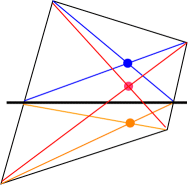
1893 Anna Margaret Mullikin (March 7, 1893 - August 24, 1975) She was born in Baltimore, Maryland and attended Goucher College, which was then a women's college located in the same city. While there she managed her class basketball team, participated on the swimming team, and earned her A.B. degree in 1915. That same year her name was mentioned in the American Mathematical Monthly [Vol. 22, No. 5 (May 1915),pp. 165-166] for solving the following geometry problem:

A quadrilateral of any shape whatever is divided by a transversal into two quadrilaterals. The diagonals of the original figure and those of the two resulting (smaller) figures are then drawn. Show that their three points of intersection are collinear.

The published solution was by Vola Barton, also from Goucher College, with the remark "Also solved by Anna Mullikin."
In 1918 she entered the graduate program in mathematics at the University of Pennsylvania, earning her master's degree in 1919. She continued her graduate studies at Penn during the 1919-1920 academic year under the direction of the topologist, Robert L. Moore, while also teaching at the Stevens School in Germantown, Pennsylvania, another private preparatory school for girls. In the fall of 1920 she moved to the University of Texas along with Moore, who had convinced the Texas math department to appoint her as an instructor. Mullikin stayed in Texas for only the one academic year before returning to Philadelphia to complete the requirements for her degree from the University of Pennsylvania, with Moore still as her advisor. She received her Ph.D. in mathematics in 1922. Mullikin did not pursue mathematical research after earning her Ph.D. She spent the rest of her professional career as a high school mathematics teacher, first at William Penn High School for Girls in Philadelphia for one year, and then at Germantown High School where she remained until her retirement in 1959. She was appointed head of the mathematics department in 1952. In 1956 she was a joint author with Ethel and Ewart Grove for the textbook Algebra and Its Use. *Agnes Scott College

1900 Fritz Wolfgang London (7 Mar 1900; 30 Mar 1954 at age 53) German-American physicist who, with Walter Heitler, devised the first quantum mechanical treatment of the hydrogen molecule, while working with Erwin Schrödinger at the University of Zurich. In a seminal paper (1927), they developed a wave equation for the hydrogen molecule with which it was possible to calculate approximate values of the molecule's ionization potential, heat of dissociation, and other constants. These predicted values were reasonably consistent with empirical values obtained by spectroscopic and chemical means. This theory of the chemical binding of homopolar molecules is considered one of the most important advances in modern chemistry. The approach is later called the valence-bond theory. *TIS

1905 John Macnaghten Whittaker I(7 March 1905 in Cambridge, England - 29 Jan 1984 in Sheffield, England) was the son of Edmund Whittaker. He studied at Edinburgh University and Cambridge. After posts at Edinburgh and Cambridge he became Professor at Liverpool though his tenure was interrupted by service in World War II. He left Liverpool to become Vice-Chancellor of Sheffield University. He worked in Quantum Mechanics and Complex Analysis. *SAU

1922 Olga Aleksandrovna Ladyzhenskaya (March 7, 1922, Kologriv – January 12, 2004, St. Petersburg) was a Soviet and Russian mathematician. She was known for her work on partial differential equations (especially Hilbert's 19th problem) and fluid dynamics. She provided the first rigorous proofs of the convergence of a finite difference method for the Navier-Stokes equations. She was a student of Ivan Petrovsky. She was awarded the Lomonosov Gold Medal in 2002.*Wik

DEATHS
1625 Johann Bayer (? 1572, 7 Mar 1625) German astronomer who cataloged the stars visible to the naked eye in his book Uranometria (1603). Therein, he established the convention, still in use, of naming each star in a constellation using one of the 24 lower-case Greek letters (known as the Bayer designation), such as Alpha Canis Majoris. This was the first star atlas to cover the entire celestial sphere. In one plate, he introduced twelve new southern constellations, which he named, inclusing Apus, Chamaeleon, Hydrus and Phoenix. Bayer's primary occupation was as a lawyer; he pursued astronomy as an amateur interest. When he dedicated his Uranometria to two leading citizens of Augsburg, where he lived, he received an honorarium of 150 gulden. *TIS

1889 Angelo Genocchi (5 March 1817 – 7 March 1889) was an Italian mathematician who specialized in number theory. He worked with Giuseppe Peano. The Genocchi numbers are named after him. The first few are 1, −1, 0, 1, 0, −3, 0, 17...(A001469 in OEIS)
Genocchi was President of the Academy of Sciences of Turin.*Wik

1922 Axel Thue(19 Feb 1863 in Tönsberg, Norway - 7 March 1922 in Oslo, Norway) Thue studied Diophantine equations, showing that, for example, y3 - 2x2 = 1 cannot be satisfied by infinitely many pairs of integers. Edmund Landau, in 1922, described Thue's work as, ".. the most important discovery in elementary number theory that I know. "
Thue's Theorem states, " If f (x, y) is a homogeneous polynomial with integer coefficients, irreducible in the rationals and of degree > 2 and c is a non-zero integer then f (x, y) = c has only a finite number of integer solutions." *SAU

1964 Samuel Stanley Wilks (June 17, 1906 – March 7, 1964) was an American mathematician and academic who played an important role in the development of mathematical statistics, especially in regard to practical applications.
Born in Little Elm, Texas (Little Elm was once a quiet farm town, and today is one of the fastest growing municipalities in Texas) and raised on a farm, Wilks was educated at the University of Iowa, where he acquired his Ph.D. under Everett F. Linquist; his thesis dealt with a problem of statistical measurement in education, and was published in the Journal of Educational Psychology. Wilks became an instructor in mathematics at Princeton University in 1933; in 1938 he assumed the editorship of the journal Annals of Mathematical Statistics in place of Harry C. Carver. Wilks assembled an advisory board for the journal that included major figures in statistics and probability, among them Ronald Fisher, Jerzy Neyman, and Egon Pearson.
Wilks was named professor of mathematics and director of the Section of Mathematical Statistics at Princeton in 1944, and became chairman of the Division of Mathematics at the University in 1958. He was noted for his work on multivariate statistics and unit-weighted regression.
From the start of his career, Wilks favored a strong focus on practical applications for the increasingly abstract field of mathematical statistics; he also influenced other researchers, notably John Tukey, in a similar direction. Drawing upon the background of his thesis, Wilks worked with the Educational Testing Service in developing the standardized tests like the SAT that have had a profound effect on American education. He also worked with Walter Shewhart on statistical applications in quality control in manufacturing.
During World War II he was a consultant with the Office of Naval Research. Both during and after the War he had a profound impact on the application of statistical methods to all aspects of military planning.
The American Statistical Association named its Wilks Memorial Award in his honor.
Wilks' lambda distribution is a probability distribution related to two independent Wishart distributed variables. It is important in multivariate statistics and likelihood-ratio tests. *Wik

1966 Georg Faber (5 April 1877 in Kaiserslautern, Germany - 7 March 1966 in Munich, Germany) Faber's most important work was on the polynomial expansion of functions. This is the problem of expanding an analytical function in an area bounded by a smooth curve as a sum of polynomials, where the polynomials are determined by the area. These polynomials are now known as 'Faber polynomials' and first appear in Faber's 1903 paper Über polynomische Entwickelungen published in Mathematische Annalen. Another important paper which he also published in Mathematische Annalen, this time in 1909, was Über stetige Funktionen. In this paper he introduced the 'hierarchical basis' and explicitly used it for the representation of functions. In fact Faber was building on the idea of Archimedes who computed approximately using a hierarchy of polygonal approximations of a circle. Only in the 1980s was Faber's idea seen to be an important ingredient for the efficient solution of partial differential equations. One further achievement of Faber is worthy of mention. In 1894 Lord Rayleigh made the following claim:" ... given a fixed area of ox-hide to make a drum, the ground tone is lowest if you make your drum circular. " Two mathematicians independently verified Rayleigh's conjecture, Faber and Edgar Krahn. *SAU

1997 E.M. Purcell (30 Aug 1912; 7 Mar 1997) American physicist who shared, with Felix Bloch of the United States, the Nobel Prize for Physics in 1952 for his independent discovery (1946) of nuclear magnetic resonance in liquids and in solids. Nuclear magnetic resonance (NMR) has become widely used to study the molecular structure of pure materials and the composition of mixtures. The method detects and measures the magnetic fields of atomic nuclei. *TIS

2008 David Gale (December 13, 1921 – March 7, 2008) was a distinguished American mathematician and economist. He was a Professor Emeritus at University of California, Berkeley, affiliated with departments of Mathematics, Economics, and Industrial Engineering​ and Operations Research. He has contributed to the fields of mathematical economics, game theory, and convex analysis.*Wik


Credits :
*CHM=Computer History Museum
*FFF=Kane, Famous First Facts
*NSEC= NASA Solar Eclipse Calendar
*RMAT= The Renaissance Mathematicus, Thony Christie
*SAU=St Andrews Univ. Math History
*TIA = Today in Astronomy
*TIS= Today in Science History
*VFR = V Frederick Rickey, USMA
*Wik = Wikipedia
*WM = Women of Mathematics, Grinstein & Campbell

Thursday, 6 March 2014

On This Day in Math - March 6

Santa Sindone in Turin.

Nobody since Newton has been able to use geometrical methods to the same extent for the like purposes; and as we read the Principia we feel as when we are in an ancient armoury where the weapons are of gigantic size; and as we look at them we marvel what manner of man he was who could use as a weapon what we can scarcely lift as a burden.
~William Whewell


The 65th day of the year; 65 is the smallest hypotenuse of two different primitive Pythagorean triangles (and of two other triangles that are not primitive) with all integral sides. (Don't just sit there, find them!)
And \( 65 = 1^5 + 2^4 + 3^3 + 4^2 + 5^1 \) jim wilder ‏@wilderlab
65 is the constant of a 5x5 normal magic square.

EVENTS
1620 Edmund Gunter appointed Gresham Professor of Astronomy. In 1619 the wealthy but earnest Sir Henry Savile put up money to fund Oxford University's first two science faculties, the chairs of astronomy and geometry. Gunter applied to become professor of geometry but Savile was famous for distrusting clever people, and Gunter's behavior annoyed him intensely. As was his habit, Gunter arrived with his sector and quadrant, and began demonstrating how they could be used to calculate the position of stars or the distance of churches, until Savile could stand it no longer. "Doe you call this reading of Geometric?" he burst out. "This is mere showing of tricks, man!" and, according to a contemporary account, "dismissed him with scorne." He was shortly thereafter championed by the far wealthier Earl of Bridgewater, who saw to it that on 6 March 1619 Gunter was appointed professor of astronomy in Gresham College, London. This post he held till his death. Gunter created the first logarithmic scale. Gunter's scale or Gunter's rule, generally called the "Gunter" by seamen, is a large plane scale, usually 2 feet (0.61 m) long by about 1½ inches broad (600 mm by 40 mm), and engraved with various scales, or lines. On one side are placed the natural lines (as the line of chords, the line of sines, tangents, rhumbs, etc.), and on the other side the corresponding artificial or logarithmic ones. By means of this instrument questions in navigation, trigonometry, etc., are solved with the aid of a pair of compasses. It is a predecessor of the slide rule, a calculating aid used from the 17th century until the 1970s.
He is also known for Gunter's chain , a geodetic measuring device used for land survey. When the Northwest territory (Ohio, Indiana, Michigan, Illinois etc) was created, the decreed official measure was the Gunther Chain.*Wik On a visit to Stratford on Avon while at Hall's croft, the home of Shakespeare's daughter Susanna and her husband, Dr John Hall, I came across an early map of the town and the only legend shown was in Gunter's Chains. Watching an English Cricket match one day in Dec of 2006, I realized that the length of the bowling area (between the two wickets) is one chain also.

In 1661, the Royal Society, London, England, elected Sir Robert Moray as their first president. *TIS

1665 first appearance of the Philosophical Transactions of the Royal Society. The Journal des sçavans (later renamed Journal des savants), founded by Denis de Sallo, was the earliest academic journal published in Europe, that from the beginning also carried a proportion of material that would not now be considered scientific. The first edition appeared as a twelve page quarto pamphlet on Monday, 5 January 1665. This was shortly before the first appearance of the Philosophical Transactions of the Royal Society, on 6 March 1665. *Wik

1689 Edmond Halley first wrote about diving equipment in a paper of 6 March 1689, perhaps prompted by his work on the Thames survey undertaken around that time. Halley proposed a mobile diving bell built on four wheels, and while he didn’t build that particular bell, he did build another as part of his salvage work on the wreck of the Guynie frigate. *halleyslog

1703 Robert Hooke is buried at the church of St Helen, Bishopsgate, London. He had died on March 3. A memorial window to him was destroyed by a bomb in 1992.


1805 Legendre introduced least squares. Gauss had them ten years earlier but had not published, so some controversy ensued. *VFR It was on this day that he published the little 80 page appendix, Nouvelle me'thodes pur la determination des orbites des cometes. "Of all the principals that can be proposed fro this purpose, I think there is none more general, more exact, or easier to apply,... it consists of making the sum of the squares of the errors a minimum." *Stephen M. Stigler, The History of Statistics

1815 Wilhelm Olbers, an amateur German astronomer who was a doctor by profession, discovered the periodic comet now named for him.  This amateur astronomer would discover many comets, and his calculating method would change the science.  He became a lifelong friend of Gauss after their correspondence regarding the discovery of Ceres in January of 1802.  He would allow Guass to name the planet (now, asteroid, a term not in use then) that he discovered in 1807, Vesta. *Wik

1832 Gauss responds to his “old, unforgettable friend,” Farkas (Wolfgang) Bolyai, that he has been working on non-Euclidean geometry “in part already for 30–35 years.” In the same letter Gauss points out several flaws in Euclid. *VFR Bolyai had included the work of Janos, his son, on non-Euclidean Geometry in a letter to Guass on the 20th of June 1831.. and again on the 16th of January 1832 Farkas sent the Appendix to Gauss again with another letter in which he wrote: ``My son appreciates Your critique more than that of whole Europe and it is the only thing he is waiting for''. In his response, One of Gauss' well-known sentences was: ``if I praised your son's work I would praise myself''. The letter deeply afflicted and upset János Bolyai, although it reflects appreciation, too: ``... I am very glad that it is my old friend's son who so splendidly preceded me'' *Komal Journal

In 1869, Dmitry Mendeleev published his first version of the periodic table of the elements. He was a Russian chemist who developed the periodic classification of the elements. In his final version of the periodic table (1871) he left gaps, foretelling that they would be filled by elements not then known and predicting the properties of three of those elements. *TIS  Mendeleev had written the properties of elements on pieces of card and tradition has it that after organizing the cards while playing patience he suddenly realized that by arranging the element cards in order of increasing atomic weight that certain types of element regularly occurred.*Royal Society of Chemistry

1896 Dutch cryogenic physicist, Heike Kamerlingh Onnes, writes to James Dewar in England to explain the reason he had not made any recent experiments in cooling gases: "..you will be astonished to hear. The municipality of Leiden has made objections as to my working with condensed gases and has not been content with asking that additional means of precaution are taken, but is gone so far to claim in August last that my cryogenic laboratory be removed from the city! " *archive of the Kamerlingh Onnes Laboratory

In 1913, this date was written by Niels Bohr on his first paper describing his new ideas on atomic structure, and mailed to his mentor, Ernest Rutherford. It was one of three historic papers he wrote on this subject. *TIS

1953 James Watson and Francis Crick submitted to the journal Nature their first article on the structure of DNA. It was published in the 25 Apr 1953 issue. "We wish to put forward a radically different structure for the salt of deoxyribose nucleic acid. This structure has two helical chains each coiled around the same axis... Both chains follow right-handed helices... The novel feature of the structure is the manner in which the two chains are held together by purine and pyrimidine bases... They are joined together in pairs, a single base from one chain being hydrogen-bonded to a single base from the other chain, so that the two lie side by side with identical z-co-ordinates. One of the pair must be a purine and the other a pyrimidine in order for bonding to occur."*TIS

1967 A study of twelve industrial nations revealed that mathematics achievement is highest in Japan, lowest in the U.S. *VFR

1992 Michaelangelo Virus Strikes: Concerns over the Michelangelo virus sparked a scare among everyone from personal computer users to world governments. As many as 5 million computers reportedly were at danger of contracting the virus, set to erase data on the March 6 anniversary of the artist's birth. In fact, Michelangelo spread to only a few thousand machines. *CHM


BIRTHS
1847 Johann Georg Hagen (6 Mar 1847, 5 Sep 1930) Austrian Jesuit priest and astronomer who made a catalog of variable stars (1890-1908). Working at the Vatican Observatory he reexamined for accuracy the listing of all of the NGC (New General Catalogue of Nebulae and Star Clusters) objects north of about -30 degrees. He published lists of errata in the NGC. During his observations, he observed dark nebulae, tenuous dark clusters of interstellar matter sometimes known as Hagen's clouds. These strange clouds have not been recorded by others, and are now attributed to optical illusions associated with visual observations. Jesuits have been involved in astronomy since 1551 when Fr. Christoph Clavius, SJ, a mathematician and astronomer helped Pope Gregory XIII reform the calendar.*TIS

1866 Ettore Bortolotti (6 March 1866 in Bologna, Kingdom of Sardinia (now Italy)
- 17 Feb 1947 in Bologna, Italy) Italian mathematician who worked in various areas in analysis. He was interested in the history of mathematics. *SAU . He revealed the importance of Evange¬lista Torricelli’s infinitesimal results and vindicated Cataldi’s claim to the discovery of continued fractions. *VFR

1901 Naum Ilyich Akhiezer (6 March 1901 – 3 June 1980) was a Soviet mathematician of Jewish origin, known for his works in approximation theory and the theory of differential and integral operators. He is also known as the author of classical books on various subjects in analysis, and for his work on the history of mathematics. He is the brother of the theoretical physicist Aleksander Akhiezer.*Wik


DEATHS
1683 Guarino Guarini (17 Jan 1624; 6 Mar 1683) Italian architect and theologian whose study of mathematics led him to a career in architecture in which he created the most fantastic geometric elaboration of all baroque churches. In his Santissima Sindone, Guarini created a diaphanous dome - a geometrical optical illusion in the dome made through the use of the actual structure which creates the illusion that the dome recedes farther up into space than it really does. He wrote two architectural treatises and other works that concentrate on his mathematical knowledge. Therein, Guarini discusses Desargue's projective geometry, which reveal a scientific basis for his daring structures. He worked primarily in Turin and Sicily, with his influence stretching into Germany, Austria and Bohemia.*TIS

*E.E. Ballew

1866 William Whewell (24 May 1794, 6 Mar 1866 at age 71) British scientist, best known for his survey of the scientific method and for creating scientific words. He founded mathematical crystallography and developed Mohr's classification of minerals. He created the words scientist and physicist by analogy with the word artist. They soon replaced the older term natural philosopher. (actually the use of scientist was a very slow process often not well received. see more of the interesting story here) Other useful words were coined to help his friends: biometry for Lubbock; Eocine, Miocene and Pliocene for Lyell; and for Faraday, anode, cathode, diamagnetic, paramagnetic, and ion (whence the sundry other particle names ending -ion). In metereology, Whewell devised a self-recording anemometer. He was second only to Newton for work on tidal theory. He died as a result of being thrown from his horse. *TIS
In a single letter to Faraday on 25 April, 1834; he invented the terms cathode, anode and ion. The letter is on display at the Wren Library at Trinity College, Cambridge, UK.

1939 Carl Louis Ferdinand von Lindemann (12 Apr 1852, 6 Mar 1939 at age 86) He showed π transcendental not the root of any algebraic equation with rational coefficients), consequently the circle cannot be squared. (constructing a square with the same area as a given circle using ruler and compasses alone.) In 1873, Lindemann visited Hermite in Paris and discussed the methods which Hermite had used in his proof that e, the base of natural logarithms, is transcendental. Following this visit, Lindemann was able to extend Hermite's results to show that pi was also transcendental. *TIS(the image is of his tombstone.... note the square and circle with Pi inside.


2005 Hans Beth (2 Jul 1906, 6 Mar 2005 at age 98), German-born American theoretical physicist who helped to shape classical physics into quantum physics and increased the understanding of the atomic processes responsible for the properties of matter and of the forces governing the structures of atomic nuclei. Bethe did work relating to armour penetration and the theory of shock waves of a projectile moving through air. He studied nuclear reactions and reaction cross sections (1935-38). In 1943, Oppenheimer asked Bethe to be the head of the Theoretical Division at Los Alamos on the Manhattan Project. After returning to Cornell University in 1946, Bethe became a leader promoting the social responsibility of science. He received the Nobel Prize for Physics (1967) for his work on the production of energy in stars. *TIS

1944 Aleksandr Petrovich Kotelnikov (20 Oct 1865 in Kazan, Russia - 6 March 1944 in Moscow, USSR) In 1927 he published one of his most important works, The Principle of Relativity and Lobachevsky's Geometry. He also worked on quaternions and applied them to mechanics and geometry. Among his other major pieces of work was to edit the Complete Works of two mathematicians, Lobachevsky and Zhukovsky. He received many honours for his work, being named Honoured Scientist in 1934, then one year before he died he was awarded the State Prize of the USSR. *SAU


Credits :
*CHM=Computer History Museum
*FFF=Kane, Famous First Facts
*NSEC= NASA Solar Eclipse Calendar
*RMAT= The Renaissance Mathematicus, Thony Christie
*SAU=St Andrews Univ. Math History
*TIA = Today in Astronomy
*TIS= Today in Science History
*VFR = V Frederick Rickey, USMA
*Wik = Wikipedia
*WM = Women of Mathematics, Grinstein & Campbell

Wednesday, 5 March 2014

On This Day in Math - March 5

Terrestrial globe by Mercator dating from 1541. It is now in the museum collection of the Palazzo Ducale in Urbania, Italy, and is one of about 22 existing Mercator globes.*Wik

But in the present century, thanks in good part to the influence of Hilbert, we have come to see that the unproved postulates with which we start are purely arbitrary. They must be consistent, they had better lead to something interesting.
~Julian Lowell Coolidge


The 64th day of the year; 64 is the smallest power of two with no prime neighbor. (What is next value of 2n with no prime neighbor?)

The square of a triangular number is always the sum of consecutive cubes starting with one, but 64 is the smallest perfect square that can be made with a sum of consecutive cubes all larger than one.
EVENTS
In 1223 BC, the oldest recorded eclipse occurred, according to one plausible interpretation of a date inscribed on a clay tablet retrieved from the ancient city of Ugarit, Syria (as it is now). This date is favoured by recent authors on the subject, although alternatively 3 May 1375 BC has also been proposed as plausible. Certainly by the 8th century BC, the Babylonians were keeping a systematic record of solar eclipses, and possibly by this time they may have been able to apply numerological rules to make fairly accurate predictions of the occurrence of solar eclipses. The first total solar eclipse reliably recorded by the Chinese occurred on 4 Jun 180 BC*TIS

In 1590, Tycho Brahe discovered a comet in the constellation Pisces.*TIS

In 1616, Copernican theory was declared "false and erroneous" in a decree delivered by Cardinal Robert Bellarmine, and issued by the Catholic Church in Rome. Further, no person was to be permitted to hold or teach the theory that the earth revolves around the sun. When Galileo subsequently violated the decree, he was put on trial and held under house arrest for the final eight years of his life. *TIS Copernican theory was declared "false and erroneous" by the 11 theologians, appointed by the Pope to examine it, on 24 February 1616. Bellarmine, who was not one of these 11, was ordered by the Pope to convey this decision to Galileo, which he did verbally on 26 February 1616. The Decree of the Index was issued on 5 March 1616 in which "…the books by Nicolaus Copernicus and Diego Zúñiga be suspended until corrected…" This decree was signed by the Most Illustrious and Reverend Lord Cardinal of St. Cecilia, Bishop of Albano P. (Paolo Sfondrati) and Fra Francisco Magdelenus Capiferreus, O.P., Secretary. *Thony Christie, My thanks to Thony for the correction More detail about this event can be found on the Feb 26 Post about Galileo

1639 Debeaune to Mersenne: “I do not think that one could acquire any solid knowledge of nature in physics without geometry, and the best of geometry consists of analysis, of such kind that without the latter it is quite imperfect.” *VFR

1673 Hooke presents Arithmetic Engine to Royal Society. After a presentation of a calculating machine by Leibniz on January 22, (after which Leibniz complained to Oldgenburg that Hooke's examination of the machine had shown "almost indecent interest") Hooke became interested in creating a better machine and announced such intention to the Royal Society. Working with Richard Shortgrave, Harry Hunt and John Pell he produced a machine which would multiply to twenty places over the next six weeks. His diary entry seemed to indicate the demonstration went well, but within a few days he seemed to have dismissed such machines entirely. *Stephen Inwood, Forgotten Genius


1684 Halley's father mysteriously went missing and five weeks later was found murdered on the banks of the Medway. *Kate Morant, halleyslog.wordpress.com

On March 5, 1750, Euler read his own Recherches sur la Précession at the Berlin Academy. Two days later he wrote d'Alembert giving an extended account of his struggle to derive the precession and giving d'Alembert credit for re-inspiring his efforts to solve it. * Curtis Wilson, Historia Mathematica, Volume 35, Issue 4, November 2008, Pages 329–332

1831 Birth of "The Average Man". Adolphe Quetelet read a memoir to the Brussels Academy Royal. The newborn l'homme moyen would not be officially named by quetelet until July. *Statistics on the Table: The History of Statistical Concepts and Methods
By Stephen M. Stigler

1876 Sylvester, at age 61, appointed professor of mathematics at Johns Hopkins University. This was the real beginning of graduate mathematics education in the United States. *VFR

1993 Talking Laptop Helps Blind Student Earn B.S.:
In an early demonstration of the impact computers could have on people's lives, the Los Angeles Times reports that a blind student was taking advantage of a talking laptop computer to help him complete courses necessary to graduate from UCLA. After 15 years of going to college on and off, the computer provided Robert Antunez the independence and aid he needed to complete a bachelor's degree in political science. *CHM

BIRTHS
1512 Gerardus Mercator (5 Mar 1512- 2 Dec 1594) Flemish cartographer whose most important innovation was a map, embodying what was later known as the Mercator projection, on which parallels and meridians are rendered as straight lines spaced so as to produce at any point an accurate ratio of latitude to longitude. He also introduced the term atlas for a collection of maps. *TIS A nice blog about the Mercator projection, which he suggests should be called the Mercator Wright projection is at the Renaissance Mathematicus blogsite.
For those interested in a quick look at the math involved in the Merator-Wright projection, this Endeavour blog by John D. Cook may help.

1575 William Oughtred (5 Mar 1575; 30 Jun 1660 at age 85) English mathematician and Episcopal minister who invented the earliest form of the slide rule, two identical linear or circular logarithmic scales held together and adjusted by hand. Improvements involving the familiar inner rule with tongue-in-groove linear construction came later. He also introduced the familiar multiplication sign x in a 1631 textbook, along with the first use of the abbreviations sin, cos and tan.*Tis There is an Oughtred Society dedicated to the history and preservation of slide rules.

1624/25 John Collins (5 March 1624 in Wood Eaton (4km north of Oxford), England - 10 Nov 1683 in London, England) was an accountant and publisher who corresponded extensively with the mathematicians of his day. Collins's importance is, as Barrow said, being "the English Mersenne" . He corresponded with Barrow, David Gregory, James Gregory, Newton, Wallis, Borelli, Huygens, Leibniz, Tschirnhaus and Sluze.
Collins published books by Barrow and Wallis and left a collection of 2000 books and an uncounted number of manuscripts.
He did publish works of his own, however. For instance he published works on sundials, trigonometry for navigation and the use of the quadrant. He had a paper on cartography published and also wrote on accounting, compound interest and annuities. His major works were An introduction to merchant's accounts (1652), The sector on a quadrant (1658), Geometrical dialling (1659), The mariner's plain scale new plained (1659) and, in 1664, he published Doctrine of Decimal Arithmetick. *SAU

1779 Benjamin Gompertz (March 5, 1779 – July 14, 1865), was a self educated mathematician, denied admission to university because he was Jewish.[citation needed] Nevertheless he was made Fellow of the Royal Society in 1819. Gompertz is today mostly known for his Gompertz law (of mortality), a demographic model published in 1825. The model can be written in this way:

N(t) = N(0) e-c (e{at}-1),

where N(t) represents the number of individuals at time t, and c and a are constants.

This model is a refinement of the demographic model of Malthus. It was used by insurance companies to calculate the cost of life insurance. The equation, known as a Gompertz curve, is now used in many areas to model a time series where growth is slowest at the start and end of a period. The model has been extended to the Gompertz–Makeham law of mortality.

1794 Jacques Babinet (5 March 1794 – 21 October 1872) was a French physicist, mathematician, and astronomer who is best known for his contributions to optics. A graduate of the École Polytechnique, which he left in 1812 for the Military School at Metz, he was later a professor at the Sorbonne and at the Collège de France. In 1840, he was elected as a member of the Académie Royale des Sciences. He was also an astronomer of the Bureau des Longitudes.
Among Babinet's accomplishments are the 1827 standardization of the Ångström unit for measuring light using the red Cadmium line's wavelength, and the principle (Babinet's principle) that similar diffraction patterns are produced by two complementary screens. He was the first to suggest using wavelengths of light to standardize measurements. His idea was first used between 1960 and 1983, when a meter was defined as a wavelength of light from krypton gas.
In addition to his brilliant lectures on meteorology and optics research, Babinet was also a great promoter of science, an amusing and clever lecturer, and a brilliant, entertaining and prolific author of popular scientific articles. Unlike the majority of his contemporaries, Babinet was beloved by many for his kindly and charitable nature. He is known for the invention of polariscope and an optical goniometer. *Wik

1815 Angelo Genocchi (5 March 1817 – 7 March 1889) was an Italian mathematician who specialized in number theory. He worked with Giuseppe Peano. The Genocchi numbers are named after him. G(t)= 2t/(et+1)for integer values of t. The first few are 1, −1, 0, 1, 0, −3, 0, 17...(A001469 in OEIS)
Genocchi was President of the Academy of Sciences of Turin.*Wik

1880 Sergei Natanovich Bernstein (March 5, 1880 – October 26, 1968) was a Russian and Soviet mathematician. His doctoral dissertation, submitted in 1904 to the Sorbonne, solved Hilbert's nineteenth problem on the analytic solution of elliptic differential equations. Later, he published numerous works on Probability theory, Constructive function theory, and mathematical foundations of genetics. From 1906 until 1933, Bernstein was a member of the Kharkov Mathematical Society. *Wik

1885 Pauline Sperry born in Peabody, Massachusetts. After graduating Phi Beta Kappa from Smith College in 1906 she taught several years before doing graduate work at the University of Chicago under the projective differential geometer Ernest Julius Wilczynski (1876–1932). Her doctoral thesis, "Properties of a certain projectively defined two-parameter family of curves on a general surface", drew on his work as the founder of the American school of projective differential geometry. After receiving her Ph.D. in 1916 she taught at the University of California at Berkeley, becomming the first woman to be promoted to assistant professor in mathematics (in 1923). In 1950 she was fired for refusing to sign a loyalty oath.

1915 Laurent-Moïse Schwartz (5 March 1915 in Paris – 4 July 2002 in Paris) was a French mathematician. He pioneered the theory of distributions, which gives a well-defined meaning to objects such as the Dirac delta function. He was awarded the Fields medal in 1950 for his work (developing the theory of distributions, a new notion of generalized functions motivated by the Dirac delta-function of theoretical physics). He was the first French mathematician to receive the Fields medal. For a long time he taught at the École polytechnique. *Wik

1931 Vera S. Pless (born 1931) is an American mathematician specializing in combinatorics and coding theory. She is professor emeritus at the University of Illinois at Chicago. She has co-authored several articles with John H. Conway, giving her an Erdős number of 2.*Wik

DEATHS
1827 Pierre Simon, Marquis de Laplace (23 Mar 1749, 5 Mar 1827 at age 78) was a French mathematician, physicist, statistician and astronomer known for his mathematical analysis of the stability of the solar system (1773), alleviating Isaac Newton's concerns about perturbations between planets. He took an exact approach to science. He developed an explanation of surface tension of a liquid in terms of inter-molecular attractions, investigated capillary action and the speed of sound. He assisted Antoine Lavoisier (1783) investigating specific heat and heats of combustion, initiating the science of thermochemistry. He believed the solar system formed from a collapsing nebula. He contributed to the mathematics of probability and calculus, in which a differential equation is known by his name, and was involved in establishing the metric system.*TIS His last words were, “What we know is very slight; what we don’t know is immense.” *Eves, Revisited, 319◦


1827 Count Alessandro Giuseppe Antonio Anastasio Volta (18 Feb 1745; 5 Mar 1827 at age 82) Italian physicist who invented the electric battery (1800), which for the first time enabled the reliable, sustained supply of current. His voltaic pile used plates of two dissimilar metals and an electrolyte, a number of alternated zinc and silver disks, each separated with porous brine-soaked cardboard. Previously, only discharge of static electricity had been available, so his device opened a new door to new uses of electricity. Shortly thereafter, William Nicholson decomposed water by electrolysis. That same process later enabled Humphry Davy to isolate potassium and other metals. Volta also invented the electrophorus, the condenser and the electroscope. He made important contributions to meteorology. His study of gases included the discovery of methane. The volt, a unit of electrical measurement, is named after him.*TIS


1875 Claude-Louis Mathieu (25 Nov 1783; 5 Mar 1875) French astronomer and mathematician who worked particularly on the determination of the distances of the stars. He began his career as an engineer, but soon became a mathematician at the Bureau des Longitudes in 1817 and later professor of astronomy in Paris. For many years Claude Mathieu edited the work on population statistics L'Annuaire du Bureau des Longitudes produced by the Bureau des Longitudes. His work in astronomy focussed on determining the distances to stars. He published L'Histoire de l'astronomie au XVIII siècle in 1827. *TIS

1905 Karol Borsuk (May 8, 1905, Warsaw – January 24, 1982, Warsaw) Polish mathematician. His main interest was topology.
Borsuk introduced the theory of absolute retracts (ARs) and absolute neighborhood retracts (ANRs), and the cohomotopy groups, later called Borsuk-Spanier cohomotopy groups. He also founded the so called Shape theory. He has constructed various beautiful examples of topological spaces, e.g. an acyclic, 3-dimensional continuum which admits a fixed point free homeomorphism onto itself; also 2-dimensional, contractible polyhedra which have no free edge. His topological and geometric conjectures and themes stimulated research for more than half a century. *Wikipedia

1925 Johan Ludwig William Valdemar Jensen (8 May 1859 in Nakskov, Denmark - 5 March 1925 in Copenhagen, Denmark)contributed to the Riemann Hypothesis, proving a theorem which he sent to Mittag-Leffler who published it in 1899. The theorem is important, but does not lead to a solution of the Riemann Hypothesis as Jensen had hoped. It expresses, "... the mean value of the logarithm of the absolute value of a holomorphic function on a circle by means of the distances of the zeros from the center and the value at the center. "
He also studied infinite series, the gamma function and inequalities for convex functions.*SAU

1840 Franz Carl Joseph Mertens (20 March 1840 in Schroda, Posen, Prussia (now Środa Wielkopolska, Poland) - 5 March 1927 in Vienna, Austria) Mertens worked on a number of different topics including potential theory, geometrical applications to determinants, algebra and analytic number theory, publishing 126 papers. Bruce C Berndt writes, "Mertens is perhaps best known for his determination of the sign of Gauss sums, his work on the irreducibility of the cyclotomic equation, and the hypothesis which bears his name. "
Many people are aware of Mertens contributions since his elementary proof of the Dirichlet theorem appears in most modern textbooks. However he made many deep contributions including Mertens' theorems, three results in number theory related to the density of the primes. He proved these results using Chebyshev's theorem, a weak version of the prime number theorem. *SAU
In his youth, Mertens moved to Berlin where he became a student at Berlin
University, and where he studied under Kronecker and Kummer. Mertens first worked in Krakow, and then moved to Austria. Ernst Fischer and Schrodinger, for instance, were students of Mertens at the University of Vienna. *Julio Gonzalez Cabillon, Historia Matematica Discussions

1885 John Radford Young (1799– March 5,1885; Peckam, England) was a mathematician, professor and author, who was almost entirely self-educated. At an early age he became acquainted with Olinthus Gilbert Gregory, who perceived his mathematical ability and assisted him in his studies.
In 1833, he was appointed Professor of Mathematics at Belfast College. When Queen's College, Belfast, opened in 1849, the Presbyterian party in control there prevented Young's reappointment as Professor in the new establishment. From that time he devoted himself more completely to the study of mathematical analysis, and made several original discoveries. He appears to have been the first to use the term "circular function" when he used it in 1831 in the an edition of Elements of the Differential Calculus "Thus, ax, a log x, sin x, &c., are transcendental functions: the first is an exponential function, the second a logarithmic function, and the third a circular function"
In 1847, he published in the Transactions of the Cambridge Philosophical Society a paper "On the Principle of Continuity in reference to certain Results of Analysis", and, in 1848, in the Transactions of the Royal Irish Academy a paper "On an Extension of a Theorem of Euler". As early as 1844, he had discovered and published a proof of Newton's rule for determining the number of imaginary roots in an equation. In 1866, he completed his proof, publishing in The Philosophical Magazine a demonstration of a principle which in his earlier paper he had assumed as axiomatic. In 1868, he contributed to the Proceedings of the Royal Irish Academy a memoir "On the Imaginary Roots of Numerical Equations".
*Wik
1930 Christine Ladd-Franklin (1 Dec 1847; 5 Mar 1930) American scientist and logician known for contributions to the theory of colour vision accounting for the development of man's color sense which countered the established views of Helmholtz, Young, and Hering. Her position was that color-sense developed in stages. Ladd- Franklin's conclusions were particularly useful in accounting for color-blindness in some individuals. In logic, she published an original method for reducing all syllogisms to a single formula *TIS Ladd-Franklin was the first woman to have a published paper in the Analyst. She was also the first woman to receive a Ph.D. in mathematics and logic. The majority of her publications were based on visual processes and logic. Her views on logic influenced Charles S. Peirce’s logic and she was highly praised by Prior. *Wik

1954 Julian Lowell Coolidge (28 Sep 1873, 5 Mar 1954 at age 80) American mathematician and educator who published numerous works on theoretical mathematics along the lines of the Study-Segre school. Coolidge received a B.A. at Harvard (1895), then in England he graduated (1897) with a B.Sc. from Balliol College Oxford. (It is interesting that this degree from Oxford was in natural science and it was the first natural science degree ever awarded by Oxford.) He taught at Groton School, Conn. (1897-9) where one of his pupils was Franklin D Roosevelt, the future U.S. president. From 1899 he taught at Harvard University. Between 1902 and 1904, he went to Turin to study under Corrado Segre and then to Bonn where he studied under Eduard Study. His Mathematics of the Great Amateurs is perhaps his best-known work. *TIS . This geometer wrote several noteworthy books on the history of geometry.*VFR


Credits :
*CHM=Computer History Museum
*FFF=Kane, Famous First Facts
*NSEC= NASA Solar Eclipse Calendar
*RMAT= The Renaissance Mathematicus, Thony Christie
*SAU=St Andrews Univ. Math History
*TIA = Today in Astronomy
*TIS= Today in Science History
*VFR = V Frederick Rickey, USMA
*Wik = Wikipedia
*WM = Women of Mathematics, Grinstein & Campbell