Monday, 12 October 2015

On This Day in Math - October 12


"Yet I exist in the hope that these memoirs ... 
may find their way to the minds of humanity in Some Dimensions, 
and may stir up a race of rebels who shall refuse to be confined to limited Dimensionality."
~ Edwin Abbott Abbott, Flatland


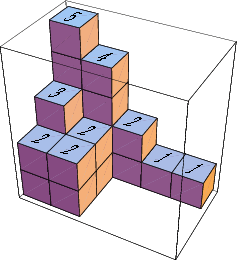
The 285th day of the year, 285 is a square pyramidal number (like a stack of cannonballs, or oranges with the base in a square)... Or.. the sum of the first nine squares. \( 285 = \sum _{i=1} ^ 9 (i^2) \)

EVENTS

1793 At the University of North Carolina, the cornerstone was laid for “Old East,” the oldest state university building in the U.S.*VFR

In 1850, classes began at the Women's Medical College of Pennsylvania, the first medical school entirely for women.*TIS

1884 George Bruce Halsted presented his inaugural address before the Texas Academy of Science. He spoke of his teacher at Johns Hopkins, J. J. Sylvester, and related how the rumor started that Sylvester killed a student when he was at the university of Virginia. [Science, 22 February 1885; vol. 1, no. 8, p. 265] *VFR

1988 Steve Jobs unveiled the NeXT, the computer he designed after moving on from Apple Computer Inc., which he had founded with Steve Wozniak. Although the NeXT ultimately failed, it introduced several features new to personal computers, including an optical storage disk, a built-in digital signal processor that allowed voice recognition, and object-oriented languages that simplified programming. On a microprocessor with 8 megabytes of RAM, however, the NeXT ran too slowly to be popular. NeXT Computer Inc. eventually became NeXT Software Inc. and then was bought by Apple in 1997.


BIRTHS
1827 Josiah Parsons Cooke (October 12, 1827 – September 3, 1894) was an American scientist who worked at Harvard University and was instrumental in the measurement of atomic weights, inspiring America's first Nobel laureate in chemistry, Theodore Richards, to pursue similar research. Cooke's 1854 paper on atomic weights has been said to foreshadow the periodic law developed later by Mendeleev and others. Historian I. Bernard Cohen described Cooke "as the first university chemist to do truly distinguished work in the field of chemistry" in the United States. *Wik

1860 Elmer Sperry (12 Oct 1860; 16 Jun 1930) American electrical engineer and inventor of the gyrocompass. In the 1890's he made useful inventions in electric mining machinery, and patent electric brake and control system for street- or tramcars. In 1908, he patented the active gyrostabilizer which acted to stop a ship's roll as soon as it started. He patented the first gyrocompass designed expressly for the marine environment in 1910. This "spinning wheel" gyro was a significant improvement over the traditional magnetic compass of the day and changed the course of naval history. The first Sperry gyrocompass was tested at-sea aboard the USS Delaware in 1911 and established Sperry as a world leader in the manufacture of military gyrocompasses for the next 80 years. *TIS


DEATHS

1492 Piero della Francesca (June 1420, 12 Oct 1492) was an Italian artist who pioneered the use of perspective in Renaissance art and went on to write several mathematical treatises. In his own time he was also known as a highly competent mathematician. In his Lives of the most famous painters ... [13], Giorgio Vasari (1511-1572) says that Piero showed mathematical ability in his earliest youth and went on to write 'many' mathematical treatises. Of these, three are now known to survive. The titles by which they are known are: Abacus treatise (Trattato d'abaco), Short book on the five regular solids (Libellus de quinque corporibus regularibus) and On perspective for painting (De prospectiva pingendi). Piero almost certainly wrote all three works in the vernacular (his native dialect was Tuscan), and all three are in the style associated with the tradition of 'practical mathematics', that is, they consist largely of series of worked examples, with rather little discursive text.
The Abacus treatise is similar to works used for instructional purposes in 'Abacus schools'. It deals with arithmetic, starting with the use of fractions, and works through series of standard problems, then it turns to algebra, and works through similarly standard problems, then it turns to geometry and works through rather more problems than is standard before (without warning) coming up with some entirely original three-dimensional problems involving two of the 'Archimedean polyhedra' (those now known as the truncated tetrahedron and the cuboctahedron).
Four more Archimedeans appear in the Short book on the five regular solids: the truncated cube, the truncated octahedron, the truncated icosahedron and the truncated dodecahedron. (All these modern names are due to Johannes Kepler (1619).) Piero appears to have been the independent re-discoverer of these six solids. Moreover, the way he describes their properties makes it clear that he has in fact invented the notion of truncation in its modern mathematical sense.
On perspective for painting is the first treatise to deal with the mathematics of perspective, a technique for giving an appearance of the third dimension in two-dimensional works such as paintings or sculptured reliefs. Piero is determined to show that this technique is firmly based on the science of vision (as it was understood in his time). He accordingly starts with a series of mathematical theorems, some taken from the optical work of Euclid (possibly through medieval sources) but some original to Piero himself. Some of these theorems are of independent mathematical interest, but on the whole the work is conceived as a manual for teaching painters to draw in perspective, and the detailed drawing instructions are mind-numbing in their repetitiousness. There are many diagrams and illustrations, but unfortunately none of the known manuscripts has illustrations actually drawn by Piero himself.
None of Piero's mathematical work was published under his own name in the Renaissance, but it seems to have circulated quite widely in manuscript and became influential through its incorporation into the works of others. Much of Piero's algebra appears in Pacioli's Summa (1494), much of his work on the Archimedeans appears in Pacioli's De divina proportione (1509), and the simpler parts of Piero's perspective treatise were incorporated into almost all subsequent treatises on perspective addressed to painters. *SAU

1682 Jean-Felix Picard (July 21, 1620 – July 12, 1682) was a French astronomer and priest born in La Flèche, where he studied at the Jesuit Collège Royal Henry-Le-Grand. He was the first person to measure the size of the Earth to a reasonable degree of accuracy in a survey conducted in 1669–70, for which he is honored with a pyramid at Juvisy-sur-Orge. Guided by Maurolycus's methodology and Snellius's mathematics for doing so, Picard achieved this by measuring one degree of latitude along the Paris Meridian using triangulation along thirteen triangles stretching from Paris to the clocktower of Sourdon, near Amiens. His measurements produced a result of 110.46 km for one degree of latitude, which gives a corresponding terrestrial radius of 6328.9 km. The polar radius has now been measured at just over 6357 km. This was an error only 0.44% less than the modern value. This was another example of advances in astronomy and its tools making possible advances in cartography. Picard was the first to attach a telescope with crosswires (developed by William Gascoigne) to a quadrant, and one of the first to use a micrometer screw on his instruments. The quadrant he used to determine the size of the Earth had a radius of 38 inches and was graduated to quarter-minutes. The sextant he used to find the meridian had a radius of six feet, and was equipped with a micrometer to enable minute adjustments. These equipment improvements made the margin of error only ten seconds, as opposed to Tycho Brahe's four minutes of error. This made his measurements 24 times more accurate. Isaac Newton was to use this value in his theory of universal gravitation.
Picard also travelled to Tycho Brahe's Danish observatory, Uraniborg, in order to assess its position accurately so that Tycho's readings could be compared to others'. Picard collaborated and corresponded with many scientists, including Isaac Newton, Christiaan Huygens, Ole Rømer, Rasmus Bartholin, Johann Hudde​, and even his main competitor, Giovanni Cassini, although Cassini was often less than willing to return the gesture. These correspondences led to Picard's contributions to areas of science outside the field of geodesy, such as the aberration of light he observed while in Uraniborg, or his discovery of mercurial phosphorescence upon his observance of the faint glowing of a barometer. This discovery led to Newton's studies of spectrometry.
Picard also developed what became the standard method for measuring the right ascension of a celestial object. In this method, the observer records the time at which the object crosses the observer's meridian. Picard made his observations using the precision pendulum clock that Dutch physicist Christiaan Huygens had recently developed. His book "Mesure de la Terre" was published in 1671.*Wik

1912 Lewis Boss (26 Oct 1846, 12 Oct 1912) American astronomer best known for his compilation of two catalogues of stars (1910, 1937). In 1882 he led an expedition to Chile to observe a transit of Venus. About 1895 Boss began to plan a general catalog of stars, giving their positions and motions. After 1906, the project had support from the Carnegie Institution, Washington, D.C. With an enlarged staff he observed the northern stars from Albany and the southern stars from Argentina. With the new data, he corrected catalogs that had been compiled in the past, and in 1910 he published the Preliminary General Catalogue of 6,188 Stars for the Epoch 1900. The work unfinished upon his death was completed by his son Benjamin in 1937*TIS

1926 Edwin Abbott Abbott (20 Dec 1838, 12 Oct 1926) His most famous work was Flatland: a romance of many dimensions (1884) which Abbott wrote under the pseudonym of A Square. The book has seen many editions, the sixth edition of 1953 being reprinted by Princeton University Press in 1991 with an introduction by Thomas Banchoff​. Flatland is an account of the adventures of A Square in Lineland and Spaceland. In it Abbott tries to popularise the notion of multidimensional geometry but the book is also a clever satire on the social, moral, and religious values of the period.
More recently, in 2002, an annotated version of Flatland has been produced with an introduction and notes by Ian Stewart who gives extensive discussion of mathematical topics related to passages in Abbott's text. *SAU The Kindle edition of Flatland is available for less than $2.00 Flatland: A Romance of Many Dimensions [Illustrated] and the Stewart version is only a little more:


In a bold statement of personal opinion I add: This book should be read by every teacher and every student of mathematics.

1936 William Sheppard read Mathematics at Cambridge and then went on to study Law. He was appointed to the Department of Education. His mathematical interests were mainly in Statistics. *SAU

1984 Georgii Dmitrievic Suvorov (19 May 1919, 12 Oct 1984) made major contributions to the theory of functions. He worked, in particular, on the theory of topological and metric mappings on 2-dimensional space. Another area on which Suvorov worked was the theory of conformal mappings and quasi-formal mappings. His results in this area, mostly from the late 1960s when he was at Donetsk, are of particular significance. He extended Lavrentev's results in this area, in particular Lavrentev's stability and differentiability theorems, to more general classes of transformations. One of the many innovations in Suvorov's work was new methods which he introduced to help in the understanding of metric properties of mappings with bounded Dirichlet integral. *SAU

2011 Dennis MacAlistair Ritchie (September 9, 1941; found dead October 12, 2011), was an American computer scientist who "helped shape the digital era." He created the C programming language and, with long-time colleague Ken Thompson, the UNIX operating system. Ritchie and Thompson received the Turing Award from the ACM in 1983, the Hamming Medal from the IEEE in 1990 and the National Medal of Technology from President Clinton in 1999. Ritchie was the head of Lucent Technologies System Software Research Department when he retired in 2007. He was the 'R' in K&R C and commonly known by his username dmr. *Wik


Credits :
*CHM=Computer History Museum
*FFF=Kane, Famous First Facts
*NSEC= NASA Solar Eclipse Calendar
*RMAT= The Renaissance Mathematicus, Thony Christie
*SAU=St Andrews Univ. Math History
*TIA = Today in Astronomy
*TIS= Today in Science History
*VFR = V Frederick Rickey, USMA
*Wik = Wikipedia
*WM = Women of Mathematics, Grinstein & Campbell

Sunday, 11 October 2015

On This Day in Math - October 11


Jeannie at the tomb of Tristan (from Tristan and Isolde) near Fowey, Cornwall


Perhaps some day in the dim future it will be possible to advance the computations faster than the weather advances and at a cost less than the saving to mankind due to the information gained. But that is a dream.
— Lewis Fry Richardson


The 284th day of the year; 284 is an amicable (or friendly) number paired with 220. The divisors of 220 add up to 284 and the divisors of 284 add up to 220. Amicable numbers were known to the Pythagoreans, who credited them with many mystical properties. A general formula by which some of these numbers could be derived was invented circa 850 by Thābit ibn Qurra (826-901).(Can you find the next pair?)

jim wilder ‏@wilderlab pointed out a variation of friendly numbers in degree three...

Along the lines of friendly numbers... 136 = 2³ + 4³ + 4³ and 244 = 1³ + 3³ + 6³


EVENTS

1606 Kepler, having heard of Thomas Harriot’s work in natural philosophy from his friend John Erickson writes to ask Harriot’s view on colors, refraction, and causes of the rainbow. *Henry Stevens, Thomas Hariot, the mathematician, the philosopher, and the scholar
Thony Christie sent a tweet reminding me that Harriot's response did not include his knowledge of the law of sines for refraction. The law of refraction is named after Snel, but he was not the first person to discover it. The first discoverer seems to have been Thomas Harriot, who knew it by 1602, based on his observations in 1597 and 1598, but died before he could publish it. Snel's re-discovery of the law came in 1621; but he did not publish it before his death in 1626. Descartes was the first person to publish it, in his famous “Discourse on Method” *rohan.sdsu.edu

1809 Gauss’s wife Johanne died, following the birth of her third child Louis. *VFR

1868 Thomas Alva Edison filed papers for his first invention, an electronic vote recorder to rapidly tabulate floor votes in Congress. Members of Congress rejected it. *VFR

1887 Patent #371,496 issued for the “comptometer,” the first adding machine “absolutely accurate at all times.” It was invented by Dorr Eugene Felt of Chicago; a model was constructed in 1884. It wasn’t first. *VFR This patent for the adding machine was granted to Dorr Eugene Felt of Chicago, Illinois. His Comptometer was the first practical key-driven calculator with sufficient speed, reliability and economic benefit. He called his original prototype the "Macaroni box", a rough model that Felt created over the year-end holidays in 1884-85. The casing was a grocery macaroni box, assembled with a jackknife using meat skewers as keys, staples as key guides and elastic bands for springs. Door improved his design, producing his earliest commercial wooden-box Comptometer from 1887 thru 1903, leading to the first steel case Model A (1904 that would be standard for the remainder for all "shoebox" models. Electric motor drive was introduced in the 1920's. *TIS

1939 Albert Einstein “wrote” President F. D. Roosevelt that “Some recent work by E. Fermi and L. Szilard ... leads me to expect that the element uranium may be turned into a new and important source of energy in the immediate future. ... This new phenomenon would also lead to the construction of bombs, and it is conceivable—though much less certain—that extremely powerful bombs of a new type may be constructed.”
The letter, drafted by Fermi, Szilard, and Wigner and seems not to have actually been signed by Einstein until August 10, and was then given to Alexander Sachs, a confident of Roosevelt, who did not deliver it to him until October 30. Roosevelt quickly started the Manhattan Project. Einstein later regretted signing this letter. *(VFR & Brody & Brody); (the letter can be read at Letters of Note) They recognized the process could generate a lot of energy leading to power and possibly weapons. There was also concern the Nazi government of Germany was already searching for an atomic weapon. This letter would accomplish little more than the creation of a "Uranium Committee" with a budget of $6,000 to buy uranium and graphite for experiments.
Sir Fred Soddy's book, The Interpretation of Radium, inspired H G Wells to write The World Set Free in 1914, and he dedicated the novel to Soddy's book. Twenty years later, Wells' book set Leo Szilard to thinking about the possibility of Chain reactions, and how they might be used to create a bomb, leading to his getting a British patent on the idea in 1936. A few years later Szilard encouraged his friend, Albert Einstein , to write a letter to President Roosevelt about the potential for an atomic bomb. The prize-winning science-fiction writer, Frederik Pohl , talks about Szilard's epiphany in Chasing Science (pg 25),
".. we know the exact spot where Leo Szilard got the idea that led to the atomic bomb. There isn't even a plaque to mark it, but it happened in 1938, while he was waiting for a traffic light to change on London's Southampton Row. Szilard had been remembering H. G. Well's old science-fiction novel about atomic power, The World Set Free and had been reading about the nuclear-fission experiment of Otto Hahn and Lise Meitner, and the lightbulb went on over his head."

1988 A 109 digit number, 11104 +1, was factored by Mark Manasse and Arjen Lenstra using a quadratic sieve and a network of hundreds of computers in the US, Europe, and Australia. *FFF pg 570
For those who care to attempt to find the factors for themselves, here are the digits:
as provided by Wolfram Alpha


BIRTHS

1675 Samuel Clarke (11 October 1675;  Norwich – 17 May 1729), defender of Newton’s physical theories against Leibniz. *VFR Clarke was considered the greatest metaphysician in England when Locke died in 1704. In 1706 Newton asked Clarke to translate his Opticks into Latin.*SAU

1758 (Heinrich) Wilhelm (Matthäus) Olbers(11 Oct 1758; 2 Mar 1840) was a German astronomer and physician, born in Arbergen, Germany. While practicing medicine at Bremen, he calculated the orbit of the comet of 1779, discovered the minor planets (asteroids) Pallas (1802) and Vesta (1807), and discovered five comets (all but one already observed at Paris). He also invented a method for calculating the velocity of falling stars. He is also known for Olber's paradox which asks "why is the night sky dark if there are so many bright stars all around to light it?" *TIS

1822 John Daniel Runkle (October 11, 1822 – July 8, 1902) was a U.S. educator and mathematician. B.S. in mathematics, 1851, Harvard College, second president of the Massachusetts Institute of Technology, was associated with the Nautical Almanac computation project from 1849 to 1884. In 1858 he founded the journal Mathematical Monthly and edited it for three years, when publication ceased. In 1860 he was a member of the committee that prepared the “Objects and Plan of an Institute of Technology” which led to the establishment of MIT. In 1862 he became MIT’s first secretary, and in 1865 he joined the new faculty as professor of mathematics, where he remained until 1902. He served as president pro-tem, 1868-1870, and was MIT’s second president, 1870-1878. He was married to Catherine Robbins Bird Runkle. *MIT History

1881 Lewis Fry Richardson (11 Oct 1881; 30 Sep 1953) British physicist and psychologist who first applied mathematics to accurate weather prediction. Richardson applied the mathematical method of finite differences to predicting the weather (1922). In his life, he held various posts: at the National Physical Laboratory, the Meteorological Office, and several university posts in physics or technology. Also, he was a chemist with National Peat Industries and in charge of the physical and chemical laboratory of the Sunbeam Lamp Co. Early application of mathematical techniques for systematically forecasting the weather were limited by extensive computation time: three months to predict weather for the next 24 hours. With electronic computers available after WW II made his methods became practical. He wrote several books applying mathematics to the causes of war. He contributed to calculus and the theory of diffusion for eddy-diffusion in the atmosphere. The Richardson number, a quantity involving gradients (change over distance) of temperature and wind velocity, is named after him.*TIS

1885 Alfréd Haar (11 October 1885, Budapest – 16 March 1933, Szeged) was a Hungarian mathematician who is best remembered for his work on analysis on groups, introducing a measure on groups, now called the Haar measure. *SAU
In 1904 he began to study at the University of Göttingen. His doctorate was supervised by David Hilbert. The Haar measure, Haar wavelet, and Haar transform are named in his honor. Between 1912 and 1919 he taught at Franz Joseph University in Kolozsvár. Together with Frigyes Riesz, he made the University of Szeged a centre of mathematics. He also founded the Acta Scientiarum Mathematicarum magazine together with Riesz. *Wik

1910 Cahit Arf (11 Oct 1910, 26 Dec 1997) Much of Arf's most important work was in algebraic number theory and he invented Arf invariants which have many applications in topology. His early work was on quadratic forms in fields, particularly fields of characteristic 2. His name is not only attached to Arf invariants but he is also remembered for the Hasse-Arf Theorem which plays an important role in class field theory and in Artin's theory of L-functions. In ring theory, Arf rings are named after him. *SAU

1916 Robert Eugene Marshak (October 11, 1916 – December 23, 1992) was an American physicist dedicated to learning, research, and education.
Marshak was born in the Bronx, New York City. His parents were immigrants to New York from Minsk. He was educated at Columbia University.
Marshak received his PhD from Cornell University in 1939. Along with his thesis advisor, Hans Bethe, he discovered many of the fusion aspects involved in star formation. This helped him on his work for the Manhattan Project, in Los Alamos, during World War II.
In 1947, at the Shelter Island Conference, Marshak presented his two-meson hypothesis about the pi-meson, which were discovered shortly thereafter.[1]
In 1957, he and George Sudarshan proposed a V-A ("vector" minus "axial vector") Lagrangian for weak interactions, which was later independently discovered by Richard Feynman and Murray Gell-Mann. His biography below, is explicit about it "Perhaps Marshak's most significant scientific contribution was the proposal of the V-A Theory of Weak Interactions (the fourth force in nature) in collaboration with his student George Sudarshan. Unfortunately, the pair published the theory only in a conference proceedings for a meeting in Italy. Six months later, a different derivation of the same concept was published by Feynman and Gell-Mann in a mainstream scientific journal. Marshak had talked with Feynman about the general problem in California some time before. Though the V-A Concept was considered to be one of the most important contributions to theoretical physics, a Nobel Prize was never awarded for it." Sudarshan himself later commented in a TV interview in 2006 that Murray Gell-Mann got the idea from him, in an informal coffee time!
He was Chairman of the Department of Physics at the University of Rochester for fourteen years (1956 to 1970)
He was the President of the City College of New York from 1970-1979.
Marshak died by accidental drowning in Cancún, Mexico in 1992. *Wik


DEATHS

1697 Stephano Angeli ( 23 September 1623 , Venice -  11 October 1697 , Padua)was an Italian mathematician who worked on infinitesimals and used them to study spirals, parabolas and hyperbolas.
In Bologna he came under the influence of Cavalieri.  Cavalieri was teaching at the University of Bologna, one of the oldest and most famous universities in Europe, dating from the 11th century. After leaving Bologna, Angeli continued his contacts with Cavalieri by correspondence, and was entrusted to publish Cavalieri's final work, Exercitationes geometricae sex, since by 1647 Cavalieri's health had deteriorated to such an extent that he was unable to carry out the work himself. Angeli also corresponded with a number of other mathematicians including Torricelli and Viviani.*SAU

1698 William Molyneux  (17 April 1656; Dublin – 11 October 1698; Dublin) was an Irish scientist and philosopher who worked on optics. Perhaps his best known scientific work was Dioptrica Nova, A treatise of dioptricks in two parts, wherein the various effects and appearances of spherick glasses, both convex and concave, single and combined, in telescopes and microscopes, together with their usefulness in many concerns of humane life, are explained, published in London 1692.
 In 1687 he invented a new type of sundial called a Sciothericum telescopicum that used special double gnomon and a telescope to measure the time of noon to within 15 seconds. "measured time by day and night." *SAU

1708 Ehrenfried Walter von Tschirnhaus  (10 April 1651 – 11 October 1708) was a German mathematician who worked on the solution of equations and the study of curves. He is best known for the transformation which removes the term of degree n-1 from an equation of degree n. *SAU The Tschirnhaus transformation, by which he removed certain intermediate terms from a given algebraic equation, is well-known. It was published in the scientific journal Acta Eruditorum in 1683. In 1696, Johann Bernoulli posed the problem of the brachystochrone to the readers of Acta Eruditorum. Tschirnhaus was one of only five mathematicians to submit a solution. Bernoulli published these contributions (including Tschirnhaus') along with his own in the journal in May of the following year.
Von Tschirnhaus produced various types of lenses and mirrors, some of them are displayed in museums. He erected a large glass works in Saxony, where he constructed burning glasses of unusual perfection and carried on his experiments. *Wik

1731 John Craig (1663 – October 11, 1731) Scottish mathematician who published three important textbooks.While he was still a student in Edinburgh, Craig published Methodus figurarum lineis rectis et curvis comprehensarum quadraturas determinandi which contains Leibniz's dy/dx notation. This notation is also used in the work he published in 1693, Tractatus mathematicus de figurarum curvilinearum quadraturis et locis geometricis which was the first text published in England to contain the integration symbol ∫ . Dale writes "The standard of his work was such that he was noted as a mathematician of the first order ... and the "Acta Eruditorum" of Leipzig ranked him among the originators of the calculus (after Leibniz, but before Newton)". *SAU

1791 Johann Castillon (15 January 1704 in Castiglion Fiorentino, Toskana - 11. October 1791 in Berlin) was an Italian mathematician and astronomer who wrote on the cardioid and may have created the name.*SAU Castillon published the correspondence between Gottfried Wilhelm Leibniz and Johann Bernoulli , edited works of Leonhard Euler and published a review of Newton's Arithmetica Universalis. He also translated Locke's basic concepts of physics into French. *Wik

1852 Ferdinand Gotthold Max Eisenstein (16 Apr 1823, 11 Oct 1852) died of pulmonary tuberculosis at age 29.*VFR German mathematician whose work covered a range of topics including the theory of elliptic functions, and quadratic and cubic forms, which led to cyclotomy, the reciprocity theorem for cubic residues, and also theorems for quadratic and biquadratic residues from partition of prime numbers. *TIS In 1843 he met William Rowan Hamilton in Dublin, who gave him a copy of his book on Niels Henrik Abel's proof of the impossibility of solving fifth degree polynomials, a work that would stimulate Eisenstein's interest in mathematical research. He specialized in number theory and analysis, and proved several results that eluded even Gauss. *Wik

1889 James Prescott Joule (24 Dec 1818, 11 Oct 1889) English physicist who established that the various forms of energy - mechanical, electrical, and heat - are basically the same and can be changed, one into another. Thus he formed the basis of the law of conservation of energy, the first law of thermodynamics. He discovered (1840) the relationship between electric current, resistance, and the amount of heat produced. In 1849 he devised the kinetic theory of gases, and a year later announced the mechanical equivalent of heat. Later, with William Thomson (Lord Kelvin), he discovered the Joule-Thomson effect. The SI unit of energy or work , the joule (symbol J), is named after him. It is defined as the work done when a force of 1 newton moves a distance of 1 metre in the direction of the force.*TIS

1940 Vito Volterra (3 May 1860, 11 Oct 1940)Italian mathematician who made important contributions to calculus, and mathematical theories in astronomy, elasticity and biometrics. His mathematical talent appeared as a young boy. In 1905, he began to develop the theory of dislocations in crystals that led to improved understanding of the behaviour of ductile materials. During WWI he established the Italian Office of War Inventions and designed weapons for use by airships, for which he proposed the use of helium instead of flammable hydrogen. He is remembered for achievements in function theory and differential equations. In biology, in 1925, he formulated a pair of differential equations relating populations of prey and predators (also independently proposed by Alfred J. Lotka in 1925)*TIS (His date of death is sometimes given as 10 October, so that date is also listed)

1943 Geoffrey Thomas Bennett (30 June 1868, 11 Oct 1943) His most famous paper is the two page paper A new four-piece skew mechanism which he published in the journal Engineering in 1903. In it Bennett considers a skew hinged four-bar mechanism in three dimensional space. The angle between the hinges in a bar is called the twist. This mechanism is movable only if the opposite sides are equal. Then it follows as a consequence that the sines of the twists are proportional to the lengths of the bars. This remarkable mechanism Bennett called a skew isogram. It uses the fewest rods possible to build a useful mechanism. In a subsequent 22 page paper The skew isogram mechanism which he published in 1914, Bennett presented many interesting properties of the skew isogram, some without proofs. These proofs were not written down until Bernard Groeneveld's thesis Geometrical considerations on space kinematics in connection with Bennett's mechanism presented to the Technische Hogeschool te Delft in 1954. In 1922 Bennett published The three-bar sextic curve. In this paper he obtained the characteristics of the curve (now called the couple curve) as the locus of the Laguerre images of the conjugate points on the Hessian of an elliptic cubic. He therefore treated a curve defined in the area of kinematics by the methods of algebraic geometry. *SAU A 1913 Paper on The skew Isogram by Bennett

1979 Franciszek Leja (January 27, 1885 in Grodzisko Górne near Przeworsk – October 11, 1979 in Kraków, Poland) Polish mathematician who greatly influenced Polish Mathematics in the period between the two World Wars.
He was born to a poor peasant family in the southeastern Poland. After graduating from the University of Lwów he was a teacher of mathematics and physics in high schools from 1910 until 1923, among others in Kraków. From 1924 until 1926 he was a professor at the Warsaw University of Technology and from 1936 until 1960 in the Jagiellonian University.
During the Second World War he lectured on the underground universities in Łańcut and Lezajsk. But after the German invasion of Poland in 1939 life there became extremely difficult. There was a strategy by the Germans to wipe out the intellectual life of Poland. To achieve this Germans sent many academics to concentration camps and murdered others. In one of such actions he was sent to the Sachsenhausen concentration camp which he fortunately survived.
Since 1948 he worked for the Institute of Mathematics of the Polish Academy of Sciences. He was a co-founder of the Polish Mathematics Society in 1919 and from 1963 until 1965 the chairman. Since 1931 he was a member of the Warsaw Science Society (TNW).
His main scientific interests concentrated on analytic functions, in particular the method of extremal points and transfinite diameters. *Wik

1989 Mark Grigorievich Krein (3 April 1907 – 17 October 1989) was a Soviet Jewish mathematician, one of the major figures of the Soviet school of functional analysis. He is known for works in operator theory (in close connection with concrete problems coming from mathematical physics), the problem of moments, classical analysis and representation theory.
He was born in Kiev, leaving home at age 17 to go to Odessa. He had a difficult academic career, not completing his first degree and constantly being troubled by anti-Semitic discrimination. His supervisor was Nikolai Chebotaryov.
He was awarded the Wolf Prize in Mathematics in 1982 (jointly with Hassler Whitney), but was not allowed to attend the ceremony.
He died in Odessa.
On 14 January 2008, the memorial plaque of Mark Krein was unveiled on the main administration building of I.I. Mechnikov Odessa National University. *Wik

1996 Lars Valerian Ahlfors (18 Apr 1907, 11 Oct 1996) Finnish mathematician who was awarded one of the first two Fields Medals in 1936 for his work with Riemann surfaces. He also won the Wolf Prize in 1981.*TIS


Credits :
*CHM=Computer History Museum
*FFF=Kane, Famous First Facts
*NSEC= NASA Solar Eclipse Calendar
*RMAT= The Renaissance Mathematicus, Thony Christie
*SAU=St Andrews Univ. Math History
*TIA = Today in Astronomy
*TIS= Today in Science History
*VFR = V Frederick Rickey, USMA
*Wik = Wikipedia
*WM = Women of Mathematics, Grinstein & Campbell

Saturday, 10 October 2015

On This Day in Math - October 10

Met this guy on the road coming across the Dartmore Forest in the fog one day.

Mathematicians have tried in vain to this day to discover some order in the sequence of prime numbers, and we have reason to believe that it is a mystery into which the human mind will never penetrate.
~Leonhard Euler


The 283rd day of the year;283 is a twin prime. Also it can be expressed as powers of its digits, 283 = 25 + 81 + 35. (Curious students might seek the first multi-digit number for which this is possible)


EVENTS


1580 Tycho observes a comet and follows it until November 25. and in the morning of December 13. He measured the distance to a comet and thereby demonstrated that comets were beyond the Moon. The Broadside from the British Museum was done about 1580, but was based on an earlier woodcut so it is probably not the comet that Tycho measured, (or perhaps any other actual comet). In January of the following year (still 1580 in England) a pamphlet of warning was written by "Francis Shakelton, minister and preacher of the worde of God":
"A blazyng starre or burnyng beacon, seene the 10. of October laste (and yet continewyng) set on fire by Gods prouidence, to call all sinners to earnest [and] speedie repentance."


1580 John Dee became one of the few commoners visited by Queen Elizabeth. Just hours after the death of his second wife the Queen and her entire privy council showed up at his door. Dee tried to entertain her using the "magical mirror" he had been given by William Pickering who had once been Elizabeth's suitor. The mirror, made of highly-polished obsidian (volcanic glass), was one of many Mexica cult objects and treasures brought to Europe after the conquest of Mexico by Cortés between 1527 and 1530. It is now in the British Museum. *Benjamin Wooley, The Queen's Conjuror


1641 Torricelli arrives in Arcetri to study with Galileo. ".. postpone his arrival at Arcetri until 10 October 1641. He took up residence in Galileo’s house, where Vincenzo Viviani was already living, and stayed there in close friendship with Galileo until the latter’s death on 8 January 1642. " *encyclopedia.com

In 1796, according to tradition, the metric system was born. The Oct 10 (10/10) date was chosen since it seems to signify the base 10 way of using measurements.*TIS (tradition perhaps, but I can find no event that took place regarding metric system on this date. France would adopt system on Dec 10th of 1796. Can anyone verify a reason for this "traditional" date. although Dec 10 has a nice ring)

1844 Michael Faraday gets a scare. After a deadly explosion in a collary in Haswell, he was asked to participate in a commission to examine the incident. They examined the mine, and asked questions about air flow and other issues. Satisfied, Faraday's last series of Q & A went something like:

Faraday: Where do you store the dynamite?
A : "In a bag, tightly tied," was the reply.
Faraday: "Yes, but where do you keep the bag?"
A : "You are sitting on it."
They had apparently honored Faraday with the most comfortable cushion available. He supposedly jumped up quickly and admonished them for their carelessness, especially since the explanation about air flow included tests with an open flame candle. *The Correspondence of Michael Faraday, Volume 3: (There are many variations on this anecdote, one here that conflates the mine incident with events in court on the previous day)

1845 Naval School (now Naval Academy) opened at Annapolis, MD. *VFR

In 1846, Neptune's moon, Triton, is discovered by William Lassell while he was observing the newly discovered planet Neptune. He was attempting to confirm his observation of the previous week, that Neptune had a ring. Instead he discovered that Neptune had a satellite, Triton. Lassell soon proved that the ring he thought he had seen was a product of his new telescope's distortion. This picture of Triton was taken in 1989 by the only spacecraft ever to pass Triton: Voyager 2, which found fascinating terrain, a thin atmosphere, and even evidence for ice volcanoes on this world of peculiar orbit and spin. Ironically, Voyager 2 also confirmed the existence of complete thin rings around Neptune - but these would have been quite invisible to Lassell! *TIS

1931 Spain issued a stamp picturing the Fountain of Lions at the Alhambra in Granada. The Alhambra is famous for its use of tessellations. [Scott #491] *VFR

1971 The rebuilt London Bridge was completed and dedicated in Arizona.   In 1831, New London Bridge had opened to traffic in London. In 1821, a committee was formed by Parliament to consider the poor condition of the existing centuries-old bridge. The arches had been badly damaged by the Great Freeze, so it was decided to build a new bridge. Building commenced under John Rennie in 1825, and completed in 1831, at the expense of the city. The bridge is composed of five arches, and built of Dartmoor granite. It was opened with great splendor by King William the fourth, accompanied by Queen Adelaide, and many of the members of the royal family, August 1st, 1831. In the 1960's it was auctioned and sold for $2,460,000 to Robert McCulloch who moved it to Havasu City, Arizona. The rebuilt London Bridge was completed and dedicated on 10 Oct 1971.*TIS

In 1986, a tiny asteroid, Asteroid 3753, was found orbiting the Earth - a body in addition to the Moon - by J. D. Waldron at Siding Spring Observatory. It was called Cruithne, (pronounced "Croo-een-ya") after Celtic tribes who came to Britain between about 880 and 500 BC. It is pulled alternately by the Sun and Earth. When viewed from the Earth, its 770-year orbit appears to be horseshoe shaped, but this is an effect of viewing an orbit from a rotating planet. It actually passes closer to the Earth than the Moon. At its closest approach it only gets to within about 15 million km (9 million miles) of our planet. Its diameter ranges between 2.9 - 6.4 km diameter wide. Cruithne will remain in a suspended state around Earth for at least 5,000 years. *TIS

In 2001, construction on the Viaduc de Millau (Millau Viaduct) began to bridge the River Tarn in Southern France. Finished in 38 months, it was opened 14 Dec 2004. The Millau Viaduct, designed by Sir Norman Foster, is the longest cable-stayed bridge in the world. Taller than the Eiffel Tower, the tallest pylon is 340m high, making it the world's highest road bridge. It carries the A75 motorway from Clermont-Ferraud south to Beziers, crosses 2.5-km and rises 270m above the valley. It was to replace the motor route through the town of Millau with continual traffic jams, shorten the journey by 100 km and save 4 hours of driving time. It was built using a steel deck, rather than concrete roadbed. *TIS


BIRTHS

Drawing of Cavendish torsion device *Yovisto
1731 Henry Cavendish (10 Oct 1731; 24 Feb 1810) English chemist and physicist who conducted experiments with diverse interests in his private laboratory. Most notably, he determined the mass and density of the Earth. He investigated the properties of hydrogen and carbon dioxide, including comparing their density to that of air. Cavendish also showed that water was a compound and measured the specific heat of various substances. His manuscripts (published 1879) revealed discoveries he made in electrostatics before Coulomb, Ohm and Faraday - including deducing the inverse square law of electrostatic attraction and repulsion. He also found specific inductive capacity. His family name is attached to the Cavendish Laboratory (founded 1871, funded by a later family member) at Cambridge University. *TIS Cavendish was supposedly so shy that for his only portrait the artist painted his coat from a hook in the hall, then painted Cavendish body from memory. *"Shock and Awe", BBC broadcast on the history of electricity)

1817 Christophorus Henricus Didericus Buys Ballot (10 Oct 1817; 3 Feb 1890) was a Dutch meteorologist who is remembered for his observation in 1857 that the wind blows at right angles to the atmospheric pressure gradient. He showed that northern hemisphere winds circulate counter-clockwise around low pressure areas and clockwise around high pressure areas. The reverse is true in the southern hemisphere. Although not the first to make this discovery, his name remains attached to it as Buys Ballot's law. He studied and taught at the University of Utrecht, and founded the Royal Netherlands Meteorological Institute in 1854. He was the inventor of the aeroklinoscope and of a system of weather signals.*TIS

1861 Heinrich Friedrich Karl Ludwig Burkhardt (10 Oct 1861, 2 Nov 1914) His main work was in analysis, particularly the theory of trigonometric series, and on the history of mathematics. Other topics on which Burkhardt published papers included groups, differential equations, differential geometry and mathematical physics.*SAU

1896 Lester Halbert Germer (10 Oct 1896; 10 Mar 1971) was a American physicist who, with his colleague Clinton Joseph Davisson, conducted an experiment (1927) that first demonstrated the wave properties of the electron. They showed that a beam of electrons scattered by a crystal produces a diffraction pattern characteristic of a wave. This experiment confirmed the hypothesis of Louis-Victor de Broglie, a founder of wave mechanics, that the electron should show the properties of an electromagnetic wave as well as a particle. He also studied thermionics, erosion of metals, and contact physics.*TIS

1919 William Henry Kruskal (October 10, 1919 – April 21, 2005) was an American mathematician and statistician. He is best known for having formulated the Kruskal–Wallis one-way analysis of variance (together with W. Allen Wallis), a widely-used nonparametric statistical method.
Kruskal was born in New York City to a successful fur wholesaler. His mother, Lillian Rose Vorhaus Kruskal Oppenheimer, became a noted promoter of Origami during the early era of television. She is credited with introduction the Japanese term "Origami" into the Enlish lexicon to replace the then common term, "paper folding". He was the oldest of five children, three of whom, including himself, became researchers in mathematics and physics; see Joseph Kruskal and Martin Kruskal. Kruskal left Antioch College to attend Harvard University, receiving Bachelor's and Master's degrees in mathematics in 1940 and 1941. He pursued a Ph. D. in Mathematical Sciences at Columbia University, graduating in 1955.
During the Second World War, Kruskal served at the U.S. Naval Proving Ground in Dahlgren, Virginia. After brief stints working for his father and lecturing at Columbia, he joined the University of Chicago faculty as an instructor in statistics in 1950. He edited the Annals of Mathematical Statistics from 1958 to 1961, served as president of the Institute of Mathematical Statistics in 1971, and of the American Statistical Association in 1982. Kruskal retired as Professor Emeritus in 1990. He died in Chicago.*Wik


DEATHS

1708 David Gregory (3 Jun 1659, 10 Oct 1708) Scottish mathematician and astronomer. In 1702 he published a book Astronomiae physicae et geometricae elementa, an effort in the popularization of Newtonian science. However, in the matter of chromatic aberration, Gregory noted something that Newton had missed. Different kinds of glass spread the colours of the spectrum by different amounts. He suggested a suitable combination of two different kinds of glass might eliminate chromatic aberration. (A half century later, Dollond accomplished this result.) Telescopes were a special interest of his, and Gregory also experimented with making an achromatic telescope. Gregory also did important work on series.*TIS

1925 Andrew Gray (2 July 1847, 10 Oct 1925) graduated from Glasgow University and was appointed assistant and secretary to Lord Kelvin. He became Professor of Physics at University College Bangor and then returned to Glasgow as Kelvin's successor. He produced many books and papers in both mathematics and physics.*SAU

1940 Vito Volterra (1860–1940) died in Rome. Best known for his early contributions to functional analysis: he introduced the concept of functional in 1887. He also gave an example of a function with a bounded derivative that is not Riemann integrable. He took a prominent role in public life, being President of the Accademia dei Lincei and also a Senator. When the Fascists’ came to power he opposed them and so lost his positions. Consequently his death was not announced in Italian newspapers. This had an ironic sequel: In October 1943 an SS detachment called at his house to arrest him and send him to a concentration camp. *VFR

1888 Sir Thomas Ralph Merton KBE, DSc, FRS (12 January 1888–10 October 1969) was an English physicist, inventor and art collector. He is particularly noted for his work on spectroscopy and diffraction gratings. Diffraction gratings were one of his lifelong interests and here his inventive genius best showed itself. The rarity and expense of good diffraction gratings led him to devise, in 1935, a method of copying them without loss of optical quality, by applying a thin layer of a cellulose ester solution to an original plane grating. When the solvent had evaporated he detached this pellicle and applied its grooved surface to a moist gelatine film on a glass plate. When dry, the gelatine bore a faithful record of the original rulings.
In 1948 Merton made an important basic advance in the art of ruling diffraction gratings. Since 1880 these had been ruled groove by groove by the method used by Rowlands. In place of this, Merton ruled a very fine helix continuously on a steel cylinder which he then opened out upon a plane gelatine-coated surface by his copying method. No lathe could, however, rule a helix free from errors of pitch and these Merton eliminated by an ingenious device. It consisted of a ‘chasing lathe’ by which he cut a secondary helix on the same cylinder with a tool mounted on a ‘nut’ lined with strips of cork pressed upon the primary lathe-cut helix. Periodic errors were thus averaged and eliminated by the elasticity of the cork.
In 1969 Merton bought Stubbings House, at Maidenhead Thicket, Berkshire. Its spacious rooms made an appropriate setting for his collection of pictures. As a man of considerable wealth, he maintained what was probably the last private physics laboratory in Britain. Papers and patents continued to appear, based on his researches there. In 1957 he had several serious operations and thereafter he rarely left his home, where he died on 10 October 1969.*Wik

1971 Sir Cyril Burt (3 Mar 1883, 10 Oct 1971) British psychologist who was a leader in developing methods of statistical data analysis, particularly factor analysis, in psychological testing. He investigated the role of heredity in intelligence with twin studies and the role of nuture in juvenile deliquency. In 1913, he was appointed thea school psychologist for the schools administered by the London County Council (LCC) This was the first appointment of this kind in the U.K. In 1926, he proposed a national testing program of intelligence tests on children at about age 11. Subsequently, the national "Eleven-Plus" exam was used to identify whether children were high scorers suitable for education at a grammar schools, or not. After Burt's death his later work on twins was questioned as flawed or fraud.*TIS

1975 Norman Levinson (August 11, 1912, Lynn, Massachusetts – October 10, 1975, Boston) was an American mathematician. Some of his major contributions were in the study of Fourier transforms, complex analysis, non-linear differential equations, number theory, and signal processing. He worked closely with Norbert Wiener in his early career. He joined the faculty of the Massachusetts Institute of Technology in 1937. In 1954, he was awarded the Bôcher Memorial Prize of the American Mathematical Society. In 1974 he published a paper proving that more than a third of the zeros of the Riemann zeta function lie on the critical line, a result later improved to two fifths by Conrey.
He received both his bachelor's degree and his master's degree in electrical engineering from MIT in 1934, where he had studied under Norbert Wiener and took almost all of the graduate-level courses in mathematics. He received the MIT Redfield Proctor Traveling Fellowship to study at the University of Cambridge, with the assurance that MIT would reward him with a PhD upon his return regardless of whatever he produced at Cambridge. Within the first four months in Cambridge, he had already produced two papers. In 1935, MIT awarded him with the PhD in mathematics.
His death in 1975 was caused by a brain tumor.*Wik

2007 Karl Walter Gruenberg, (3 June 1928; 10 October 2007) Emeritus Professor of Pure Mathematics of Queen Mary, London University, was a much respected algebraist, being a leading light in the London algebra research community, with many professional contacts across the globe.
For his PhD he worked under Philip Hall, the UK's leading algebraist at the time, submitting a thesis in the theory of groups (a branch of algebra concerned with an abstract study of symmetry). He moved to Queen Mary College, London University, temporarily in 1953 and permanently in 1957. There Kurt Hirsch was slowly building up a world-class algebra research centre and Gruenberg rapidly became a leading member of this group.
Gruenberg remained at Queen Mary all his working life, apart from leaves of absence mostly taken at North American universities. He was made Professor in 1967, and was Head of the Pure Mathematics Department from 1973 until 1978.
After leaving Cambridge he continued his research in abstract group theory into the 1960s, becoming a leading expert at the time on the Engel theory of groups, which is concerned with extracting global information from certain types of local data.
From about 1960 or so, his main research interest moved into homological algebra and its applications, particularly to group theory. In mathematics, frequently unsuspected connections arise between quite separate and apparently unrelated areas. In this work Gruenberg was concerned with applying to group theory techniques originally developed for the "geometry of continuity". In this field he was a major, in many ways the major, pioneer. This work led him over the years towards representation theory, especially integral representation theory, and more latterly number theory. He published many research articles both singularly and jointly.
He was a talented and very successful teacher, especially of graduate students and his many innovative graduate courses were regularly attended by students, visitors and staff from Queen Mary and other London institutions. His books, Linear Geometry (1967, an undergraduate text written with Alan Weir), Cohomological Topics in Group Theory (1970) and Relation Modules of Finite Groups (1976), were all very well received. He continued his research to the end. He published a joint paper with Alfred Weiss in the Journal of Algebra in 2006, was working on further joint work with Weiss in the summer of 2007 both at Queen Mary and at the University of Alberta in Canada. He had been due to address the Queen Mary Pure Mathematics Seminar.* B.A.F. Wehrfritz Obituary in The Independent


Credits :
*CHM=Computer History Museum
*FFF=Kane, Famous First Facts
*NSEC= NASA Solar Eclipse Calendar
*RMAT= The Renaissance Mathematicus, Thony Christie
*SAU=St Andrews Univ. Math History
*TIA = Today in Astronomy
*TIS= Today in Science History
*VFR = V Frederick Rickey, USMA
*Wik = Wikipedia
*WM = Women of Mathematics, Grinstein & Campbell

Friday, 9 October 2015

On This Day in Math - October 9


It is important that students bring a certain ragamuffin, barefoot, irreverence to their studies; they are not here to worship what is known, but to question it.
~Jacob Bronowski, The Ascent of Man


The 282nd day of the year; there are 282 plane partitions of nine objects. (A plane partition is a two-dimensional array of integers n_(i,j) that are nonincreasing both from left to right and top to bottom and that add up to a given number n.)
(That reads much harder than the idea, here is an image of a plane partition of 22 from Mathworld, which, as they say, is worth a thousand words:


EVENTS

1676 Leeuwenhoek writes to Oldenburg to describe the "little animals" he sees in his microscope.
The 31th of May, I perceived in the same water more of those Animals, as also some that were somewhat bigger. And I imagine, that [ten hundred thousand] of these little Creatures do not equal an ordinary grain of Sand in bigness: And comparing them with a Cheese-mite (which may be seen to move with the naked eye) I make the proportion of one of these small Water-creatures to a Cheese-mite, to be like that of a Bee to a Horse: For, the circumference of one of these little Animals in water, is not so big as the thickness of a hair in a Cheese-mite.
*The Collected Letters of Antoni van Leeuwenhoek (1957), Vol. 2, 75.

1701 Yale College founded. Yale traces its beginnings to "An Act for Liberty to Erect a Collegiate School", passed by the General Court of the Colony of Connecticut on October 9, 1701 in an effort to create an institution to train ministers and lay leadership for Connecticut. Soon thereafter, a group of ten Congregationalist ministers: Samuel Andrew, Thomas Buckingham, Israel Chauncy, Samuel Mather, James Noyes, James Pierpont, Abraham Pierson, Noadiah Russell, Joseph Webb and Timothy Woodbridge, all of whom were alumni of Harvard, met in the study of Reverend Samuel Russell in Branford, Connecticut, to pool their books to form the school's first library. The group, led by James Pierpont, is now known as "The Founders". *Wik

In 1780, the first U.S. astronomy expedition to record an eclipse of the sun left on this day from Harvard College, Cambridge, Mass., for Penobscot Bay, led by Samuel Williams. A boat was supplied by the Commonwealth of Massachusetts with four professors and six students. Although the country was at war with Britain, the British officer in charge of Penobscot Bay permitted the expedition to land and observe the eclipse of 27 Oct 1780. The eclipse began at 11:11 am and ended at 1:50 pm. They set up equipment to observe the predicted total eclipse of the sun. A solar eclipse occurred, but the expedition was shocked to find itself outside the path of totality. They saw a thin arc of the sun instead of its complete obscuration by the moon. *TIS

In 1890, it is reported, however without evidence, French electrical engineer Clément Ader was the first person to actually fly an airplane, but his steam-powered bat-like plane, "Eole", only rose a few inches off the ground. (It was not a sustained flight like the Wright Brothers later flight.) Ader's 50 meter flight was cut short, said eye witnesses, by trees at the end of the field. The plane's design flaw didn't show up in that minimal flight - Ader hadn't provided adequate control. He coined the french word "avion" for aircraft. It is said to mean Appareil Volant Imitant les Oisaux Naturels: Flying Machine Imitating Natural Birds. At the Paris Electrical Exhibition (1881), Ader showed a closed-circuit stereo audio system to a listening booth. *TIS

1926 Saturday Evening Post prints "Coconuts" story by Ben Ames Williams with problem of five men and a monkey and a pile of coconuts. In the following week 2000 letters to the Post demand to know the answer. Editor-in-chief Horace Latimore send Williams an emphatic telegram, "FOR THE LOVE OF MIKE, HOW MANY COCONUTS? HELL POPPING AROUND HERE."
For those who seek the problem:
"Five men and a monkey were shipwrecked on a desert island, and they spent the first day gathering coconuts for food. Piled them all up together and then went to sleep for the night.
But when they were all asleep one man woke up, and he thought there might be a row about dividing the coconuts in the morning, so he decided to take his share. So he divided
the coconuts into five piles. He had one coconut left over, and he gave that to the monkey, and he hid his pile and put the rest all back together. By and by the next man woke up and did the same thing. And he had one left over, and he gave it to the monkey. And all five of the men did the same thing, one after the other; each one taking a fifth of the coconuts in the pile when he woke up, and each one having one left over for the monkey. And in the morning they divided what coconuts were left, and they came out in five equal shares. Of course each one must have known there were coconuts missing; but each one was guilty as the others, so they didn't say anything. How many coconuts were there in the beginning?"
*Martin Gardner, The Second Scientific American Book of Mathematical Puzzles and Diversions,

Professor David Singmaster credits the first problem of this type to Mahavira's "Ganita-sara-sangraha" in the year 850."
 850 Mahavira: Ganita-sara-sangraha - first 100 Fowls Problem with four 
types; first Monkey and Coconuts Problem; first Selling Different Amounts at 
the Same Prices; first Sharing Cost of Stairs."

In 1933, a great unpredicted meteor shower was seen from Europe that surprised astronomers. Dr. W.J. Fisher, a Harvard astronomer, identified the Giacobini-Zinner comet as the cause. This minor periodic comet was only sparsely the cause of meteors in the past, and would otherwise be little noticed by the astronomical observers. A hundred "shooting stars" a minute were reported from the Soviet observatory at Pulkovo, near Leningrad. Though short-lived, this exceeded in brilliance the showers of 1833 and 1866, Lasting only a few hours, its maximum came at about 20:00 GMT. It was regarded as one of the major meteoric displays of history, resulting from stray fragments of comet burning up in Earth's upper atmosphere. TIS

1947 A contract was signed to develop the BINAC. The BINary Automatic Computer was the only computer ever built by the Eckert-Mauchly Computer Co., founded by ENIAC pioneers J. Presper Eckert and John Mauchly. The company became a division of Remington Rand Corp. before completing its next project, the UNIVAC. The first electronic digital computer with a stored-program capability to be completed in the United States, the BINAC had a capacity of 512 words. At a price of $278,000, the BINAC improved on the ENIAC primarily by improving speed and power with only 700 vacuum tubes instead of 18,000.*CHM

1972 On October 9, 1972, Dr Jeffrey Hamilton from Warwick University wanted to show his students the effect of chance by tossing a coin. Taking a 2p coin out of his pocket, he tossed it, then watched as it hit the floor, spun round and came to rest on its edge.
Prof Hamilton tells me that dozens of students witnessed the amazing event, and after a stunned silence they all broke into wild applause. As well they might, for you don't need to be a distinguished Cambridge mathematician to postulate that none of them will see such an event again. *from my loose notes and credited to "Robert Matthews who apparently knows the professor in question."

2014 October 9, 2014 the post office of Macao in the People's Republic of China issued a series of stamps based on magic squares. The figure below shows the six magic squares chosen to be in this collection. *Wik


In 1992, a great meteor, seen from Kentucky to New York, was observed at 7:50 pm EDT. It landed as a stone (chondrite, Olivine-Bronzite, H6, brecciated) meteorite. Its 12.37 kg mass crashed onto the Chevrolet Malibu car of Mrs. Michelle Knapp of Wells Street in Peekskill, NY. The fireball  was first seen over West Virginia and traveled about 700 km NE, before smashing into the parked car with a velocity of about 80 m/s. It is only the 4th recovered meteorite for which detailed data exist on its trajectory. Dark flight began about 30 km high, when the velocity dropped below 3 km/s and it continued an additional 50 km without ablation. Since getting hit by the meteorite, the car has toured Germany, Switzerland, Japan, France and the US.*TIS

2012 The Nobel Prize in Physics is awarded jointly to Serge Haroche and David J. Wineland "for ground-breaking experimental methods that enable measuring and manipulation of individual quantum systems". Their work may eventually help make quantum computing possible. *Wik


BIRTHS

1581 Claude-Gaspar Bachet de M´eziriac (9 Oct 1581, 26 Feb 1638), noted for his work in number theory and mathematical recreations. He published the Greek text of Diophantus’s Arithmetica in 1621. He asked the first ferrying problem: Three jealous husbands and their wives wish to cross a river in a boat that will only hold two persons, in such a manner as to never leave a woman in the company of a man unless her husband is present. (With four couples this is impossible.)*VFR (I admit that I don't know how this differs from the similar river crossings problems of Alcuin in the 800's, Help someone?)

1704 Johann Andreas von Segner (9 Oct 1704; 5 Oct 1777) German physicist and mathematician who recognized the surface tension of liquids. He discovered that every solid body has 3 axes of symmetry. He used Daniel Bernoulli's theoretical work on the "reaction effect" to produce a horizontal waterwheel the same principle which drives a modern lawn sprinkler, which influenced Euler to work on turbines. In 1751 Segner introduced the concept of the surface tension of liquids, likening it to a stretched membrane. His view that minute and imperceptible attractive forces maintain surface tension laid the foundation for the subsequent development of surface tension theory. He made an unsuccessful attempt to give a mathematical description of capillary action.*TIS

1801 Auguste-Arthur de La Rive (9 Oct 1801; 27 Nov 1873) Swiss physicist who was one of the founders of the electrochemical theory of batteries. He began experimenting with the voltaic cell (1836) and supported the idea of Michael Faraday that the electricity was the result of chemical reactions in the cell. He invented a prize-winning electroplating method to apply gold onto brass and silver. He determined the specific heat of various gases, examined the temperature of the Earth's crust, and made ozone from electrical discharge through oxygen gas. He was a contemporary of Faraday, Ampere and Oersted, with whom he exchanged correspondence on electricity.*TIS

1873 Karl Schwarzschild (9 Oct 1873; 11 May 1916) German theoretical astrophysicist who made both practical and theoretical contributions to 20th-century astronomy. He developed the use of photography for measuring variable stars. He also investigated the geometrical aberrations of optical systems using ray optics by introducing a perturbation equation which he called the Seidel Eikonal. While on the Russian front during military service, he computed the first two exact solutions of the Einstein Field Equations of General Relativity, one in static isotropic empty space surrounding a massive body (such as a "black hole"), and one inside a spherically symmetric body of constant density - work which led directly to modern research on black holes.*TIS His grave is in Gottingen, shown at right.

1879 Max von Laue (9 Oct 1879; 23 Apr 1960) German physicist who was a recipient of the Nobel Prize for Physics in 1914 for his discovery of the diffraction of X-rays in crystals. This enabled scientists to study the structure of crystals and hence marked the origin of solid-state physics, an important field in the development of modern electronics. *TIS When Nazi Germany invaded Denmark in World War II, the Hungarian chemist George de Hevesy dissolved the gold Nobel Prizes of von Laue and James Franck in aqua regia to prevent the Nazis from discovering them. At the time, it was illegal to take gold out of the country, and had it been discovered that Laue had done so, he could have faced prosecution in Germany. Hevesy placed the resulting solution on a shelf in his laboratory at the Niels Bohr Institute. After the war, he returned to find the solution undisturbed and precipitated the gold out of the acid. The Nobel Society then re-cast the Nobel Prizes using the original gold. *Wik

1898 Heinrich Behne (9 Oct 1898, 10 Oct 1979) In addition to his work on complex analysis, Behnke wrote many articles on mathematicians. For example he published works on Weierstrass, Toeplitz, Reidemeister, Hopf, Aleksandrov, Klein, Blumenthal, von Neumann, and Lorey. He also was a leading expert on mathematical education publishing articles such as Freiheit und Autorität im mathematischen Leben (1972) which considers the professor-student relationship and the way in which a framework, like the Erlanger program, may be immensely stimulating and yet end by being stifling and having to be discarded. Also Die Autonomie der Geometrie (1971) which considers the way that geometry is taught in schools. *SAU

1901 Winifred Deans (9 October 1901  New Milton, Hampshire, England - 7 Jun 1990  Milltimber, Peterculter, Aberdeenshire, Scotland) graduated from Aberdeen and Cambridge. After a period in teaching she joined a Scottish publishing company and translated many important German scientific texts for them. After World War II she worked at the Commonwealth Bureau of Animal Nutrition in Aberdeen. *SAU

1911 Luís Antoni Santaló Sors (October 9, 1911 – November 22, 2001) was a Spanish mathematician.
He graduated from the University of Madrid and he studied at the University of Hamburg, where he received his Ph.D. in 1936. His advisor was Wilhelm Blaschke. Because of the Spanish Civil War, he moved to Argentina where he became a very famous mathematician.
He studied integral geometry and many other topics of mathematics and science.
He worked as a teacher in the National University of the Littoral, National University of La Plata and University of Buenos Aires. *Wik

1949 Fan Rong K Chung Graham (October 9, 1949, ), known professionally as Fan Chung, is a mathematician who works mainly in the areas of spectral graph theory, extremal graph theory and random graphs, in particular in generalizing the Erdős-Rényi model for graphs with general degree distribution (including power-law graphs in the study of large information networks).Since 1998 she has been the Akamai Professor in Internet Mathematics at the University of California, San Diego (UCSD). She received her doctorate from the University of Pennsylvania in 1974, under the direction of Herbert Wilf. After working at Bell Laboratories and Bellcore for nineteen years, she joined the faculty of the University of Pennsylvania​ as the first female tenured professor in mathematics. She serves on the editorial boards of more than a dozen international journals. Since 2003 she has been the editor-in-chief of Internet Mathematics. She has given invited lectures in many conferences, including the International Congress of Mathematicians in 1994, and a plenary lecture on the mathematics of PageRank at the 2008 Annual meeting of the American Mathematical Society. She was selected to be a Noether Lecturer in 2009.
Chung has two children, the first born during her graduate studies, from her first marriage. Since 1983 she has been married to the mathematician Ronald Graham. They were close friends of Paul Erdős, and have both published papers with him; thus, both have Erdős numbers of 1.
She has published more than 200 research papers and three books. *Wik


DEATHS

1253 Robert Grosseteste (1168, 9 Oct 1253) was an English bishop who worked on geometry, optics and astronomy and made Latin translations of many Greek and Arabic scientific writings. He was educated at Oxford University. He became Chancellor of Oxford University in 1215 remaining in this post until about 1221. After this he held a number of ecclesiastical positions, then from 1229 to 1235 he was a lecturer in theology to the Franciscans.
He became Bishop of Lincoln in 1235 and remained in this position until his death. As Bishop of Lincoln he attended the Council of Lyon (1245) and addressed the papal congregation at Lyon in 1250.
Grosseteste worked on geometry, optics and astronomy. In optics he experimented with mirrors and with lenses. He believed that experimentation must be used to verify a theory by testing its consequences. In his work De Iride he writes:-
This part of optics, when well understood, shows us how we may make things a very long distance off appear as if placed very close, and large near things appear very small, and how we may make small things placed at a distance appear any size we want, so that it may be possible for us to read the smallest letters at incredible distances, or to count sand, or seed, or any sort or minute objects.
Grosseteste realised that the hypothetical space in which Euclid imagined his figures was the same everywhere and in every direction. He then postulated that this was true of the propagation of light. He wrote the treatise De Luce on light.
In De Natura Locorum he gives a diagram which shows light being refracted by a spherical glass container full of water.
Grosseteste also made Latin translations of many Greek and Arabic scientific writings. He wrote a commentary on Aristotle's Posterior Analytics and Physics and many treatises on scientific subjects including De Generatione Stellarum, Theorica Planetarum and De astrolabio. In an astronomy text he claimed that the Milky Way was the fusion of light from many small close stars.
In 1225 in De Luce (On Light), four centuries before Isaac Newton proposed gravity and seven centuries before the Big Bang theory, Grosseteste describes the birth of the Universe in an explosion and the crystallization of matter to form stars and planets in a set of nested spheres around Earth.
To our knowledge, De Luce is the first attempt to describe the heavens and Earth using a single set of physical laws.
His student,Roger Bacon, called him “the greatest mathematician” of his time. Grosseteste's work on optical physics influenced mathematicians and natural philosophers for generations, notably in Oxford during the fourteenth century and in Prague during the fifteenth.. *SAU & *Nature.com

1806 Benjamin Banneker (9 Nov 1731, 9 Oct 1806). Black-American astronomer, inventor and mathematician, compiler of almanacs and one of the first important black American intellectuals who was the self-educated son of a freed slave. He was the first to record the arrival of the "seventeen-year locusts" or periodical cicadas. In 1753, Banneker built a wooden clock that kept accurate time even though he had only previously seen a sundial and a pocket watch. He calculated the clock's gear ratios and carved them with a pocket knife. In 1789, he successfully predicted an eclipse. He helped survey the site of Washington D.C. (1791-3). Banneker was also an early antislavery publicist who worked to improve the lot of black people in the U.S.*TIS

1807 Gianfrancesco Malfatti (26 September 1731 – 9 October 1807) was an Italian mathematician who worked on geometry, probability and mechanics and made contributions to the problem of solving polynomial equations. Malfatti wrote an important work on equations of the fifth degree. In 1802 he gave the first solution to the problem of describing in a triangle three circles that are mutually tangent, each of which touches two sides of the triangle, the so-called Malfatti problem. His solution was published in a paper of 1803 on un problema stereotomica. *SAU

1909 Bailie Hugh Blackburn (2 July, 1823, Craigflower, Torryburn, Fife – 9 October, 1909, Roshven, Inverness-shire) was a Scottish mathematician. A lifelong friend of William Thomson (later Lord Kelvin), and the husband of illustrator Jemima Blackburn, he was professor of mathematics at the University of Glasgow from 1849 to 1879. He succeeded Thomson's father James in the Chair of Mathematics.*Wik

1943 Pieter Zeeman (25 May 1865, 9 Oct 1943). Dutch physicist who was an authority on magneto-optics. In 1896, he discovered the "Zeeman effect," the "phenomena produced in spectroscopy by the splitting up of spectral lines in a magnetic field." He shared (with Hendrik A. Lorentz) the Nobel Prize for Physics in 1902 for his discovery of the Zeeman effect.*TIS

1948 Joseph Henry Maclagen Wedderburn (2 Feb 1882 in Forfar, Angus, Scotland
- 9 Oct 1948 in Princeton, New Jersey, USA) studied at Edinburgh, Leipzig, Berlin and Chicago. He returned to Scotland to work at Edinburgh but then moved to a post at Princeton where he spent the rest of his career except for a break for service in World War I. He made far-reaching discoveries in the theory of rings, algebras and matrices. He became an honorary member of the EMS in 1946. *SAU

1990 Georges de Rham (10 September 1903 – 9 October 1990) was a Swiss mathematician, known for his contributions to differential topology.
In 1931 he proved de Rham's theorem, identifying the de Rham cohomology groups as topological invariants. This proof can be considered as sought-after, since the result was implicit in the points of view of Henri Poincaré and Élie Cartan. The first proof of the general Stokes' theorem, for example, is attributed to Poincaré, in 1899. At the time there was no cohomology theory, one could reasonably say: for manifolds the homology theory was known to be self-dual with the switch of dimension to codimension (that is, from Hk to Hn-k, where n is the dimension). That is true, anyway, for orientable manifolds, an orientation being in differential form terms an n-form that is never zero (and two being equivalent if related by a positive scalar field). The duality can to great advantage be reformulated in terms of the Hodge dual—intuitively, 'divide into' an orientation form—as it was in the years succeeding the theorem. Separating out the homological and differential form sides allowed the coexistence of 'integrand' and 'domains of integration', as cochains and chains, with clarity. De Rham himself developed a theory of homological currents, that showed how this fitted with the generalised function concept.
The influence of de Rham’s theorem was particularly great during the development of Hodge theory and sheaf theory.
De Rham also worked on the torsion invariants of smooth manifolds. Wik

2006 Raymond Noorda (19 Jun 1924, 9 Oct 2006) American electrical engineer, known as "the father of computer networking" because he was primarily responsible for making widespread the business use of networked personal computers (PC's). He did not invent the local area network (LAN) by which computers share files and printers through interlinked nodes. However, as chief executive of Novell Inc (1983-94), his organization and marketing turned the company's NetWare brand software into the first major PC network operating system. It linked even previously incompatible computers, whether IBM-compatible, Apple or Unix. To establish standardization in the industry, he believed in working with competitors, for which he coined the term "co-opetition." *TIS


Credits :
*CHM=Computer History Museum
*FFF=Kane, Famous First Facts
*NSEC= NASA Solar Eclipse Calendar
*RMAT= The Renaissance Mathematicus, Thony Christie
*SAU=St Andrews Univ. Math History
*TIA = Today in Astronomy
*TIS= Today in Science History
*VFR = V Frederick Rickey, USMA
*Wik = Wikipedia
*WM = Women of Mathematics, Grinstein & Campbell