Whenever you can, count.
~Sir Francis Galton
The traditional tally stick has a very long history. I have written about it before, but wanted to add some notes to make a somewhat more comprehensive inclusion of some other types of tally marks that have been (and some still are) in common use.
Roman natural philosopher Pliny the Elder described the best wood for tally sticks in his Naturalis Historia encyclopedia published circa C.E. 77. Venetian merchant traveler Marco Polo (1254–1324) reported that otherwise illiterate residents of Zardandan in the modern Chinese province of Yunnan recorded business transactions by cutting notches in each half of a split stick. On settling accounts the creditor’s half was returned to the debtor.
The term "tally" comes from the name of a stick or tablet on which counts were made to keep a count or a score. The Latin root is talea and is closely related to the origin of tailor, "one who cuts". Many math words have origins that reflect back to the earliest and most primitive uses of number. Compare the origins of compute, digit, and score.
Many cultures use number symbols that reflect this tally counting approach for the lowest numbers. Japanese, for example, uses horizontal bars to represent the first three numerals.
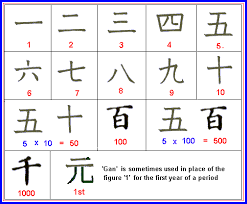
 The idea of creating tally sticks to record agreed amounts may be suggested by the Chinese character for contract, which shows the character for knife with the character for stick. (or so I am told by those who are better at reading Kanji than I)
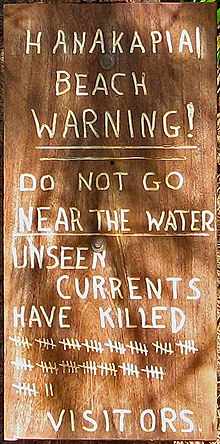
The problem with the traditional tally mark, is that larger numbers start to become difficult to count. For example, try to quickly determine the number of casualties indicated by this sign I found at Wikipedia:
At some point methods were developed to counter this. Our word score for twenty (you know, four score and twenty years ago..) is believed to come from making a more distinct cross cut to ease the counting of large groups. The use of a slanted fifth mark across the first four in sets of five is also now common for these types of tallys. Today our most popular pastimes remind us of our mathematical beginnings as they report the sports "scores", the number of marks for each team.
James A Landau noticed something of a puzzle about the use of score. He writes, "I checked the Oxford English Dictionary, 2nd Edition and found that the first citation for "threescore" was in 1388, for "fourscore" was in 1250, and for "sixscore" was in 1300. There were no entries for twoscore, fivescore, sevenscore, eightscore, or ninescore, which is a little curious. Why would people only start counting by scores at 60 and quit after 120?"
There used to be a unit called a shock for groups of 3 score. The following quote comes from a post by John Conway. "Most of the major European languages had a break after 60, which usually had a special name of its own ; for example, it was a "shock" in English before it became "three score". In Elizabethan times, the standard names for 60,70,80,90 were "threescore", "threescore and ten", "fourscore" and "fourscore and ten" and the other European languages did much the same thing. The word shock as an amount persisted in American use (albeit in a slightly changed form) at least until 1919 when James Whitcomb Riley's poem, "When the Frost is on the Punkin" was published. The first line reads, "WHEN the frost is on the punkin and the fodder's in the shock," but by this time it seems that the bundles of corn stalks, bundled and dried to use for feed, or fodder, may not have reflected a count of sixty as much as however many could be conveniently bound together.
Other methods of tallying have appeared in different places. I figure most are newer, but their histories seem very hard to trace (If you have information on early use of any of the following, I would love to hear of them.)
Wikipedia has several representations such as the one below they credit to French and Spanish cultures.

I have never seen this, and don't know if it is still in common use any.where. ("Anyone, Anyone.") I did imagine almost instantly that it could be assembled into sets of four to make a score, or any number near a score by progressing in some order towards something like this, which I imagine could quickly be seen as 18:

I vacillated between whether the four diagonals in a rhombus or an X array would be better, but avoided the X because of its association with ten in Roman numerals and such.
The successive strokes of the Chinese character for completion, or correct (it seems to have a variety of contextual applications)正 ( ) are used in China, Japan, and Korea to designate tallies in votes, scores, points, sushi orders, and the like, much as
  is used in Europe, Africa, Australia, and North America. Tallies beyond five are written with a 正 for each group of five, followed by the remainder. For example, a tally of twelve
  is written as 正正丅. I have read that this method is traced back to the late Qing, early Republican period (around the end of the 19th Century).
John D Cook had some notes that included the tally marks shown below, which he credited to the mathematician/statistician John Tukey. The method actually dates back to early use in the Forestry industry in the Americas as a method of keeping tallys. My earliest notation is from Forest mensuration By Carl Alwin Schenck, 1898 pg 47.

The final tally method I have seen comes from personal experience, and I can't find record of it anywhere. It was a method my parents used to use in score keeping in domino games. The method they, and most others play, scores points in multiples of five, so the only method needed was how many multiples of five had been scored. Their method shows the first five points as a larger diagonal, / and the next five produces a large cross, X. Afterwards they would proceed to fill in smaller slashes and x's in the four spaces around the first X. So that after 35 points (7 five point markers) the score would show something like this:
 Since the game was played to 100 (or 20 five point scores) two of these completed would signal a win.
I have not seen this anywhere I have searched, but believe it must be pretty common, at least among domino players in the Southwest US. If you are familiar with this and can give dates of recorded usage prior to about 1950, I would love that information also.
In the meantime, I will keep searching and updating as I get new information.

 on
on
As a footnote, Thony Christie wrote to tell me that " In German bars drinks are still tallied on the beer mats. " I take this to be from his direct experience. "
---------------------------------------------------------------------------------------------------------------------------------------- I knew that indigenous people used tally marks for various reasons before the first Europeans arrived. The Powhatan kept their base-ten tallies on notched sticks and knotted strings. "They count no more but by tennes," Captain John Smith tells us, using words up to a hundred. They also had a word for thousand, but needed nothing beyond that. Keepers of calendar sticks are among the most exalted members of the Ojibway tribes, serving as shaman and sky watcher. Other sticks were used to keep track of the number of warriors slain in tribal wars, or the number of skins bartered in a fur trade.
Beads and knots on chord have also been used for tallys. I am still looking for details on their use and will amend as I find more details. *Wik
Around 1960 an ancient mathematical record on bone was uncovered in the African area of Ishango, near Lake Edward. While it was at first considered an ancient (9000 BC) tally stick, many now think it represents the oldest table of prime numbers.
The first record existing of tally marks is on a leg bone of a baboon dating prior to 30,000 BC. The bone has 29 clear notches in a row. It was discovered in a cave in Southern Africa. It is sometimes called the Lebombo Bone after the Lebombo mountains in which it was found. The exact age of such artifacts is a subject of debate, and their mathematical usage is somewhat speculative. Some sources have stated that the bone is a lunar phase counter, and by implication that African women were the first mathematicians since keeping track of menstrual cycles requires a lunar calendar.
Another candidate for the oldest tally record in history is a wolf bone found in Czechoslovakia with 57 deep notches cut into it, some of which appear to be grouped into sets of five.
 |
| *Wik |
Around 1960 an ancient mathematical record on bone was uncovered in the African area of Ishango, near Lake Edward. While it was at first considered an ancient (9000 BC) tally stick, many now think it represents the oldest table of prime numbers.
The first record existing of tally marks is on a leg bone of a baboon dating prior to 30,000 BC. The bone has 29 clear notches in a row. It was discovered in a cave in Southern Africa. It is sometimes called the Lebombo Bone after the Lebombo mountains in which it was found. The exact age of such artifacts is a subject of debate, and their mathematical usage is somewhat speculative. Some sources have stated that the bone is a lunar phase counter, and by implication that African women were the first mathematicians since keeping track of menstrual cycles requires a lunar calendar.
Another candidate for the oldest tally record in history is a wolf bone found in Czechoslovakia with 57 deep notches cut into it, some of which appear to be grouped into sets of five.
For more on these early artifacts see Tally Sticks of the Stone Age by Andrej Kapcar
The split tally was a technique which became common in medieval Europe, which was constantly short of money (coins) and predominantly illiterate, in order to record bilateral exchange and debts. A stick (squared hazelwood sticks were most common) was marked with a system of notches and then split lengthwise. This way the two halves both record the same notches and each party to the transaction received one half of the marked stick as proof. Later this technique was refined in various ways and became virtually tamper proof. One of the refinements was to make the two halves of the stick of different lengths. The longer part was called stock and was given to the party which had advanced money (or other items) to the receiver. The shorter portion of the stick was called foil and was given to the party which had received the funds or goods. Using this technique each of the parties had an identifiable record of the transaction. The natural irregularities in the surfaces of the tallies where they were split would mean that only the original two halves would fit back together perfectly, and so would verify that they were matching halves of the same transaction. *Wik
Several mathematical and business terms spring from the use of tally sticks. It was the common practice that when a lperson deposited money with the Bank of England, and the tally stick was split, the lender would receive the heavier, or stock, end of the tally stick, while the Bank kept the "split". The lender would "own the stock " of the Bank, To receive his money he would have to present the Talley to "Check" his stock.
The split tally was a technique which became common in medieval Europe, which was constantly short of money (coins) and predominantly illiterate, in order to record bilateral exchange and debts. A stick (squared hazelwood sticks were most common) was marked with a system of notches and then split lengthwise. This way the two halves both record the same notches and each party to the transaction received one half of the marked stick as proof. Later this technique was refined in various ways and became virtually tamper proof. One of the refinements was to make the two halves of the stick of different lengths. The longer part was called stock and was given to the party which had advanced money (or other items) to the receiver. The shorter portion of the stick was called foil and was given to the party which had received the funds or goods. Using this technique each of the parties had an identifiable record of the transaction. The natural irregularities in the surfaces of the tallies where they were split would mean that only the original two halves would fit back together perfectly, and so would verify that they were matching halves of the same transaction. *Wik
 |
| *Wik |
Several mathematical and business terms spring from the use of tally sticks. It was the common practice that when a lperson deposited money with the Bank of England, and the tally stick was split, the lender would receive the heavier, or stock, end of the tally stick, while the Bank kept the "split". The lender would "own the stock " of the Bank, To receive his money he would have to present the Talley to "Check" his stock.
In Mathematics Galore by Budd and Sangwin, there is a story of much more recent tally sticks. It seems that until around 1828 the British kept tax and other records on wooden tally sticks. When the system was discontinued they were left with a huge residue of wooden tally sticks, so in 1834 they decided to have a bonfire to get rid of them. The bonfire was such a success that it burned the parliament buildings to the ground. What Guy Fawkes could not do with dynamite the Exchequer did with tally sticks.... The power of math.
The story, as improbable as it seems, is verified by a speech by Charles Dickens 1855. [Charles Dickens, Speech to the Administrative Reform Association, June 27, 1855, in Speeches of Charles Dickens, ed. K.F. Fielding, Oxford: The Clarendon Press, 1960, p. 206, ] The somewhat clipped version below is taken from Number, The Language of Science by Tobias Dantzig (pgs 23&24)
Several images of the fire was painted by J.M.W. Turner who watched the fire from a boat on the Thames. I have a clip that I can not credit that says, "The fire of 1834 burned down most of the Palace of Westminster. The only part still remaining from 1097 is Westminster Hall. The buildings replacing the destroyed elements include Big Ben's tower (oooh, side bar... Big Ben is not the name of the tower at Westminster, it is the name of the great Bell in the Chimes there.. admit it, you did NOT know that, well at least I didn't till recently), with it's four 23 foot clock faces, built in a rich late gothic style that now form the Houses of Commons and the House of Lords. These magnificent buildings are still the subject of many paintings, including my own Parliament, with the grand Westminster Abbey on their north." The one below hangs in the in a gallery in Cleveland, Ohio.
The split tally sticks shown above were common for two (and sometimes three ) person transactions, but there were unsplit tallys that represented records of receipts or other details. A surviving talley from an English monastery recorded milk yields. One from Sweden recorded the number of seals caught in a season. An Albanian talley recorded loaves of bread baked on successive dates.
The story, as improbable as it seems, is verified by a speech by Charles Dickens 1855. [Charles Dickens, Speech to the Administrative Reform Association, June 27, 1855, in Speeches of Charles Dickens, ed. K.F. Fielding, Oxford: The Clarendon Press, 1960, p. 206, ] The somewhat clipped version below is taken from Number, The Language of Science by Tobias Dantzig (pgs 23&24)
Ages ago a savage mode of keeping accounts on notched sticks was introduced into the Court of Exchequer and the accounts were kept much as Robinson Crusoe kept his calendar on the desert island. A multitude of accountants, bookkeepers, and actuaries were born and died... Still official routine inclined to those notched sticks as if they were pillars of the Constitution, and still the Exchequer accounts continued to be kept on certain splints of elm-wood called tallies. In the reign of George III an inquiry was made by some revolutionary spirit whether, pens, ink and paper, slates and pencils being in existence, this obstinate adherence to an obsolete custom ought to be continued, ..... All the red tape in the country grew redder at the bare mention of this bold and original conception, and it took until 1826 to get these sticks abolished. In 1834 it was found that there was a considerable accumulation of them; and the question then arose, what was to be done with such worn-out, worm-eaten, rotten old bits of wood? The sticks were housed in Westminster, and it would naturally occur ot any intelligent person that nothing could be easier than to allow them to be carried away for firewood by the miserable people who lived in that neighborhood. However, they never had been useful, and official routine required that they should never be, and so the order went out that they were to be privately and confidentially burned. It came to pass that they were burned in a stove in the House of Lords. The stove, over-gorged with these preposterous sticks, set fire to the paneling; the paneling set fire to the House of Commons; the two houses were reduced to ashes; architects were called in to build others; and we are now in the second million of the cost thereof.
Several images of the fire was painted by J.M.W. Turner who watched the fire from a boat on the Thames. I have a clip that I can not credit that says, "The fire of 1834 burned down most of the Palace of Westminster. The only part still remaining from 1097 is Westminster Hall. The buildings replacing the destroyed elements include Big Ben's tower (oooh, side bar... Big Ben is not the name of the tower at Westminster, it is the name of the great Bell in the Chimes there.. admit it, you did NOT know that, well at least I didn't till recently), with it's four 23 foot clock faces, built in a rich late gothic style that now form the Houses of Commons and the House of Lords. These magnificent buildings are still the subject of many paintings, including my own Parliament, with the grand Westminster Abbey on their north." The one below hangs in the in a gallery in Cleveland, Ohio.
 |
| *Wik |
The split tally sticks shown above were common for two (and sometimes three ) person transactions, but there were unsplit tallys that represented records of receipts or other details. A surviving talley from an English monastery recorded milk yields. One from Sweden recorded the number of seals caught in a season. An Albanian talley recorded loaves of bread baked on successive dates.
Many cultures use number symbols that reflect this tally counting approach for the lowest numbers. Japanese, for example, uses horizontal bars to represent the first three numerals.

The problem with the traditional tally mark, is that larger numbers start to become difficult to count. For example, try to quickly determine the number of casualties indicated by this sign I found at Wikipedia:
At some point methods were developed to counter this. Our word score for twenty (you know, four score and twenty years ago..) is believed to come from making a more distinct cross cut to ease the counting of large groups. The use of a slanted fifth mark across the first four in sets of five is also now common for these types of tallys. Today our most popular pastimes remind us of our mathematical beginnings as they report the sports "scores", the number of marks for each team.
James A Landau noticed something of a puzzle about the use of score. He writes, "I checked the Oxford English Dictionary, 2nd Edition and found that the first citation for "threescore" was in 1388, for "fourscore" was in 1250, and for "sixscore" was in 1300. There were no entries for twoscore, fivescore, sevenscore, eightscore, or ninescore, which is a little curious. Why would people only start counting by scores at 60 and quit after 120?"
There used to be a unit called a shock for groups of 3 score. The following quote comes from a post by John Conway. "Most of the major European languages had a break after 60, which usually had a special name of its own ; for example, it was a "shock" in English before it became "three score". In Elizabethan times, the standard names for 60,70,80,90 were "threescore", "threescore and ten", "fourscore" and "fourscore and ten" and the other European languages did much the same thing. The word shock as an amount persisted in American use (albeit in a slightly changed form) at least until 1919 when James Whitcomb Riley's poem, "When the Frost is on the Punkin" was published. The first line reads, "WHEN the frost is on the punkin and the fodder's in the shock," but by this time it seems that the bundles of corn stalks, bundled and dried to use for feed, or fodder, may not have reflected a count of sixty as much as however many could be conveniently bound together.
Other methods of tallying have appeared in different places. I figure most are newer, but their histories seem very hard to trace (If you have information on early use of any of the following, I would love to hear of them.)
Wikipedia has several representations such as the one below they credit to French and Spanish cultures.

I have never seen this, and don't know if it is still in common use any.where. ("Anyone, Anyone.") I did imagine almost instantly that it could be assembled into sets of four to make a score, or any number near a score by progressing in some order towards something like this, which I imagine could quickly be seen as 18:

I vacillated between whether the four diagonals in a rhombus or an X array would be better, but avoided the X because of its association with ten in Roman numerals and such.
The successive strokes of the Chinese character for completion, or correct (it seems to have a variety of contextual applications)正 (
 ) are used in China, Japan, and Korea to designate tallies in votes, scores, points, sushi orders, and the like, much as
  is used in Europe, Africa, Australia, and North America. Tallies beyond five are written with a 正 for each group of five, followed by the remainder. For example, a tally of twelve
  is written as 正正丅. I have read that this method is traced back to the late Qing, early Republican period (around the end of the 19th Century).
John D Cook had some notes that included the tally marks shown below, which he credited to the mathematician/statistician John Tukey. The method actually dates back to early use in the Forestry industry in the Americas as a method of keeping tallys. My earliest notation is from Forest mensuration By Carl Alwin Schenck, 1898 pg 47.

The final tally method I have seen comes from personal experience, and I can't find record of it anywhere. It was a method my parents used to use in score keeping in domino games. The method they, and most others play, scores points in multiples of five, so the only method needed was how many multiples of five had been scored. Their method shows the first five points as a larger diagonal, / and the next five produces a large cross, X. Afterwards they would proceed to fill in smaller slashes and x's in the four spaces around the first X. So that after 35 points (7 five point markers) the score would show something like this:
I have not seen this anywhere I have searched, but believe it must be pretty common, at least among domino players in the Southwest US. If you are familiar with this and can give dates of recorded usage prior to about 1950, I would love that information also.
In the meantime, I will keep searching and updating as I get new information.
I recently found a video that showed a similar score method, but allowed either an x or an o to represent 10 pts in the branches of the big X
Over Christmas vacation of 2021 I was also reminded of another common , I think, tally method for score-keeping in the card game of Euchre in which the two five cards are used to keep score. Here Red has 7, Black has 3.
Another method using a two card and a three card that I found online, but never saw in my limited play experience.
on As a footnote, Thony Christie wrote to tell me that " In German bars drinks are still tallied on the beer mats. " I take this to be from his direct experience. "
----------------------------------------------------------------------------------------------------------------------------------------
In the fall of 2023 Jeannie and I were visiting Quebec City, and while walking through the old town, we came across Brousseau Inuit Art Gallery. This was special for us as my Jeannie was descended from the Brusseau family of Michigan's western Upper Peninsula through her maternal grandfather, and to the Menominee Indian leader Big Martin through her maternal grandmother, so we were excited to visit. It was a fantastic museum and I find it is one of the most incredible collections around. But this is about tally marks and math, and sure enough, I found an intriguing set of marks on one of the carvings.

While searching for more examples of Inuit tallys I came across an amazing story:"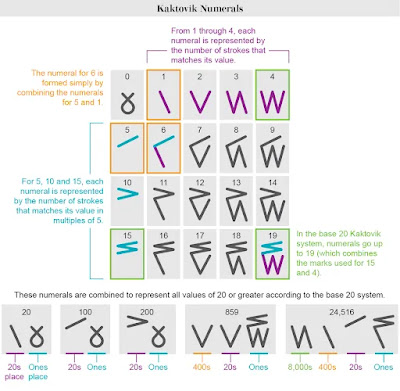
A Number System Invented by Inuit Schoolchildren Will Make Its Silicon Valley Debut
It was a story in Scientific American, and the original goes deeper than I can, but I want to touch on this new tally based method of numeration with a base twenty syatem broken into base five units that was created working with inuit Children. Their word for five is the word for arm, taliq, and the word for twenty represents the whole person, Iñuiññaq.

The W may not differs only a little from the |||| in a regular tally before the slant across it makes a five (arm).
If you study the figures you can see how the zig-zag tallys build up. It's better for representing numbers than the basic tally, because you can represent multiple fives without the tallies for all the ones. Look at the zig-zag for fifteen, for example.(Kids today, huh? What's the world coming to?)Beads and knots as counters The earliest use of beads as counters may have been the development of prayer beads. Beads are among the earliest human ornaments and ostrich shell beads in Africa date to 10,000 BC. Over the centuries various cultures have made beads from a variety of materials from stone and shells to clay. How long they have been used to count prayers is unknown, but a Wikipedia site notes a statue of a holy Hindu man with beads dates to the 3rd century BC. The English word bead derives from the Old English noun bede which means a prayer.
Prayer beads is a little different, in my mind from typical tallys in that the object is not to record the number counted, but to count to a predetermined number without distracting the focus on the prayer or blessing. In some religions knotted ropes are used for the same purpose.
Beads on a string for calculating are described as early as the second century. These suanpan, or Chinese abacci are also not tallying devices in my mind, but more of a calculating device. However, others who have wasted part of their youth, as I did, in older pool halls know that they frequently had beads on a wire string above the table to mark off the number of points scored for each player in certain games. I saw a table top Foosball game with a similar device recently. But tallying with knots seems to have been in use in many cultures.
 In the MAA Convergence online site, noted math historian Frank Swetz gives this description of the Inca use of knotted chords
Also, in The Number Concept by Levi Leonard Conant he tells of "Mom Cely, a Southern negro of unknown age, finds herself in debt to the storekeeper; and, unwilling to believe that the amount is as great as he represents, she proceeds to investigate the matter in her own peculiar way. She had 'kept a tally of these purchases by means of a string, in which she tied commemorative knots.'"
I have also seen several books for children that suggest that "counting ropes" were employed in the Navajo culture in the United States, but have no idea how historical these stories are. So at least it seems that counting ropes were used in some cultures for counting.
I am still searching for more evidence of their use, and welcome comments.
Prayer beads is a little different, in my mind from typical tallys in that the object is not to record the number counted, but to count to a predetermined number without distracting the focus on the prayer or blessing. In some religions knotted ropes are used for the same purpose.
Beads on a string for calculating are described as early as the second century. These suanpan, or Chinese abacci are also not tallying devices in my mind, but more of a calculating device. However, others who have wasted part of their youth, as I did, in older pool halls know that they frequently had beads on a wire string above the table to mark off the number of points scored for each player in certain games. I saw a table top Foosball game with a similar device recently. But tallying with knots seems to have been in use in many cultures.

Quipus were knotted tally cords used by the Inca Civilization of South America (1400-1560). The system consisted of a main cord from which a variable number of pendant cords were attached. Each pendant cord contained clusters of knots. These knots and their clusters conveyed numerical information. In some complex instances, further pendant cords were attached to these primary pendants. The number, type of knots, and knot and cluster spacing, as well as the pendant array, all conveyed particular information. A further dimension of this system was use of color: different pendants were dyed different colors, conveying different meanings. One of the few existing records of quipu use is found in the Chronicle of Good Government (1615/1616), written in Spanish by the Inca author Guaman Poma de Ayala.These quipus may have been more of a recording device than a counting device, but Professor Swetz's use of "tally" in his description make me think they may well have had tally purposes as well.
Also, in The Number Concept by Levi Leonard Conant he tells of "Mom Cely, a Southern negro of unknown age, finds herself in debt to the storekeeper; and, unwilling to believe that the amount is as great as he represents, she proceeds to investigate the matter in her own peculiar way. She had 'kept a tally of these purchases by means of a string, in which she tied commemorative knots.'"
I have also seen several books for children that suggest that "counting ropes" were employed in the Navajo culture in the United States, but have no idea how historical these stories are. So at least it seems that counting ropes were used in some cultures for counting.
I am still searching for more evidence of their use, and welcome comments.


