
The 170th day of the year; the start of a record-breaking run of consecutive integers (170-176) with an odd number of prime factors.
170 is the smallest number that can be written as the sum of the squares of 2 distinct primes, where each of these primes is the square of a prime added to another prime (170 = (22 + 3)2 + (32 + 2)2).
*Prime Curios
170 is the largest integer for which its factorial can be stored in double-precision floating-point format. This is probably why it is also the largest factorial that Google's built-in calculator will calculate, returning the answer as 170! = 7.25741562 × 10306. (For 171! it returns "infinity".)
170 is the smallest number n for which phi(n)(the number of integers relatively prime to 170=64=82) and sigma(n) (the sum of the divisors of 170=324=182) are both square.
In 240 BC, Eratosthenes, a Greek astronomer and mathematician, estimated the circumference of the earth. As the director of the great library of Alexandria, he read in a papyrus book that in Syene, approaching noon on the summer solstice, the longest day of the year, shadows of temple columns grew shorter. At noon, they were gone. The sun was directly overhead. However, a stick in Alexandria, far to the north, could cast a pronounced shadow. Thus, he realized that the surface of the Earth could not be flat. It must be curved. Not only that, but the greater the curvature, the greater the difference in the shadow lengths. By measurement on the ground and application of geometry, he calculated the circumference of the earth. *TIS He estimated that the meridian has a length of 252,000 stadia (39,060 to 40,320 kilometres (24,270 to 25,050 mi)), with an error on the real value between −2.4% and +0.8%
 |
| *Wik |
325 The early Christian church opened the council of Nicaea, which decided the rules for computing the date of Easter: The first Sunday after the first full moon on or after the vernal equinox *VFR

1934 1st motion picture of the solar surface was made using the McMath-Hulbert Spectroheliokinematograph (repeat three times real fast):
K8MHO is the club radio station for the McMath-Hulbert Astronomical Society. The station is housed in the McGregor administration building of the McMath-Hulbert Solar Observatory which at one time was the second largest solar observatory in the world. The Observatory is located in Lake Angelus, Oakland County, Michigan,
The McMath-Hulbert Solar Observatory was founded in 1929 by Francis McMath, his son Robert McMath and Henry Hulbert, neighbors who just had a mutual interest in astronomy. The first tower at this site was built with a 16 foot dome in 1930 and originally had a 10.5” equatorial telescope. As they gained more interest in observing the sun, this building became more exclusively devoted to solar observing. On June 19, 1934, they released the first ever motion picture film of the surface of the sun. *QRZ.Com with hat tip to David Dickinson @Astroguyz

1951 In 1951, a little girl named Monique wrote to Einstein about her fears regarding the end of the world. Einstein reassured her that earth has been around for a little more than a billion years [sic], so she needn't worry:

*Paul Halpern
 |
| *NASA |
 |
| Me considering Pascal considering the Roulette at at the Louvre |
1669 Leonty Magnitsky (born Telyatin, June 9, 1669, Ostashkov – October 19, 1739, Moscow) was a Russian teacher who wrote the first guide to mathematics published in Russia.*SAU

1771 Joseph Gergonne born. (19 June 1771 Nancy, France—4 May 1859 Montpellier, France) He came under the influence of Gaspard Monge, the Director of the new École Polytechnique in Paris. In 1810, in response to difficulties he encountered in trying to publish his work, Gergonne founded his own mathematics journal, officially named the Annales de mathématiques pures et appliquées but generally referred to as the Annales de Gergonne. The most common subject of articles in his journal was geometry, Gergonne's specialty. Over a period of 22 years, the Annales de Gergonne published about 200 articles by Gergonne himself, and other articles by many distinguished mathematicians, including Poncelet, Servois, Bobillier, Steiner, Plücker, Chasles, Brianchon, Dupin, Lamé, even Galois.
Gergonne was appointed to the chair of astronomy at the University of Montpellier in 1816. In 1830, he was appointed Rector of the University of Montpellier, at which time he ceased publishing his journal. He retired in 1844.
Gergonne was the first mathematician to employ the word polar. In a series of papers beginning in 1810, he discovered the principle of duality in projective geometry, by noticing that every theorem in the plane connecting points and lines corresponds to another theorem in which points and lines are interchanged, provided that the theorem embodied no metrical notions. In 1816, he devised an elegant solution to the problem of Apollonius: find a circle which touches three given circles.
In 1813, Gergonne wrote the prize-winning essay for the Bordeaux Academy, Methods of synthesis and analysis in mathematics, unpublished to this day and known only via a summary. The essay is very revealing of Gergonne's philosophical ideas. He called for the abandonment of the words analysis and synthesis, claiming they lacked clear meanings. Surprisingly for a geometer, he suggested that algebra is more important than geometry, at a time when algebra consisted almost entirely of the elementary algebra of the real field. He predicted that one day quasi-mechanical methods would be used to discover new results.
In 1815, Gergonne wrote the first paper on the optimal design of experiments for polynomial regression. According to S. M. Stigler, Gergonne is the pioneer of optimal design as well as response surface methodology.
 |
| *Mark Cowart |

1846 Antonio Abetti (19 Jun 1846, 20 Feb 1928 at age 81) Italian astronomer who was an authority on minor planets. At first a civil engineer, he became an astronomer at the University of Padua (1868-93), with an interest in positional astronomy and made many observations of small planets, comets and star occultations. In 1874, Abetti went to Muddapur, Bengal, to observe the transit of Venus across the sun's disk where his use of a spectroscope was the first use of this kind. Later, he became director at the Arcetri Observatory and Professor of astronomy at the University of Florence (1894-1921). The observatory had been founded by G. B. Donati in 1872, and Abetti equipped it with a new telescope that he had built in the workshops at Padua. He was active after retirement, until his death, and was followed by his son Giorgio.*TIS

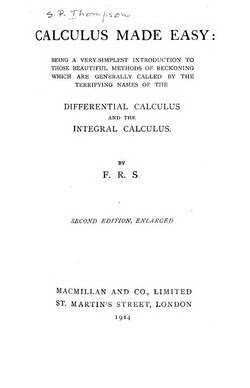
1851 Silvanus P. Thompson (19 June 1851 – 12 June 1916) In 1910 he published Calculus Made Easy, which was published anonymously until after his death in 1916. It is still in print. *VFR He was a noted physicist and engineer, and a celebrated teacher and writer on electricity and magnetism. He also wrote popular biographies of Faraday and Lord Kelvin. At his death he was professor at City and Guilds Technical College at Finsbury (London). Thompson’s particular gift was in his ability to communicate difficult scientific concepts in a clear and interesting manner. He attended and lectured at the Royal Institution giving the Christmas lectures in 1896 on Light, Visible and Invisible with an account of Röntgen Light. He was an impressive lecturer and the radiologist AE Barclay said that: “None who heard him could forget the vividness of the word-pictures he placed before them.”

1901 Raj Chandra Bose (or Basu) (19 June 1901 – 31 October 1987) was an Indian American mathematician and statistician best known for his work in design theory, finite geometry and the theory of error-correcting codes in which the class of BCH codes is partly named after him. He also invented the notions of partial geometry, association scheme, and strongly regular graph and started a systematic study of difference sets to construct symmetric block designs. He was notable for his work along with S. S. Shrikhande and E. T. Parker in their disproof of the famous conjecture made by Leonhard Euler dated 1782 that for no n do there exist two mutually orthogonal Latin squares of order 4n + 2.*Wik

1907 Børge Christian Jessen (19 June 1907 – 20 March 1993) was a Danish mathematician best known for his work in analysis, specifically on the Riemann zeta function, and in geometry, specifically on Hilbert's third problem.Jessen was a professor of descriptive geometry at the Technical University of Denmark from 1935 till 1942, when he moved back to the University of Copenhagen where he was professor from 1942 to 1977 when he retired. He was the president of the Carlsberg Foundation in 1955-1963 and one of the founders of the Hans Christian Ørsted Institute. He was the Secretary of the Interim Executive Committee of the International Mathematical Union (1950–1952), and in September 1951 he officially declared the founding of the Union, with its first domicile in Copenhagen. He was also active in the Danish Mathematical Society. After his death, the society named an award in his honor (Børge Jessen Diploma Award).*Wik


1927 Frank Levin (19 June 1927, Dayton, Ohio, USA, 2 October 2011, Swansea, Wales) was an American mathematician who worked mainly in infinite group theory.
Frank Levin was born 19 June 1927 in Dayton, Ohio, the eldest of two children. When the younger child, Julie, was born, their father deserted the family, leaving their mother the difficult task of bringing up two children, in some considerable poverty. This was in fact the time of the great depression in America. Because Julie lacked a father, Frank was forced to be the father substitute, which he did well, so that his sister was always grateful to him. Those difficult years obviously remained with him all his life, and he was always extremely careful in spending.
Early on he showed signs of academic brilliance and at Primary School did four years in one. His undergraduate degree from Wright State in Dayton, Ohio, was interrupted in his final year at the age of 18, when he was called up for military service.
To look at, he was an unlikely candidate for a soldier, being slight of build, and entirely non-aggressive, but a soldier is what he became. He was not involved in fighting but in the occupation of Japan after the Second World War. It is difficult to imagine a milder man, but he was nevertheless promoted, a consequence of his noticing a memo, and he realised it meant he could be promoted if he applied, and so of course he did.
He returned to the United States on a navy boat, which gave him a feel for travel. And travel he later on would. Having served in the U.S. army, he was entitled to a University education. He had to repeat his interrupted year at Wright State.
He took his Ph.D. in 1955 under the supervision of Arno Jäger with his thesis titled On the Algebraic Theory of Linear Multidifferential Polynomials.
His first job was at the Ford factory, where he was given the project of calculating the characteristics of the suspension of a car, a lengthy and laborious piece of calculation. When he had completed his results, his chief looked at them and said they were completely wrong. It turned out the chief had given Frank the wrong data to begin with. "Oh well," the boss said, "Here is the right data. Just do the calculation again."
Initially he taught at the University of Kentucky. His next appointment was at Rutgers University, but for much of his tenure he was elsewhere, in Europe, and finally the faculty insisted he make up his mind to return permanently. He then got a job in Germany in Ruhr-Universität Bochum with the aid of his former supervisor Arno Jäger. In Bochum he took the advanced qualification of docent, and became a professor.
Frank liked best of all to work with other mathematicians. In total there were thirteen co-authors, *SAU

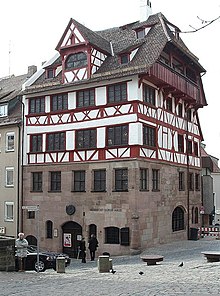
Walther was born in Memmingen, and was a man of large means, which he devoted to scientific pursuits. When Regiomontanus settled in Nuremberg in 1471, they worked in collaboration to build an observatory and a printing press. After the death of Regiomontanus in 1476 at Rome, Walther bought his instruments, after Hans von Dorn, commissioned by the Hungarian king, had tried in vain about it with the council of Nuremberg. Thenceforward, he continued the observation of planets till his death in Nuremberg. His house, purchased in 1509 by Albrecht Dürer, is now a museum
1770 Diego de Torres Villarroel (?17 Nov 1693 – 19 June 1770) was a Spanish writer, poet, dramatist, doctor, mathematician, priest and professor of the University of Salamanca.


 |
| *SAU |
Credits
*CHM=Computer History Museum
*FFF=Kane, Famous First Facts
*NSEC= NASA Solar Eclipse Calendar
*RMAT= The Renaissance Mathematicus, Thony Christie
*SAU=St Andrews Univ. Math History
*TIA = Today in Astronomy
*TIS= Today in Science History
*VFR = V Frederick Rickey, USMA
*Wik = Wikipedia
*WM = Women of Mathematics, Grinstein & Campbell


No comments:
Post a Comment