Newton wrote his paper in order that he would not lose credit for his work on infinite series. Collins immediately recognized Newton’s genius. Although not published until 1711, this paper led to Newton’s appointment as Lucasian professor on 29 October 1669.*VFR
Shortlisted for the Royal Society Science Book Prize 2019 A magisterial history of calculus (and the people behind it) from one of the world's foremost mathematicians. This is the captivating story of mathematics' greatest ever idea:
1790 The U.S. Patent Office issued its first patent to Samuel Hopkins of Vermont for his “process for making pot and pearl ashes,” whatever they are. Since George Washington and Thomas Jefferson signed Hopkins’ patent, more than 4 million have been issued. *VFR In 1790, the first U.S. patent was granted to Samuel Hopkins of Vermont for a process for making potash and pearl ashes. Potash was important as an ingredient in soap and fertilizer. The patent was granted for a term of 14 years and signed by President George Washington, who had the previous month signed the first U.S. patent statute into law on 10 April 1790. Hopkins did not get Patent with a serial No.1 as thousands of patents were issued before the Patent Office began to number them. Congress had passed the Patent Act on 10 Apr 1790. Two other patents were granted that year - one for a new candle-making process and the other the flour-milling machinery of Oliver Evans. The next year, 1791, Samuel Hopkins also was granted the first Canadian patent.*TIS
 |
| *C. Pickover |
1802 Earliest date for a Iron Maiden torture device. The iron maiden is a mythical torture device, (Not to be confused with a more modern heavy metal band which was torture for many older adults.) believed to have been first created in the 19th century. It consists of a solid iron cabinet with a hinged front and spike-covered interior, sufficiently tall to enclose a human being. While often popularly thought to have been used in the medieval period, there is no known mention of the iron maiden from before the 19th century. It has become a popular image in media involving the Middle Ages and torture chambers.
Wolfgang Schild, a professor of criminal law, criminal law history, and philosophy of law at the Bielefeld University, has argued that putative iron maidens were pieced together from artifacts found in museums to create spectacular objects intended for (commercial) exhibition. Several 19th-century iron maidens are on display in museums around the world, including the Museum of Us, the Meiji University Museum, and several torture museums in Europe.
The most famous iron maiden that popularized the design was that of Nuremberg, first displayed possibly as far back as 1802. The original was lost in the Allied bombing of Nuremberg in 1945. A copy "from the Royal Castle of Nuremberg", crafted for public display, was sold through J. Ichenhauser of London to the Earl of Shrewsbury in 1890 along with other torture devices, and, after being displayed at the World's Columbian Exposition, Chicago, Illinois, 1893, was taken on an American tour.[14] This copy was auctioned in the early 1960s and is now on display at the Medieval Crime Museum, Rothenburg ob der Tauber.*Wik

1851 Gauss witnessed the opening ceremonies when the newly constructed railway from Cassel reached Gottingen. *VFR
1943 Ireland issued—as its first stamp with a mathematical theme—two stamps to celebrate the centenary of the discovery of Quaternions by Sir William Rowan Hamilton. [Scott #126-7]. *VFR
1990The U.S. government panel approved the use of gene therapy to treat human disease. Gene therapy uses DNA to treat disease, usually by replacing a faulty gene with a healthy copy. Recent clinical studies suggest this technique holds promise for the future treatment of Parkinson’s disease. *.rsc.org
In 2003, Felix Baumgartner became the first man to cross the English Channel by unpowered flight. He jumped from a plane about 9,800-m (30,000-ft) above Dover, England and glided 36-km (22-mi) across the Channel in a 10-min flight wearing a special suit with carbon-fibre wings across his back. In sub-zero air, the 34-yr-old Austrian's flight began at about 220 mph, slowing to around 135 mph by the time he landed by parachute at Cap Blanc-Nez, near Calais, in France. He was equipped with oxygen, cameras and hi-tech data monitors to enable his journey to be tracked. His wing span of 1.8-m was about 10-cm longer than another he used a few weeks earlier to win a race against an aeroplane in the U.S.*TiS
He is widely known for jumping to Earth from a helium balloon from the stratosphere on 14 October 2012 and landing in New Mexico, United States, as part of the Red Bull Stratos project. Doing so, he set world records for skydiving an estimated 39 km (24 mi), reaching an estimated top speed of 1,357.64 km/h (843.6 mph), or Mach 1.25. He became the first person to break the sound barrier relative to the surface without vehicular power on his descent *Wik
2015 The second full moon this month (the other was on the 2nd). This only happens “Once in a blue moon”—and this is the origin of the phrase. Consequently, there were be thirteen full moons this year. The last "blue moon" was in 1985, and the next is predicted in 2018.The next blue moon takes place on 31 August 2023. As this Moon is also a supermoon, it will be a Super Blue Moon.
Supermoon: A Full or New Moon that occurs when the center of the Moon is less than 360,000 kilometers (ca. 223,694 miles) from the center of Earth.
 |
| *Farmer's Almanac |
BIRTHS
1704 Gabriel Cramer (31 July 1704 – 4 January 1752). He is best known for “Cramer’s Rule,” a method for solving systems of simultaneous linear equations using determinants. *VFR Gabriel Cramer (31 July 1704 – 4 January 1752) was a Swiss mathematician, born in Geneva. He showed promise in mathematics from an early age. At 18 he received his doctorate and at 20 he was co-chair of mathematics. In 1728 he proposed a solution to the St. Petersburg Paradox that came very close to the concept of expected utility theory given ten years later by Daniel Bernoulli. He published his best known work in his forties. This was his treatise on algebraic curves, "Introduction à l'analyse des lignes courbes algébriques", published in 1750. It contains the earliest demonstration that a curve of the n-th degree is determined by n(n + 3)/2 points on it, in general position. He edited the works of the two elder Bernoullis; and wrote on the physical cause of the spheroidal shape of the planets and the motion of their apsides (1730), and on Newton's treatment of cubic curves (1746). He was professor at Geneva, and died at Bagnols-sur-Cèze.*Wik
 |
| *Geeks For Geeks |
1712 Samuel König (July 31, 1712, Büdingen – August 21, 1757, Zuilenstein near Amerongen) was a German mathematician who is best remembered for his part in a dispute with Maupertuis over the Principle of Least Action.*SAU
1718 John Canton (31 July 1718 – 22 March 1772) British physicist and teacher, born Stroud, Gloucestershire. He made a number of minor discoveries in physics and chemistry. As a result of preparing artificial magnets in 1749 he was elected to the Royal Society. In 1762, he demonstrated that water was slightly compressible. He invented a number of devices in connection with electricity. His notable work, between 1756 and 1759, was to record that on days when the aurora borealis was particularly bright, a compass needle behaved with more irregularity than usual. Thus he was the first to record this as an electromagnetic phenomenon for what is now known to be a magnetic storm.*TIS
1810 Oliver Byrne (31 July 1810 – 9 December 1880) was a civil engineer and prolific author of works on subjects including mathematics, geometry, and engineering. He is best known for his 'colored' book of Euclid's Elements. He was also a large contributor to Spon's Dictionary of Engineering.
His most innovative educational work was a version of the first six books of Euclid's Elements that used colored graphic explanations of each geometric principle. It was published by William Pickering in 1847.
The book has become the subject of renewed interest in recent years for its innovative graphic conception and its style which prefigures the modernist experiments of the Bauhaus and De Stijl movements. Information design writer Edward Tufte refers to the book in his work on graphic design and McLean in his Victorian book design of 1963. In 2010 Taschen republished the work in a facsimile edition and in 2017 a project was launched to extend the work to the remaining works of Euclid.
Byrne described himself as a mathematician, civil engineer, military engineer, and mechanical engineer and indicates on the title pages of one of his books that he was surveyor of Queen Victoria's settlement in the Falkland Islands. Evidence shows Byrne never traveled to the Falkland Islands.
1826 Daniel Friedrich Ernst Meisse (31 July 1826, 11 March 1895) his mathematical work covers number theory, work on Möbius inversion and the theory of partitions as well as work on Bessel functions, asymptotic analysis, refraction of light and the three body problem.
He worked on prime numbers and found, in the 1870s, a method for computing individual values of
π(x), the counting function for the number of primes less than or equal to 𝑥. His method was based on recurrences for partial sieving functions, and he used it to compute π(107), π(108), and π(109 ). He found that there are 664,599 primes less than π(107), there are 5,761,455 primes less than π(108) and 50,847,478 primes less than π(109 ) . However Derrick Lehmer simplified and extended Meissel's method 70 years later, and showed Meissel's value of π(109) was too small by 56. *SAU

1835 George Albert Wentworth (July 31, 1835 – May 24, 1906) was an American teacher and author of textbooks on mathematics including algebra, geometry, and trigonometry.
Wentworth was born in 1835 in Wakefield, New Hampshire, the youngest of eight children. He enrolled at Phillips Exeter Academy (PEA) in Exeter, New Hampshire, in 1852 and went on to graduate from Harvard College in 1858. While an undergraduate at Harvard he began teaching at PEA, and was appointed professor of mathematics there on March 23, 1858. One of his early students was Robert Todd Lincoln, who enrolled at PEA in the fall of 1859, and was visited in Exeter by his father, Abraham Lincoln, the following spring. When the future president spoke in Exeter on March 3, 1860, Wentworth was toastmaster at the event.
Wentworth wrote a series of textbooks on mathematics, of which The Boston Globe noted in 1886, "his Complete Algebra and Elements of Geometry are used extensively by many of the more important schools in America, and doubtless will, with but very few changes, be employed as standard works for a half century to come."
Wentworth remained at PEA for over 30 years, including serving as interim principal in 1889. He resigned his position as a professor in 1892, after which he continued to write textbooks. He was named a PEA trustee in 1899. Wentworth was also involved in banking, serving as a director of the National Granite State Bank; later, he became president of the Exeter Banking Company upon its formation in 1894. In 1903, Wentworth and George S. Morison donated the funding for construction of a new dormitory at PEA, Hoyt Hall, named after a former mathematics instructor. Wentworth was considered "a leading citizen in many activities."
In 1900, while Wentworth was visiting New Orleans, The Times-Picayune wrote, "There are not many young people of this generation, who have reached the age of discretion, who have not seen a Wentworth's arithmetic, an algebra, geometry, trigonometry, or an analytical trigonometry." A 1904 update to his textbook Plane and Solid Geometry was lauded for its discussion of limits, "believed to be the best presentation of the subject in any elementary geometry."
Wentworth died in 1906 in Dover, New Hampshire. His wife, Emily née Hatch from Covington, Kentucky, had died in 1895. He was survived by two sons and a daughter. His estate was estimated to have a value over $1 million ($35.8 million in 2025). One of his sons continued to update the textbooks and issued new ones. In 1920, Wentworth's textbooks were still in active use and were considered "one of the notable successes of the textbook history."
In 1925, PEA named Wentworth Hall, one of three new dormitories, in his honor. The school maintains a "George Albert Wentworth Professor in Mathematics" position, which is held by Gwynneth Coogan as of January 2024. Since 1962, Wentworth has been honored on a New Hampshire historical marker in his hometown of Wakefield.*Wic I have Wentworth's 1895 Geometry.

1843 Friedrich Robert Helmert (July 31, 1843 – June 15, 1917) German geodesist and an important writer on the theory of errors.
From 1887 Helmert was professor of advanced geodesy at the University of Berlin and director of the Geodetic Institute.
Helmert received many honours. He was president of the global geodetic association of "Internationale Erdmessung", member of the Prussian Academy of Sciences in Berlin, was elected a member of the Royal Swedish Academy of Sciences in 1905, and recipient of some 25 German and foreign decorations. *TIA
1858 Richard Dixon Oldham (31 July 1858 – 15 July 1936) Irish geologist and seismologist who discovered evidence for the existence of the Earth's liquid core (1906). In studying seismograms of great 1897 Indian Earthquake he identified P (primary) and S (secondary) waves. It is interesting that he did not get a clue to the presence of the core from the S waves, which are actually incapable of being transmitted through the liquid of the outer core. (The liquid core does not transmit the shear wave energy released during an earthquake.) Rather he noted the existence of a shadow zone in which P waves from an earthquake in the opposite hemisphere of the earth failed to appear*TIS
1863 George Abram Miller (31 July 1863 – 10 February 1951) was an early group theorist whose many papers and texts were considered important by his contemporaries, but are now mostly considered only of historical importance.Miller helped in the enumeration of finite groups of degree 8, 9, and 10. Arthur Cayley had listed 198 groups of degree 8 in 1891, and Miller found two more making the total 200 in 1893. Camille Jordan had given a list for degree 9 in 1872, re-examined by Cole, and brought up to 258 groups by Miller. In 1894 Miller produced a list of 294 intransitive groups of degree 10. In consequence, the Academy of Science of Cracow awarded a prize and "Miller came to prominence in the mathematical world abruptly."
Miller was born in Lynnville, Lehigh County, Pennsylvania, and died in Urbana, Illinois.*Wik
1923 Joseph Bishop Keller (July 31, 1923 – September 7, 2016) is an American mathematician who specializes in applied mathematics. He is best known for his work on the "Geometrical Theory of Diffraction" (GTD).
He worked on the application of mathematics to problems in science and engineering, such as wave propagation. He contributed to the Einstein-Brillouin-Keller method for computing eigenvalues in quantum mechanical systems.
In 1988 he was awarded the U.S. National Medal of Science, and in 1997 he was awarded the Wolf Prize by the Israel-based Wolf Foundation. In 1996, he was awarded the Nemmers Prize in Mathematics.*Wik
1923 Beauregard Stubblefield (31 July 1923, Navasota, Texas, - 17 January 2013Atlanta, Georgia,)
Stubblefield was the son of the watchmaker Clayton S Stubblefield and his wife Josephine Odessa Taylor who was a teacher. He was the second of his parents four children, having an older brother Cedric, a younger sister Iris and a younger brother Elwyn. The family moved to Houston when he was a young child. He attended Burrus Elementary and Junior High School, moving to Booker T Washington High School, a school for African Americans in Dallas, Texas, graduating in 1940. He then entered Prairie View Agricultural and Mechanical College on 5 September 1940 where he was taught mathematics by Clarence Francis Stephens. His remarkable mathematical abilities were quickly seen by Stephens who gave him one-to-one tuition. Stubblefield had been taught watchmaking by his father and was able to earn enough money to support his education. He graduated with a Bachelor's Degree in 1943 and, continuing to study supported by a scholarship, he was awarded a Master's Degree in 1945. His Master of Science thesis, supervised by A W Randall, was Computation Of The Real And Complex Roots Of Algebraic And Transcendental Equations.
Despite his excellent record, he was turned down for graduate work at several universities. When he received no answer from the University of Michigan, he went there in person and, impressed by his determination, he was offered a place. When he was told that since he had funding from Texas, he would have to pay Michigan more, he left and worked for the Hollis Jewelery store as a watchmaker for several years earning money to continue his studies. Returning to the University of Michigan, he was awarded an M.S. in 1951. He was appointed Professor and Head of the Department of Mathematics at the University of Liberia at Monrovia from 1952-1956, then worked as a Research Mathematician at Detroit Arsenal 1957-59. During this time he was undertaking research for his Ph.D. He published results from his thesis in the paper Some imbedding and nonimbedding theorems for n-manifolds (1962).
He was an assistant Professor of Mathematics at Stevens Institute of Technology in Hoboken, New Jersey (1960-1961), then an associate Professor of Mathematics at Oakland University in Michigan (1961-1967). After a spell as a Visiting Professor and Visiting Scholar at Texas Southern University, he was appointed Director of Mathematics in the Thirteen College Curriculum Program in 1969. In the paper New Approaches to General Education Mathematics for Developing Colleges (1971) he explained about this Program:
The Thirteen College Curriculum Program is a consortium of developing colleges which aims to improve freshman instruction and curriculum materials. As a large and promising project it is supported by private and public funds. ... The Program was launched in the Summer of 1967 with a writing conference. The conferees devised a new freshman program which attempted to release students from intellectual ruts in formalism and boredom. The course was called "Quantitative and Analytical Thinking," and the materials and techniques were tested on the thirteen campuses the following academic year. (Participants worked in close liaison with curriculum experts of the Curriculum Resources Group of the Institute for Services to Education who provided much of the inspiration for the emergent Thirteen College philosophy and techniques.) This pattern was repeated in successive years.
He was Professor of Mathematics at Appalachian State University in Boone, North Carolina (1971-1976), and then at the U.S. Department of Commerce in Boulder, Colorado where he worked until he retired in 1992. He died on 17 January 2013 in Atlanta, Georgia. *SAU

1923 Stephanie Kwolek (31 Jul 1923; 18 Jun 2014 at age 90) American chemist and inventor of Kevlar. Shortly after graduating with a bachelor's degree in chemistry (1946), she began a career at DuPont's textile fibers department in Buffalo, New York. Kwolek was assigned to search for a new, high-performance fiber that would be acid- and base-resistant and stable at high temperatures, suitable to replace steel in radial tyres. After extensive experimentation, she created a polymer solution which, when spun into a fibre, was five times stronger than steel and had half the density of fiberglass. It was named Kevlar. Today, this fibre is used to make bullet-proof jackets military helmets, aircraft parts, inflatable boats, gloves, rope, and building materials. Kwolek never pursued a Ph.D. degree. She was the fourth woman inducted into the National Inventors Hall of Fame (1995).TiS

1927 Felix Earl Browder ( July 31, 1927 – December 10, 2016) was an American mathematician known for his work in nonlinear functional analysis. He received the National Medal of Science in 1999 and was President of the American Mathematical Society until 2000. His two younger brothers also became notable mathematicians, William Browder (an algebraic topologist) and Andrew Browder (a specialist in function algebras).
Felix Earl Browder was born in 1927 in Moscow, Russia, while his American father Earl Browder, born in Wichita, Kansas, was living and working there. He had gone to the Soviet Union in 1927. His mother was Raissa Berkmann, a Russian Jewish woman from St. Petersburg whom Browder met and married while living in the Soviet Union. As a child, Felix Browder moved with his family to the United States, where his father Earl Browder for a time was head of the American Communist Party and ran for US president in 1936 and 1940. A 1999 book by Alexander Vassiliev, published after the fall of the Soviet Union, said that Earl Browder was recruited in the 1940s as a spy for the Soviet Union.
Felix Browder was a child prodigy in mathematics; he entered MIT at age 16 in 1944 and graduated in 1946 with his first degree in mathematics. In 1946, at MIT he achieved the rank of a Putnam Fellow in the William Lowell Putnam Mathematical Competition. In 1948 (at age 20), he received his doctorate from Princeton University.

1932 Elliott Hershel Lieb (July 31, 1932, ) is an American mathematical physicist. He is a professor of mathematics and physics at Princeton University. Lieb's works pertain to the quantum and classical many-body problems, atomic structure, the stability of matter, functional inequalities, the theory of magnetism, and the Hubbard model.
Lieb was born in Boston in 1932. His family moved to New York when he was five. His father, from Lithuania, was an accountant, while his mother, from Bessarabia, worked as a secretary.
Lieb received his B.S. in physics from the Massachusetts Institute of Technology in 1953 and his PhD in mathematical physics from the University of Birmingham in England in 1956. Lieb was a Fulbright Fellow at Kyoto University, Japan (1956–1957), and worked as the Staff Theoretical Physicist for IBM from 1960 to 1963. In 1961–1962, Lieb was on leave as professor of applied mathematics at Fourah Bay College, the University of Sierra Leone. In 1963, he joined the Yeshiva University as an associate professor. He has been a professor at Princeton since 1975, following a leave from his professorship at MIT.
Lieb is married to fellow Princeton professor Christiane Fellbaum.
For years, Lieb has rejected the standard practice of transferring copyright of his research articles to academic publishers. Instead, he would only give publishers his consent to publish.
Awards
Lieb has been awarded several prizes in mathematics and physics, including the Heineman Prize for Mathematical Physics of the American Physical Society and the American Institute of Physics (1978), the Max Planck Medal of the German Physical Society (1992), the Boltzmann medal of the International Union of Pure and Applied Physics (1998), the Schock Prize (2001), the Henri Poincaré Prize of the International Association of Mathematical Physics (2003), and the Medal of the Erwin Schrödinger Institute for Mathematics and Physics (2021).
In 2022 Lieb was awarded the Medal for Exceptional Achievement in Research from the American Physical Society for ″major contributions to theoretical physics through obtaining exact solutions to important physical problems, which have impacted condensed matter physics, quantum information, statistical mechanics, and atomic physics″ and the Carl Friedrich Gauss Prize at the International Congress of Mathematicians ″for deep mathematical contributions of exceptional breadth which have shaped the fields of quantum mechanics, statistical mechanics, computational chemistry, and quantum information theory.″ Also in 2022 he received the Dirac Medal of the ICTP jointly with Joel Lebowitz and David Ruelle.
Lieb is a member of the U.S. National Academy of Sciences and has twice served (1982–1984 and 1997–1999) as the president of the International Association of Mathematical Physics. Lieb was awarded the Austrian Decoration for Science and Art in 2002. In 2012 he became a fellow of the American Mathematical Society and in 2013 a Foreign Member of the Royal Society.
In 2023 Lieb received Kyoto Prize in Basic Sciences for his achievements in many-body physics. *Wik
1943 Ireland issued—as its first stamp with a mathematical theme—two stamps to celebrate the centenary of the discovery of Quaternions by Sir William Rowan Hamilton. [Scott #126-7].*VFR
1945 John O'Connor (31st July 1945 in Luton, Bedfordshire, England.- )
Lists his Research interests A lapsed topologist, I am interested in Computational Algebra.
I am interested in the History of Mathematics and at present am supervising two research students in this area. * His Personal web page
He is best known as one of the creators of the MacTutor History of Mathematics archive. *SAU

Yu Deng (: Dèng Yù, born June 1989) is a Chinese mathematician and a professor of mathematics at the University of Chicago. He is known for his contributions to partial differential equations, fluid dynamics, and probabilistic analysis. He was awarded the Fields Medal in 2026.
Early life and education
Deng was born in June 1989 in China. His father was a software engineer and his mother was a gastroenterologist. He was raised in Shenzhen, Guangdong, and began participating in mathematics competitions in primary school.
As a child, Deng excelled in tournaments of the Chinese strategy board game Go. In 2001, while in middle school, he competed professionally but failed to qualify for the national Go tournament in China. He later recalled, "Either Go or math. Since I lost, I decided to move my focus to math." As a first-year student at Shenzhen Senior High School, he won first prize at the Chinese Mathematical Olympiad. He then represented China in the 2006 International Mathematical Olympiad, where he won a gold medal at age 16.
Granted exemption from the Gaokao, Deng was admitted to Peking University in 2007, alongside Hong Wang. He was an undergraduate there until June 2009, transferring to the Massachusetts Institute of Technology (MIT), where he graduated with a Bachelor of Science in mathematics in 2011. He then received a Ph.D. in mathematics from Princeton University in 2015. As a doctoral student at Princeton, Deng won a Jacobus Fellowship, the university's highest honor for graduate students. His doctoral dissertation, completed under Alexandru D. Ionescu, was titled, "Long time behavior of some nonlinear dispersive equations". Ionescu described Deng in 2015 as "a brilliant student".
After receiving his doctorate, Deng was an instructor at the Courant Institute of Mathematical Sciences at New York University from 2015 to 2018. He became an assistant professor of mathematics at the University of Southern California in Los Angeles in 2018 and a full professor there in April 2024.
In September 2024, Deng joined the faculty of the University of Chicago as an associate professor of mathematics and was promoted to a full professorship in June 2025.
Deng works in partial differential equations and mathematical physics, particularly on probabilistic and combinatorial methods for nonlinear wave and particle systems. With Andrea Nahmod and Haitian Yue, he developed tools known as random tensors to study rough random initial data for the two-dimensional nonlinear Schrödinger equation, proving invariance of the associated Gibbs measure. With Zaher Hani at the University of Michigan, he subsequently used combinatorial expansions of interacting waves to rigorously derive the wave kinetic equation from the Schrödinger equation over the time scales predicted by physics.
Deng and his collaborators adapted these methods to systems of hard spheres. They derived the Boltzmann equation from Newtonian particle dynamics over long time scales, overcoming the repeated-collision problem that had restricted earlier results to very short times. For a periodic-box model, their work combined with earlier Boltzmann-to-Navier–Stokes limits to establish a rigorous passage from microscopic particle motion to macroscopic fluid behaviour in a major case of Hilbert's sixth problem.
In 2021, Yu received a Sloan Research Fellowship in recognition of outstanding early-career research. In 2025, he was awarded the Oberwolfach Prize for "his outstanding achievements in analysis and applied mathematics". In 2026, he was awarded the Clay Research Award for "remarkable derivation of the Boltzmann equation for long times, starting from a system of hard spheres".
On 23 July 2026, Yu was awarded the Fields Medal alongside Hong Wang, John Pardon, and Jacob Tsimerman at the International Congress of Mathematicians in Philadelphia, Pennsylvania. He and Hong Wang are the first Chinese citizens to be awarded the Fields Medal.*Wik

DEATHS
1726 Nikolaus II Bernoulli died (February 6, 1695, Basel, Switzerland – July 31, 1726, St. Petersburg, Russia). *VFR Nicolaus(II) Bernoulli was the favourite of three sons of Johann Bernoulli. He made important mathematical contributions to the problem of trajectories while working on the mathematical arguments behind the dispute between Newton and Leibniz.*SAU
1784 Denis Diderot died. (October 5, 1713 – July 31, 1784) was a French philosopher, art critic, and writer. He was a prominent persona during the Enlightenment and is best-known for serving as co-founder and chief editor of and contributor to the Encyclopédie. *Wik
1896 Ludwig Christian Wiener (7 December 1826 Darmstadt – 31 July 1896 Karlsruhe) was a German mathematician, physicist and philosopher, known for his explanation of Brownian motion , which identified him as a skillful experimenter. He mainly dealt with geometry.*Wik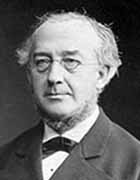
1913 John Milne (30 December 1850 – 31 July 1913) English seismologist who invented the horizontal pendulum seismograph (1894) and was one of the European scientists that helped organize the seismic survey of Japan in the last half of the 1800's. Milne conducted experiments on the propagation of elastic waves from artificial sources, and building construction. He spent 20 years in Japan, until 1895, when a fire destroyed his property, and he returned home to the Isle of Wight. He set up a new laboratory and persuaded the Royal Society to fund initially 20 earthquake observatories around the world, equipped with his seismographs. By 1900, Milne seismographs were established on all of the inhabited continents and he was recognized as the world's leading seismologist. He died of Bright's disease*TIS
Milne died of Bright's disease on 31 July 1913 and, after a service in St. Paul's Church, Newport, was buried in the civic cemetery to the north of the church. His Japanese wife Tone returned to Japan in 1919 and died in 1926.*Wik

1980 Ernst Pascual Jordan ( 18 October 1902 – 31 July 1980) was a German theoretical and mathematical physicist who made significant contributions to quantum mechanics and quantum field theory. He contributed much to the mathematical form of matrix mechanics, and developed canonical anticommutation relations for fermions. He introduced Jordan algebras in an effort to formalize quantum field theory; the algebras have since found numerous applications within mathematics.
Jordan joined the Nazi Party in 1933, but did not follow the Deutsche Physik movement, which at the time rejected quantum physics developed by Albert Einstein and other Jewish physicists. After the Second World War, he entered politics for the conservative party CDU and served as a member of parliament from 1957 to 1961.
2016 Seymour Papert ( 1 Mar 1928, 31 Jul 2016) American computer scientist who invented the Logo computer programming language, an educational computer programming language for children. He studied under Piaget, absorbing his educational theories. He has studied ways to use mathematics to understand better how children learn and think, and about the ways in which computers can aid in a child's learning. With Marvin Minsky, he co-founded the Artificial Intelligence Lab at MIT. In the mid-80s he worked in Costa Rica to develop a nationwide program of intensive computer use throughout the public education system. Costa Rica, which now has the highest literacy rate in the A mericas, continues to serve as a model for large-scale deployment of computer technology in education. *TiS
Papert with a Turtle robot
Credits :
*CHM=Computer History Museum
*FFF=Kane, Famous First Facts
*NSEC= NASA Solar Eclipse Calendar
*RMAT= The Renaissance Mathematicus, Thony Christie
*SAU=St Andrews Univ. Math History
*TIA = Today in Astronomy
*TIS= Today in Science History
*VFR = V Frederick Rickey, USMA
*Wik = Wikipedia
*WM = Women of Mathematics, Grinstein & Campbell


.jpeg)


No comments:
Post a Comment